

What we do
EV Chargers
Charge your car at home with a fast, tidy setup.
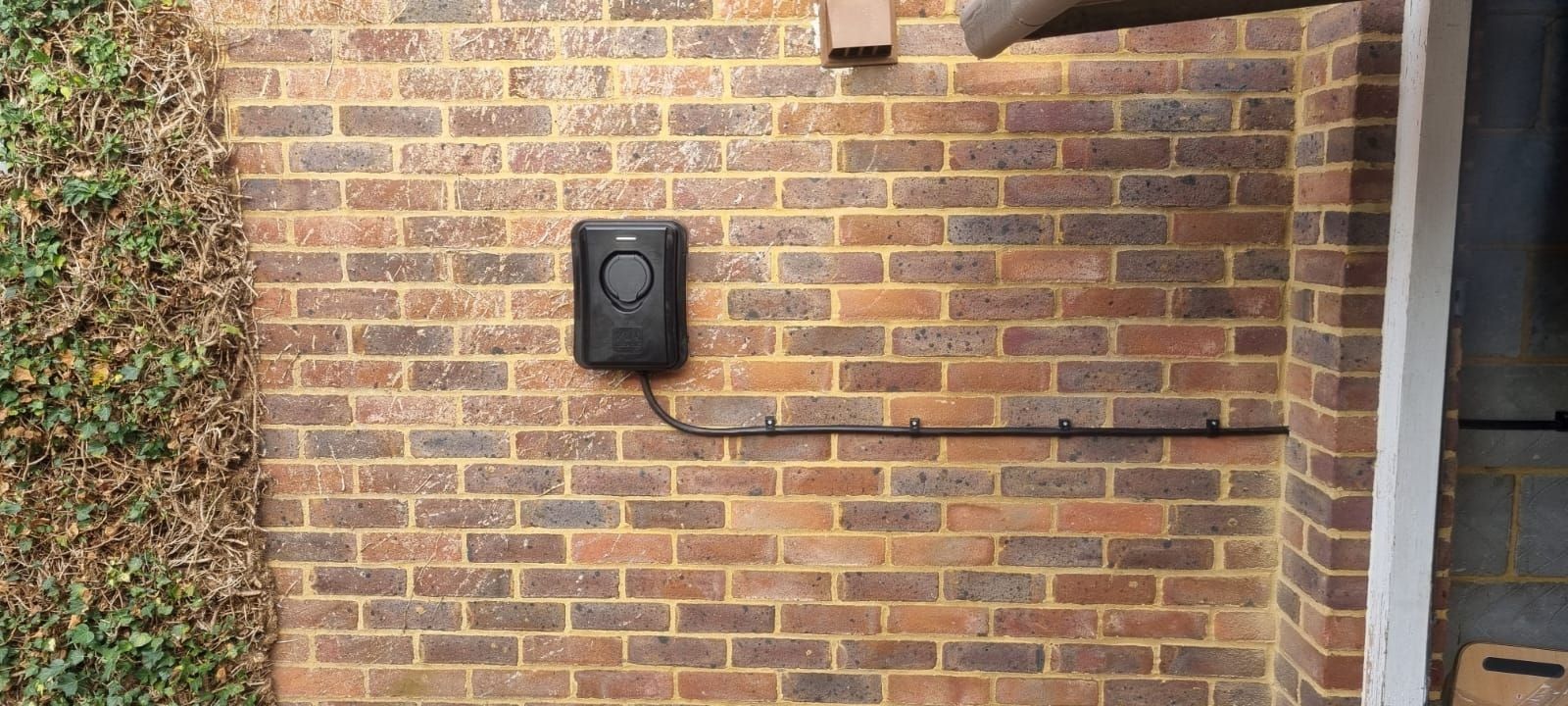
A home charger fed by your own panels is about as cheap as motoring gets. It is also, done properly, an invisible bit of kit — one neat unit and a cable run nobody notices.
Charge on sunshine wherever the day allows it
Pair a charger with solar and, on a decent day, a chunk of your mileage comes off your own roof rather than off your bill. Schedule it for the middle of the day and the maths gets better again.
An electric car adds meaningfully to a household’s annual consumption, which is exactly why the array and the charger want designing together rather than two years apart.
None of that needs new hardware on the roof. Where the panels are already up, the charger simply becomes another thing the system is asked to feed, and the order it feeds things in is a setting rather than a rebuild.
What actually happens, start to finish
It starts with a look at what you already have. We need to see the incoming supply, where the meter is, what is in the consumer unit and how the property is earthed — those four things between them decide most of the job. On a straightforward house it is a twenty-minute look, and it is part of the free survey.
On the day, the unit is mounted, the supply is run to it, the protective devices go in at the board, and the circuit is tested and certificated before anything is plugged into a car. A single charger on a house that does not need board work is usually a day.
Then it gets commissioned rather than just switched on: connected to your wi-fi if it wants to be, any schedule you have asked for set up, and a walk round it with the cable in your hand rather than a manual in your inbox.
The cable run is the bit people actually notice
Anyone can screw a charger to a wall. The difference is where the supply comes from, how the cable gets there, and whether you can see it from the front of the house. We plan that route on the survey.
Where the board is at the front and the parking is at the back, the route is the job. It can go through a loft, round a soffit, under a drive or along a fence line, and each of those carries a different amount of disruption. We would rather show you two or three honest options before we start than pick one for you afterwards.
Where the unit itself sits matters as much as how it is fed. How far the cable has to stretch, whether the car noses in or reverses, whether a second car might ever need it, and whether the thing is going to sit lit up outside a bedroom window.
Load management, so nothing trips at teatime
A charger, an oven and a shower at once is more than plenty of older supplies enjoy. Load-managed charging watches the incoming supply and eases off rather than tripping the main fuse.
Whether you need it is a question about your supply, not about your car, and it is measured rather than guessed. Where the headroom is tight, load management is very often cheaper and far less disruptive than asking the network operator for a bigger supply.
What actually changes the job from house to house
The distance from the consumer unit to where the charger is going, and what the cable has to get through on the way. On most jobs this is the single biggest variable, and it is the one you can see for yourself before we arrive.
Whether the board has a spare way and the right protective device, or whether it has run out of road. Older boards sometimes need work before anything new can land on them — which is the moment an EV job quietly becomes an electrical job as well, and we would rather you heard that at the survey than on the day.
How the property is earthed. Most UK homes take their earth from the incoming supply cable, and a charge point sitting outdoors needs protection arranged around that. It is standard, well-understood work, but it is work, and it is not identical on every house.
What the wall is made of — brick, render, timber, or something with a cavity behind it nobody wants to discover mid-drill.
Whether there is solar on the roof already, or about to be. Doing the two together is materially cheaper than doing them two years apart.
What we need you to tell us
Where the car parks, and roughly where you would like the charger. A photograph of the driveway and one of the fuse board answers half of our questions before anyone knocks on the door.
Whether you are on an off-peak tariff or thinking about moving to one. That changes what we set up, not what we fit, but it is much easier to set up on the day than to revisit.
Whether solar or a battery is already on the house, or on the list. And, honestly, whether a second car is coming — the time to think about that is before a cable is buried under a drive.
If you rent, if the parking is shared, or if the wall belongs to somebody else, say so early. None of those stop the job; all of them need a permission that is easier to get at the start.
Afterwards
You get the electrical certificate for the circuit, the same as for any other work we do, and your network operator is told that a charge point has gone in. That is a requirement rather than an optional extra, and we deal with it — you do not need to.
If it ever stops working, you ring the same number and it is the same team. We fitted it and we hold the paperwork for it, and we would sooner come and look at it than try to talk you through a fault down the phone.
What it looks like when we’re there
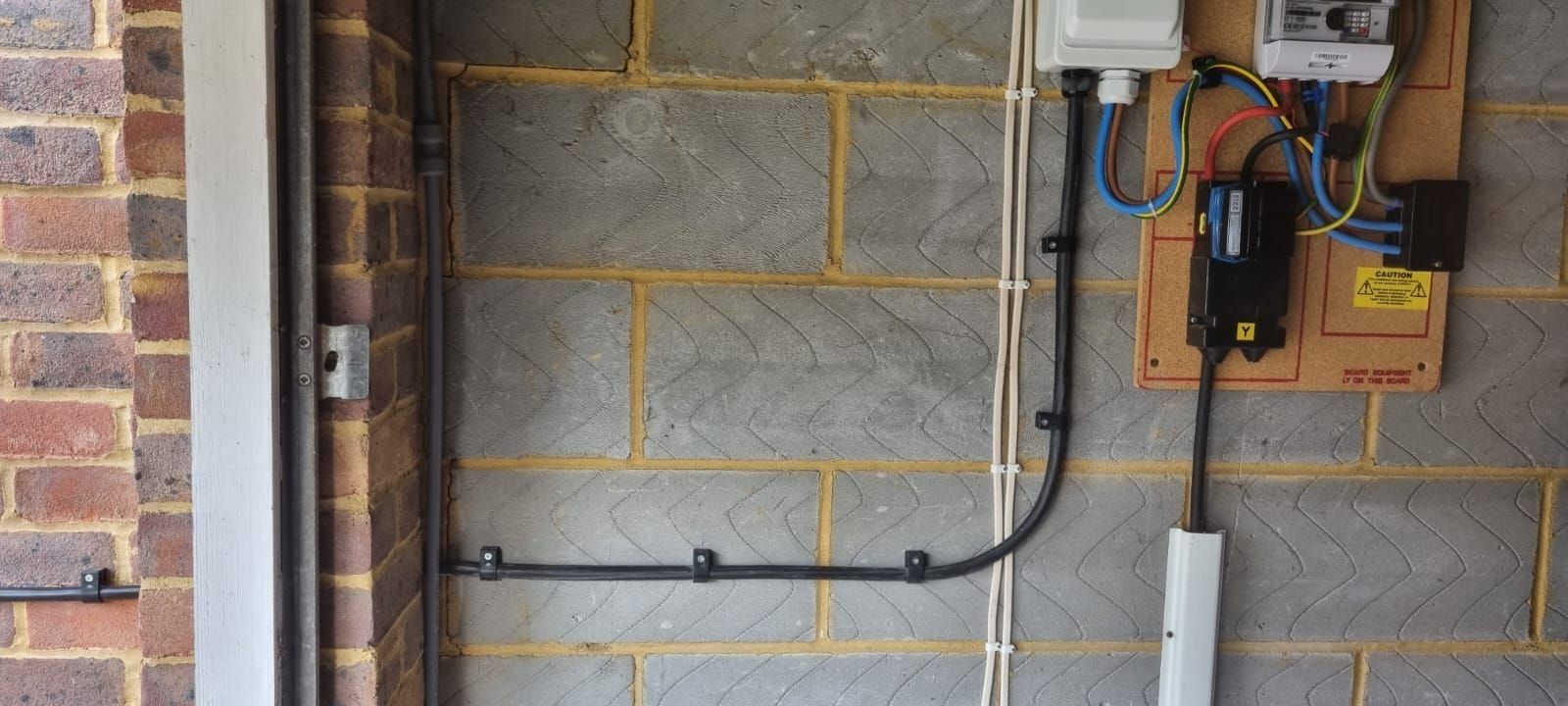
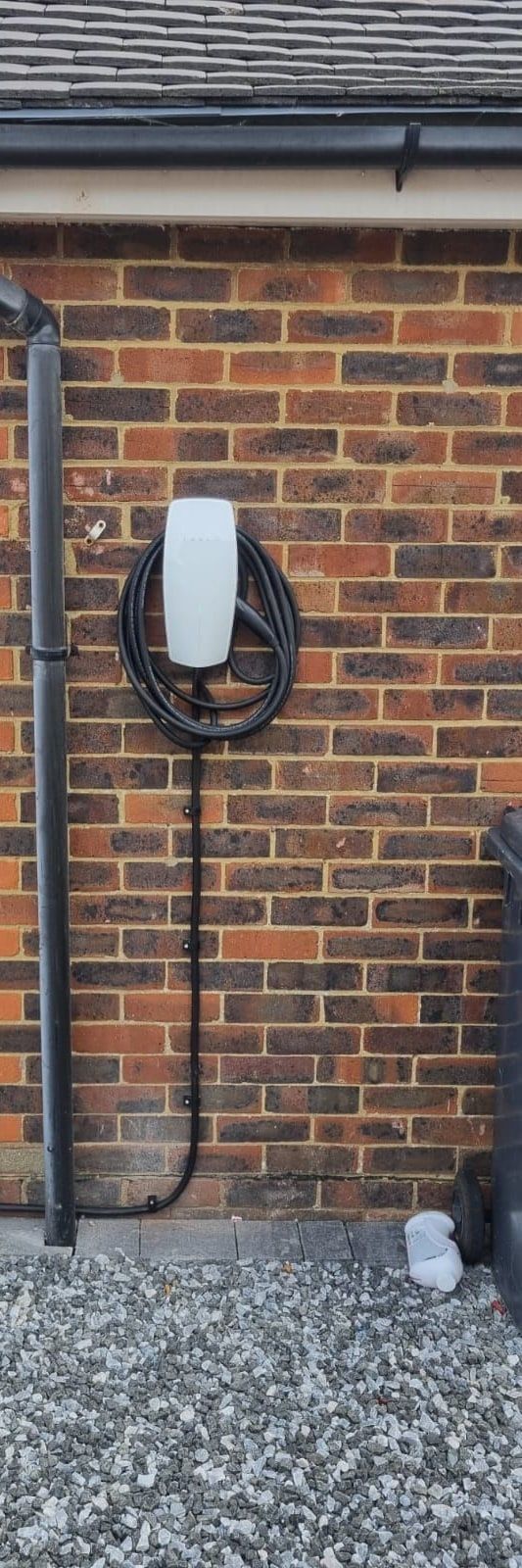
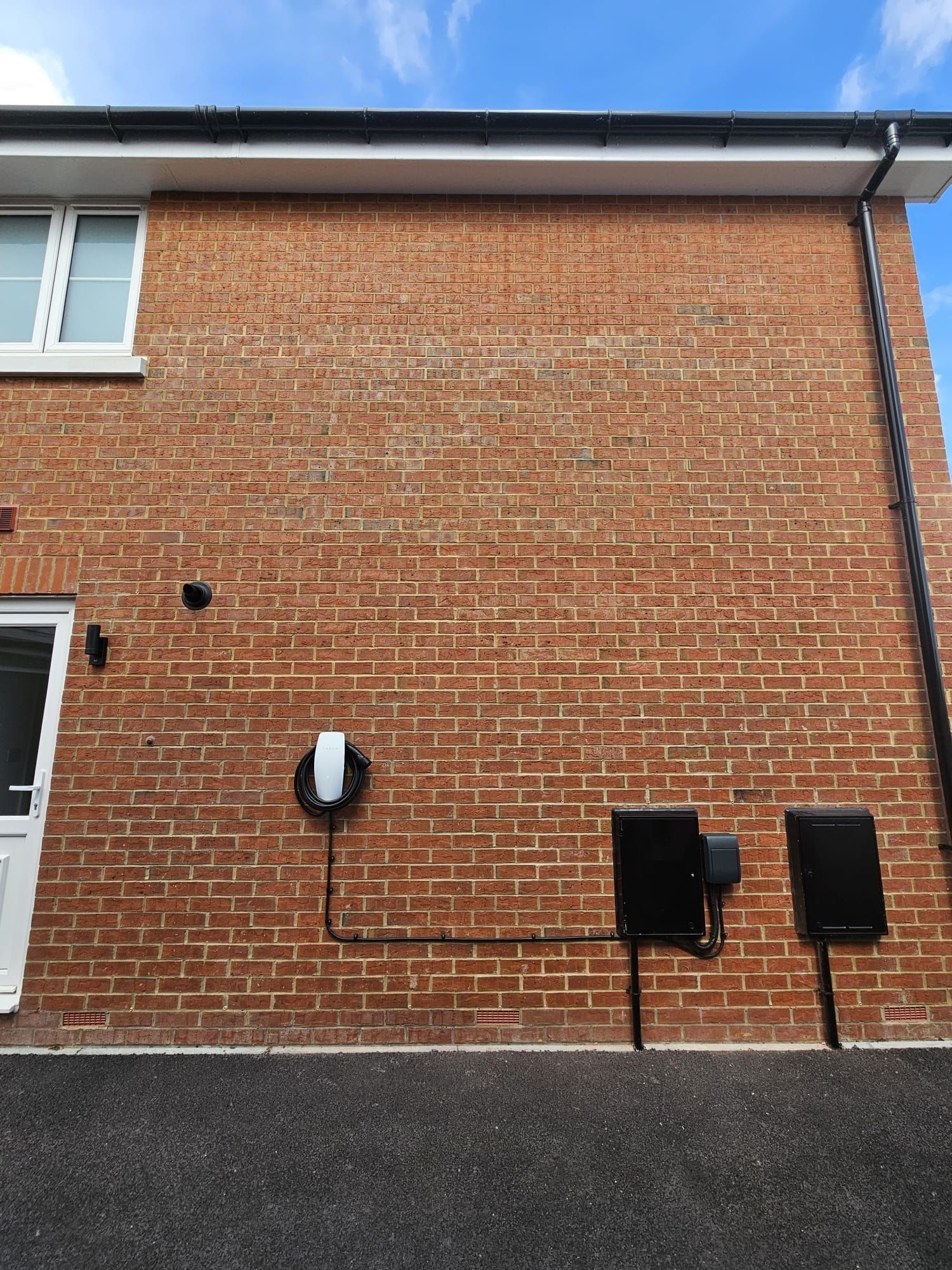
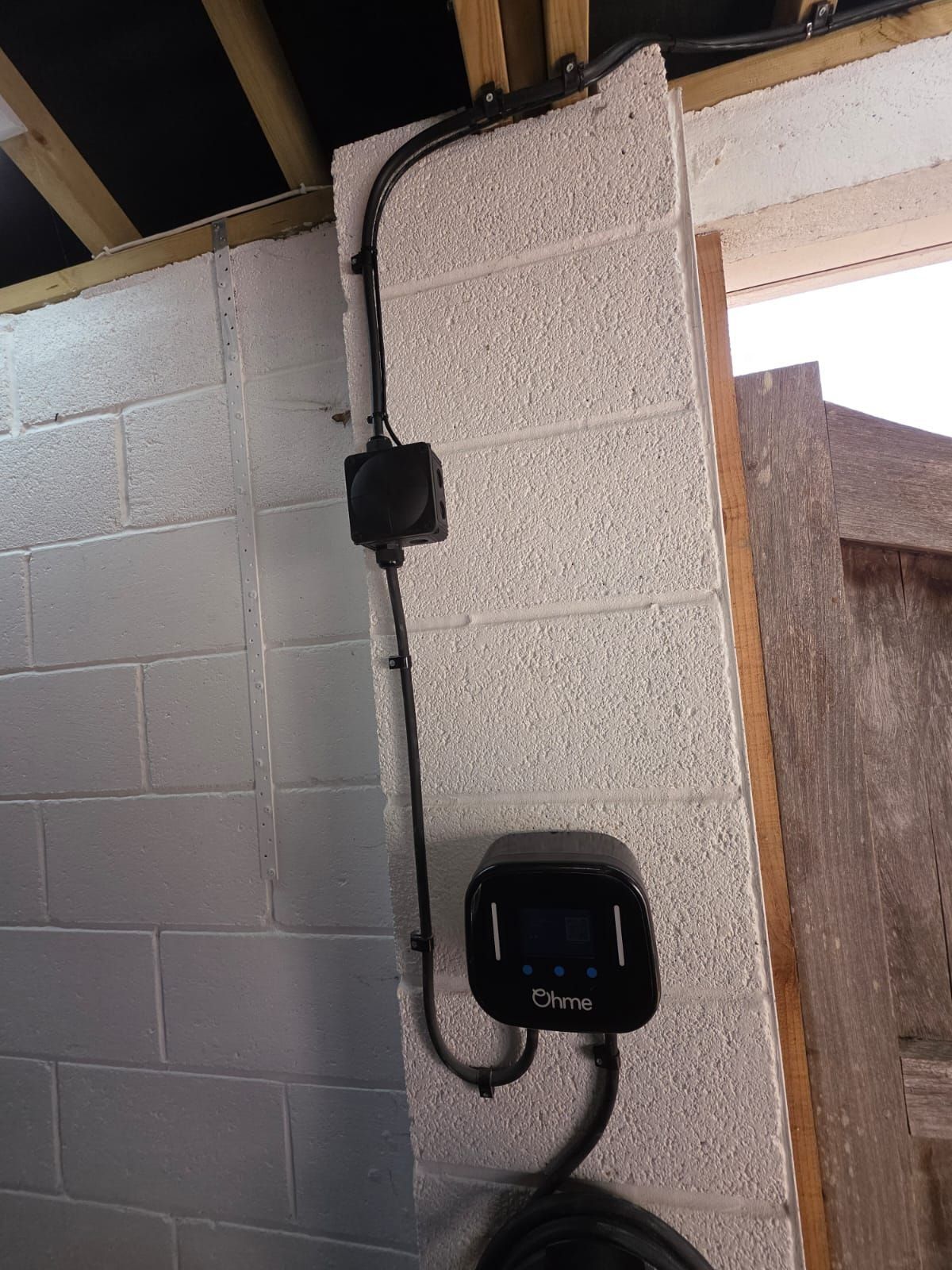
Our own photographs. They show the systems we design and fit — not specific completed jobs, and no customer or address is identified.
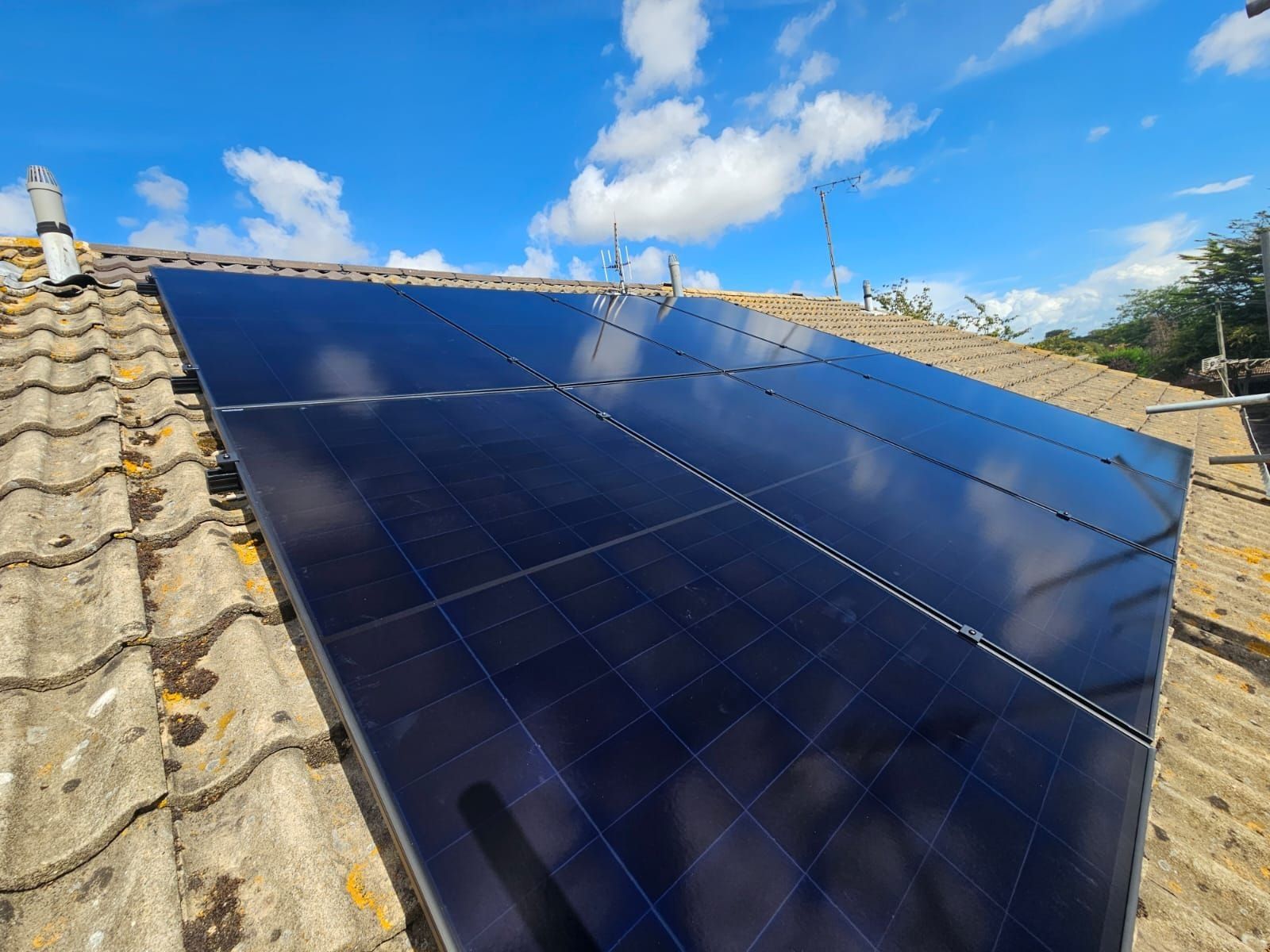
Charging an electric car off your own roof
Pairing a home charger with solar changes the maths on both. What actually gets charged by the sun, and why the two want designing together.
Read it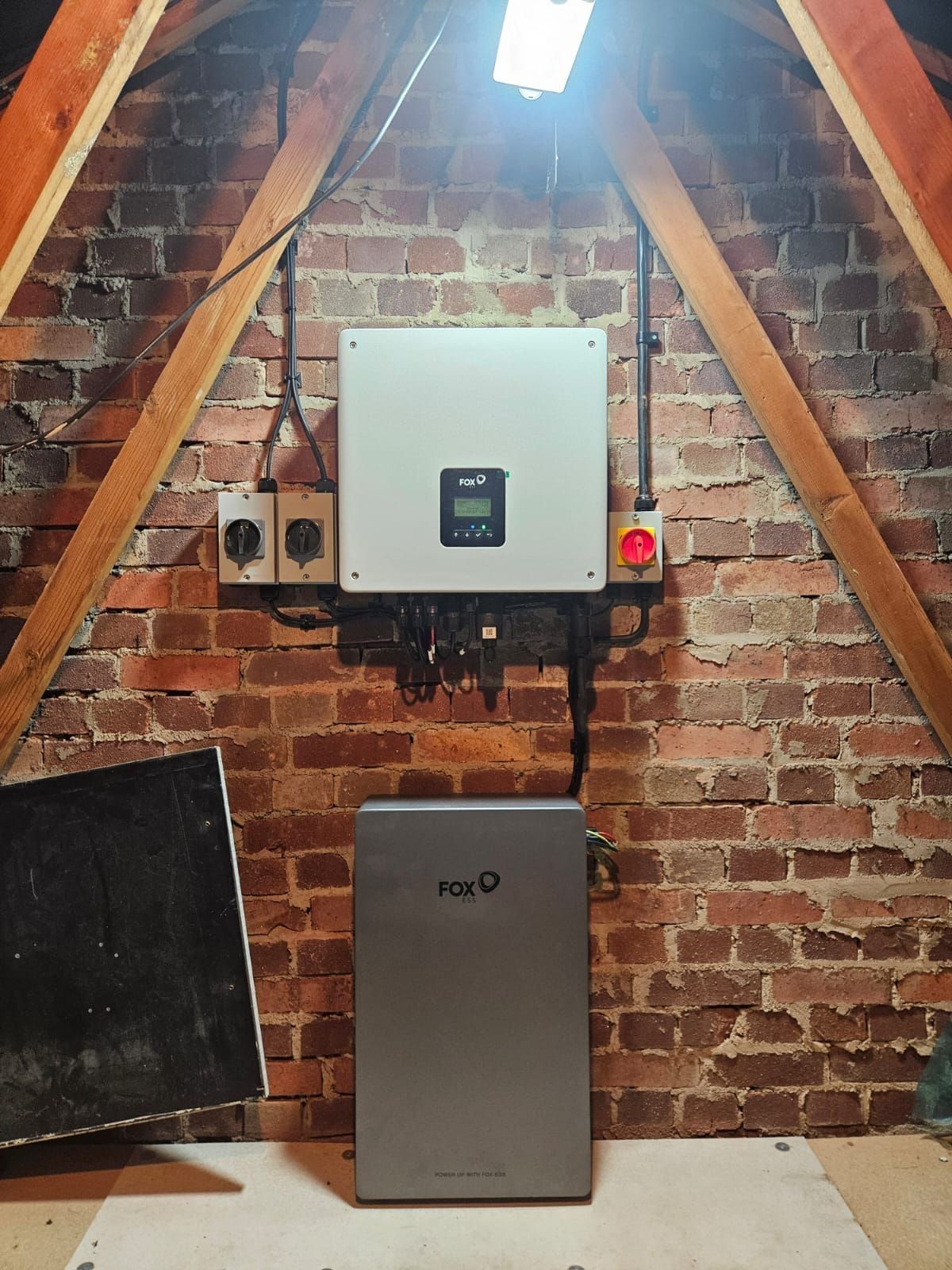
Is a battery worth it? The honest arithmetic
A battery roughly doubles how much of your own generation you use. Whether that pays depends on when your house is empty. Here is the arithmetic.
Read it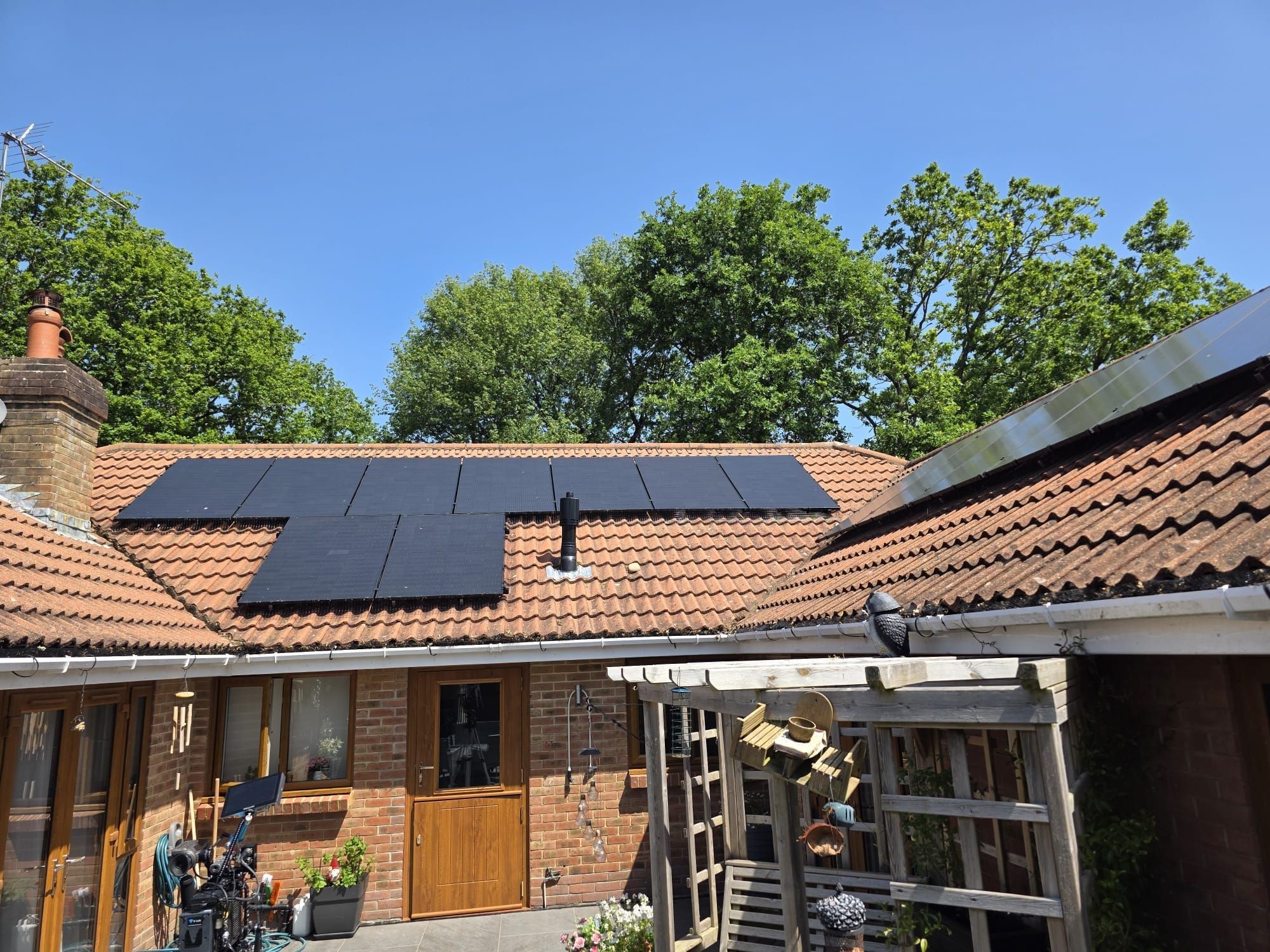
Zero VAT and the Smart Export Guarantee, explained plainly
The two schemes that actually affect what a domestic solar system costs and earns in the UK — what each one is, and what neither of them is.
Read itThe next step
Book your free survey
Thirty to forty-five minutes, at your house, at no cost. We look at the roof, the fuse board and how you actually use the place — then send you a clear quote with the assumptions shown.
- Call 01243 882444
- Email hello@solar-squirrel.co.uk
- Based Washington, West Sussex
If solar genuinely won’t pay for itself on your usage, we’ll say so and save us both an afternoon.
Rather see the numbers before you speak to anybody? Put your own bill on the house — it works out the size, the saving and the payback while you watch, and brings them down to this form with you.