

Battery storage & hybrid inverters
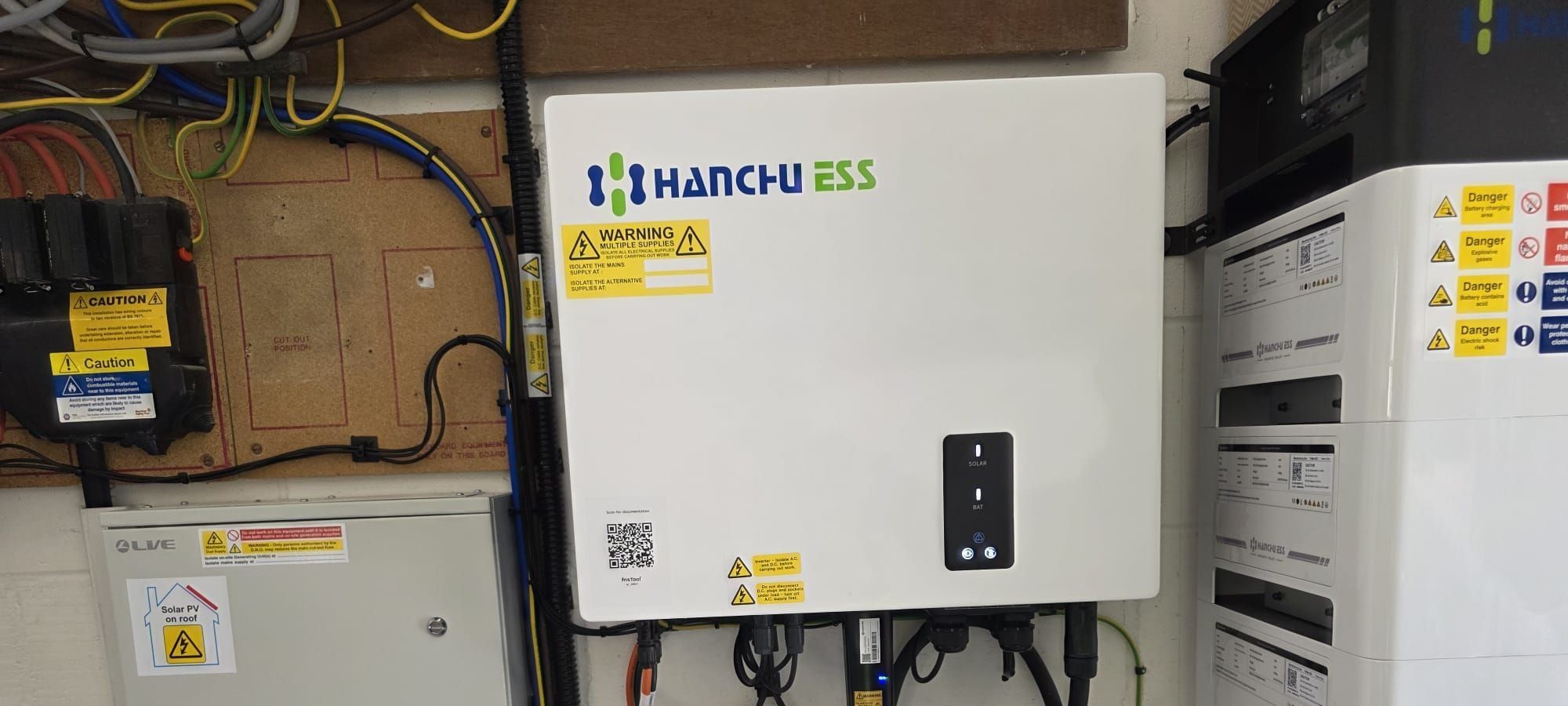
Hanchu ESS
Hanchu ESS is a line we fit. It is not a name most people in Britain have heard, and this page is about what that does and does not tell you — when we would put it on a house, and when we would not.
A name most people have not heard, said out loud
Hanchu ESS is not a household badge in Britain and we are not going to dress it up as one. We would rather you read that on our page than find it on a forum a fortnight after signing something. What follows is the honest case for it, and the two or three places where we would talk you out of it.
An unfamiliar badge is not the same thing as a worse one
Recognition in this trade follows advertising budgets at least as closely as it follows engineering. There is equipment working quietly in garages that never had a campaign behind it, and there is equipment everybody can name that nobody in the trade is especially fond of. What decides whether you are content in year seven is who specified it, who fitted it, and who picks up the phone — and only one of those three is printed on the lid.
House-sized, or the workshop behind it
The workshop behind the house, the farm office, the small unit down the lane. A good many of the buildings we are asked about are not quite domestic and not quite commercial, and the question worth asking is whether a design can grow with the building rather than be thrown away and started again. That is a question we answer at survey, against your supply and your roof and what is actually available on the day — not off a website.
Where the support behind it actually comes from
There is a chain behind every line we fit, and it is a different shape for every one of them. That changes very little for you and a fair amount for us: if something has to go back, you ring us, and working out who else needs to be in that conversation is our job rather than yours. It does mean we would not put this equipment on a house we were not going to be looking after — which is the same rule we apply to everything on this list, and the reason the list is short.
The figures we will not give you down the phone
You will not find a capacity, a charge rate or a warranty length anywhere on this page, and that is deliberate rather than an oversight. Those things move by range, by revision, and by the terms in force on the day you buy — and a number half-remembered from a trade counter is worth less than no number at all. What you get from us is the current documentation for the exact equipment we are proposing, in writing, before you decide anything.
The car, if there is one on the drive
Where an array, a battery and a charge point can come from one supplier instead of three, it makes for a tidier wall and one fewer app on your phone. That is not automatically the right answer — the incoming supply, the board and where the car actually parks decide far more than the badge does — and what is currently in any manufacturer’s range on the day you buy is a question we answer at survey, in writing, rather than off a website.
What we would want in front of us before pricing it
The consumer unit, photographed with the cover on and, if it is safe and easy, with it off. The wall you have in mind, and roughly how far it sits from that board. A year of consumption broken down by the half hour if your supplier will release it, because an annual total hides the only thing that matters. And a straight answer about whether anybody is in the house between nine and three.
Ask what the app is allowed to do, not just what it shows
Every one of these systems arrives with a phone app, and they are far more alike than the brochures suggest. The useful questions are the dull ones: does it stay free, how much history does it hold, can you get your own data out of it, and can we see the same screen you can when you ring us about something odd. Those four answers are much easier to hear before you choose a line than eighteen months afterwards.
If it is the wrong line for your house, you will hear so
There are houses where we would specify something else and tell you why, and there are houses where storage of any kind is not the strongest thing you could do with the money. Neither answer costs you anything at survey stage and both are cheaper than the alternative. A firm that only ever recommends whatever happens to be in the van is telling you something about itself.
What stays behind when the van goes
A tested, certificated circuit. Labelling that will still mean something to whichever electrician opens that board in fifteen years. Your network operator told, by us. The monitoring working on your phone rather than on ours. And the equipment details written down somewhere findable, which sounds like housekeeping right up until the afternoon somebody needs them and the label is pressed against a wall.
Where this one sits against the other three
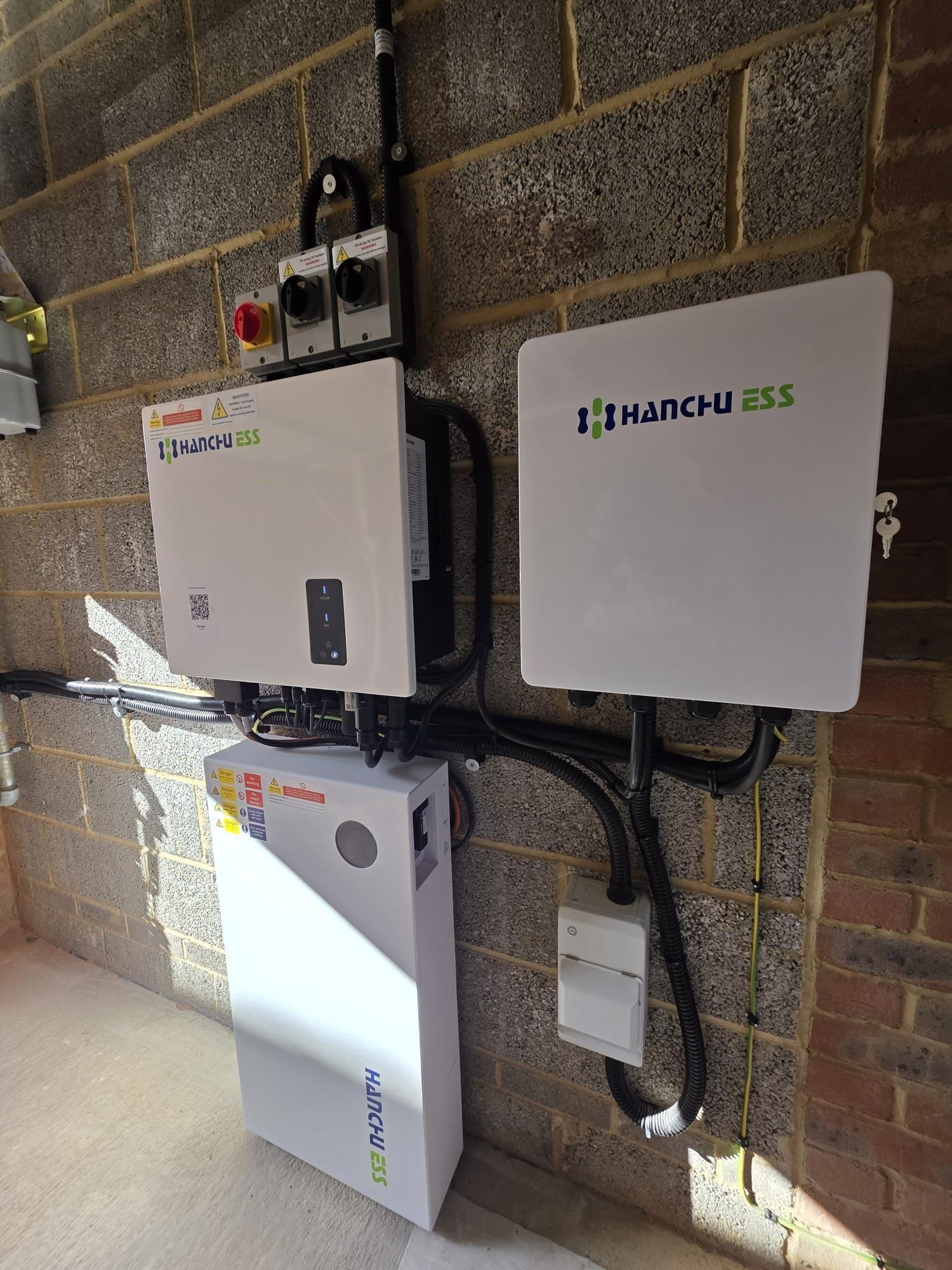
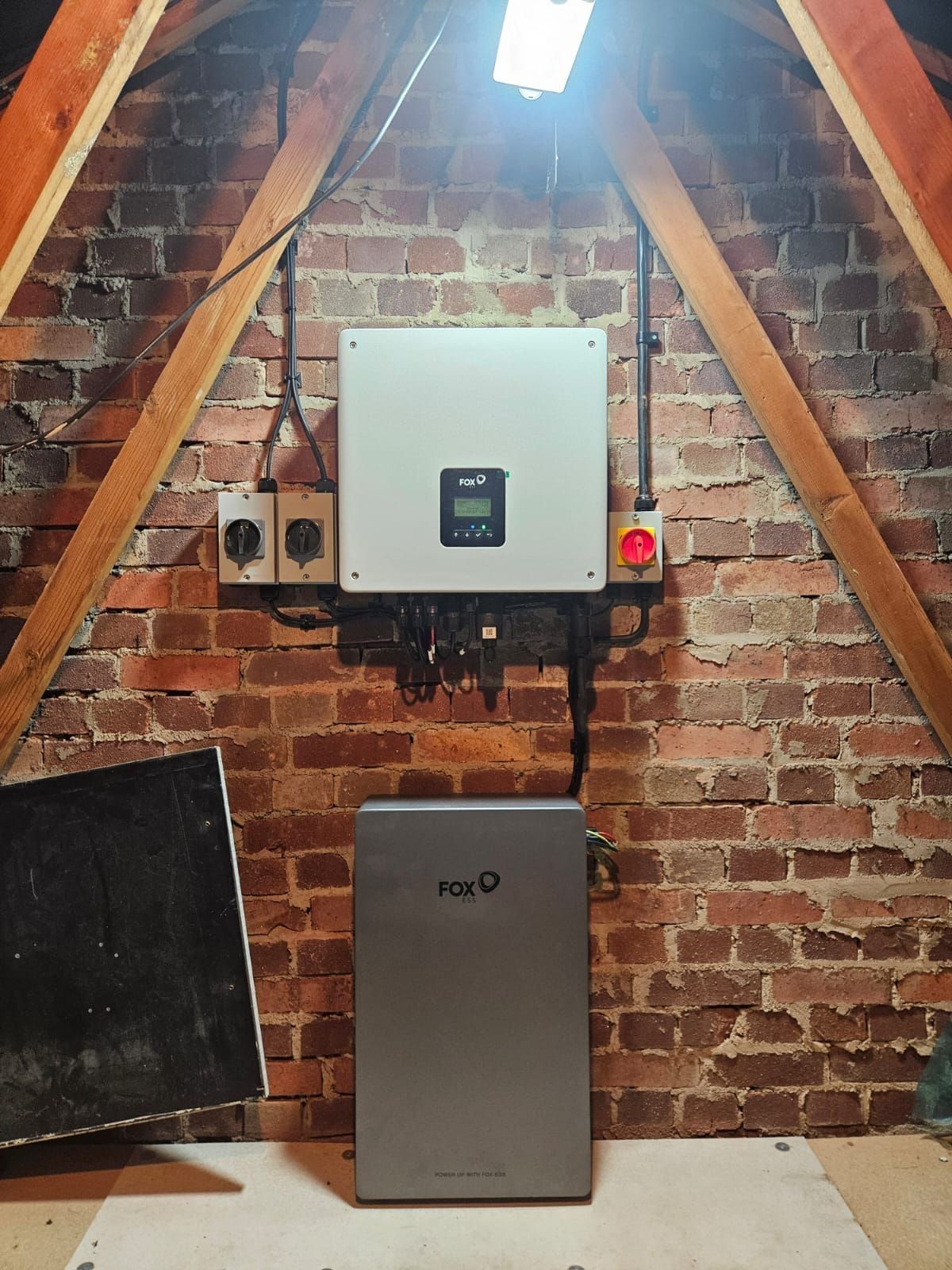
Fox ESS and Hanchu ESS are both in our own installation photographs. Sigenergy suits a household that wants the whole thing arriving as one stack. EcoFlow PowerOcean suits one that would rather start small and add battery packs as it goes. Hanchu earns its place where it genuinely fits the building and the money does honest work — and where we are confident we will still be the people looking after it. Which of the four we put in front of you is a survey decision, not a preference.
What a home battery is actually for
So here is a drawing instead. It carries no badge, because the point of it is the part that is the same whichever line ends up on your wall.
What it does is the same whatever the badge on the front says. Daylight goes in while nobody is home to use it, and comes back out at six o'clock when everybody is. Without one, the surplus goes to the grid and you buy it back later at a worse rate.
Whether you want one at all is a real question and the answer is sometimes no — if you are home through the middle of the day you may already be using most of what the roof makes. How storage behaves day to day covers it, and the questions people ask first include that one.
Our own drawing of a housed home battery — not a photograph, and not Hanchu ESS hardware. The unit proposed for your house is named at the survey.
Is a battery worth it? The honest arithmetic
A battery roughly doubles how much of your own generation you use. Whether that pays depends on when your house is empty. Here is the arithmetic.
Read it
What actually happens at a free solar survey
Thirty to forty-five minutes, a look at your roof and your fuse board, and a quote afterwards. No pressure, and sometimes the answer is no.
Read it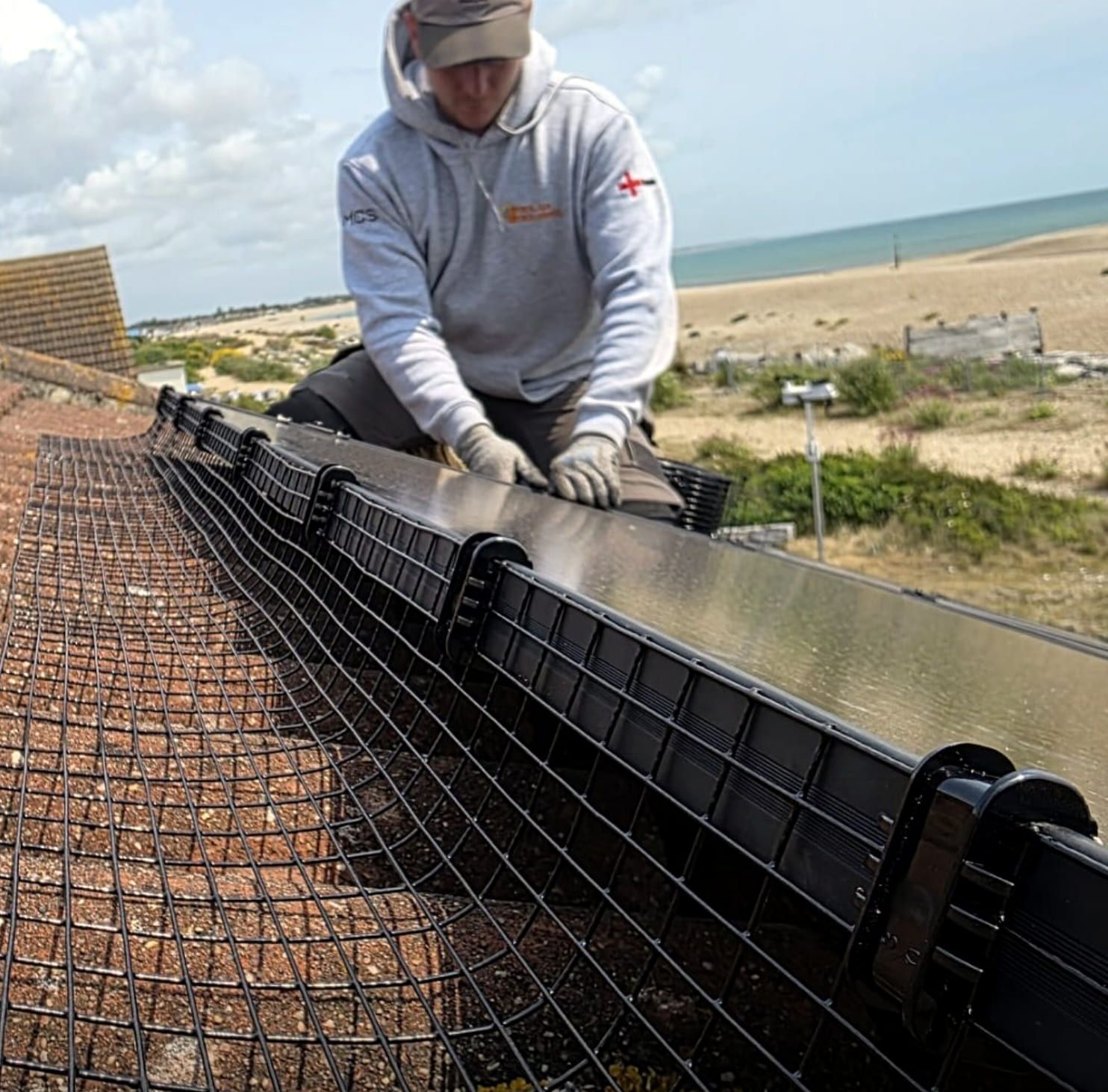
Pigeons, panels and why we fit mesh as part of the job
The gap under a solar array is a perfect nesting site, and clearing a colony out later costs far more than preventing it. Which roofs need mesh.
Read itWhat people ask at this point.
Are there any grants or incentives for solar in the UK?
Yes, you can benefit from the Zero VAT scheme on solar panels and batteries (for domestic installs), and in some cases, you can sell your excess energy back to the grid through the Smart Export Guarantee (SEG). We’ll explain what applies to you based on your setup and provider.
What happens to the system if I move house?
It stays with the house. Panels, inverter and battery are part of the building, and they go to the new owner along with the certification.
Keep the paperwork somewhere findable — the MCS certificate and the electrical certificates are what a buyer’s solicitor will ask for, and hunting for them mid-sale is nobody’s idea of a good week. Your export arrangement is between you and your energy supplier, so that is a conversation for them rather than for us.
Do you do the electrical work yourselves, or subcontract it?
Ourselves. Solar Squirrel grew out of an electrical firm and the electrical side never went anywhere — same team, same vans, and it is work carried out by an NICEIC Approved Contractor, tested and certificated.
It matters more than it sounds. When the consumer unit turns out to be older than expected, or the earthing arrangement needs attention before a charge point can go in, it is the same people on the same day rather than a second trade to book.
Read all the questions — or ask yours at the free survey.
The next step
Book your free survey
Thirty to forty-five minutes, at your house, at no cost. We look at the roof, the fuse board and how you actually use the place — then send you a clear quote with the assumptions shown.
- Call 01243 882444
- Email hello@solar-squirrel.co.uk
- Based Washington, West Sussex
If solar genuinely won’t pay for itself on your usage, we’ll say so and save us both an afternoon.
Rather see the numbers before you speak to anybody? Put your own bill on the house — it works out the size, the saving and the payback while you watch, and brings them down to this form with you.