

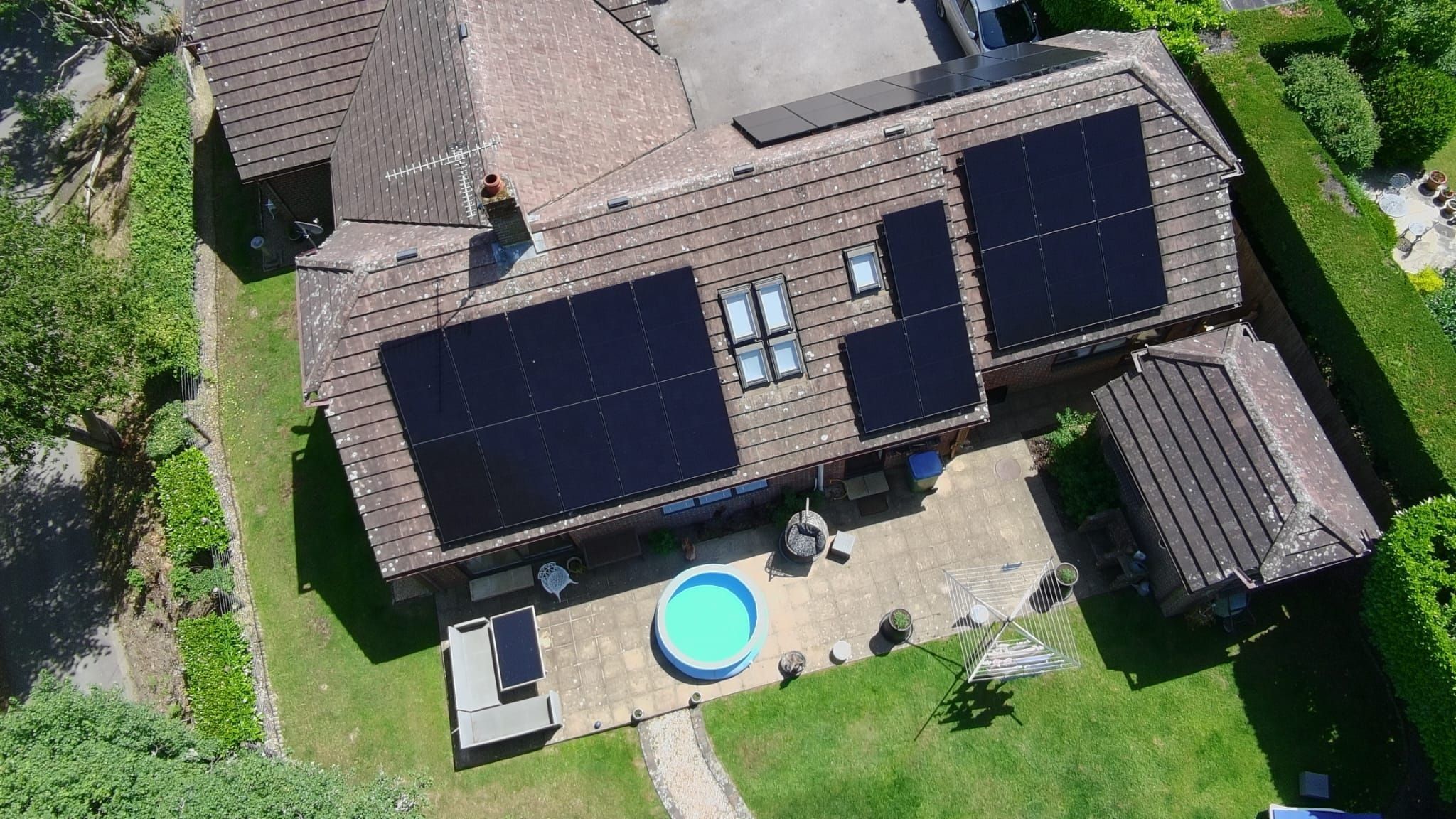
Cranleigh 24 to Horley 28 road miles — the northern edge of the patch
Solar panels in Surrey
The northern edge of the patch and the “parts of Surrey” in our own coverage statement: the Weald-side towns from Haslemere round to Horley, reached up the A24 and the A281, with the thirty-mile line falling at Reigate and just short of Guildford.
What we find on Surrey roofs
More shade to model than on the coast, and two network operators to tell apart — the survey on the Surrey edge is about the paperwork and the trees before it is about the panels.
Distance, geography, housing stock and the planning position all change how a system gets designed. These are the ones that decide it in Surrey.
What we take into account here
- Approximately 24 road miles to Cranleigh, 25 to Haslemere, 26 to Dorking and 28 to Horley from Washington; Reigate sits on the thirty-mile line and Guildford, at 32, is just beyond it (road distances measured on 15 October 2026).
- “Parts of Surrey” is how our own coverage statement puts it, and this page is honest about which parts: the southern edge of the county along the Sussex border, not Woking, Epsom or the Thames towns.
- Surrey has two electricity network operators and the line between them runs through the part we cover: Cranleigh, Dorking, Horley and Reigate are UK Power Networks (grid supply point group J), while Haslemere, Godalming and Guildford are Scottish and Southern Electricity Networks (group H) — checked district by district on 15 October 2026. The MPAN on your bill says which one receives the G98 or G99 notification.
- The Surrey Hills National Landscape — one of the first in the country, designated in 1958 — stretches across a quarter of the county from Farnham in the west to Oxted in the east, taking in the Greensand Hills around Haslemere; inside it the roof-slope rules are the same as in a conservation area, and a listed house needs consent before anything goes on the roof (surreycc.gov.uk, read 15 October 2026).
- Surrey County Council’s climate change strategy sets net zero for its own operations by 2030 and for the county by 2050, with a stated target of 15% of energy from solar PV by 2032 and a 66% cut in domestic housing emissions by 2035 against business as usual (surreycc.gov.uk, read 15 October 2026).
- Mole Valley District Council, which covers Dorking, declared a climate emergency on 18 June 2019 and voted unanimously for carbon neutrality by 2030 or earlier, defeating an amendment to move the date to 2050.
- ONS Census 2021: 73.2% of Mole Valley households owned their home, and private renting had grown to just under one in seven — the roofs on this edge are owner-occupied, and the decision to put panels on them is the owner’s to make (ons.gov.uk census area changes, read 15 October 2026).
Which Surrey, exactly
Surrey is a big county and we cover a narrow band of it: the towns along the Sussex border that are inside thirty road miles of Washington. Cranleigh at 24, Haslemere at 25, Dorking at 26 and Horley at 28 are inside the line. Reigate is on it. Guildford, at 32, is the one people ask about most and the honest answer is that it is just over — we will quote, but we say up front that the travel is in the price. Woking, Epsom and the Thames towns we leave to the installers who are based there.
Inside the band the roofs are much like the Weald side of West Sussex — clay and concrete tile on village and small-town stock, with the greensand ridge and the woods around Haslemere putting more shade on a south-facing slope than a Sussex coastal roof ever sees — so the survey spends its time on the shading model, not the mounting.
Two operators, one county line
Every inverter has to be notified to the network operator before it is switched on, and in the Surrey we cover that means knowing which of two operators you are on. The Mole Valley and Reigate side — Dorking, Horley, Reigate, and Cranleigh in Waverley — is UK Power Networks, the same operator as Horsham and Crawley. Haslemere and the Godalming side are Scottish and Southern Electricity Networks, the same as our Hampshire jobs. The threshold is the same for both: up to 16 amps per phase, which is 3.68 kW, is a G98 notification; anything larger needs a G99 application approved before the system is energised. We make the submission and you receive the acknowledgement, whichever side of the line you are on.
Home batteries on the Surrey edge
The owner-occupied semis and detached houses that make up most of this band usually have a garage or a utility wall, and that is where a home battery belongs — dry, ventilated, off the escape route, installed to PAS 63100 as the wiring regulations have required since April 2026. Our page for Sigenergy installers explains the one-stack idea and the questions we ask before fitting it; the Hanchu ESS and EcoFlow PowerOcean pages do the same for those lines, and how we choose between all four is written down before anyone drives up the A24.
What the sum looks like on this edge of the county is worked through on solar panel cost in Surrey — the PVGIS yield for Dorking against the published starting range and the Energy Saving Trust average, every assumption shown — and the honest list of what is and is not a grant is on solar panel grants in Surrey; the planning position, Surrey Hills included, is in solar panels and planning permission in Surrey. Which operator receives your G99 is the first question on this edge — battery storage in Surrey settles it, and the two-operator post explains why a lower yield makes the battery count.
Solar panel installers on the Surrey edge: how a job runs
From Cranleigh round to Horley the survey is about the paperwork and the trees before it is about the panels. Two network operators split the part of Surrey we cover — Cranleigh, Dorking, Horley and Reigate on UK Power Networks, Haslemere and Godalming on SSEN — and we read which from your MPAN because the boundary wanders. Inside the Surrey Hills National Landscape the roof-slope rules match a conservation area and a listed house needs consent for the roof. The thirty-to-forty-five-minute survey models the shade from the Greensand and the trees before it sizes anything.
The scaffold is in the quote; installation is typically one to two days; the certificate is signed by our own NICEIC-registered electricians and the registrations arrive in your name. The town page for solar panels in Dorking is the first on this edge to have one of its own; the others are covered from here.
Battery storage, EV charging and the electrics on the Surrey edge
Which operator gets your G99 is the first battery question here — battery storage in Surrey and the two-operator post settle it — and a lower modelled yield than the coast is the argument for storing the surplus rather than selling it.
For a car, EV charger installation in Surrey. Surrey County Council reports over 200 chargepoint sockets installed on its behalf by October 2024 under a five-year contract with Connected Kerb signed in February 2023 — standard 7 kW units, slower 3–5 kW lamp-post units and 50 kW-plus rapids mostly in car parks — invites residents to request on-street chargepoints through an online map, and states that trailing a cable across the pavement is not allowed in Surrey; cables may only cross a public footpath in a cable gully. A house with its own off-street space can have a home charger; a flat owner or renter with private off-street parking can claim 75% of it up to £500 under the government’s grant.
What solar costs on the Surrey edge, and what it pays
Most domestic installations typically start from around £4,000 to £6,000 depending on the size of the home and the amount of energy it uses; domestic solar and battery storage currently attract zero-rate VAT; the published average saving is £300–£600 per year, sometimes more with a battery or by working from home during the day. What solar costs in Surrey carries the full worked example at Dorking’s yield and grants and schemes in Surrey what the county and the districts offer.
PVGIS models a south-facing 4.5 kWp array at Dorking at about 1,037 kWh per kWp a year — below the coast — and Surrey County Council’s own strategy targets 15% of the county’s energy from solar PV by 2032. The surplus is exported at the Smart Export Guarantee rate, 12p per kWh in our reference as at June 2026, against about 26p to buy a unit back. The calculator runs your own bill.
The Surrey edge in numbers
Cranleigh 24, Haslemere 25, Dorking 26 and Horley 28 road miles from Washington; Reigate on the thirty-mile line, Guildford at 32 just beyond it. Two operators: UK Power Networks east of the Weald line, SSEN west of it. The Surrey Hills National Landscape, designated 1958, across a quarter of the county. Surrey County Council: net zero 2030 for its own operations, 2050 for the county; 15% of energy from solar PV by 2032. Mole Valley: climate emergency 18 June 2019, carbon neutral by 2030; 73.2% of households owner-occupied. Over 200 public chargepoint sockets by October 2024.
Questions we get asked in Surrey
Do you cover Guildford, Woking or Epsom?
Guildford is about 32 road miles from Washington — just over our thirty-mile line — so we will quote, but we say up front that the travel is in the price. Woking is about 39 and Epsom about 35, which is outside our regular working area, and we would rather point you to an installer based there than pretend otherwise.
Is my house in the Surrey Hills, and does that change the install?
The Surrey Hills National Landscape covers about a quarter of the county, from Farnham to Oxted, including the Greensand Hills around Haslemere, so a good share of the houses we survey on this edge are inside it. On a house roof slope, panels are still permitted development there; what changes is that a listed house needs listed building consent, and a panel on a wall or balcony fronting a highway is outside the permitted class. We check the boundary and the listing register before the survey.
How much do solar panels cost in Surrey?
Most domestic installations typically start from around £4,000 to £6,000 depending on the size of your home and the amount of energy you use, with zero-rate VAT; the Energy Saving Trust put an average home system at about £7,600 when we read it in October 2026. The Surrey cost page carries the worked example at Dorking’s own yield.
Which Surrey towns do you cover for solar panels?
Cranleigh, Haslemere, Dorking and Horley, with Reigate on our thirty-mile line from Washington — the southern edge of the county along the Sussex border, not Woking, Epsom or the Thames towns. Dorking has a page of its own; the others are covered from this one.
Where in Surrey we reach
Approximate road miles from Washington, measured on the road network rather than as the crow flies. The thirty-mile line is where our regular working area ends; a town with a page of its own links to it.
- Cranleigh · 24 mi
- Haslemere · 25 mi
- Dorking · 26 mi
- Horley · 28 mi
- Reigate · 30 mi
The systems that suit Surrey
Three arrangements cover most of what goes on a Surrey roof. Which one your house wants is decided at the survey, on the roof itself — not from a satellite image.
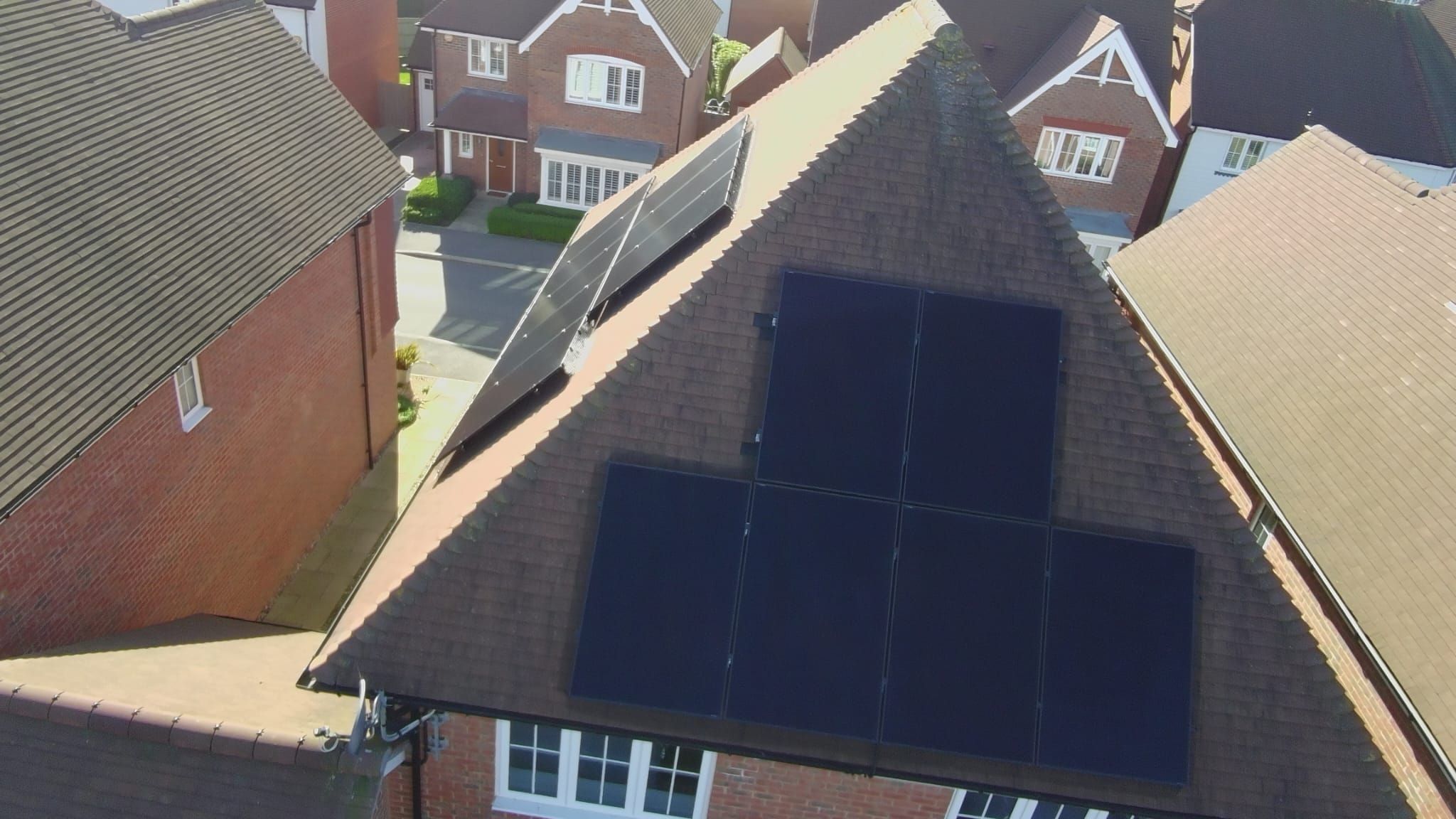
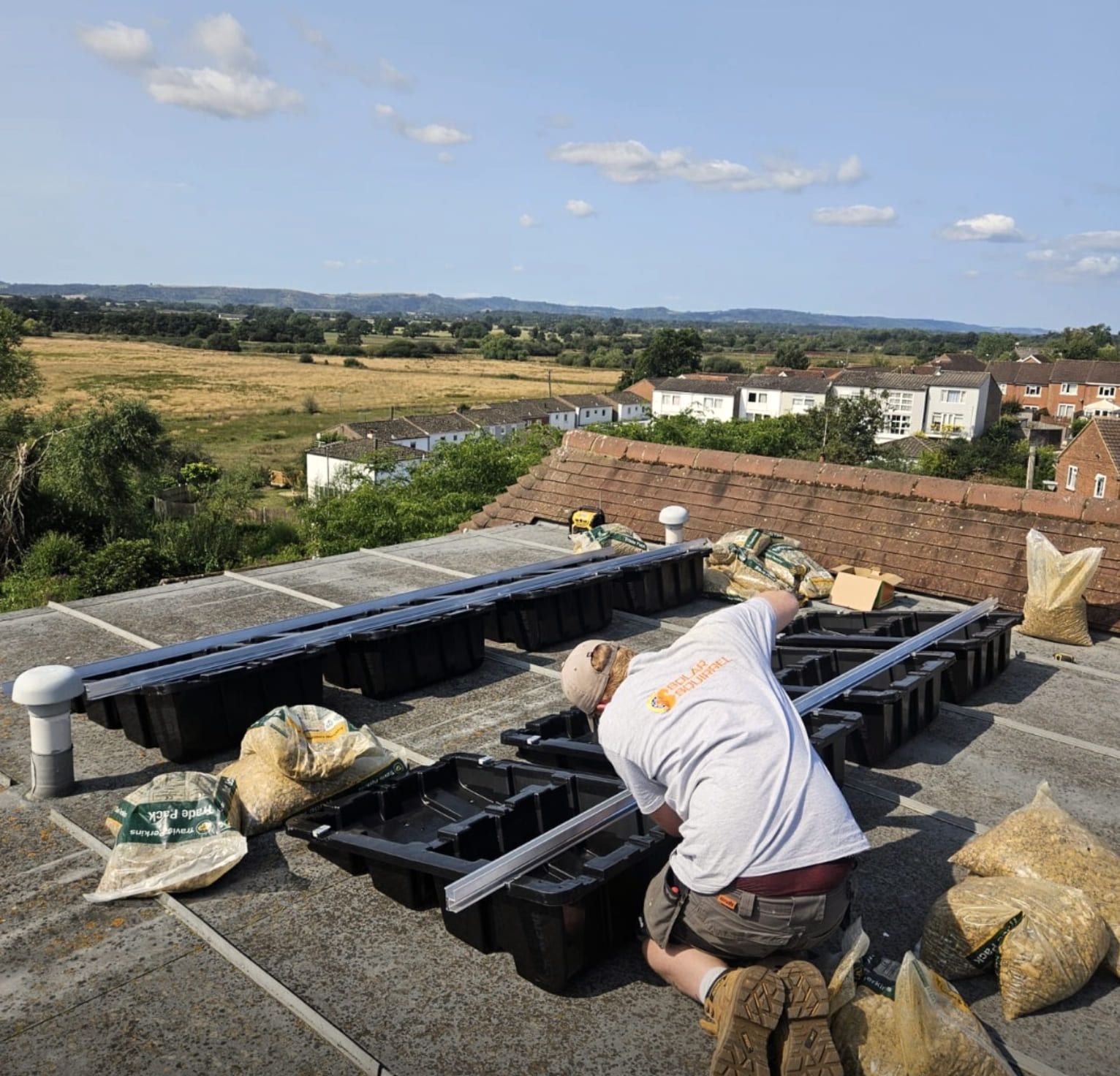
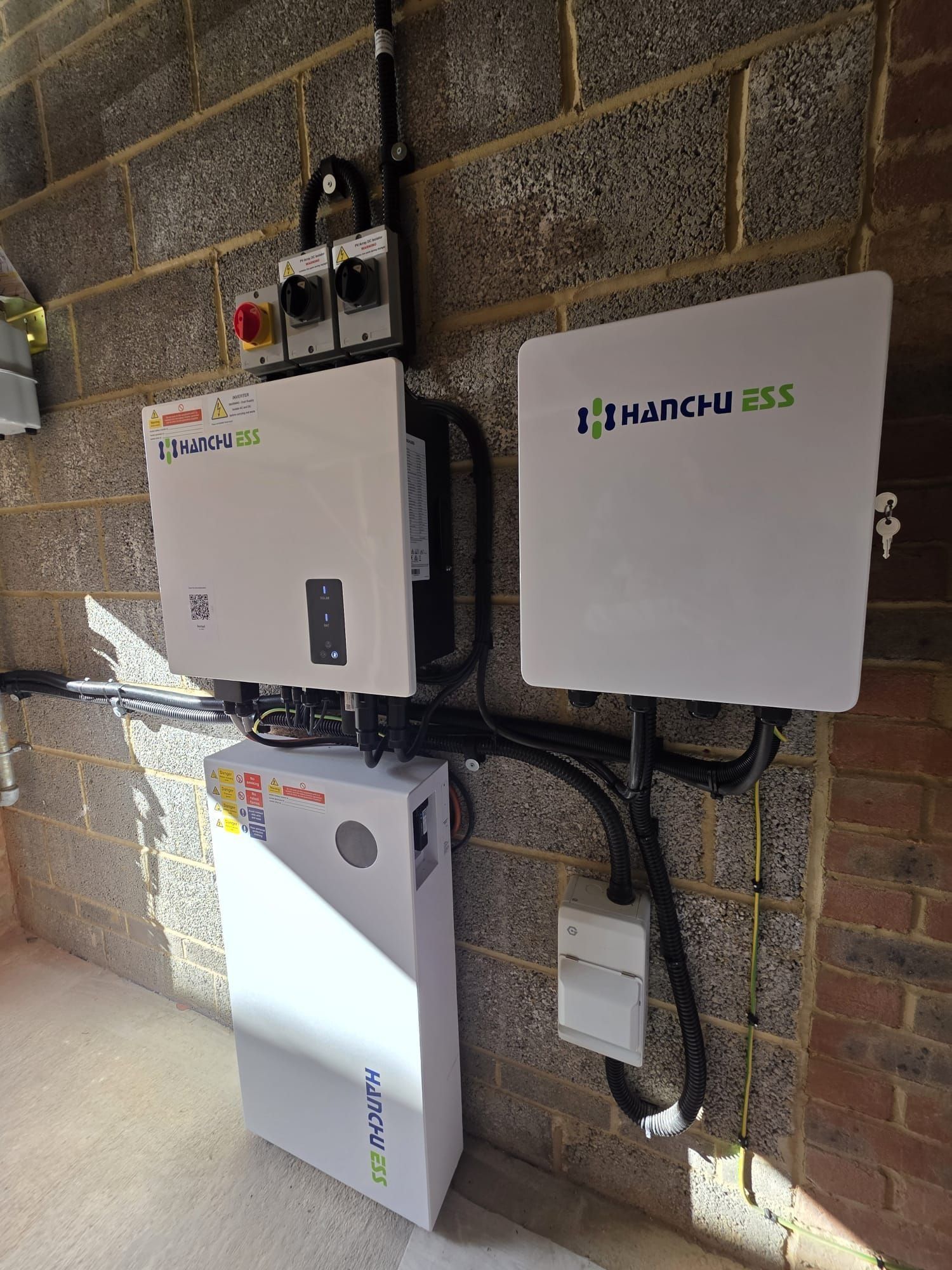
Our own photographs. They show the systems we design and fit — not specific completed jobs in Surrey, and no customer or address is identified.
The same certifications, whichever end of the patch you are on.






Other areas we cover
Worthing
7 miles · West Sussex
Have a lookShoreham-by-Sea
10 miles · West Sussex
Have a lookBurgess Hill
19 miles · West Sussex
Have a lookHaywards Heath
19 miles · West Sussex
Have a lookBillingshurst
10 miles · West Sussex
Have a lookChichester
21 miles · West Sussex
Have a lookHorsham
13 miles · West Sussex
Have a lookBrighton & Hove
17 miles · East Sussex
Have a lookLittlehampton
12 miles · West Sussex
Have a lookStorrington & Pulborough
7 miles · West Sussex
Have a lookPetersfield
30 miles · Hampshire
Have a lookEast Sussex
County page · the East Sussex edge of the patch
Have a lookEast Grinstead
27 miles · West Sussex
Have a lookDorking
26 miles · Surrey
Have a lookLewes
23 miles · East Sussex
Have a lookThe next step
Book your free survey
Thirty to forty-five minutes, at your house, at no cost. We look at the roof, the fuse board and how you actually use the place — then send you a clear quote with the assumptions shown.
- Call 01243 882444
- Email hello@solar-squirrel.co.uk
- Based Washington, West Sussex
If solar genuinely won’t pay for itself on your usage, we’ll say so and save us both an afternoon.
Rather see the numbers before you speak to anybody? Put your own bill on the house — it works out the size, the saving and the payback while you watch, and brings them down to this form with you.