

What goes on the wall
The lines we fit
Four lines. Which one ends up on your wall is decided at the survey, on the shape of your system — not before we have seen it.
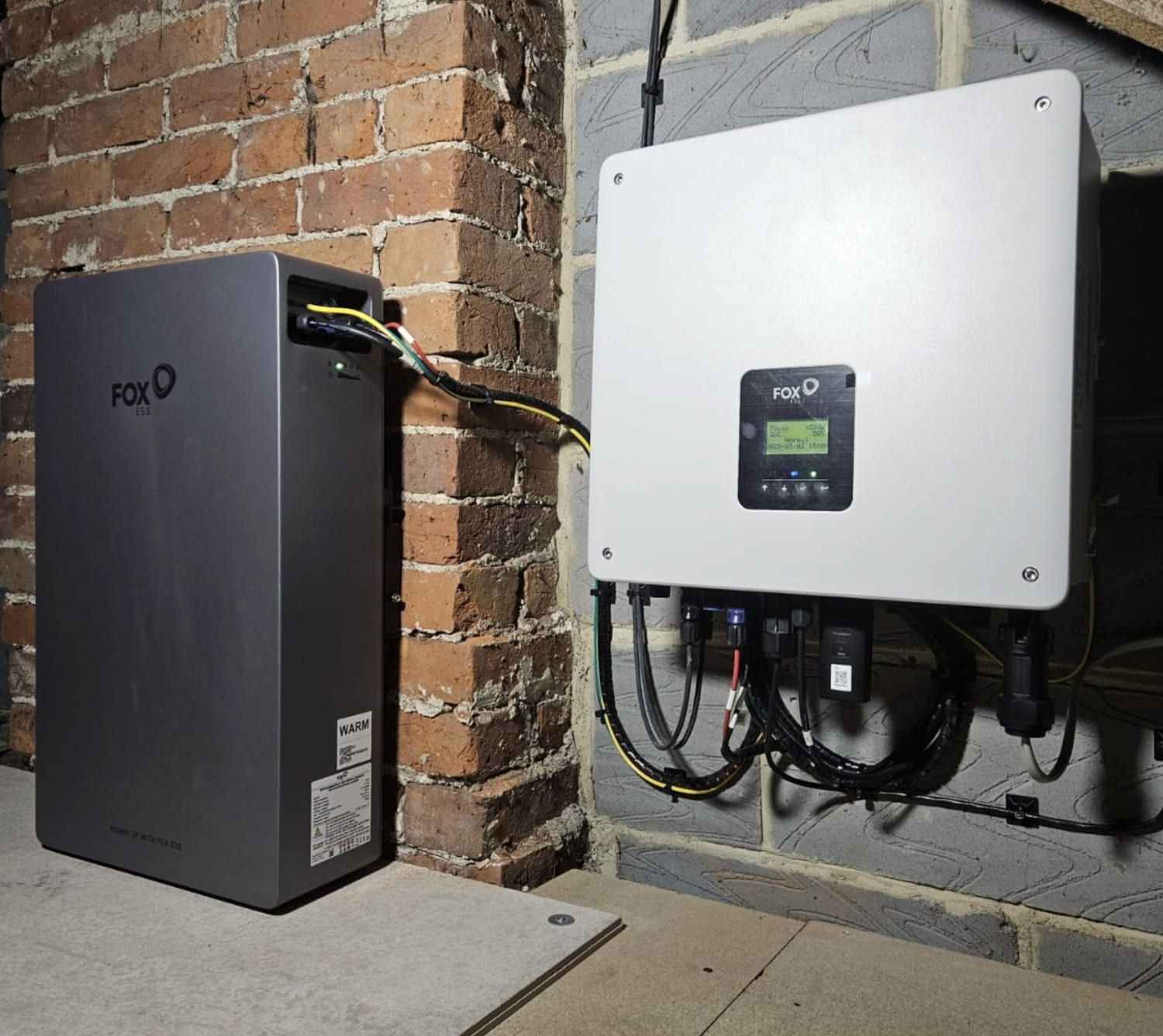
Fox ESS
The battery and inverter in our own install photography.
What we know about it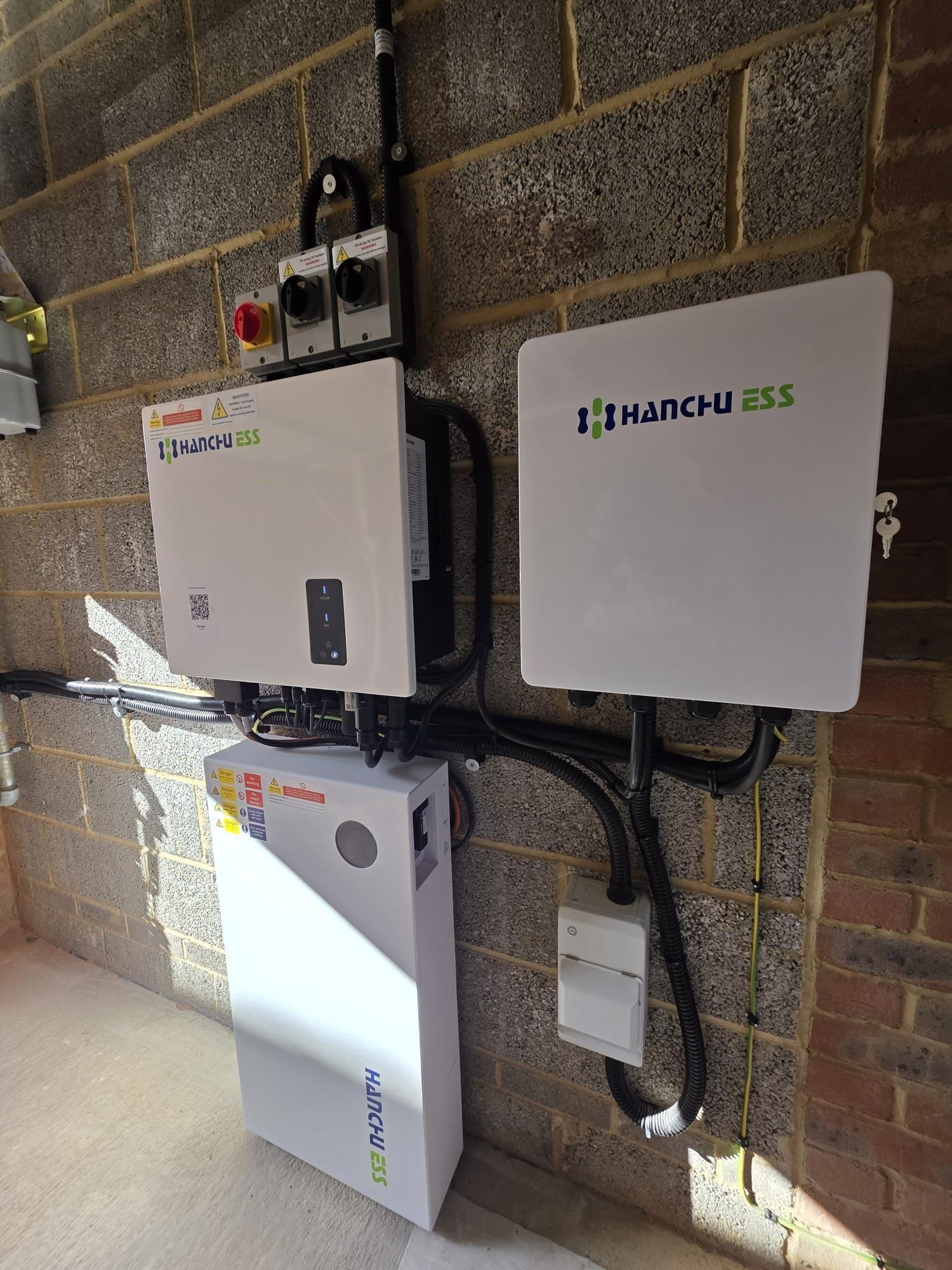
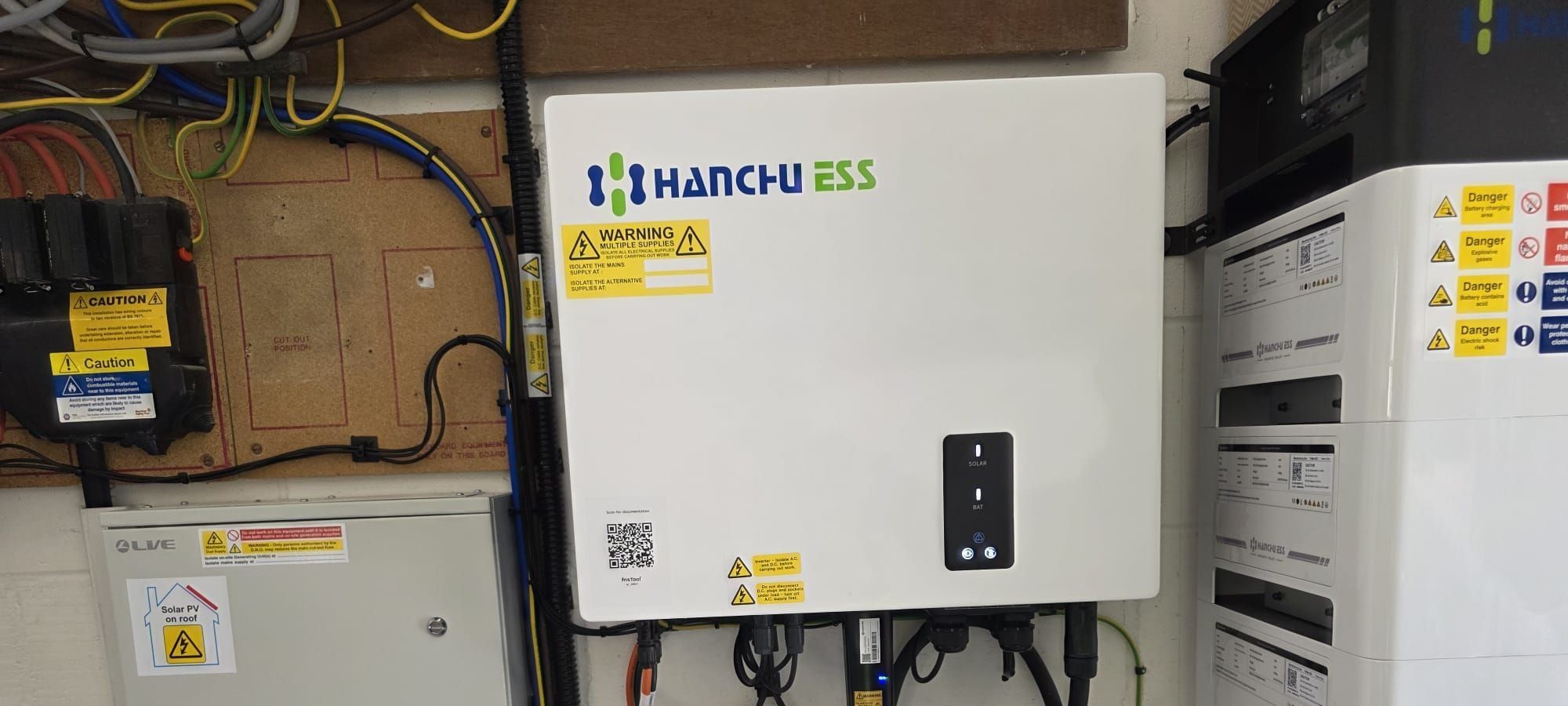
Hanchu ESS
A line we fit, and an unfamiliar name said out loud.
What we know about itSigenergy
One stack that inverts, stores and can charge the car.
What we know about itEcoFlow
PowerOcean: start with one battery pack and add to it.
What we know about itKit is only half of it. How battery storage actually works, what a full installation involves, and the questions people ask before choosing are all worth reading first.
How the choice actually gets made
Nobody sensible picks a battery off a website, ours included. The decision comes out of the visit, and it comes out of four things we can only see once we are standing in front of them.
-
What your house actually uses, and when
A household that is empty until six in the evening wants a different answer from one with somebody working at the kitchen table all day. The consumption pattern comes first, because everything downstream of it is a consequence.
-
Where the equipment has to live
A garage or a utility wall changes what is sensible; a cupboard under a stair changes it again. In our own installation photograph the battery and the inverter sit together on an internal brick wall with the isolators beside them — the usual arrangement where there is a wall to take it.
-
What the rest of the system is doing
Panels going on at the same time, panels already up, an EV charger on the list, or a board that has run out of spare ways. Battery and inverter from the same maker keeps the conversation between them simple, and it is a large part of why installers standardise on a line at all.
-
Whether it is a retrofit or a fresh install
A hybrid inverter handles the array and the battery in one unit rather than two, which on a retrofit usually means less kit on the wall and a shorter list of things to find room for.
Book the free survey and you get the answer for your house rather than the answer for a house. The rest of the questions are answered plainly, and how storage behaves day to day is worth ten minutes before anybody quotes you.
Our own drawing of a housed home battery — not a photograph, and not any manufacturer's product. The unit that gets proposed for your house is named at the survey.
One maker approval, and four lines we fit
One manufacturer has approved us as an installer — SolaX Power — and that mark sits on our accreditation wall alongside MCS, the NICEIC and the Renewable Energy Consumer Code. That is what a manufacturer approval looks like, and it is why that logo is up there.
The four lines on this page are a different thing. They are equipment we fit, and fit well, and none of them is shown here as an approval. What Fox ESS and Hanchu ESS have instead is our own installation photographs, with the equipment on the wall — evidence of the work rather than a logo. Sigenergy and EcoFlow are lines we fit that we have not yet photographed on a job of our own. We would rather say that here than let it be assumed.






What this page deliberately does not tell you
Most installer product pages carry a specification table. Ours does not, and it is worth saying why: we will not print a manufacturer figure we cannot stand behind, and a number that is right this quarter and wrong the next is worse than no number at all.
No capacities
Battery sizes move with the range, and the size that suits your house is a survey answer anyway. You get the capacity of the actual unit being proposed, in writing, with the quote.
No warranty terms
Warranty length and what it covers are the manufacturer's to state and theirs to change. We hand you the current terms for the exact unit rather than a figure we typed once and forgot.
No tier we bought
You will not find a gold, silver or platinum anything on this website, because we have not bought one. Where a maker has approved us we show the mark and call it by the maker’s own name. Where we hold nothing, we say that too.
The next step
Book your free survey
Thirty to forty-five minutes, at your house, at no cost. We look at the roof, the fuse board and how you actually use the place — then send you a clear quote with the assumptions shown.
- Call 01243 882444
- Email hello@solar-squirrel.co.uk
- Based Washington, West Sussex
If solar genuinely won’t pay for itself on your usage, we’ll say so and save us both an afternoon.
Rather see the numbers before you speak to anybody? Put your own bill on the house — it works out the size, the saving and the payback while you watch, and brings them down to this form with you.