

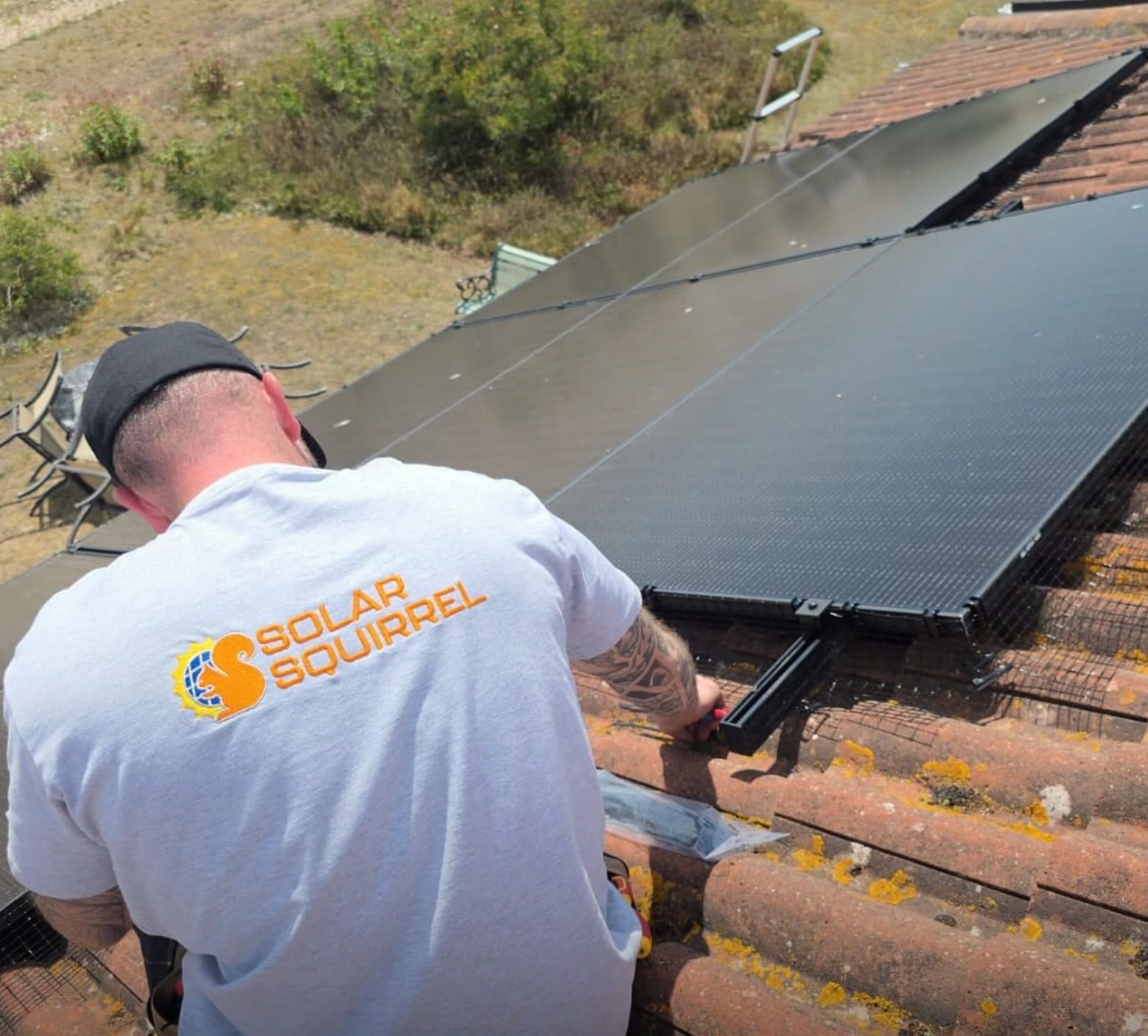
What we do
Solar Panel Installers in West Sussex
Smart designs, clean installs, built to last.
Panels are the easy part. The design is what decides whether you get twenty-five good years or a roof full of compromises — so that is where we spend the time.
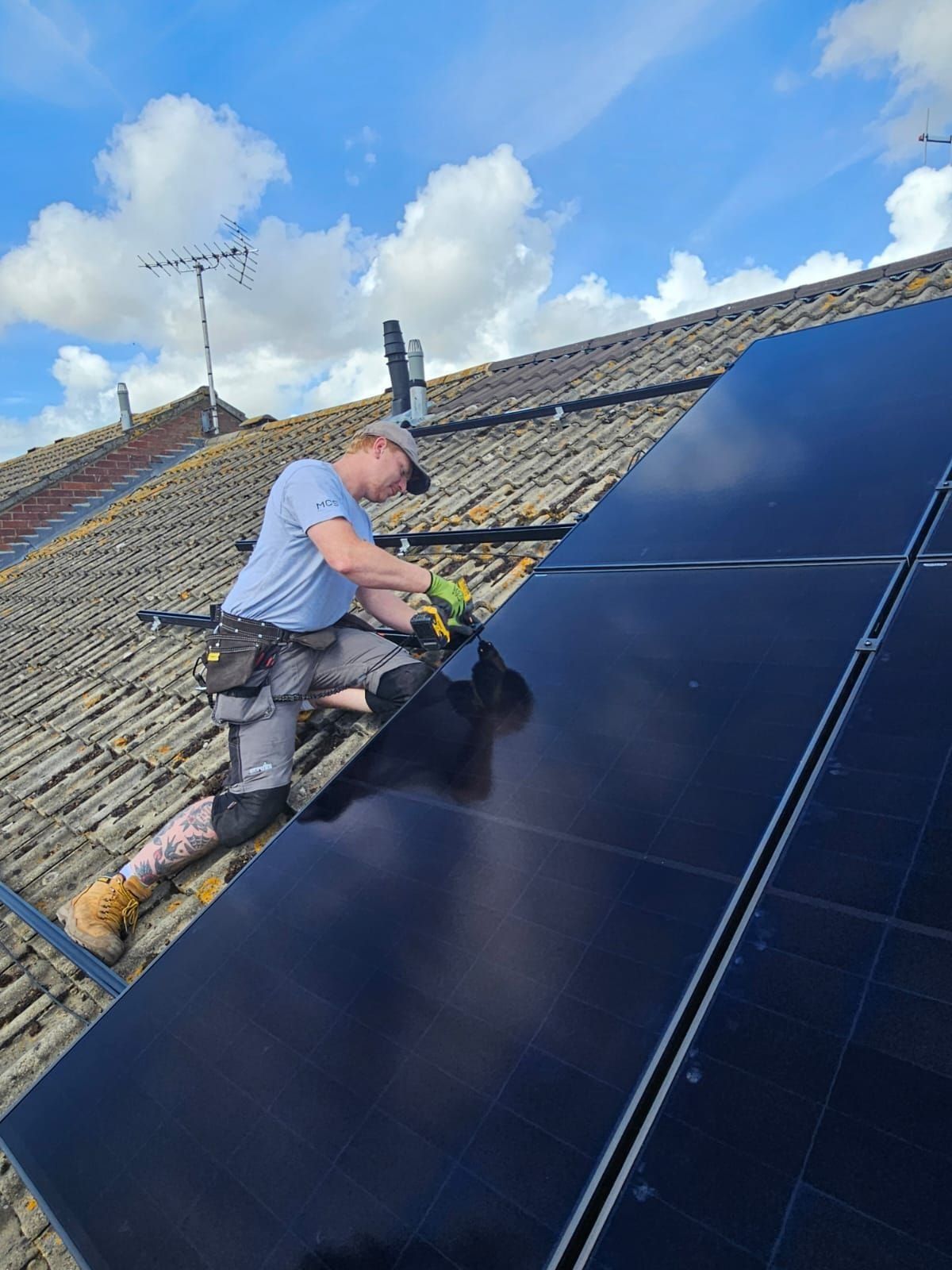
We design the array around your roof, not the other way round
Sussex roofs are rarely a clean rectangle. Hips, dormers, a chimney in exactly the wrong place, a conservation officer with a view — we survey the whole thing before we quote a single panel, so what lands on the day is what we drew.
That means shading is modelled properly, panel rows are set out to the tile course, and the array is placed where it earns its keep rather than where it happens to fit.
All-black panels, because most people want the roof to still look like a roof
Nearly every domestic system we fit now is all-black — black frame, black backsheet. From the pavement it reads as a dark panel of roof rather than a grid of silver lines.
Most panels last 25–30 years, and many come with warranties of 20+ years. Inverters and batteries might need replacing sooner, but we’ll talk you through it all.
The install itself is a tidy two days
Most domestic systems are installed in 1–2 days. Bigger or more complex systems might take a little longer. Scaffold goes up, panels and mounts go on, the electrical side gets tied in, and everything gets tested and signed off.
Dust sheets down, cables clipped and run properly, and the loft left as we found it. You mostly make the tea.
Bird mesh, before you need it
Pigeons will nest under an array given half a chance, and clearing them out later costs more than preventing them. We fit mesh along the perimeter as part of the job on roofs that need it — it clips to the panel frame, so nothing is screwed into your tiles.
Where in West Sussex we actually work
We are based in Washington, at the foot of the Downs, and the honest map of our solar work is the county around it. Storrington and Pulborough are three and seven road miles away; Steyning, Henfield and West Chiltington sit in the same fold of the Downs; Worthing is eight miles down the A24 and Shoreham-by-Sea ten down the A283; Littlehampton, Arundel and Billingshurst are ten to thirteen; Horsham is thirteen up the A24; Brighton and Hove, Burgess Hill and Haywards Heath are seventeen to nineteen miles, and Chichester twenty-one along the A27. Each of those towns has its own page, written from its own roofs, planning position and network operator rather than from a template.
Beyond that ring we will still quote, but we say so plainly: the further the van travels, the more the day costs, and a two-storey scaffold in Petersfield is a different job from a bungalow in Ashington.
Three roof coverings decide most West Sussex jobs
Modern concrete interlocking tile is the easy one: standard hooks, predictable courses, a clean install. Clay peg and plain tile, which cover a great deal of the older stock from Chichester to Steyning, need the array set out to the tile line and a careful hand with the hooks, because the tiles are small and brittle. Horsham stone, the thick sandstone slabs on older roofs across the district, is a different conversation altogether: heavy, irregular and unforgiving, and almost never a standard mounting; our solar panel installers in Horsham page covers the stone roofs and the district’s 39 conservation areas town by town.
Slate turns up on the coast and in the town centres, often at a shallow pitch with parapets in the way. We survey the covering before we quote, because it decides the fixing, the scaffold and sometimes whether the roof should carry an array at all.
Conservation areas, the National Park and what is actually permitted
West Sussex is thick with designations. Horsham District alone lists 39 conservation areas, four of them in Horsham town; Worthing has 27; Adur lists seven; Mid Sussex 36; Brighton and Hove more than thirty; and the South Downs National Park runs the whole length of the county, including our own village. The rule people get wrong is this: in a conservation area or the National Park, roof-slope panels on a house are still permitted development. What the regulations exclude is a panel on a wall, balcony or roof enclosure fronting a highway, and since December 2023 a flat-roof array on that kind of land needs prior approval. A listed house sits outside the permitted-development class entirely and needs listed building consent.
An Article 4 direction can remove roof rights in a particular conservation area, and some West Sussex councils have them, so we check the address against the council map before the survey and tell you whether anything has to be applied for. In most cases the answer is no.
Two network operators, one county
Every inverter has to be notified to the electricity network operator before it is switched on, and West Sussex has two. UK Power Networks covers most of the county we work in, from Horsham and Burgess Hill down to the coast at Worthing, Shoreham-by-Sea and Brighton; Scottish and Southern Electricity Networks covers the west, towards Chichester, Bognor Regis, Billingshurst and Petworth. The MPAN on your bill says which. The threshold is set by the industry code: up to 16 amps per phase, which is 3.68 kW, is a G98 notification; anything larger needs a G99 application approved first. We make the submission and you get the acknowledgement.
What a solar panel installer in West Sussex should be able to show you
The certification that makes the export payment possible: for systems up to 50 kW, Ofgem’s guidance is that a Smart Export Guarantee supplier asks for MCS certification, or an equivalent, covering both the installation and the installer. The electrical registration for the circuit: we are the electricians, registered with the NICEIC, and the certificate for the new circuit is ours. The scaffold, in the quote, not as an extra. The network notification, done by the installer. The manufacturer registration for the panels, the inverter and any battery, in your name, with the warranty terms for the exact configuration fitted. And a photograph of their own work on a real Sussex roof, which is the cheapest test there is and the one most websites fail.
If you want a national yardstick to hold a quote against, the Energy Saving Trust put the cost of an average home solar system at around £7,600 when we read its advice page in October 2026, with a 4.5 kWp system typically covering 20 to 30 square metres with around twelve panels. A West Sussex job with a battery, bird mesh and a two-storey scaffold sits above that; a bungalow with a short cable run can sit below it.
Beyond West Sussex: the edges of the patch
Our own coverage statement says “West Sussex, Hampshire and parts of Surrey and the South Coast”, and two of those edges now have a page written from their own councils, network operator and measured road miles rather than from this one: solar panels in Surrey for Haslemere, Cranleigh, Dorking and Horley, and solar panels in East Sussex for Lewes and the coast to Newhaven — each with its own cost and grants pages. The Hampshire end — Petersfield, Liss and Liphook — is covered from our Petersfield page. The rule on every edge is the thirty-mile line from Washington: inside it we quote as we do here, on it we say so, and beyond it — Portsmouth, Guildford, Eastbourne — we will tell you plainly that the travel is in the price.
The questions a quote raises, answered in order
Before the panels there is the survey and the scaffold — what the thirty-to-forty-five-minute survey measures and why the scaffold is in every quote. Then the size, which comes from the bill rather than the roof — the five numbers a system is sized on — and, if a car is in the picture, how the array, the battery and the charger are sized as one system. Then the paperwork the inverter needs, G98 or G99; what the surplus is worth, on export tariffs compared; and what the warranty actually promises, in how to read a solar and battery warranty. The words in all of them are in the glossary.
What we publish about cost and saving
- The cost depends on the size of your home and the amount of energy you use, but most domestic solar panel installations in the UK typically start from around £4,000 to £6,000.
- On average, UK homeowners save £300–£600 per year, sometimes more if you add battery storage or work from home during the day.
This is a modelled figure and it sits a little above the “£4,000 to £6,000” we publish as a typical starting point — your own price comes from the survey, not from this.
Every figure above is quoted whole, with its own caveat attached — the rest of the questions are answered here.
What it looks like when we’re there
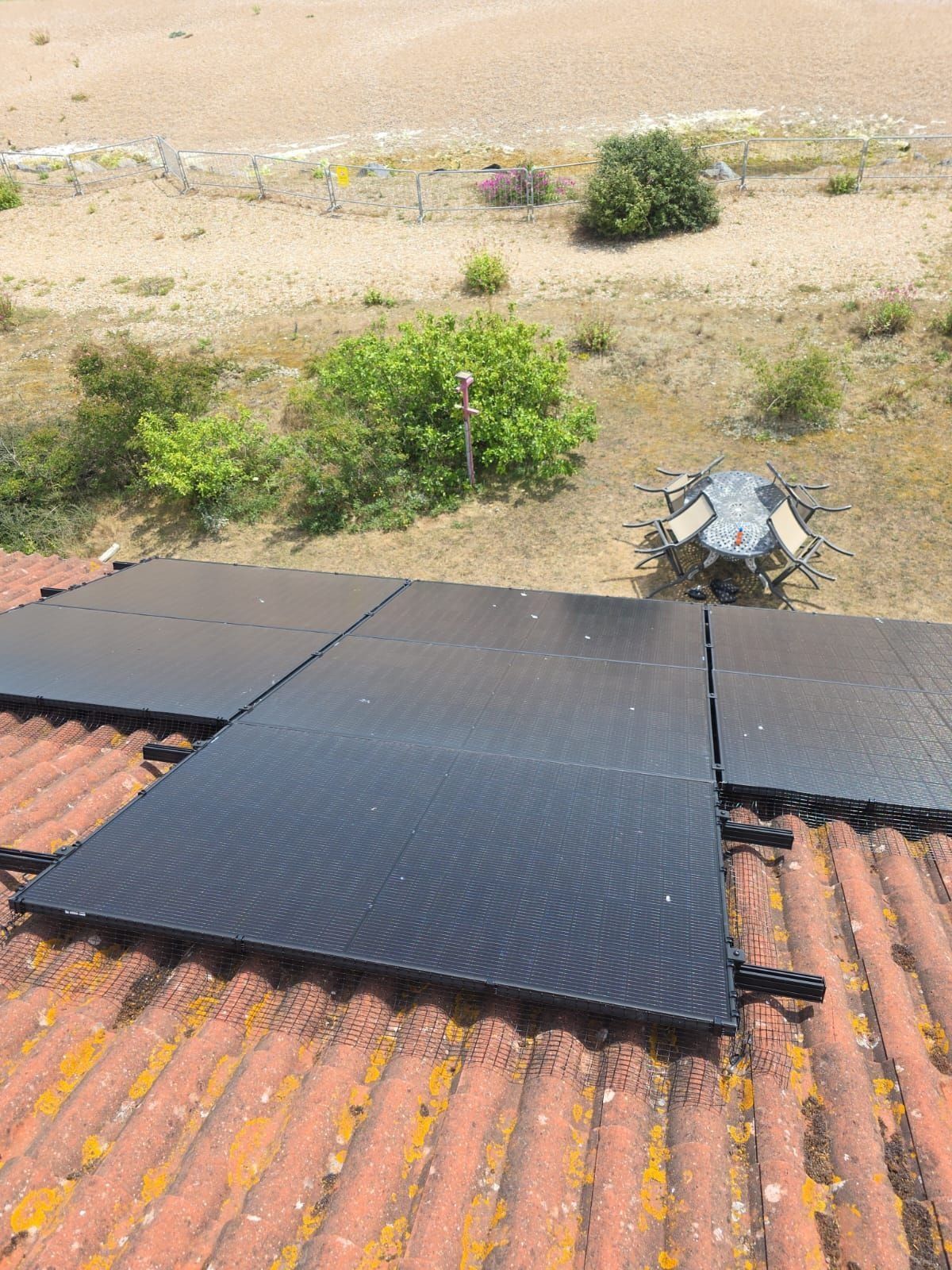
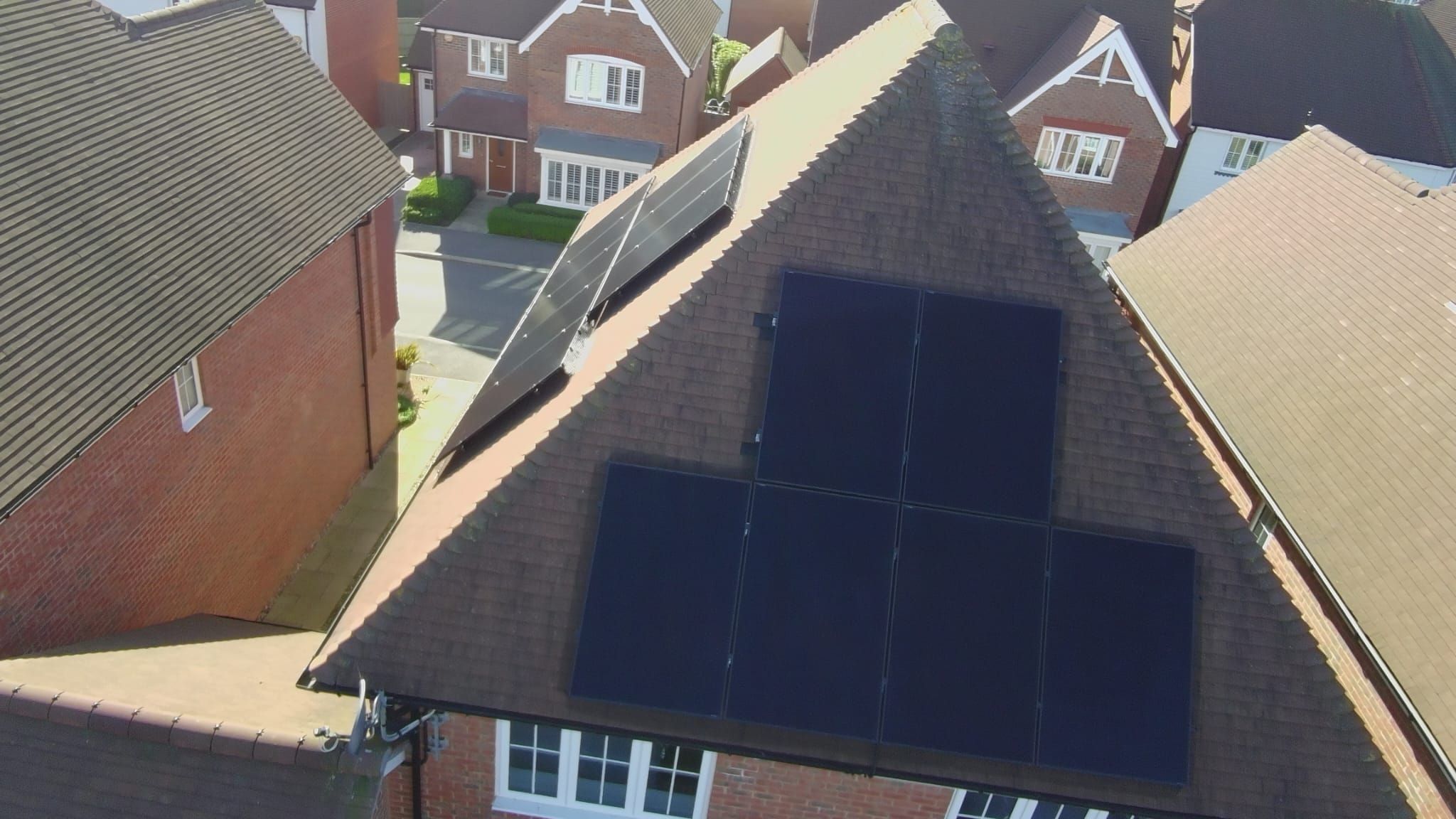
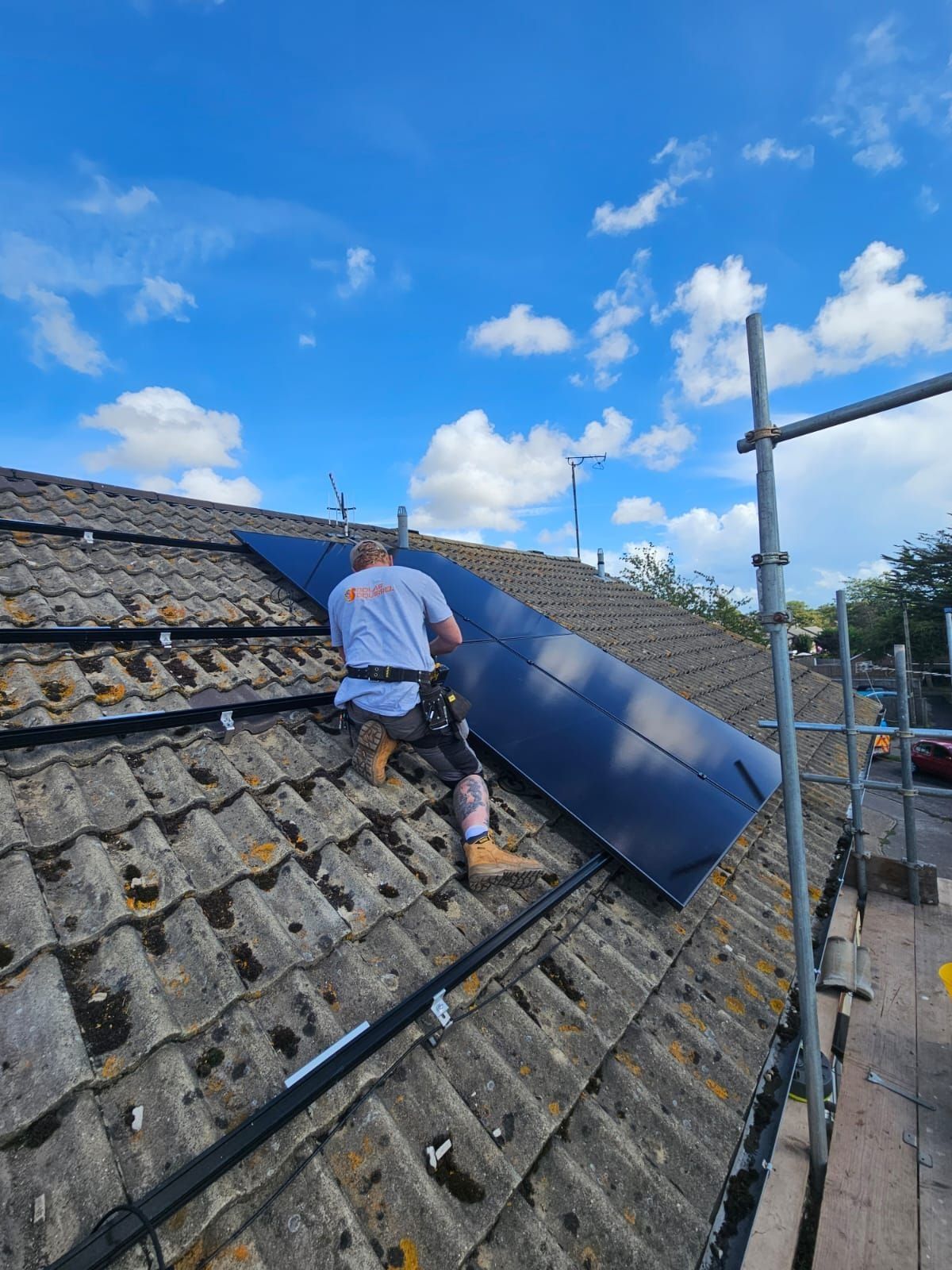
Our own photographs. They show the systems we design and fit — not specific completed jobs, and no customer or address is identified.
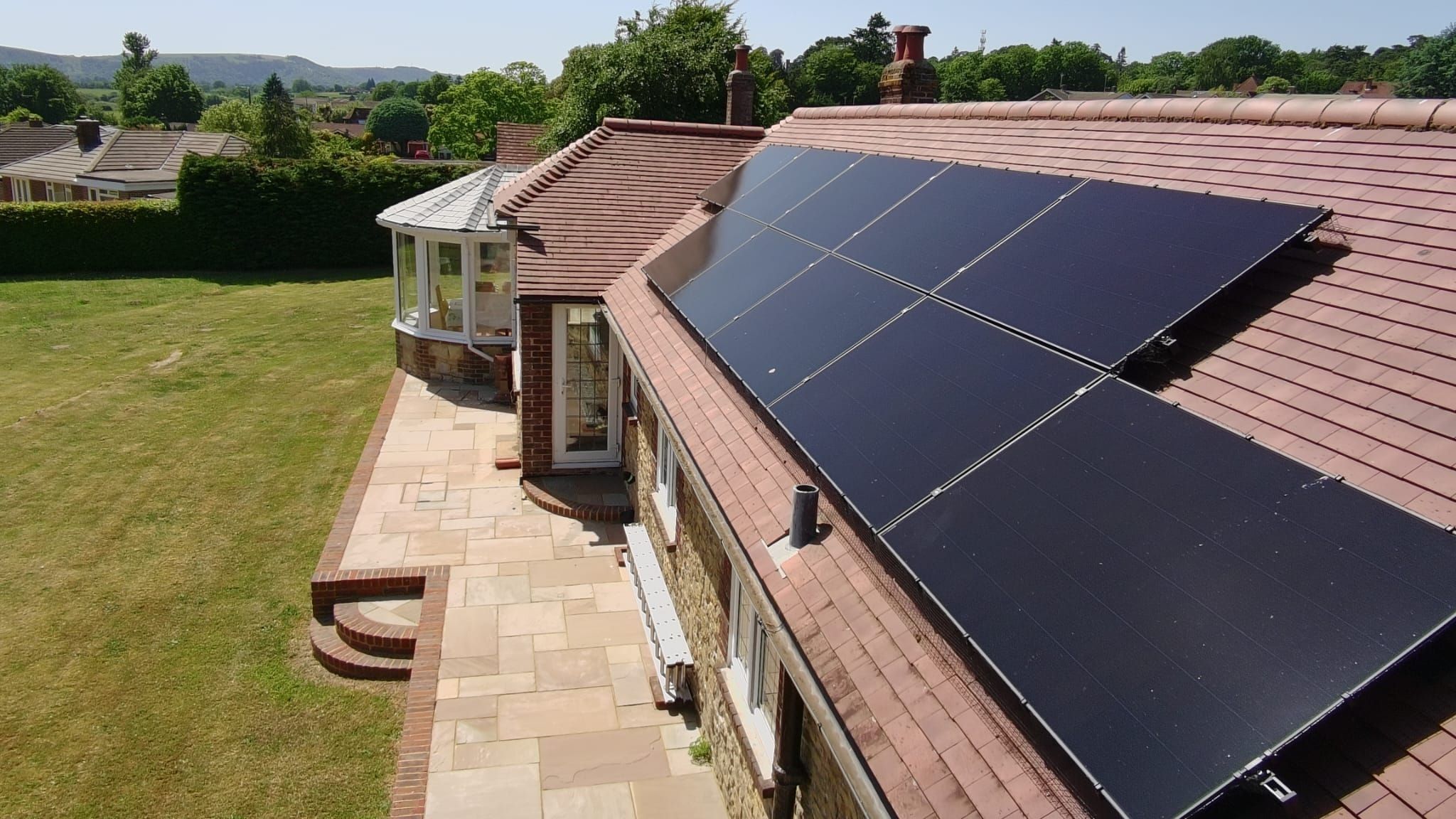
Why nearly every roof we do now is all-black
Black frames, black backsheets and why the silver grid disappeared from Sussex roofs. What you gain, what it costs, and when it isn't worth it.
Read it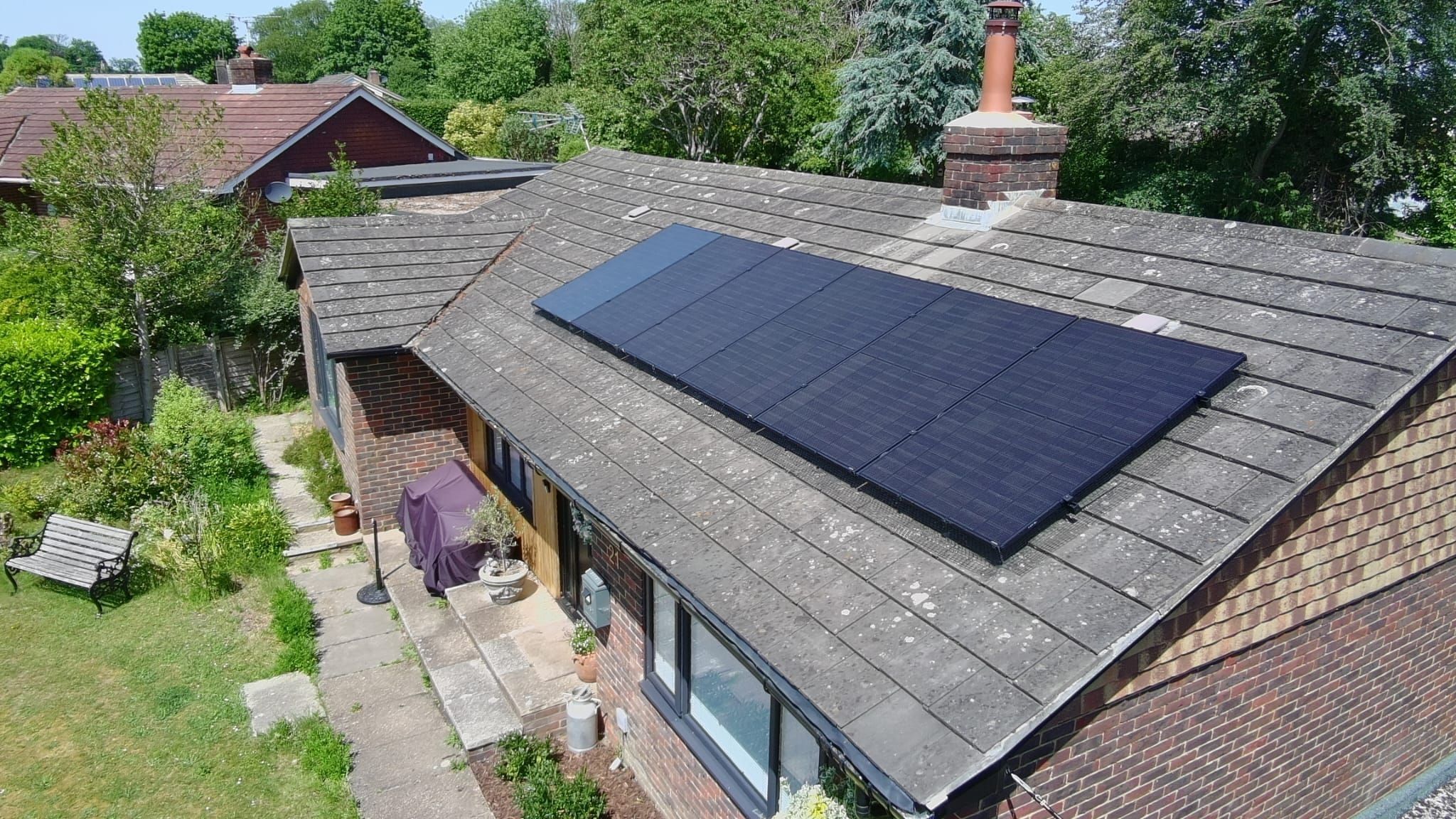
Horsham stone, flint and the Sussex roof problem
Some local roofs make solar straightforward. Others need a different conversation entirely. A survey-level guide to what we find on West Sussex roofs.
Read it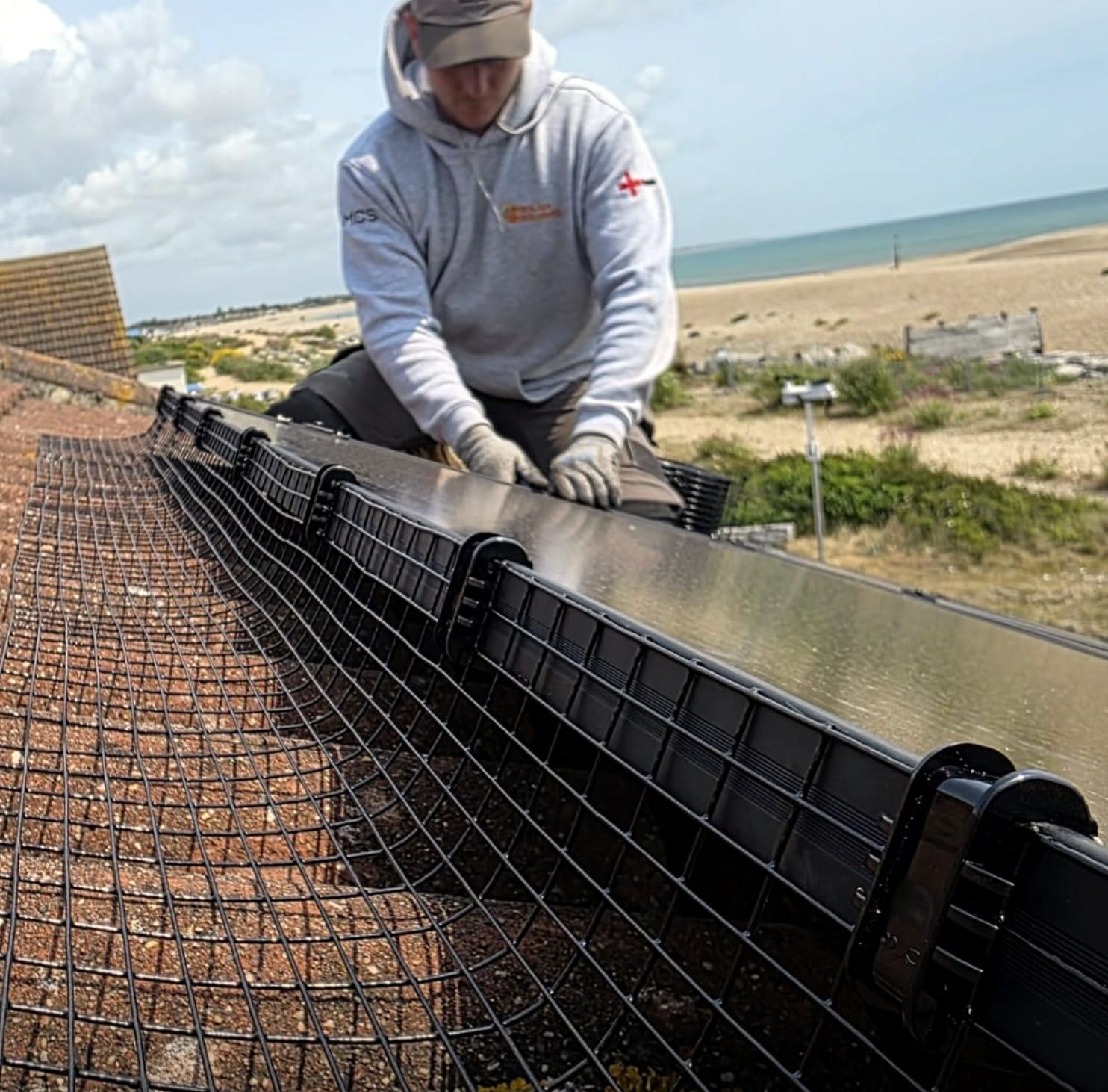
Pigeons, panels and why we fit mesh as part of the job
How pigeons get under solar panels, what it costs you if they settle, what the law allows, and why mesh clipped on at install beats a clean-out later.
Read itThe next step
Book your free survey
Thirty to forty-five minutes, at your house, at no cost. We look at the roof, the fuse board and how you actually use the place — then send you a clear quote with the assumptions shown.
- Call 01243 882444
- Email hello@solar-squirrel.co.uk
- Based Washington, West Sussex
If solar genuinely won’t pay for itself on your usage, we’ll say so and save us both an afternoon.
Rather see the numbers before you speak to anybody? Put your own bill on the house — it works out the size, the saving and the payback while you watch, and brings them down to this form with you.