

17 miles from the workshop
Solar panels in Brighton & Hove
The biggest roofscape on this stretch of coast, and the most complicated. Brighton is dense, steep, listed in places and windy everywhere.
What we find on Brighton & Hove roofs
Rear elevations and flat roofs do most of the work in Brighton. A ballasted flat-roof array is often the honest answer — with the prior-approval step on designated land handled by us.
Distance, geography, housing stock and the planning position all change how a system gets designed. These are the ones that decide it in Brighton & Hove.
What we take into account here
- Approximately 17 road miles east of Washington along the A283 and A27.
- A city on the Channel coast, built up the chalk slope of the South Downs — street gradients that make scaffold access a genuine design input.
- Dense Regency and Victorian terraced stock, much of it three and four storeys, frequently with slate at a shallow pitch and parapets or bay projections in the way.
- More than thirty conservation areas across the city and a very large listed-building count in the Regency squares. Roof-slope panels on a house stay permitted development inside a conservation area; what the national rules exclude is a panel on a wall or balcony fronting a highway, a flat-roof array without prior approval, and anything on a listed house.
- Exposed coastal position with high wind loading off the Channel; fixings and clamping are specified to the exposure, not to the catalogue.
- Falls within the “South Coast” of our own published coverage statement.
- The network operator for the BN1, BN2 and BN3 postcodes is UK Power Networks, who receive the G98 or G99 notification we make for every inverter; the MPAN on your bill confirms it.
- Brighton & Hove City Council runs a Net Zero programme with a citywide energy study behind it, and its conservation-area pages carry their own guidance on solar panels, external wall insulation and heat pumps in designated areas.
- Solar PV, battery storage, EV chargers and electrical work, all from the Washington base.
Why the rear slope and the flat roof do most of the work
On a three- or four-storey terrace the front slope is shallow slate with a parapet in the way and a street below that makes scaffold expensive. The back addition, the rear slope or a flat roof on a garage or extension is usually where the array earns its keep, and it keeps the street elevation untouched, which is what the conservation officer wants anyway. A ballasted flat-roof system puts no holes in the covering; it needs a roof that can take the weight and, on designated land, the prior-approval step below.
The flat-roof rule that matters more in Brighton than anywhere
Under the national permitted-development class, panels on the roof slope of a house in a conservation area do not need planning permission, even street-facing. Two things do: a panel on a wall, balcony or roof enclosure fronting a highway, and, since December 2023, a flat-roof array on designated land, which needs prior approval from the council before it goes up. Given how much of the city’s solar ends up on flat roofs, that second rule is the one to know. A listed house needs listed building consent, and an Article 4 direction can remove roof rights in a specific area, so we check the address against the council’s maps before the survey and put the answer in writing. Whether the house is one home or four is the first battery question in the city: battery storage in Brighton & Hove and can a Brighton flat have a battery? answer it honestly.
Wind, salt and the fixings
The city faces the Channel. Wind loading on an exposed roof is a design input, salt within a mile of the front corrodes anything that was not specified for it, and a ballasted array has to be weighted for the exposure of that roof rather than a catalogue average. We specify marine-grade fixings and clamps as standard on the coast. For the county picture, our solar panel installers in West Sussex page covers the roof coverings and network operators; Shoreham-by-Sea, the next town west along the A259, has a page of its own.
Where the battery lives in a Brighton terrace
On a three-storey terrace the array is on the back and the battery is in the basement, and the basement is the PAS 63100 conversation: ventilation, detection, the escape route and a wall that will take the weight. A flat or a maisonette adds the question of who owns the wall. We settle both before we propose a line, and the inverter is notified to UK Power Networks as a G98 or G99 before it is energised.
For a Brighton house with the car on the street rather than a drive, the integrated stack a Sigenergy installer proposes has less of its advantage, because the charger half of it has nowhere to go; a Hanchu ESS or Fox ESS battery with a hybrid inverter is the more usual shape. On a house in Hove with a drive it can be the other way round. The survey tells us which. East of the city the rules change at the Park boundary and the money does not: what a system costs in East Sussex is worked through from the Lewes yield figure, the best of the three county points we measured. For a fault, a board or a flat’s wiring on its own, electricians in Brighton & Hove is the page.
Solar panel installers in Brighton & Hove: how a job runs
Rear slopes and flat roofs do most of the work in Brighton, and the survey is where that gets decided. A front slope on a Regency or Victorian terrace is often shallow slate with a parapet in the way and a street below that makes scaffold expensive; the rear slope or a ballasted flat-roof array is frequently the honest answer, and a flat-roof array on designated land — which most of the thirty-plus conservation areas are — needs prior approval, which we handle. The survey is thirty to forty-five minutes; the gradient of the street is a design input in its own right.
The fixings and clamping are specified to the Channel exposure, not to the catalogue. Installation is typically one to two days once the scaffold is up; the certificate is signed by our own NICEIC-registered electricians, the registrations arrive in your name, and the inverter is notified to UK Power Networks under G98 or applied for under G99 above 16 amps per phase. On a listed house in the squares the roof is a consent question first, and we say so.
Battery storage, EV charging and the electrics in Brighton & Hove
Whether the house is one home or four is the first battery question in the city, and battery storage in Brighton & Hove and can a Brighton flat have a battery? answer it honestly; electricians in Brighton & Hove is the same team on the board.
A car in a terrace city is its own question, which EV charger installation in Brighton & Hove takes on. The council says over 1,000 chargepoints have been installed in the city to date, that 86% of residents without off-street parking now live within a three-minute walk of a public chargepoint, and that Char.gy has been selected to supply lamp-column chargepoints — so a house without a drive has a public answer. A house with its own off-street space can have a home charger, and a flat owner or renter with private off-street parking can claim 75% of it up to £500 under the government’s grant.
What solar costs in Brighton & Hove, and what it pays
Most domestic installations typically start from around £4,000 to £6,000 depending on the size of the home and the amount of energy it uses; domestic solar and battery storage currently attract zero-rate VAT; the published average saving is £300–£600 per year, sometimes more with a battery or by working from home during the day. In Brighton the scaffold and the prior-approval step can move the line more than the panels do, and the survey says which before you see a figure.
PVGIS models a south-facing 4.5 kWp array at Lewes, the nearest point we publish, at about 1,177 kWh per kWp a year — the best of the three regions — and a rear slope or a ballasted flat roof set to the south in the city will sit close to it. The surplus is exported at the Smart Export Guarantee rate, 12p per kWh in our reference as at June 2026, against about 26p to buy a unit back. The calculator runs your bill; Brighton’s roofs is the roof side in full.
Brighton & Hove in numbers
Seventeen road miles east via the A283 and A27. More than thirty conservation areas and a very large listed-building count in the Regency squares. Dense Regency and Victorian terraced stock, much of it three and four storeys. UK Power Networks, group J, for BN1, BN2 and BN3. Over 1,000 public chargepoints installed, per the council. The city council’s Net Zero programme with a citywide energy study behind it. Neighbours: Shoreham-by-Sea west, Lewes and the East Sussex edge east.
Questions we get asked in Brighton & Hove
Do solar panels in a Brighton conservation area need planning permission?
On the roof slope of a house, usually not: roof panels stay permitted development in a conservation area. You need permission or prior approval for a panel on a wall or balcony fronting a highway, for a flat-roof array on designated land, which has needed prior approval since December 2023, and for anything on a listed house. We check the address against the council’s maps before the survey.
Can you fit solar on a Brighton terrace with a shallow slate front roof?
Often, but rarely on the front slope. The rear slope, a back addition or a flat roof usually carries the array, with marine-grade fixings for the coastal exposure and a ballasted system where the roof is flat. The survey looks at the structure, the access and the planning position together, and the quote follows.
How much do solar panels cost in Brighton & Hove?
Most domestic installations typically start from around £4,000 to £6,000 depending on the size of your home and the amount of energy you use, with zero-rate VAT. On a terrace the scaffold line and a flat-roof prior-approval step are what move the figure; the survey gives you a written one for your roof.
Can I charge an electric car at home in a Brighton terrace without a drive?
Not from a home charger — a charger needs your own off-street parking, and a cable across the pavement is not the answer. The city’s public network is the route: over 1,000 chargepoints to date and lamp-column chargepoints from Char.gy, with 86% of residents without off-street parking within a three-minute walk of one, per the council.
The systems that suit Brighton & Hove
Three arrangements cover most of what goes on a East Sussex roof. Which one your house wants is decided at the survey, on the roof itself — not from a satellite image.
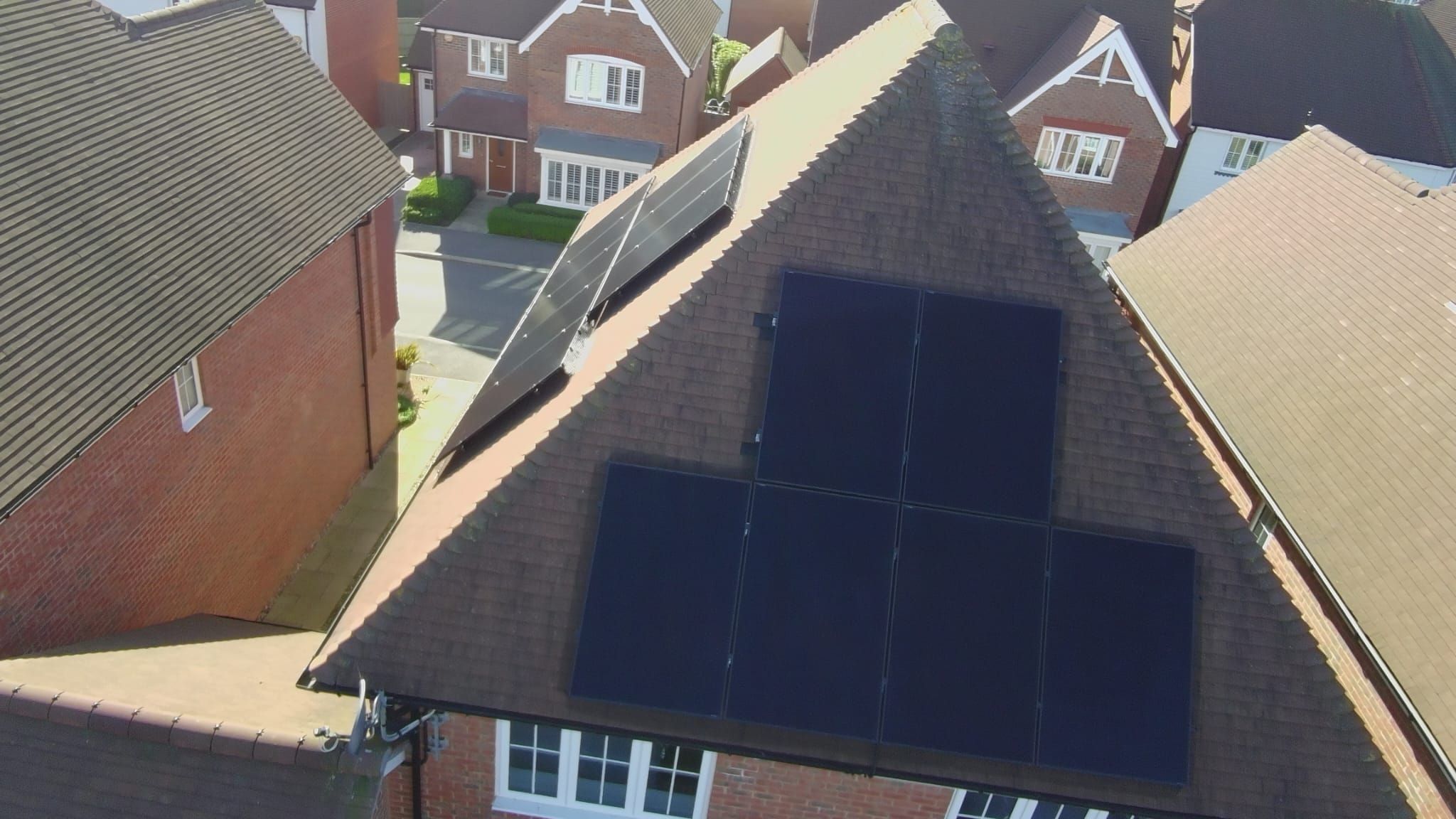
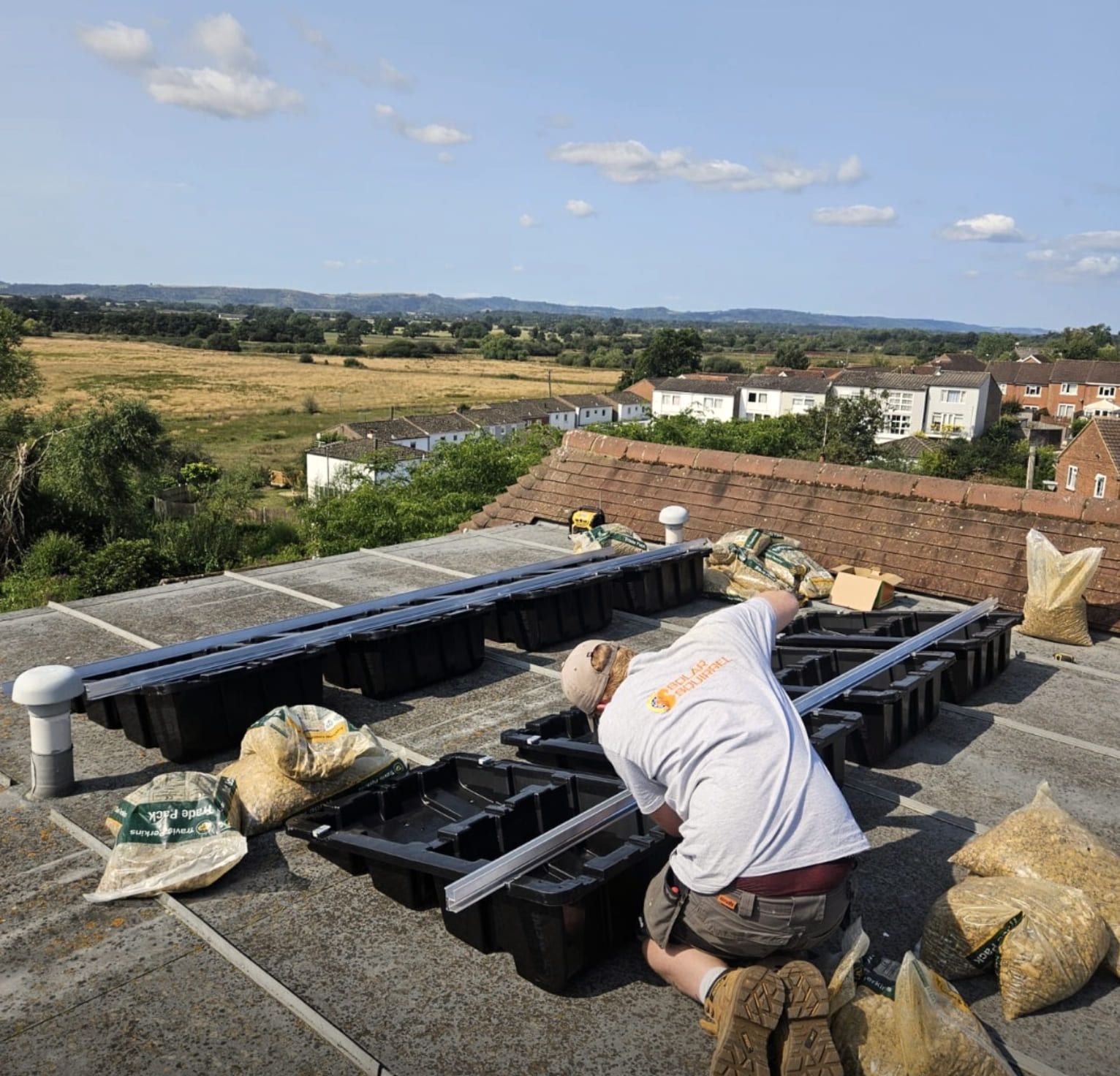
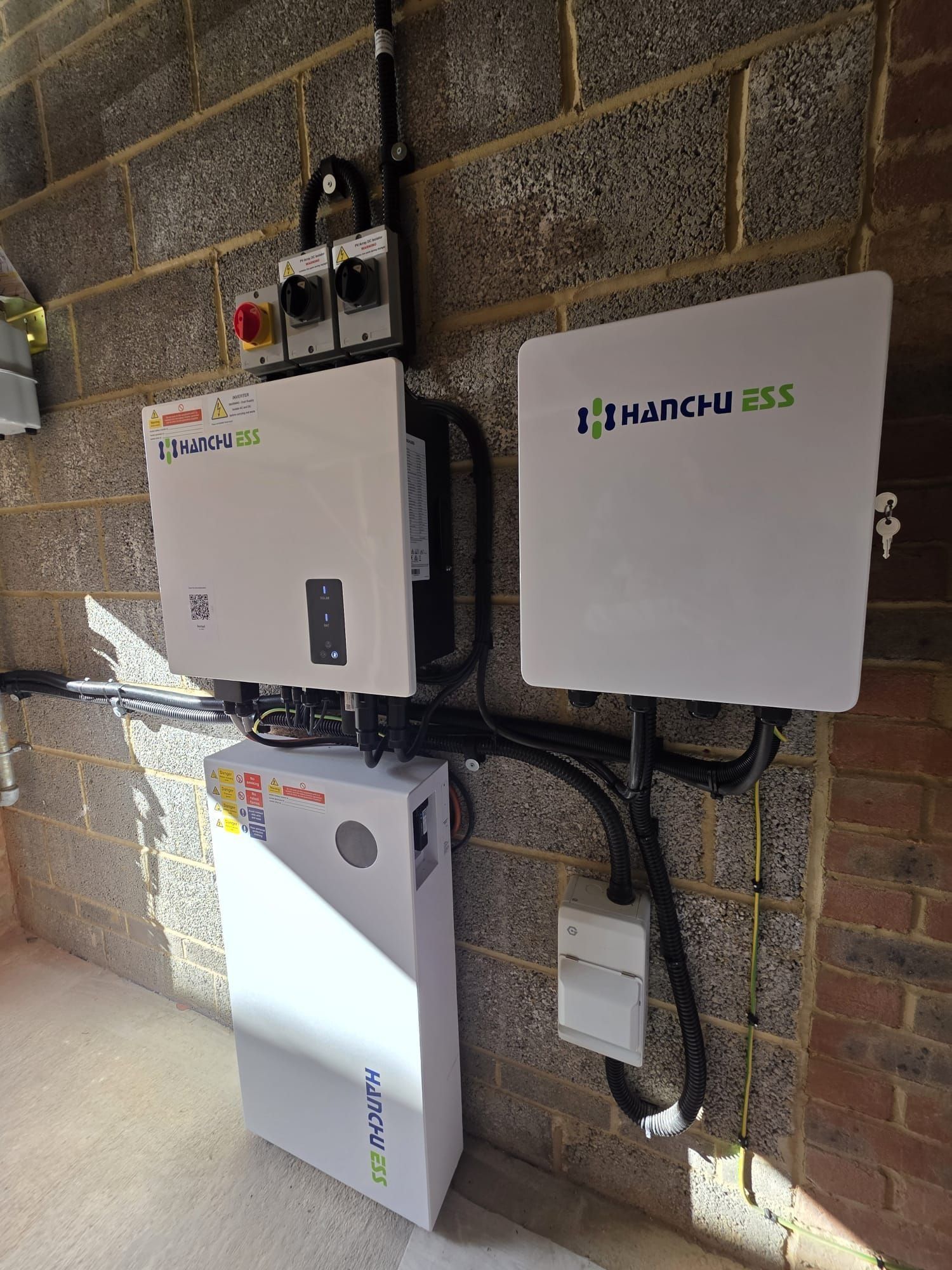
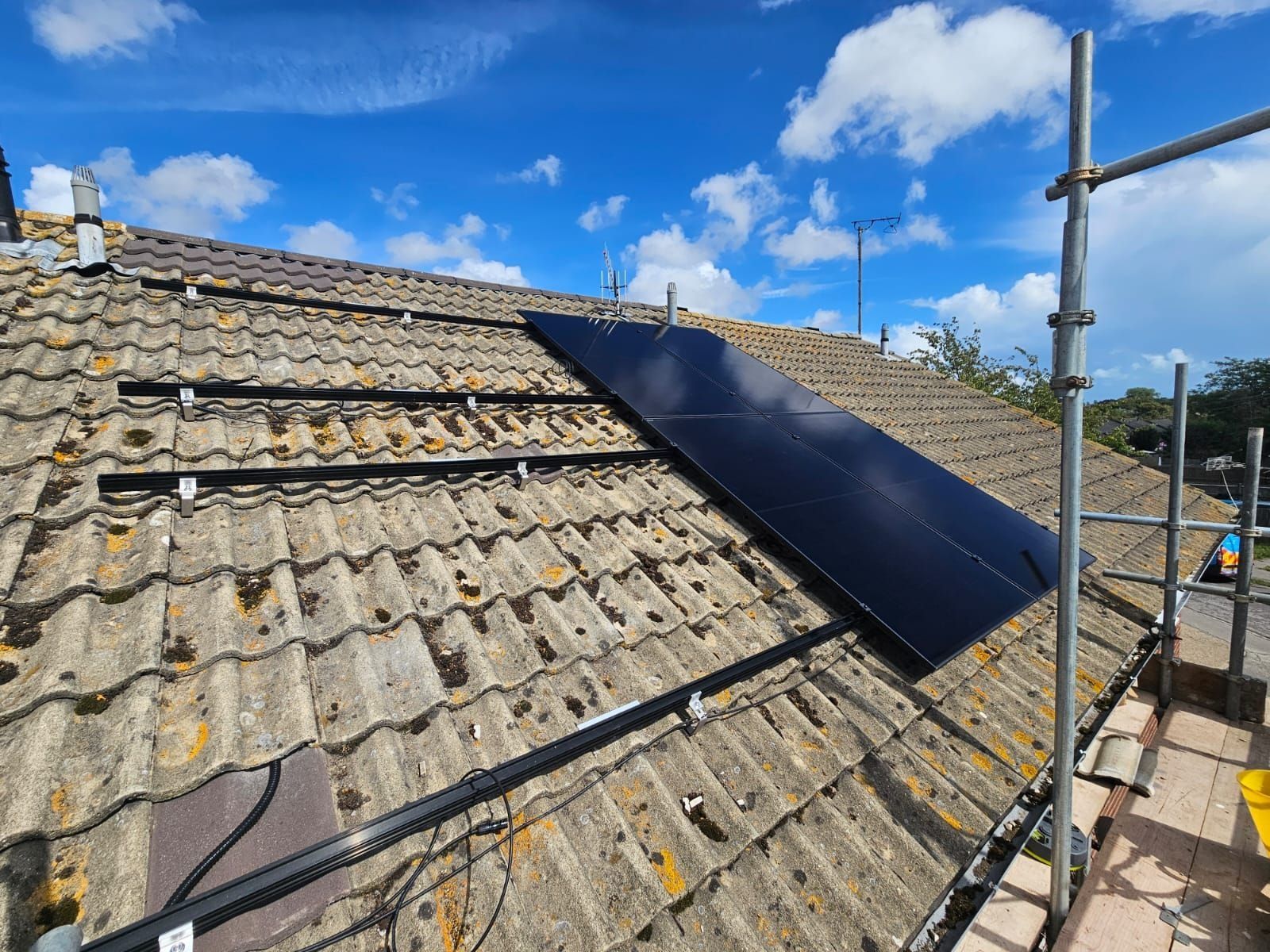
Our own photographs. They show the systems we design and fit — not specific completed jobs in Brighton & Hove, and no customer or address is identified.
The same certifications, whichever end of the patch you are on.






Other areas we cover
Worthing
7 miles · West Sussex
Have a lookShoreham-by-Sea
10 miles · West Sussex
Have a lookBurgess Hill
19 miles · West Sussex
Have a lookHaywards Heath
19 miles · West Sussex
Have a lookBillingshurst
10 miles · West Sussex
Have a lookChichester
21 miles · West Sussex
Have a lookHorsham
13 miles · West Sussex
Have a lookLittlehampton
12 miles · West Sussex
Have a lookStorrington & Pulborough
7 miles · West Sussex
Have a lookPetersfield
30 miles · Hampshire
Have a lookSurrey
County page · the Surrey edge of the patch
Have a lookEast Sussex
County page · the East Sussex edge of the patch
Have a lookEast Grinstead
27 miles · West Sussex
Have a lookDorking
26 miles · Surrey
Have a lookLewes
23 miles · East Sussex
Have a lookThe next step
Book your free survey
Thirty to forty-five minutes, at your house, at no cost. We look at the roof, the fuse board and how you actually use the place — then send you a clear quote with the assumptions shown.
- Call 01243 882444
- Email hello@solar-squirrel.co.uk
- Based Washington, West Sussex
If solar genuinely won’t pay for itself on your usage, we’ll say so and save us both an afternoon.
Rather see the numbers before you speak to anybody? Put your own bill on the house — it works out the size, the saving and the payback while you watch, and brings them down to this form with you.