

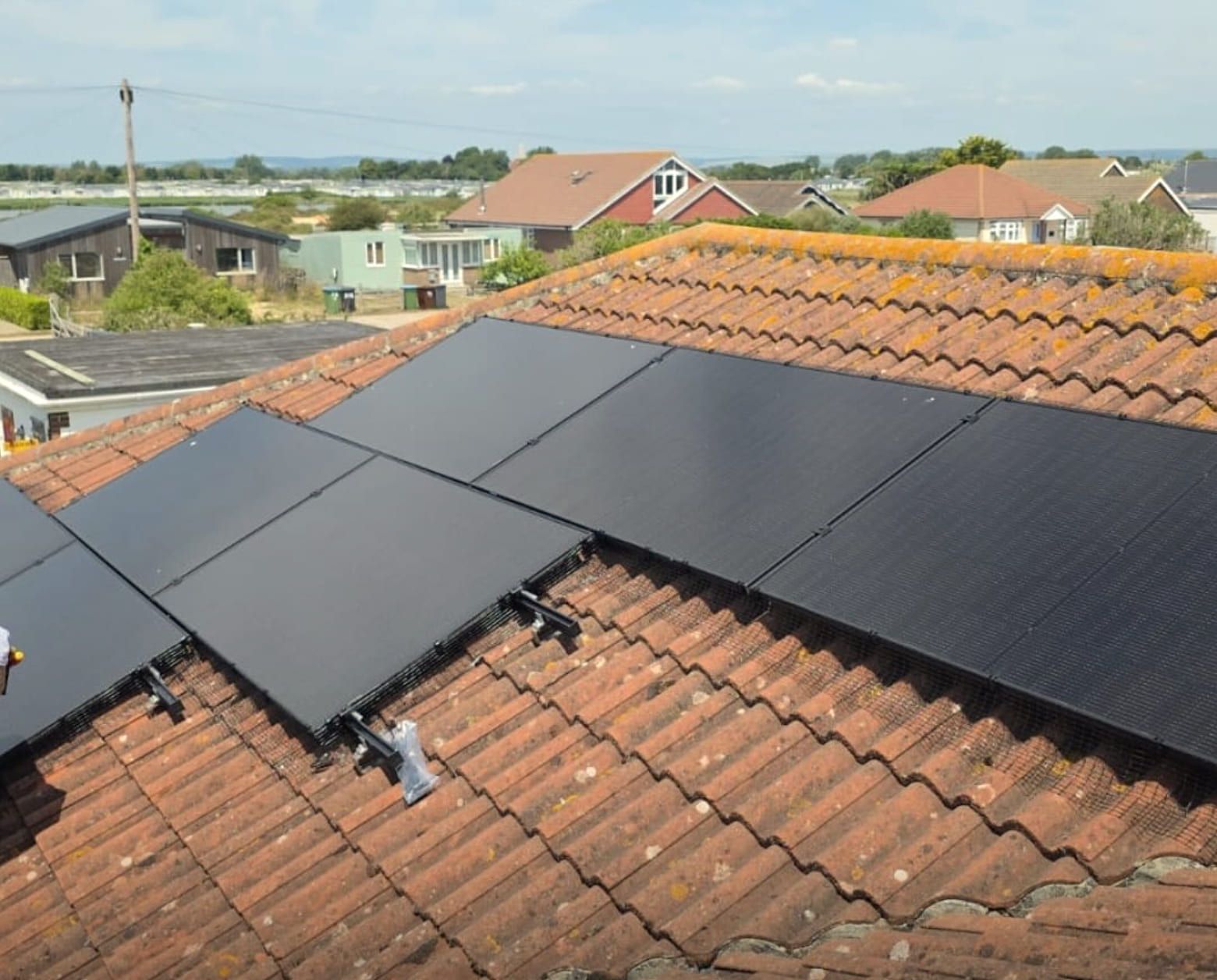
23 miles from the workshop
Solar panels in Lewes
Twenty-three road miles east along the A27, Lewes is the largest town in any National Park and the East Sussex end of our patch: a conservation area that covers almost the whole historic town, the Park authority on planning, the river cutting through the chalk, and UK Power Networks on the paperwork.
What we find on Lewes roofs
Listed flint and tile in a conservation area that covers almost the whole historic town, with the National Park Authority deciding — the survey here settles the rulebook before it settles the panels.
Distance, geography, housing stock and the planning position all change how a system gets designed. These are the ones that decide it in Lewes.
What we take into account here
- Approximately 23 road miles east of Washington along the A27 (road distance measured 16 October 2026); Peacehaven is 26 and Newhaven, at 31, just over our thirty-mile line.
- “Lewes is the largest town in the South Downs National Park and any National Park. It lies on the river Ouse at the point where it cuts through the chalk of the Downs” — the National Park Authority’s own description (planning committee report, October 2023, read 18 October 2026). The chalk slopes and the valley sides are what the shade model has to deal with here.
- Almost all the historic town is a conservation area, first designated in 1970 by East Sussex County Council and extended in 2012 by the National Park Authority to take in Rotten Row, St Pancras Road, Lewes Cemetery and County Hall; the Malling Deanery conservation area alongside dates from 1974 (SDNPA committee report; Friends of Lewes, read 18 October 2026).
- An Article 4 Direction covers the Lewes conservation area, and the Authority consulted in 2023 on revising it alongside a new appraisal and management plan — the 2007 appraisal and 2013 management plan having been called “out-of-date and in need of revision”. Roof-slope panels on a house stay permitted development; a listed house needs consent, and anything on a wall or balcony fronting a highway is outside the class.
- The BN7 and BN8 districts are on UK Power Networks (grid supply point group J, checked 18 October 2026): the G98 notification for an inverter up to 16 amps per phase (3.68 kW), or the G99 application above that, goes to UKPN — the same operator as Brighton and the rest of the Sussex coast.
- Lewes District Council declared a climate emergency in 2019 and committed to net zero by 2030, using Newhaven as a test case for a whole town; East Sussex County Council declared its own in October 2019 (lewes-eastbourne.gov.uk and democracy.eastsussex.gov.uk, read 15 October 2026).
- Solar Together Sussex reported over 1,600 homes fitted by its third phase in 2023, with retrofit battery storage offered to households that already had panels; its prices remain a fair yardstick to hold any Lewes quote against, ours included.
- ONS Census 2021: Lewes district had around 99,900 residents, 71.1% of households owned their home and private renting had risen to 16.9% — a growing share of the roofs belong to a landlord rather than to the people under them.
- PVGIS 5.2 puts a south-facing 4.5 kWp array at Lewes at about 1,177 kWh per kWp a year (35° pitch, 14% system loss, read 15 October 2026) — the best modelled yield of the three regions we publish.
A National Park town: who decides, and what they allow
In Lewes the planning authority is the South Downs National Park Authority, not the district council, and its officers visit every application site. For a house roof that changes less than people fear: roof-slope panels stay permitted development inside the conservation area and the Park; the Article 4 Direction protects particular features, which we check against the address; a listed house needs consent, and the historic core has a great many. The flat-roof array that does so much work in Brighton needs prior approval on designated land, and the Authority is the body that gives it.
The chalk is the other Lewes fact. A town in a gap in the Downs has slopes and trees closer to its roofs than the coastal plain does, so the survey models the shade before it sizes the array — and with the best modelled yield of the three regions we publish, a well-placed Lewes roof is worth the care. Solar panels in East Sussex is the county page this town hangs off; what solar costs in East Sussex carries the worked example at Lewes’s own yield.
Home batteries under the Downs
A lot of Lewes roofs already have panels — Solar Together put many of them there — so the battery question here is often a retrofit: what the existing inverter can take, where a stack can go under PAS 63100 in a flint-and-tile town house with a cellar, and what a listed interior means for the position and the cable runs. Battery storage in Lewes takes that in turn, and adding a battery to panels you already have is the longer read, with the Lewes survey in its own order alongside.
Solar panel installers in Lewes: how a job runs
In Lewes the planning authority is the South Downs National Park Authority, and almost all the historic town is a conservation area with an Article 4 direction over it, so the thirty-to-forty-five-minute survey starts with the rulebook: roof-slope panels on a house stay permitted development, the Article 4 features are checked against the address, a listed house needs consent, and a flat-roof array needs prior approval from the Authority. Then the chalk — slopes and trees closer to the roofs than on the coastal plain, so the shade is modelled before the array is sized.
The scaffold is in the quote, and on a flint-and-tile town house in the core it can be the harder part of the access. Installation is typically one to two days; the certificate is signed by our own NICEIC-registered electricians, the registrations arrive in your name, and the inverter is notified to UK Power Networks — BN7 and BN8 are group J — under G98 up to 16 amps per phase or by G99 application above it.
Battery storage, EV charging and the electrics in Lewes
A lot of Lewes roofs already have panels, which is why battery storage in Lewes and Lewes cellars, listed interiors and the retrofit question start with the inverter that is already on the wall.
For a car, EV charger installation in Lewes. East Sussex County Council secured £4.441m under tranche 1 of the government’s Local Electric Vehicle Infrastructure fund in February 2024 to help residents without off-street parking, and states that it is not permissible to charge a vehicle by running a cable across the road or pavement even with a cable protector — so a home charger needs your own off-street space, and a flat owner or renter with private off-street parking can claim 75% of one up to £500 under the government’s grant.
What solar costs in Lewes, and what it pays
Most domestic installations typically start from around £4,000 to £6,000 depending on the size of the home and the amount of energy it uses; domestic solar and battery storage currently attract zero-rate VAT; the published average saving is £300–£600 per year, sometimes more with a battery or by working from home during the day. Solar Together Sussex’s group-buying prices remain a fair yardstick to hold any quote against, ours included, and what solar costs in East Sussex carries the worked example at Lewes’s own yield.
That yield — about 1,177 kWh per kWp a year for a south-facing 4.5 kWp array at 35°, PVGIS 5.2 — is the best of the three regions we publish, so a well-placed Lewes roof is worth the care. The surplus is exported at the Smart Export Guarantee rate, 12p per kWh in our reference as at June 2026, against about 26p to buy a unit back. Grants and schemes in East Sussex covers Solar Together and the councils’ programmes; the calculator runs your bill.
Lewes in numbers
Twenty-three road miles east along the A27. The largest town in any National Park, on the Ouse where it cuts through the chalk of the Downs. Conservation area first designated 1970, extended by the National Park Authority in 2012, with an Article 4 direction. Lewes District Council: climate emergency 2019, net zero by 2030. Over 1,600 homes fitted through Solar Together Sussex by its third phase in 2023. UK Power Networks, group J, for BN7 and BN8. PVGIS about 1,177 kWh per kWp. Neighbours: Brighton & Hove west, the East Sussex edge down to Peacehaven.
Questions we get asked in Lewes
Do you cover Lewes for solar panels?
Yes. Lewes is about 23 road miles east of our Washington base along the A27 and inside our thirty-mile line; Peacehaven is covered too, and Newhaven sits just over the line. We survey, install and certificate there, and the paperwork goes to UK Power Networks.
Who decides a solar application in Lewes — the council or the National Park?
The South Downs National Park Authority is the planning authority for Lewes. Roof-slope panels on a house usually need no application at all; a flat-roof array on designated land, a listed house or a feature protected by the Article 4 Direction does, and the Authority is who decides. We tell you which applies before we quote.
How much do solar panels cost in Lewes?
Most domestic installations typically start from around £4,000 to £6,000 depending on the size of your home and the amount of energy you use, with zero-rate VAT. Solar Together’s group-buying prices are a fair yardstick to hold our quote against; the survey gives you a written figure for your roof.
Do I need the National Park’s permission for solar panels in Lewes?
For roof-slope panels on a house, usually not — they stay permitted development inside the Park and the conservation area. A flat-roof array, a listed house or a feature protected by the Article 4 direction does need the Authority’s consent, and we tell you which applies before we quote.
The systems that suit Lewes
Three arrangements cover most of what goes on a East Sussex roof. Which one your house wants is decided at the survey, on the roof itself — not from a satellite image.
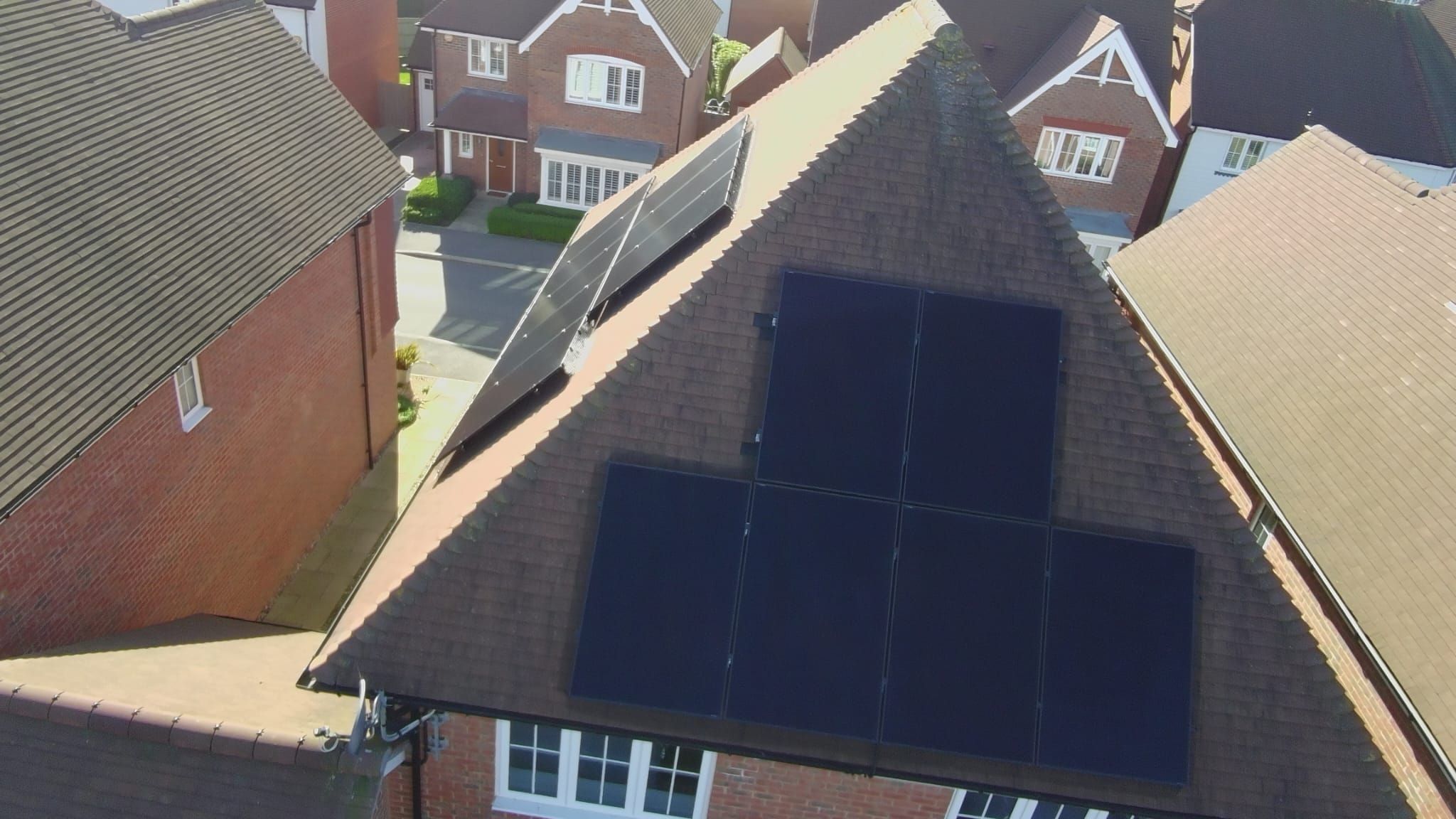
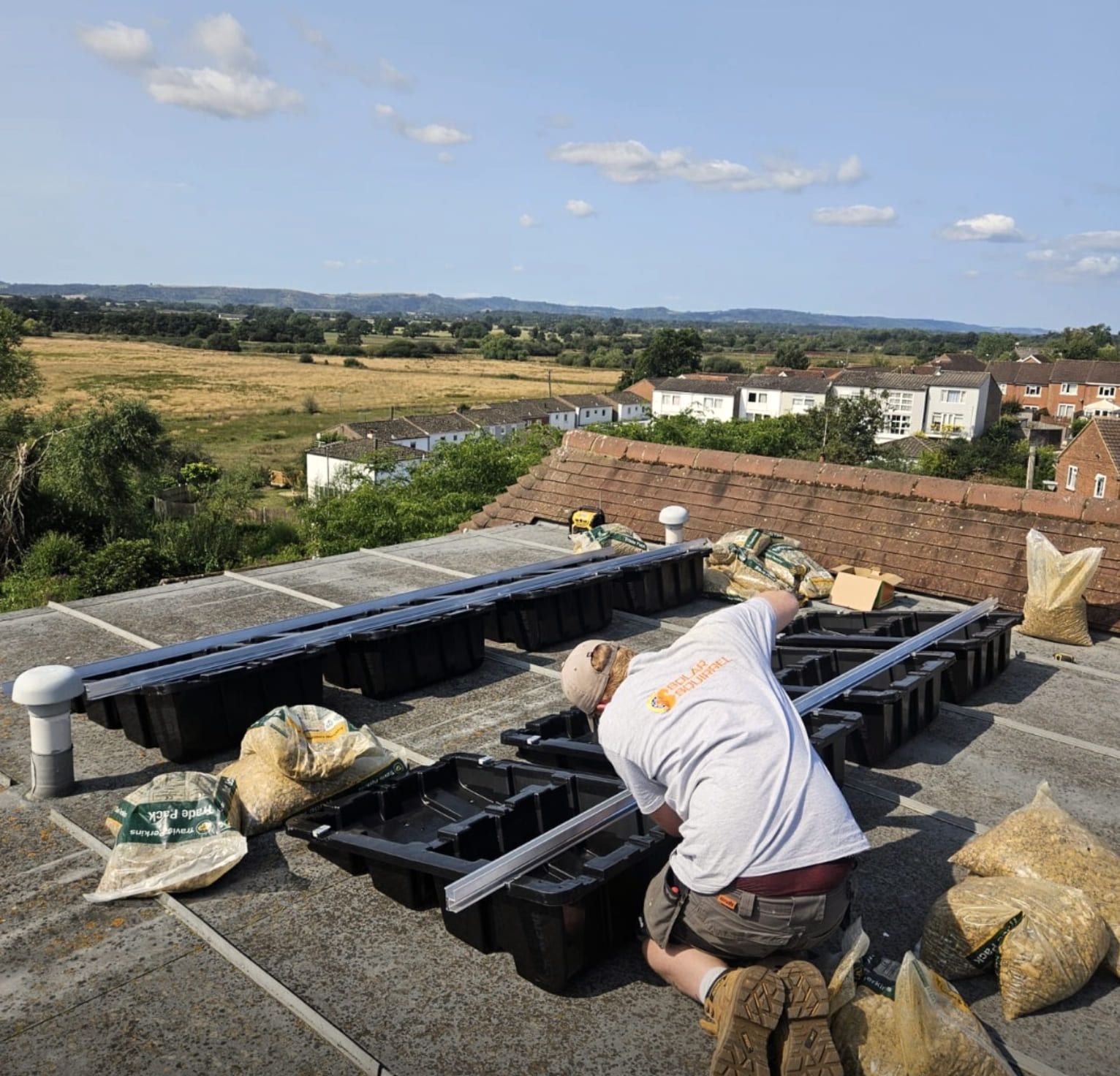
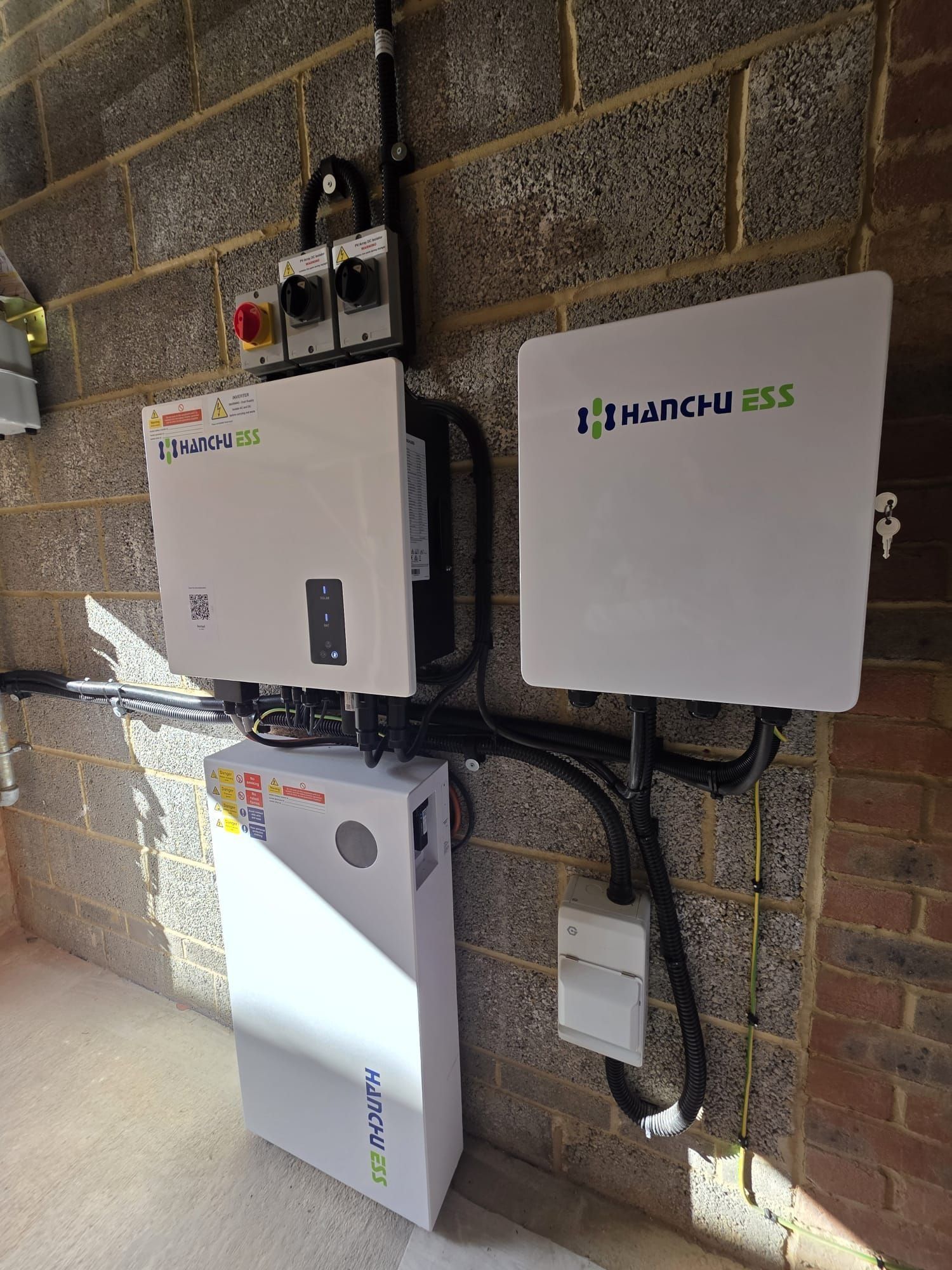
Our own photographs. They show the systems we design and fit — not specific completed jobs in Lewes, and no customer or address is identified.
The same certifications, whichever end of the patch you are on.






Other areas we cover
Worthing
7 miles · West Sussex
Have a lookShoreham-by-Sea
10 miles · West Sussex
Have a lookBurgess Hill
19 miles · West Sussex
Have a lookHaywards Heath
19 miles · West Sussex
Have a lookBillingshurst
10 miles · West Sussex
Have a lookChichester
21 miles · West Sussex
Have a lookHorsham
13 miles · West Sussex
Have a lookBrighton & Hove
17 miles · East Sussex
Have a lookLittlehampton
12 miles · West Sussex
Have a lookStorrington & Pulborough
7 miles · West Sussex
Have a lookPetersfield
30 miles · Hampshire
Have a lookSurrey
County page · the Surrey edge of the patch
Have a lookEast Sussex
County page · the East Sussex edge of the patch
Have a lookEast Grinstead
27 miles · West Sussex
Have a lookDorking
26 miles · Surrey
Have a lookThe next step
Book your free survey
Thirty to forty-five minutes, at your house, at no cost. We look at the roof, the fuse board and how you actually use the place — then send you a clear quote with the assumptions shown.
- Call 01243 882444
- Email hello@solar-squirrel.co.uk
- Based Washington, West Sussex
If solar genuinely won’t pay for itself on your usage, we’ll say so and save us both an afternoon.
Rather see the numbers before you speak to anybody? Put your own bill on the house — it works out the size, the saving and the payback while you watch, and brings them down to this form with you.