

What we do
General Electrical Work
We’re a full-service electrical team too, not just solar.
Solar Squirrel grew out of an electrical firm, and the electrical side never went anywhere. Same team, same vans, same standards — for jobs that have nothing to do with the roof.
The unglamorous work, done properly
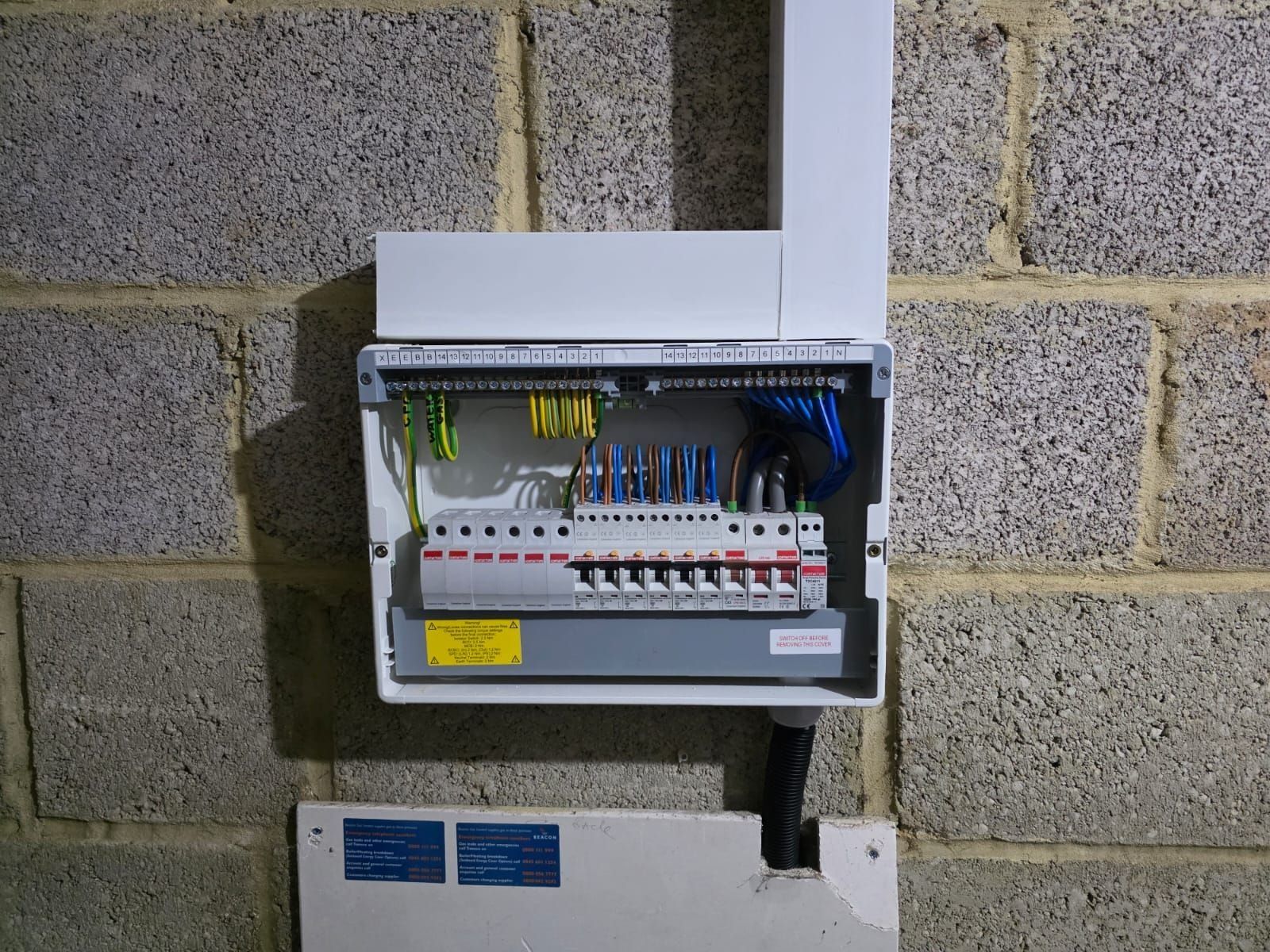
Consumer unit changes, additional circuits, outdoor sockets and lighting, fault-finding on a circuit that trips for no obvious reason, and the tidying-up that follows somebody else’s weekend project.
It is work carried out by an NICEIC Approved Contractor, tested and signed off, whether it is a full array or a single socket.
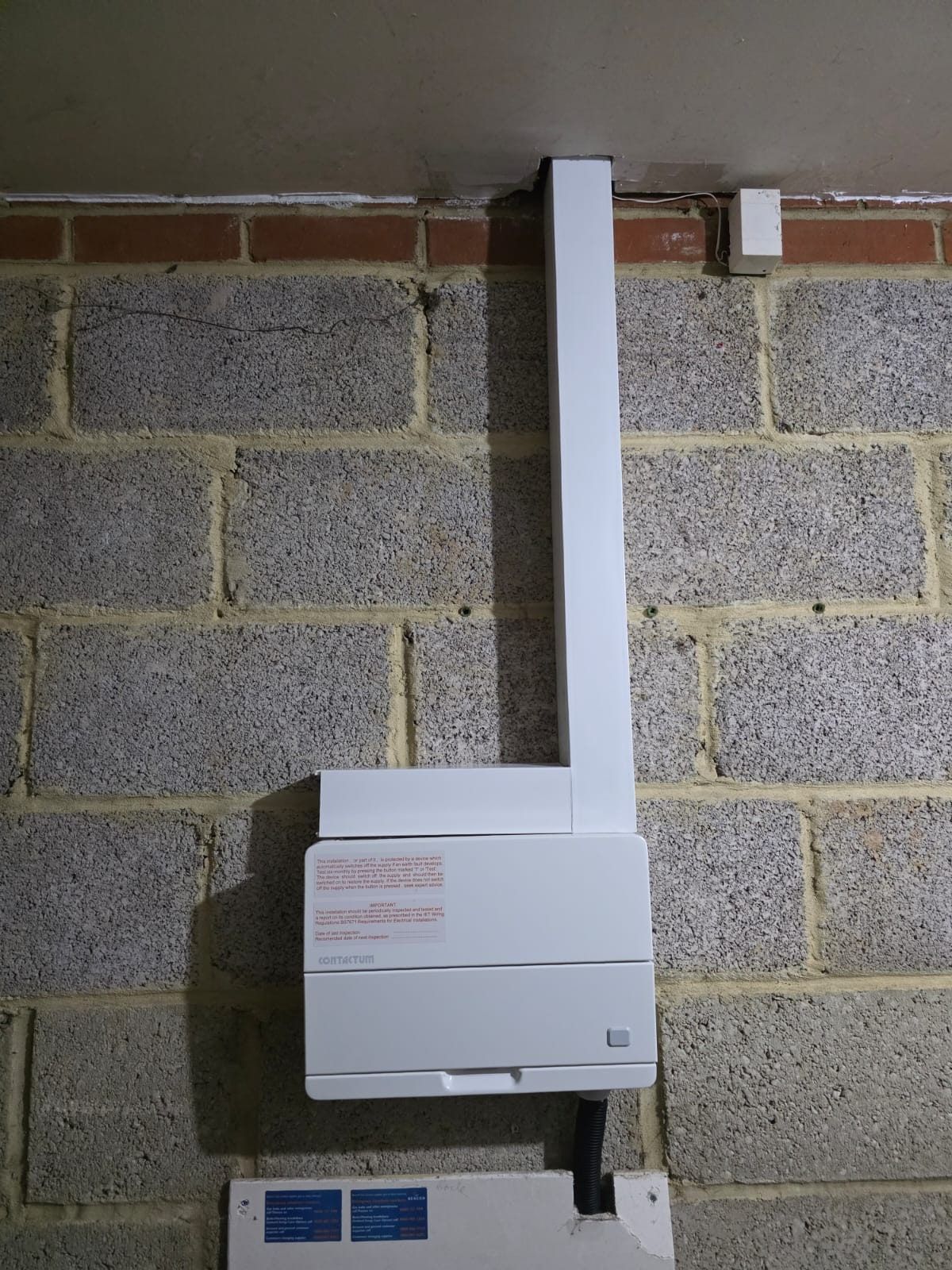
Consumer units, when the old one has run out of road
Most consumer unit work starts the same way: something else needed doing — a charger, an array, a kitchen — and the board turned out to be older than the house’s wiring deserved. Rewireable fuses, no RCD protection, or simply no spare ways left.
We replace it, test every circuit that lands on it, and hand you the certification for the lot. It is not glamorous and it is not cheap to do twice, so it gets done once.
Extra circuits, and power where there isn’t any
Outdoor sockets that are actually rated for outdoors. A supply to a garage, a shed or a home office that stops the extension lead running under the back door. Additional circuits added properly rather than spurred off whatever was nearest.
Lighting, indoors and out
Downlights, garden and security lighting, and the switching arrangements that go with them. The same care about cable routes and clipping that we give a roof — most of the work on a lighting job is the part nobody ever sees.
Fault-finding, which is mostly patience
A circuit that trips for no obvious reason is rarely one thing. We test rather than guess, and we would rather tell you it is a twenty-minute fix than invent a reason to change a board.
This is also where somebody else’s weekend project usually surfaces, and we are not precious about it.
Certification, for everything we touch
Every circuit is tested and certificated as NICEIC Approved Contractor work, whether it is a full array or a single socket. You get the paperwork whether or not you ask for it.
What a visit actually looks like
Most domestic electrical jobs start with a phone call and a couple of photographs — the board, and whatever is not working. Between them those usually tell us whether this is an hour, a morning, or a conversation about a bigger piece of work.
We give you a window rather than a day, we turn up inside it, and if we are going to be late you hear it from us before you have to ring and ask. Dust sheets go down, the floor is swept before we leave, and the old parts go with us unless you want them.
Where power has to go off, we tell you when and for roughly how long before we start, not once the freezer is already warming up. On a board change that is the part of the day worth planning around.
What changes the price on a domestic electrical job
Access, more often than anything else. A board on an open wall in a garage is a different job from the same board in a cupboard under a staircase with a boiler in front of it.
What the existing installation turns out to be. A house that has been added to over forty years by four different people takes longer to test than one that was wired once and left alone.
How far the new work is from the board, and what the cable has to cross to get there — a solid floor, a finished ceiling, or a wall somebody has just had plastered.
Whether anything has to come off before the new work goes on. Removing somebody else’s improvisation is usually quick; finding all of it is the part that takes the time.
What to tell us when you ring
What is actually happening, in your own words. “It trips when the kettle and the toaster are both on” is more useful to an electrician than a diagnosis, and you do not need to know the cause — that is our job.
A photograph of the consumer unit with the cover on, and one with it open if it is safe and easy to do. That single picture answers questions about age, protection and spare capacity that are otherwise guesswork until we arrive.
Whether anything has been changed recently — a new appliance, an extension, a kitchen, or work somebody else did that has not been quite right since.
Whether the property is let, listed, or shared, and whether there is anyone in the house for whom losing power for an hour is a genuine problem. All three change how we plan the visit.
When a job turns out to be bigger than the job
It happens. You ask for an outdoor socket and the board it would have to land on has rewireable fuses and no spare ways; you ask for a light fitting and the circuit it is on has been extended twice by somebody who did not test it afterwards.
When that happens you get a phone call and a straight explanation before we do anything, not a longer invoice at the end. Sometimes the answer is that the original job still goes ahead and the rest can wait; sometimes it genuinely cannot, and we will tell you why in terms you can check.
What we will not do is leave a job half-safe because finishing it properly turned out to be an awkward conversation.
Why it matters for the solar side too
A solar installer who is also an electrical contractor is a different animal from one who subcontracts the electrics. When the consumer unit turns out to be older than expected, or the earthing arrangement needs upgrading before an EV charger can go in, it is the same team on the same day.
It works the other way round as well. If we have already rewired half your house we know what is behind the walls before we quote an array, and we are not discovering the incoming supply for the first time with a scaffold already up.
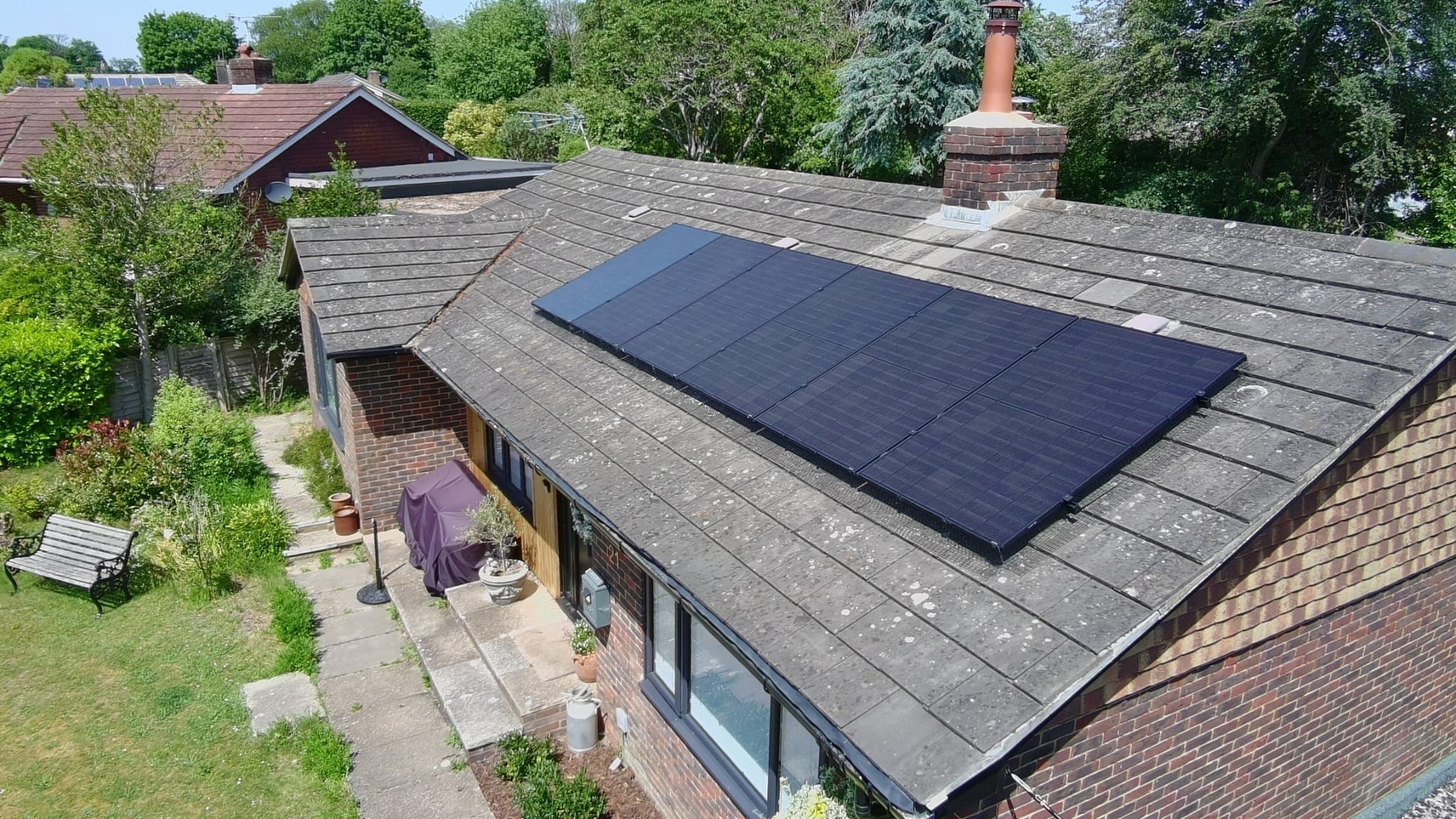
Horsham stone, flint and the Sussex roof problem
Some local roofs make solar straightforward. Others need a different conversation entirely. A survey-level guide to what we find on West Sussex roofs.
Read it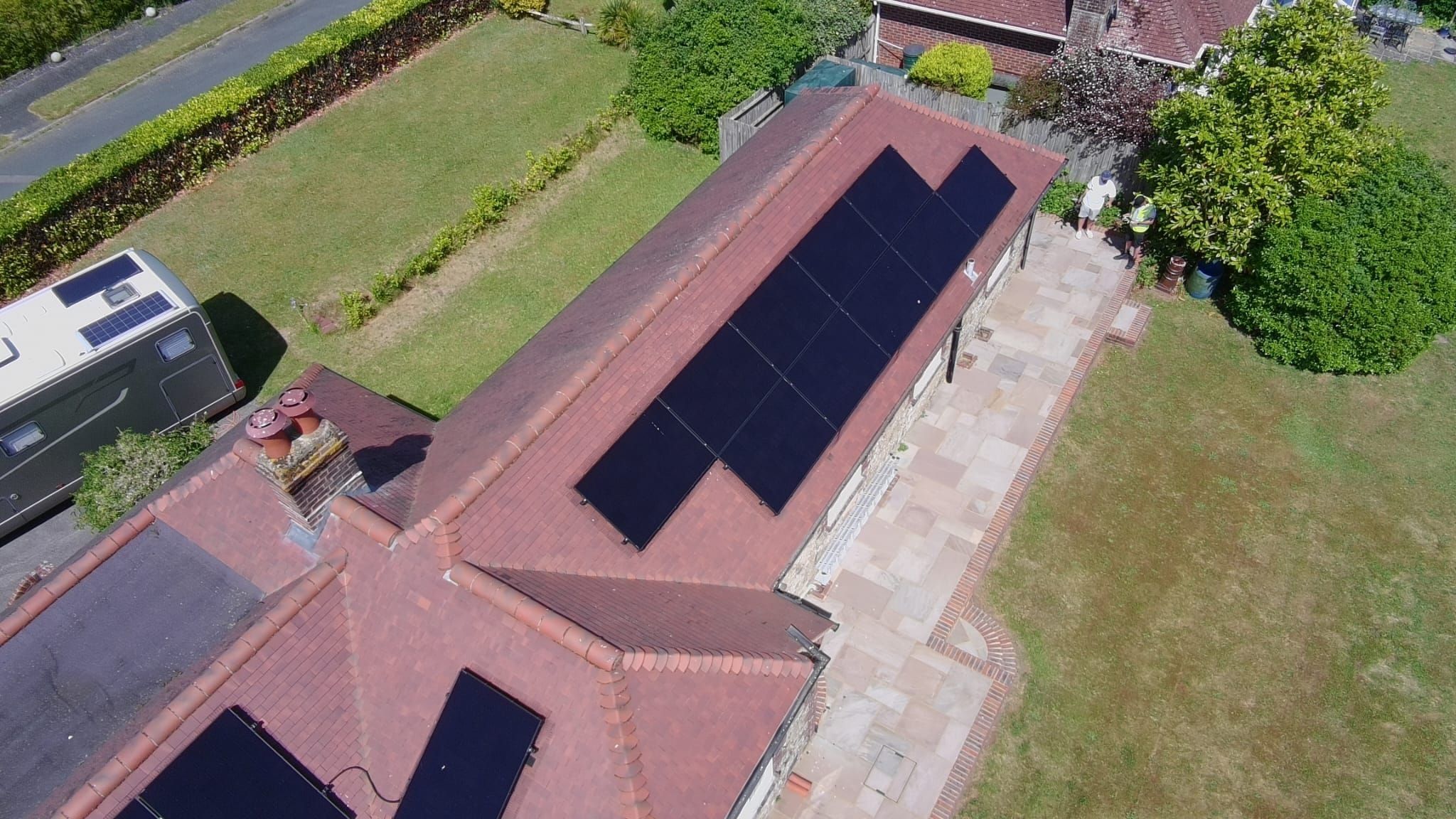
What actually happens at a free solar survey
Thirty to forty-five minutes, a look at your roof and your fuse board, and a quote afterwards. No pressure, and sometimes the answer is no.
Read it
Is a battery worth it? The honest arithmetic
A battery roughly doubles how much of your own generation you use. Whether that pays depends on when your house is empty. Here is the arithmetic.
Read itThe next step
Book your free survey
Thirty to forty-five minutes, at your house, at no cost. We look at the roof, the fuse board and how you actually use the place — then send you a clear quote with the assumptions shown.
- Call 01243 882444
- Email hello@solar-squirrel.co.uk
- Based Washington, West Sussex
If solar genuinely won’t pay for itself on your usage, we’ll say so and save us both an afternoon.
Rather see the numbers before you speak to anybody? Put your own bill on the house — it works out the size, the saving and the payback while you watch, and brings them down to this form with you.