

What we do
Climate Squirrel Air Conditioning
The supply, the circuit and the first fix — with the refrigerant work certificated separately.
Climate Squirrel is the air conditioning side of Solar Squirrel. An air conditioning installation is two jobs in one van. One of them is electrical work, and that is ours. The other is refrigerant work, which the law restricts — and this page is straight with you about exactly where the line between them falls.
Where the line falls, and why we are putting it on the page
The electrical half of an air conditioning installation — the load assessment, the supply, the dedicated circuit and its protective device, the isolators, the containment, the board work and the certification — is what we do every day of the week as an NICEIC Approved Contractor.
The refrigerant circuit is the other half, and it is governed separately. Connecting into it, pressure testing, evacuating, releasing the charge, commissioning, servicing and decommissioning are restricted work. That part of your job is carried out by an F-Gas certified engineer.
A great many websites blur those two halves into one confident sentence. We would rather set it out plainly, because it is the thing that decides who is legally allowed to touch what on your job — and you are entitled to know that before anyone quotes you, not after.
Why Climate Squirrel sits alongside Solar Squirrel
Because of when it runs. Air conditioning draws its heaviest load on hot, bright afternoons, which is exactly when an array is producing most. Of all the things a building can be asked to do with its own generation, cooling is close to the best-matched there is.
That also changes the sensible order of operations. If there are panels on the roof, or panels on the list, the moment to think about a cooling load is while the system is being designed — not after somebody has bought a unit and discovered the supply will not carry it.
It is the reason Climate Squirrel sits under the same roof as Solar Squirrel rather than on a generic cooling site. The question that decides your job is an electrical one, and electricians are what we are.
The question to settle before anybody orders a unit
Can the supply and the board actually take it? That is answerable in an afternoon, and it is the single thing most likely to derail a job if it is left until the equipment is standing in the hallway.
We look at the incoming supply and what headroom is left once the oven, the shower, the kettle and everything already on the board have had their say. We look at whether the consumer unit has a spare way and the right protective device — and whether it is a board with anywhere left to go at all.
On plenty of houses the answer is a straightforward yes. On some it is that the board needs work first, and that is a far better thing to hear before you have committed to equipment than on the morning it arrives.
What the electrical work actually consists of
A dedicated circuit, sized for the load and for the length of the run, with the correct protective device and RCD protection. Local isolation for both the indoor and the outdoor unit, so that whoever works on it next can make it safe without switching off half the house.
A fused connection unit where one is called for, and a supply for a condensate pump where the position needs one. Earthing and bonding checked rather than assumed. Containment and cable routes planned so the finished job does not look like an afterthought stapled to the outside of a wall.
Then it is tested, and you are issued an electrical installation certificate for the circuit we have installed. That certificate covers our work. It does not cover the refrigerant side, and nobody should ever tell you it does.
Where our half of the job stops
The part of this job that is ours is the electrical work and the first fix: mounting the indoor and outdoor units, running the pipework and the cable between them, and leaving the system ready to be commissioned.
What we do not do is open the refrigerant circuit. Connecting the system through, pressure testing it, evacuating it and charging it are carried out by an F-Gas certified engineer, and we set out in writing before the job starts which parts are ours and which are not.
You get an electrical installation certificate for the circuit, and the refrigerant side is certificated separately by whoever carries it out. Two pieces of paper, two names on them, and no confusion later about which one covers what.
Responsibility written down beats responsibility assumed. If any part of a quote you are reading — ours or anybody else’s — does not say who is doing the refrigerant work, that is the question to ask before you sign it.
Where the outdoor unit goes
It wants air around it, a position where the noise is not aimed at your neighbour’s bedroom window or your own, and a fixing that will hold it for years on whatever wall or ground it is actually going onto rather than whatever was convenient.
The condensate has to go somewhere. Access for whoever attends it later has to exist rather than be hoped for. The pipework and the cable need a route that does not cross the front elevation of the house.
And on a listed building or inside a conservation area, where a unit sits is not purely a practical question. A good stretch of our patch is inside the South Downs National Park, which is worth checking before a position is settled rather than afterwards.
What we would want you to tell us
Which room, what it is used for, and when it actually becomes uncomfortable. Whether the heat is arriving through glass, through a roof, or off equipment inside the room — because the answer changes what is worth doing.
A photograph of the consumer unit, and one of the outside wall where a unit might reasonably go. Whether there are panels on the roof or on the list. Whether the property is listed, in a conservation area, let, or shared with somebody whose agreement you would need.
And whether anyone has quoted already, and what they proposed. That is not nosiness — it tells us very quickly whether the electrical side of what you have been offered has been thought about at all.
A room, or a building
One room that overheats — a loft conversion, a west-facing office, a bedroom under a flat roof — is a different job from cooling a whole floor. A single split serving one space is the simplest version, and it is what most homes actually need.
More than one indoor unit on a single outdoor unit changes the pipework, the electrical load and the position of everything, and it wants designing rather than accumulating one unit at a time.
On a commercial building it is a different conversation again, and it nearly always starts with the incoming supply rather than with the equipment.
Heating as well as cooling, and what we are not claiming
Most modern split systems run in reverse and will warm a room as readily as they cool it. That is a property of the equipment rather than a claim about your bills, and you will not find an efficiency figure or a running cost on this page for a unit we have not specified for your room.
There is no grant claim anywhere on this page either. Funding in this area attaches to particular certifications and particular kinds of installation, and we are not going to imply an entitlement we cannot evidence for you.
Servicing, and the honest answer about it
Servicing an air conditioning system is not an oil change. It involves the refrigerant circuit and leak checking, and it is regulated in exactly the same way the installation is — which is why it is not something to assume simply comes along with the unit.
What we will do is tell you, before you buy anything, what your system will need looking after and who will be doing it. That is a more useful answer than a badge on a website.
What the day looks like
A single-room installation is usually a short job, and it stretches where the cable run is awkward or where the board needs attention before anything else can happen. The power goes off for part of it, and we tell you when and roughly for how long before we start rather than once the fridge is already warming up.
Dust sheets down, cores drilled cleanly and made good, cable clipped and run properly, and the packaging leaves on the van rather than on your drive. The refrigerant work is scheduled into the programme rather than left as a loose end, so you are not living with a mounted unit that does not run.
What you end up with, and who is answerable for what
An electrical installation certificate in your name for the circuit we install, as NICEIC Approved Contractor work. A written statement of which parts of the job we carried out and which were carried out under F-Gas certification.
And the same number to ring afterwards for anything electrical. Where a problem turns out to sit on the refrigerant side, we will say so plainly rather than taking a cover off and hoping.
The photographs on this page are illustrative: none of them is one of our own installations. What we can show you is the electrical work, and what we can tell you is precisely which half of an air conditioning job is ours and which half is not.
What an installation looks like

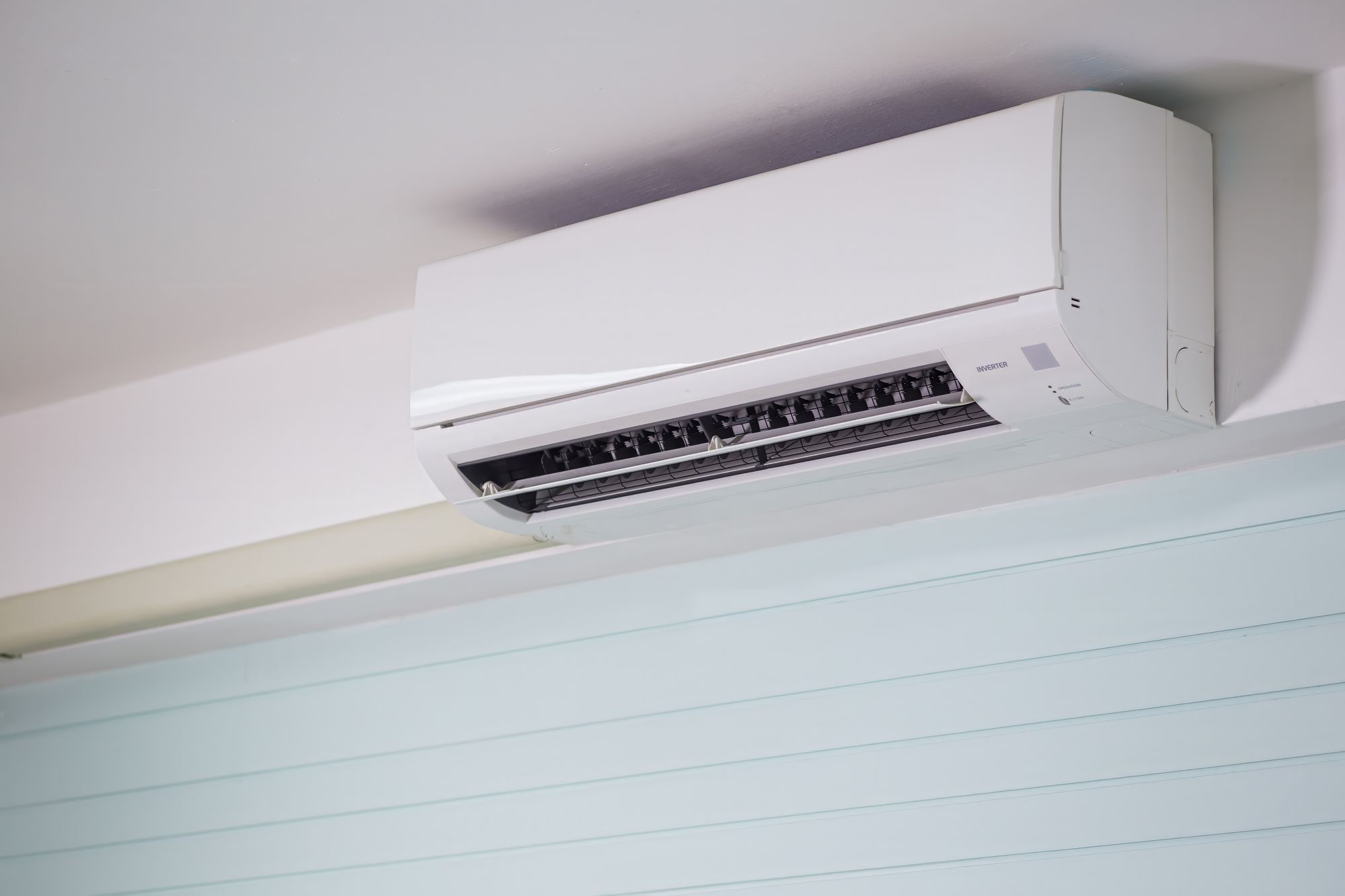
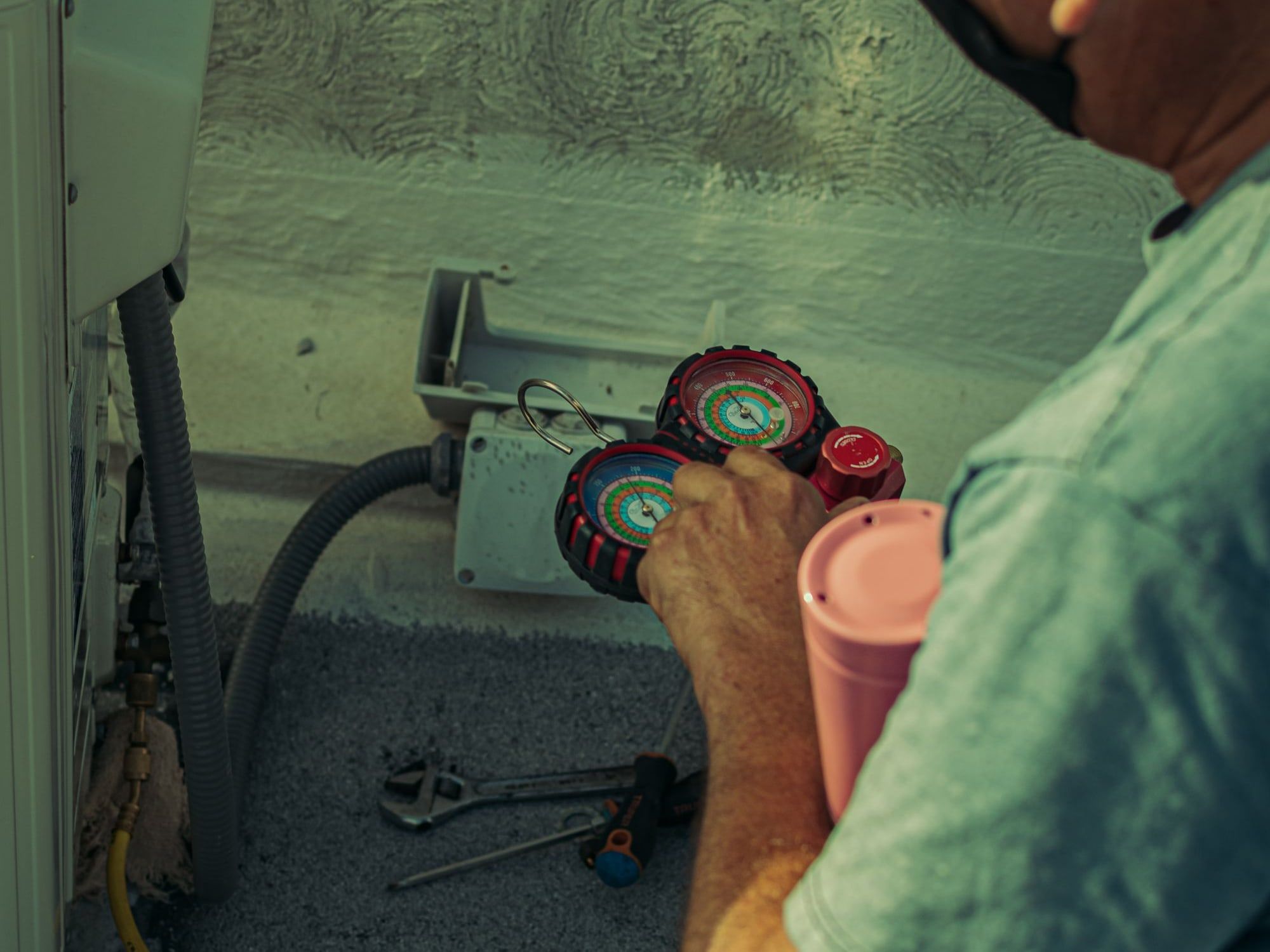
Illustrative stock photographs. None of them is a Solar Squirrel installation.
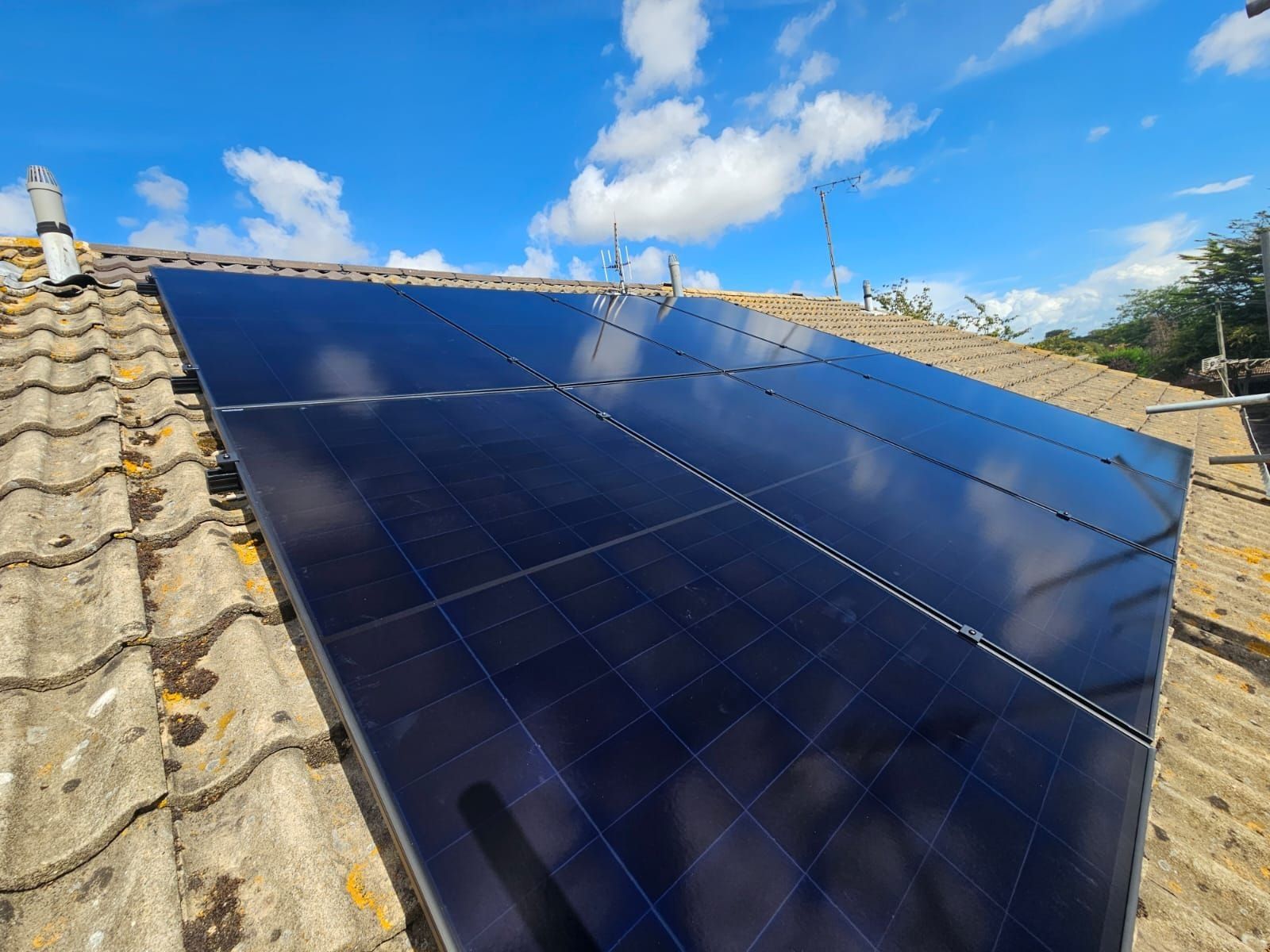
Charging an electric car off your own roof
Pairing a home charger with solar changes the maths on both. What actually gets charged by the sun, and why the two want designing together.
Read it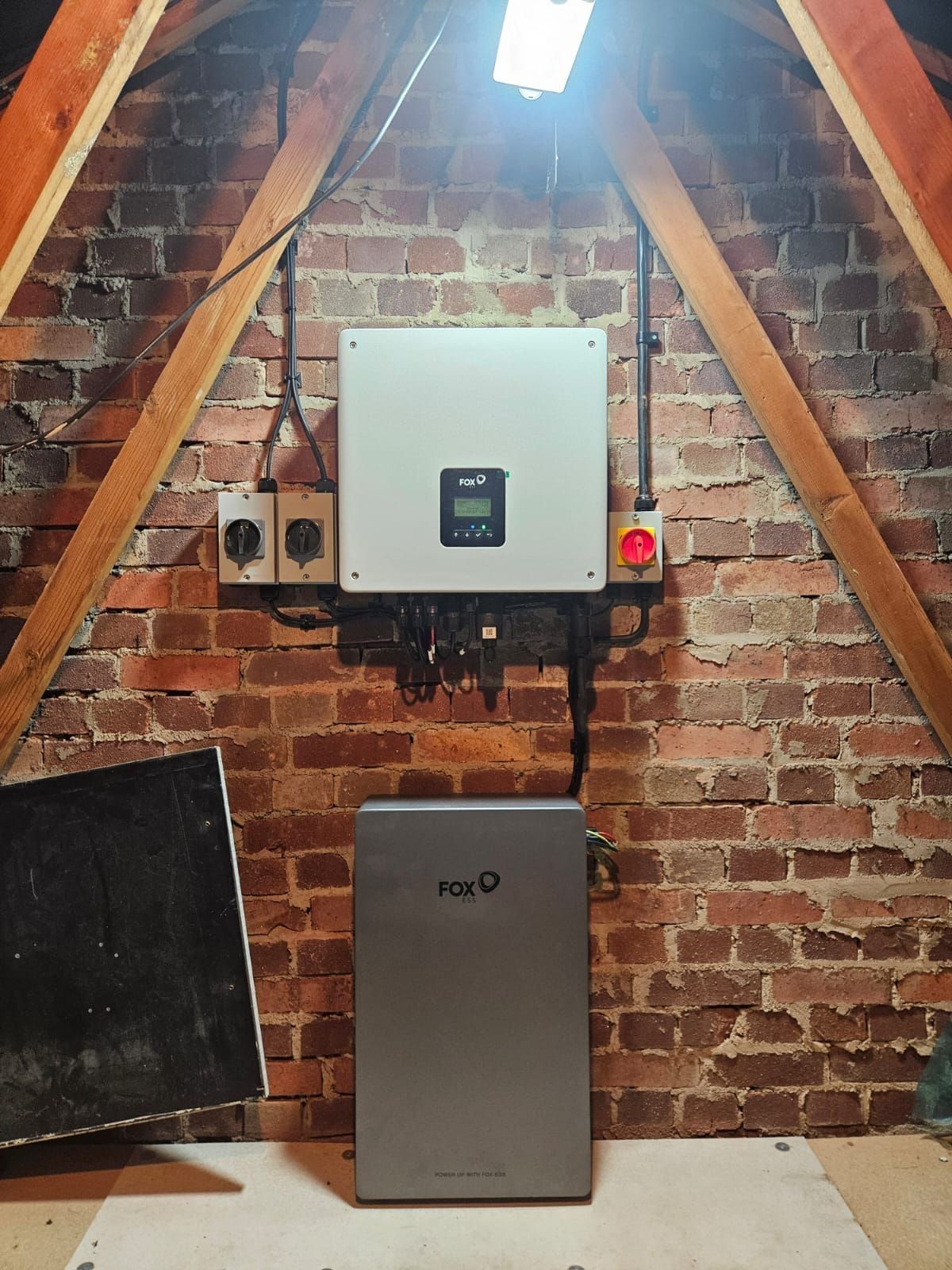
Is a battery worth it? The honest arithmetic
A battery roughly doubles how much of your own generation you use. Whether that pays depends on when your house is empty. Here is the arithmetic.
Read it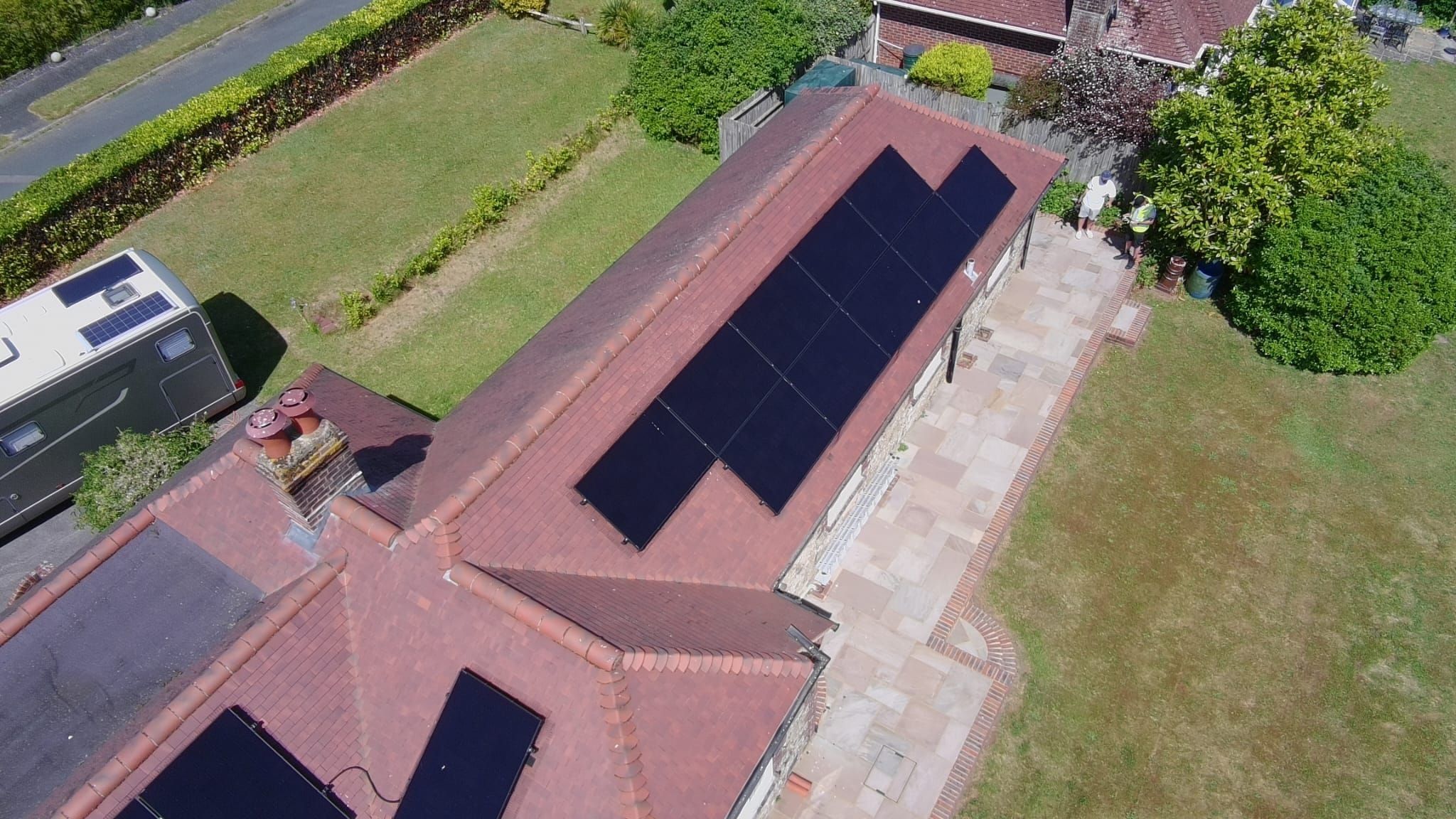
What actually happens at a free solar survey
Thirty to forty-five minutes, a look at your roof and your fuse board, and a quote afterwards. No pressure, and sometimes the answer is no.
Read itThe next step
Book your free survey
Thirty to forty-five minutes, at your house, at no cost. We look at the roof, the fuse board and how you actually use the place — then send you a clear quote with the assumptions shown.
- Call 01243 882444
- Email hello@solar-squirrel.co.uk
- Based Washington, West Sussex
If solar genuinely won’t pay for itself on your usage, we’ll say so and save us both an afternoon.
Rather see the numbers before you speak to anybody? Put your own bill on the house — it works out the size, the saving and the payback while you watch, and brings them down to this form with you.