

Integrated solar, storage & EV
Sigenergy
Sigenergy build around one idea: put the inverter, the battery, the management of both and, if you want it, the car charger into a single stack instead of three boxes on a wall.
No photograph on this page, and that is deliberate. The equipment this page is about is not pictured anywhere on this site, because we have not photographed it on a job of our own — and a manufacturer’s render would only be evidence that we can download one.
One idea, carried all the way through
The integration is the premise here rather than an upgrade bolted on afterwards, and that shows in the shape of the equipment: it is designed as one assembly rather than as parts that later had to meet. Whether that premise is the right one for your house is a separate question, and it is the one this page is actually about.
What “integrated” means once it is on a wall
It means the parts that would normally be separate units — each with its own mounting, its own cabling between them and its own set of connections to get wrong — turn up as one assembly. Fewer joints between components is fewer places for a fault to hide, and a fault that does appear has one place to be diagnosed rather than a polite argument between two suppliers about whose end of it is at fault.
How you meet a line matters more than it sounds
Equipment that reaches a household through the person who then has to stand behind the installation tends to get specified where it actually fits, rather than wherever there happened to be stock to shift. That is not a claim about any one manufacturer. It is the reason we keep a short list at all, and the reason the first question we ask about a line is who carries the can when it is eight years old.
Built to be added to
Households rarely arrive at the finished system in one move. Panels this spring, storage after the next winter bill, a car on the drive the year after that. A modular stack answers that pattern without the part you already paid for having to come off the wall to make room — which is the expensive way to change your mind, and the one we would rather you never met.
The car, and the case for keeping it in the same assembly
Where a charge point can be part of the same stack rather than a separate unit on another wall, the cable runs get shorter, the coordination between generating, storing and charging happens inside one system, and there is one thing to learn instead of three. Whether that is worth it on your drive turns on where the car parks and what the incoming supply will carry, and both of those get measured rather than assumed.
The trade-off nobody selling it will mention
Putting everything into one assembly is a real advantage right up to the day something in it needs attention, at which point you are dealing with a system rather than a component. That is not a reason to avoid it. It is a reason to ask, before you buy, what happens if one part of the stack ever has to be worked on — and to be wary of anyone who presents integration as pure upside without saying this part out loud.
What we measure anyway, whatever is on the box
The incoming supply and what headroom it has. The consumer unit, its age, and whether it has anywhere left to go. The earthing arrangement. The wall the assembly is going on and what is behind it. How far that wall sits from the board and what the cable has to cross to get there. None of those questions get easier because the equipment is clever; they are the questions that decide whether the clever equipment can go where you want it.
What you will see, and what you will hear
One assembly rather than a row of units, which counts for something in a utility room somebody walks through every day. It is not silent — anything converting power moves air to keep itself cool, and it works hardest in the middle of a bright day. In a garage that is a non-issue. On the other side of a bedroom wall it is a conversation, and the time for it is the survey rather than the following July.
A young manufacturer, and the fair question that follows
Founded in 2022 is recent, and it is entirely reasonable to ask what that means for equipment you expect to work for two decades. We are not going to pretend we know how any manufacturer will look in 2045. What we can tell you is who holds the certification for your installation, who you ring, what the current documentation says in writing, and how the system behaves if part of it ever has to be replaced. Ask us that — and ask it of everyone else quoting.
What to ask before you settle on an integrated system
Ask what it does when the grid goes off, and be specific about what you would want still working, because the answer comes from the design and not from the badge. Ask whether it can take cheap electricity overnight if your tariff rewards that. Ask what is monitored, whether it costs anything to carry on seeing it, and who changes the charging windows when your tariff changes. Then ask us to show you rather than tell you.
Where the decision actually gets made
On the survey, with the roof, the board and the space all in front of us, and your household described honestly rather than averaged into somebody else’s. We will tell you which of the four lines we would put on your house and, more usefully, why the other three were not it. A firm that names the equipment before it has seen the roof is reading from a stock list.
What integration is actually doing on the wall
It is the least glamorous advantage in the whole system and it is the one you live with. An integrated unit takes the array and the battery together, in one assembly, instead of an inverter and a separate battery converter sitting beside each other with cabling between them.
On a retrofit that matters more than it sounds. There is one thing to find wall space for rather than two, one thing to isolate, and one thing to talk to when a system needs looking at. Fewer joints between components is fewer places for a fault to hide. On a house where the only sensible wall is half a garage end, it is occasionally the whole reason a line gets specified.
It is not automatically the right answer. Which line goes on your wall comes out of the survey — what storage actually does day to day is the better place to start, and the questions people ask first are answered plainly.
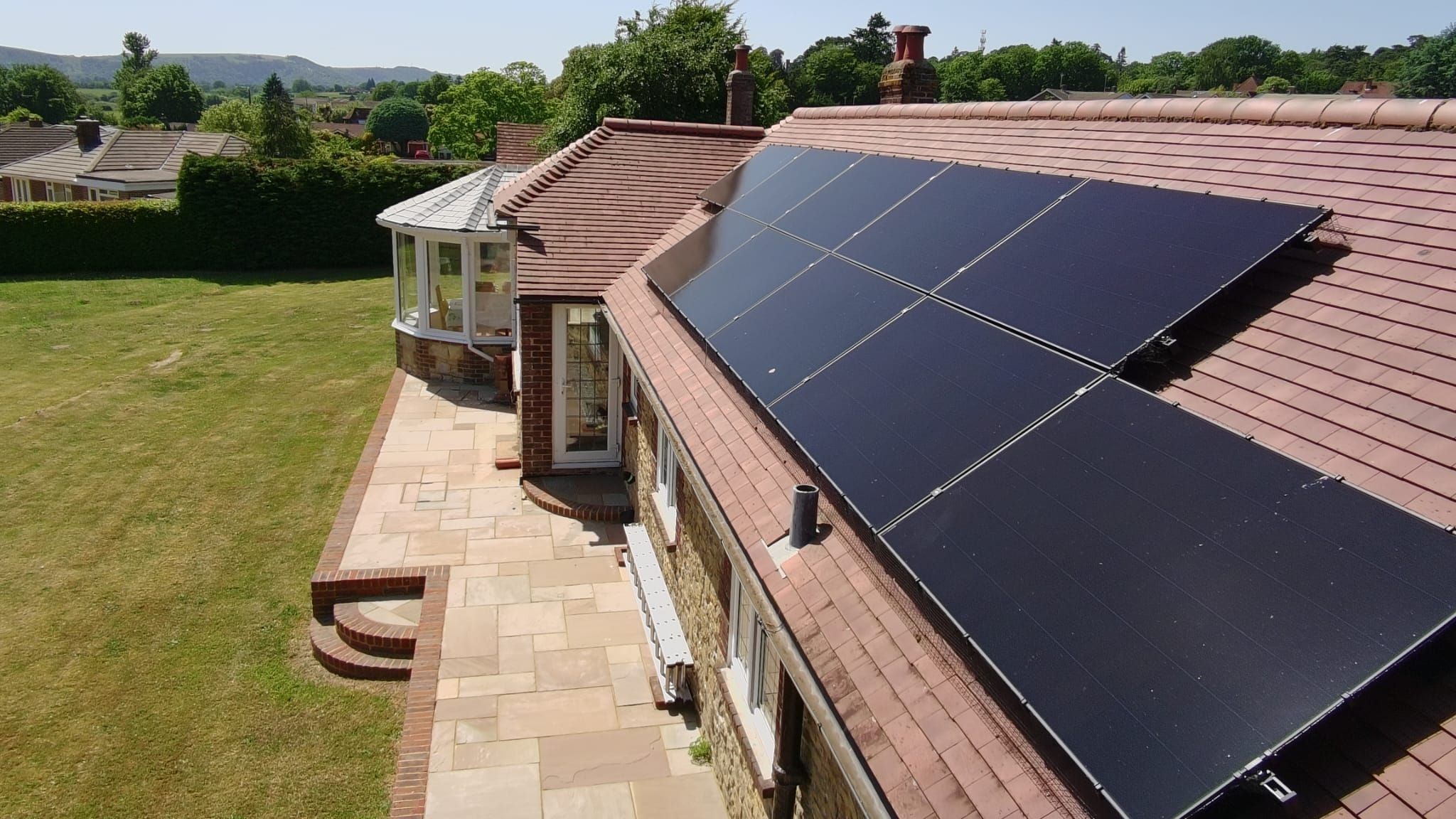
Why nearly every roof we do now is all-black
Black frames, black backsheets and why the silver grid disappeared from Sussex roofs. What you gain, what it costs, and when it isn't worth it.
Read it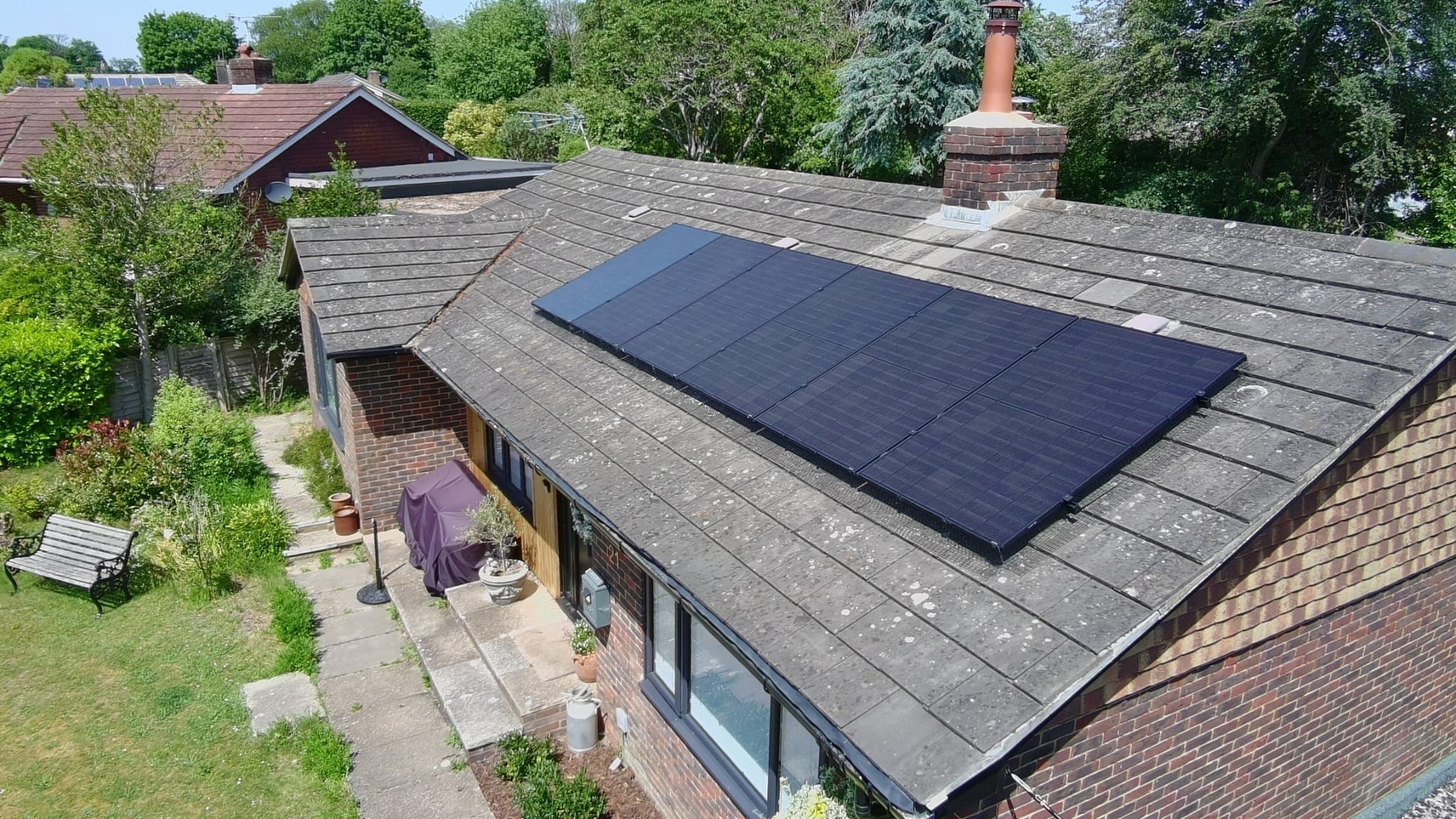
Horsham stone, flint and the Sussex roof problem
Some local roofs make solar straightforward. Others need a different conversation entirely. A survey-level guide to what we find on West Sussex roofs.
Read it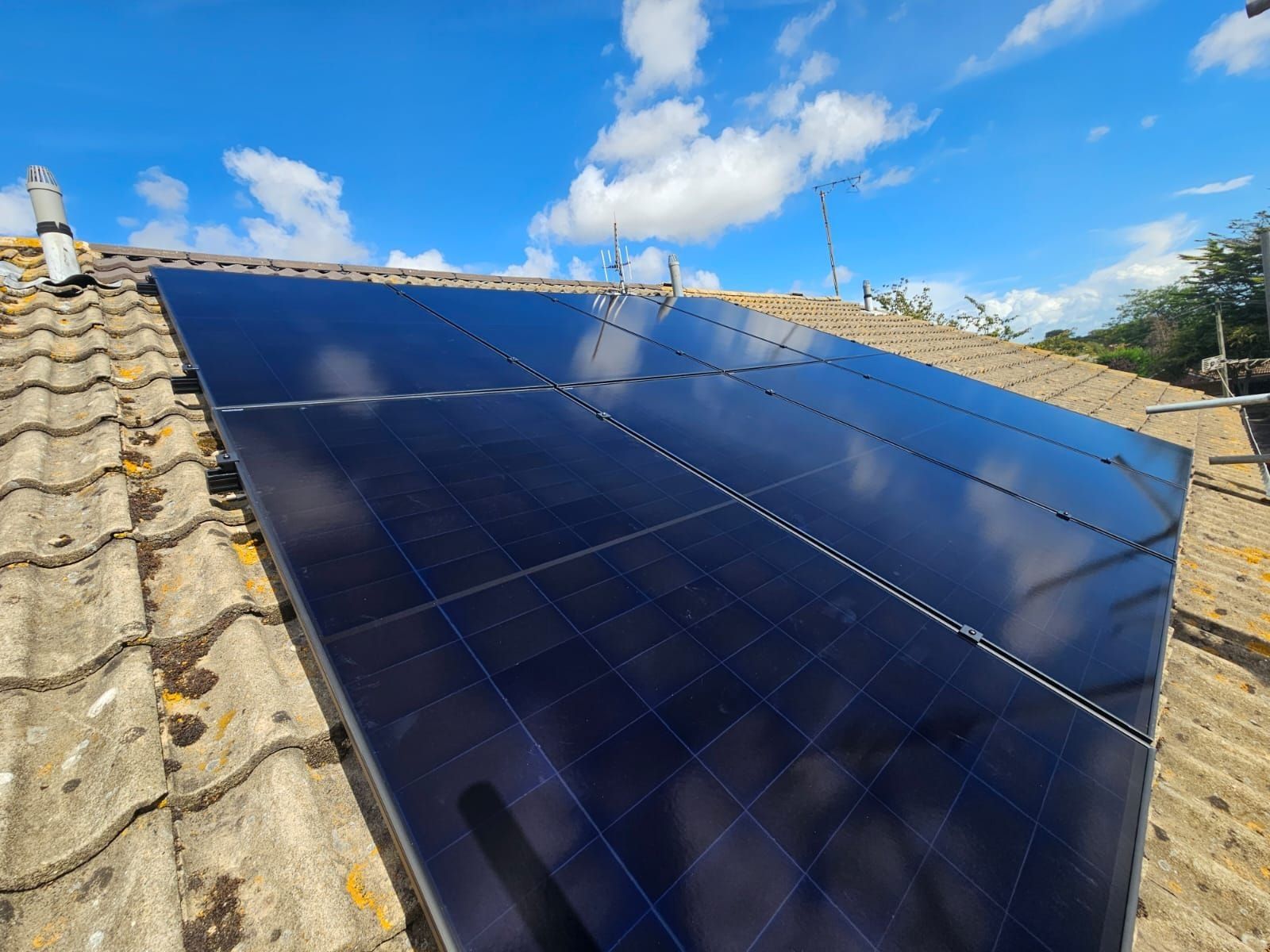
Charging an electric car off your own roof
Pairing a home charger with solar changes the maths on both. What actually gets charged by the sun, and why the two want designing together.
Read itWhat people ask at this point.
How much will I actually save with solar panels?
On average, UK homeowners save £300–£600 per year, sometimes more if you add battery storage or work from home during the day. Your savings depend on:
- Your energy usage
- System size
- Whether you use a battery or export energy
- Electricity prices in your area
Do solar panels work in winter or on cloudy days?
Yes, they still generate power on overcast days, just less than in full sun. Battery storage can help you make the most of what you generate all year round.
Does my electricity network operator need to be told?
Yes. A grid-connected system has to be registered with the local network operator, and so does a home charge point. For a typical domestic installation that is a notification we send after commissioning; a larger system can need an application before the work starts, which we would flag at design stage.
Either way it is our paperwork, not yours. You should not have to ring anybody.
Read all the questions — or ask yours at the free survey.
The next step
Book your free survey
Thirty to forty-five minutes, at your house, at no cost. We look at the roof, the fuse board and how you actually use the place — then send you a clear quote with the assumptions shown.
- Call 01243 882444
- Email hello@solar-squirrel.co.uk
- Based Washington, West Sussex
If solar genuinely won’t pay for itself on your usage, we’ll say so and save us both an afternoon.
Rather see the numbers before you speak to anybody? Put your own bill on the house — it works out the size, the saving and the payback while you watch, and brings them down to this form with you.