

What we do
Commercial Solar & Electrical
Solar, storage, EV charging and three-phase electrical work for businesses, farms and landlords.
The trade is the same. The scale, the paperwork and the person signing it are not — and on a commercial job it is usually the grid connection rather than the roof that decides how long the whole thing takes.
The same trade at a different scale
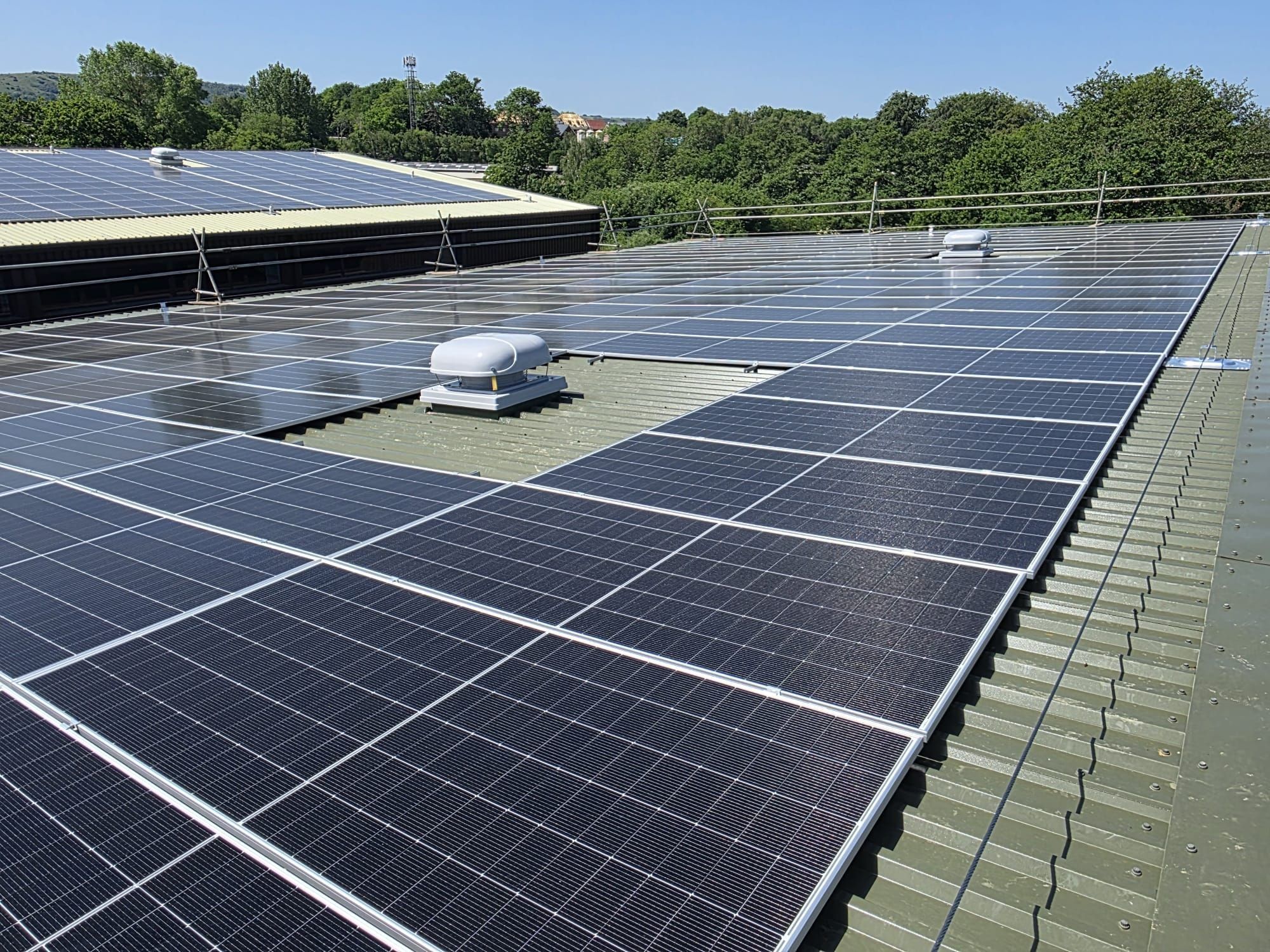
Solar on a commercial, industrial or agricultural roof is the work we already do, sized up. Battery storage specified against a business’s measured load rather than a household’s habits. Charging bays with the load managed so the site does not trip at shift change. And the three-phase electrical work that has always sat underneath all of it — distribution boards, sub-mains, machine supplies, lighting, containment, fixed-wire testing.
What genuinely changes is everything wrapped around the work: who is buying it, what has to be approved before anybody starts, how long the building can afford to be interrupted, and what documentation the insurer and the auditor will want when it is finished.
We are a family-run electrical firm in Washington, and what you are reading here is what the work involves rather than a portfolio. If you want to know whether we are the right people for a particular building, the honest route to that answer is a conversation about that building.
The grid connection is usually the long pole
This is the biggest single difference from a domestic job, and it is the one worth understanding first. A small domestic system is notified to the distribution network operator after it has been installed — fit it, tell them, done. That is the arrangement known as G98.
Anything larger sits under G99, where the network operator has to approve the connection before the work happens. That is an application with a timescale attached to it and occasionally a connection cost attached to it, and it is not a thing that can be compressed by wanting it more. On most commercial projects it is what sets the programme.
So we start it early, we tell you what has been submitted and when, and we do not book scaffold against a date the network has not confirmed. If a quotation for a commercial array does not mention the connection at all, that is worth asking about before you sign it.
Self-consumption is the commercial argument
A business that trades in daylight uses electricity in daylight. That is the whole case, and it is a stronger one than the domestic version, because generation and demand already line up without a battery having to move one to the other.
Which is also why you will not find a payback figure for your building anywhere on this page. What a system is worth to you depends on your tariff, your load shape and your roof, and any one of those three can move the answer a long way. We will model it on your own data and show you every assumption we used. What we will not do is put a number on a web page and hope it fits your building.
Half-hourly data, and why it changes the method
Most commercial supplies are half-hourly metered, which means the building already knows what it does. Not an annual total, not an estimate read off a bill — actual consumption, settlement period by settlement period, across a full year.
That is a materially better starting point than anything available on a house. It lets us size an array and a battery against what the site really draws at four o’clock on a November afternoon, rather than against an average that describes nobody.
If you can get twelve months of that data out of your supplier, it is the single most useful thing you can hand us, and it is free.
The roof is a survey, not a formality
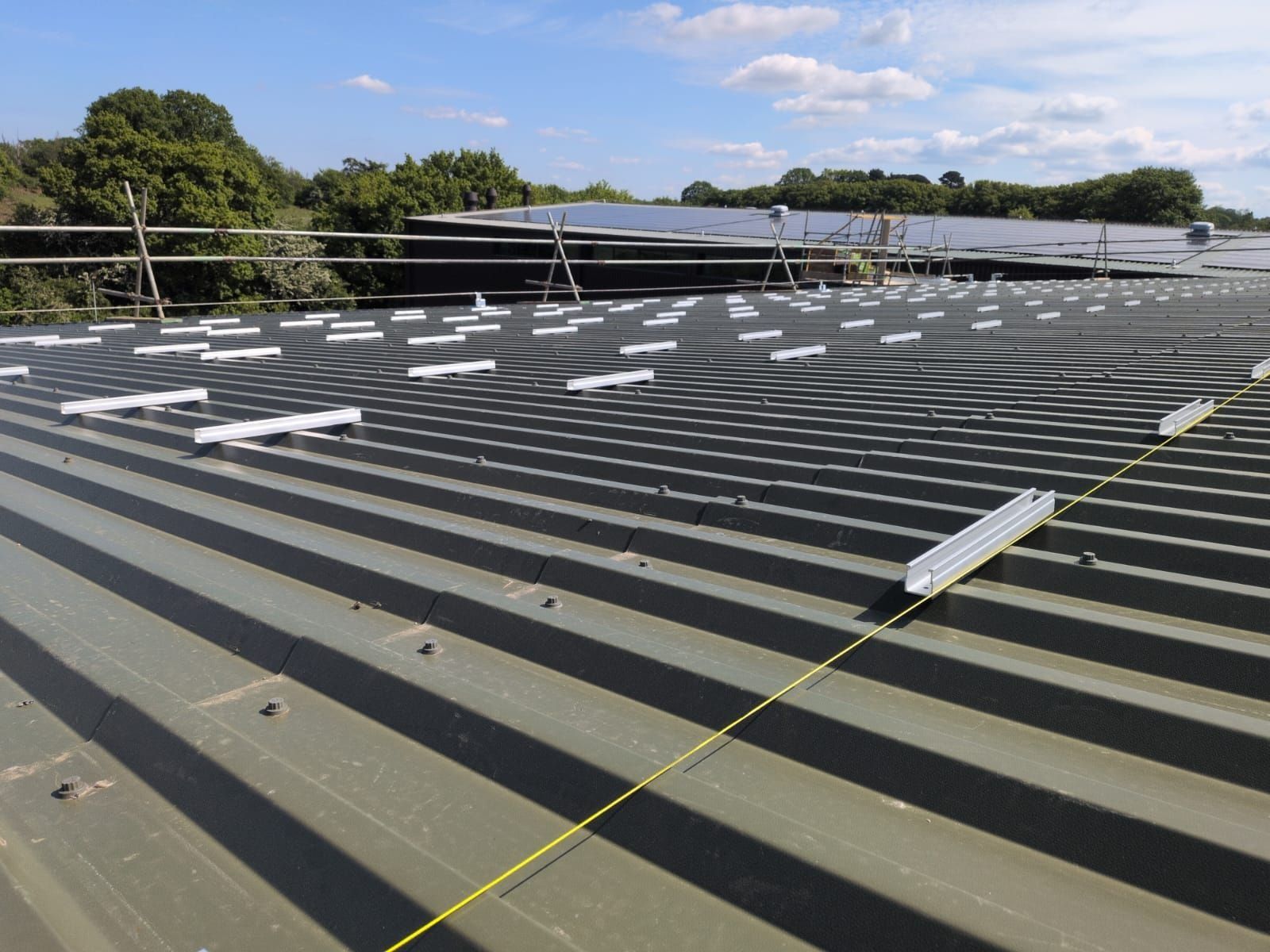
Commercial roofs are their own subject. Profiled metal sheet, single-ply membrane, built-up felt — each takes a different fixing and each has a different attitude to being penetrated. Asbestos cement is a genuine blocker rather than an inconvenience, and it changes the conversation entirely.
Then there is loading: what the structure will carry, with the ballast or the fixings, in the wind, on that exposure. And the covering’s remaining life, because an array fitted over a roof with a few years left in it is a cost you end up paying twice.
None of that is answerable from a satellite image, and we would be wary of anybody who quotes a commercial roof without having been on it.
Agricultural buildings, which are their own thing again
Barns, grain stores, packhouses and dairy units have big, simple roofs and, very often, a genuinely useful load underneath them: refrigeration, ventilation, drying, irrigation — most of it drawing power in daylight.
They also have three-phase supplies that were sized decades ago, long cable runs between buildings, and structures nobody designed with an array in mind. So the survey questions are different again: what the sheeting actually is, what the purlins will take, where the supply comes into the yard and how far that is from the building you want to use.
It is work that rewards being measured properly rather than estimated, and it is a large part of what is on our doorstep.
What to send us to get started
The address, and a satellite view with the roof outlined if you have one. What the building is and what goes on inside it. Twelve months of half-hourly data if your supplier will release it, or your bills if it will not.
Whether you own the building or lease it, and how long is left. A photograph of the main intake and of the distribution board. Whether anything is already planned for the roof, the yard or the supply.
That is normally enough for us to tell you whether the idea is worth a site visit — and to be straight with you if it is not.
Keeping the building trading
The first question most businesses ask is whether this stops them working. Usually the answer is that a good deal of it can be phased, done out of hours or arranged around a quiet week — and that the parts which genuinely need the power off are short and can be booked in advance.
Access is a design decision too. Scaffold, a mast climber or a MEWP each suit different buildings and each costs a different amount of disruption. Working on a live site means inductions, permits, signing in and out, and keeping an eye on everybody else trying to get their own job done.
We would far rather set all of that out in the programme at the start than discover on the morning that the loading bay we planned to work above is the one the lorries use.
Tenants, landlords, and who actually benefits
On a great many commercial buildings the person paying for the roof is not the person whose bill goes down. That is solvable, but it is real, and it wants dealing with before the survey rather than after the quote.
Lease length matters, because a system with a working life measured in decades, on a building with a couple of years left on the lease, is a different proposition entirely. So does who holds responsibility for the roof, who consents to the works, and what happens at a change of tenant.
We are electricians rather than solicitors. But we know which of those questions have to be answered before anything useful can be designed, and we will ask them early rather than late.
Three-phase, boards and the unglamorous half
A good share of commercial work has nothing to do with a roof. Distribution boards and sub-mains. Additional circuits and machine supplies. Lighting, and the emergency lighting that goes with it. Containment run properly rather than improvised over twenty years by four different trades.
Fixed-wire testing and periodic inspection, which is usually what a landlord, an insurer or a licensing condition is actually asking for. Remedial work afterwards, prioritised honestly rather than sold as a package.
It is the same team and the same certification standard as the domestic side, and it is very often where a commercial relationship starts: a board change or a test this year, and the array two years later.
Charging a fleet, or a car park
Several charge points on one supply is a load-management problem before it is an installation problem. The question is never simply how many units will fit on a wall; it is what the incoming supply can carry with everything else the site is doing, and whether the charging can be spread across the hours the vehicles are actually standing still.
Where the headroom is tight, managed charging is very often cheaper and far less disruptive than asking the network for a bigger supply. Where it genuinely is not enough, we would tell you that before you ordered anything rather than after it arrived.
Procurement, and the paperwork that ends the job
A business buys differently from a household. You want a written scope, a specification you can put next to somebody else’s, lead times you can plan around, and a programme that says who is on site when.
At the end you want the documentation: electrical certification for everything we have touched, the commissioning records, the operation and maintenance information, and whatever your insurer and your auditor need to see. That comes as a matter of course rather than as an extra line.
On tax treatment, ask your accountant rather than your electrician. The allowances that apply to solar on a commercial building are not the headline ones people tend to assume, and it is not our place to tell you what your return should say.
What it looks like when we’re there
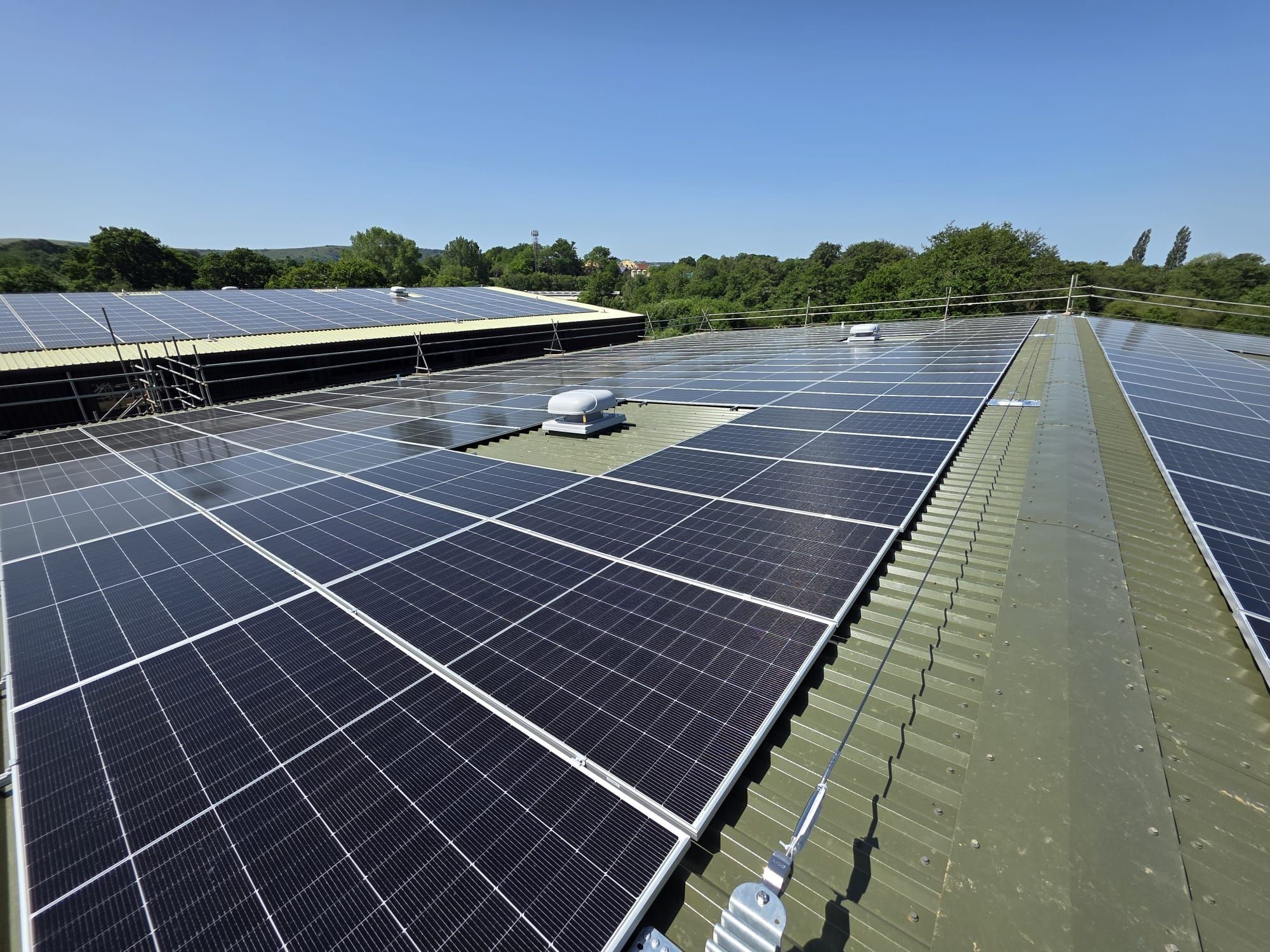
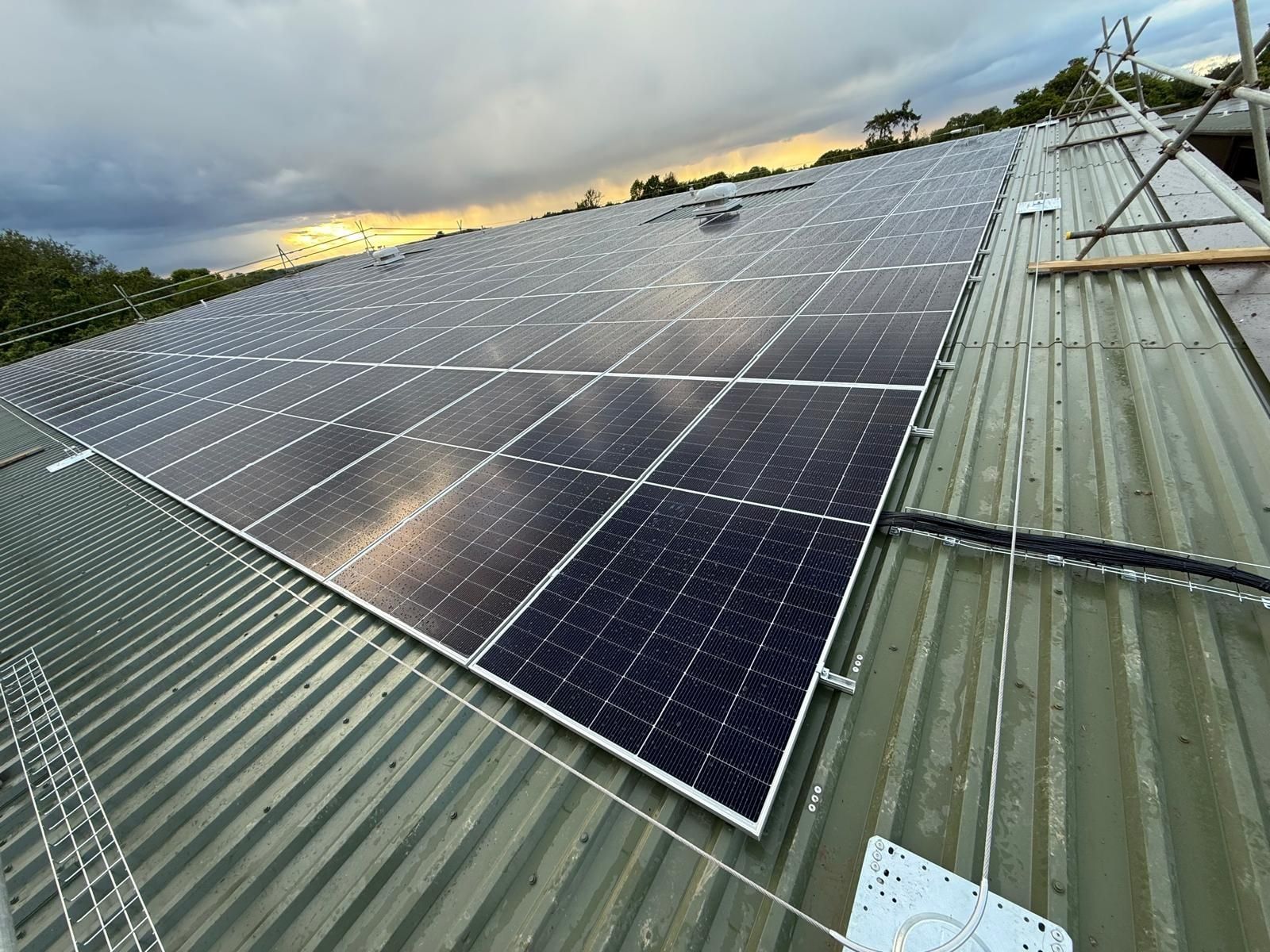
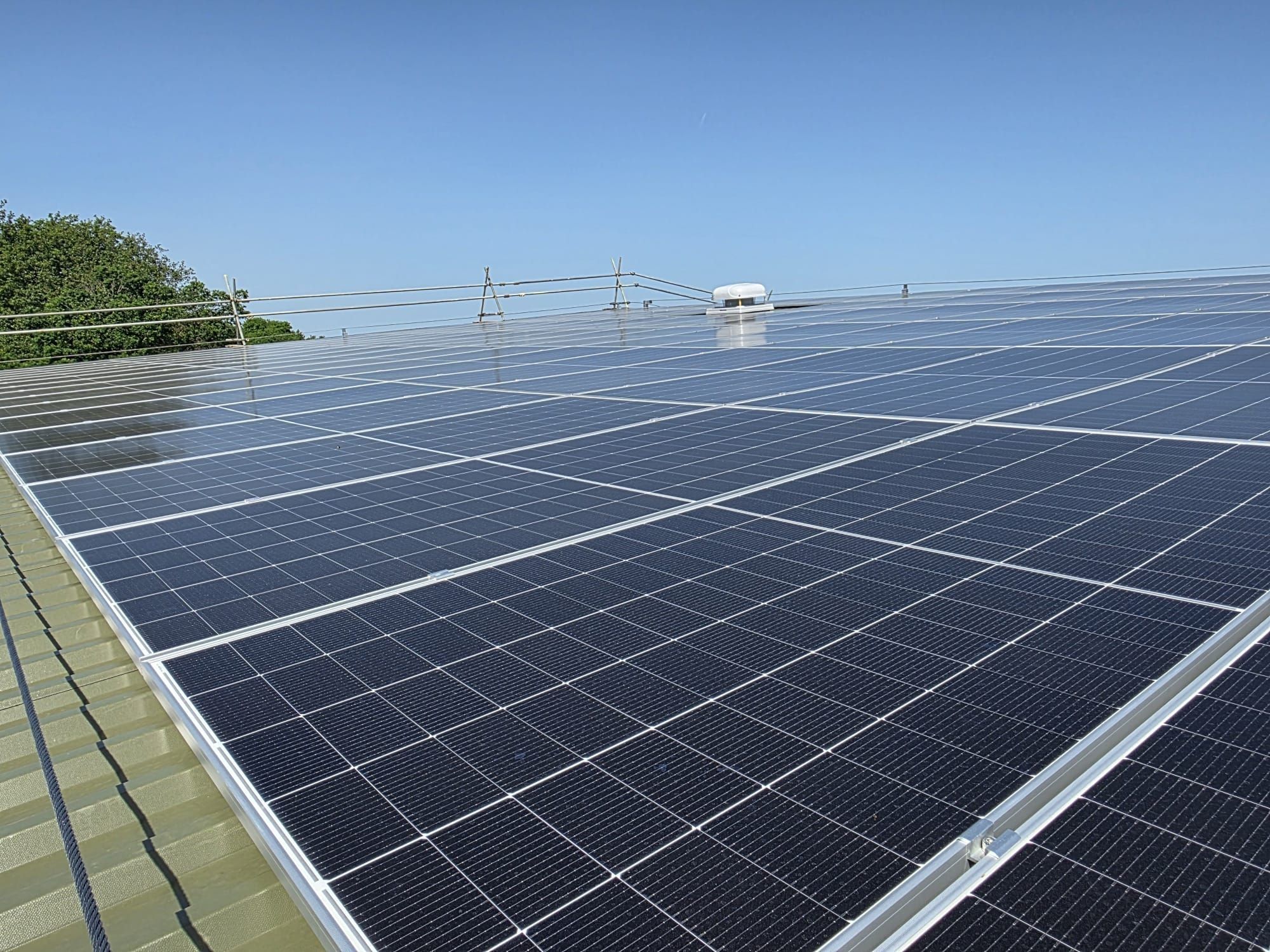
Our own photographs. They show the systems we design and fit — not specific completed jobs, and no customer or address is identified.
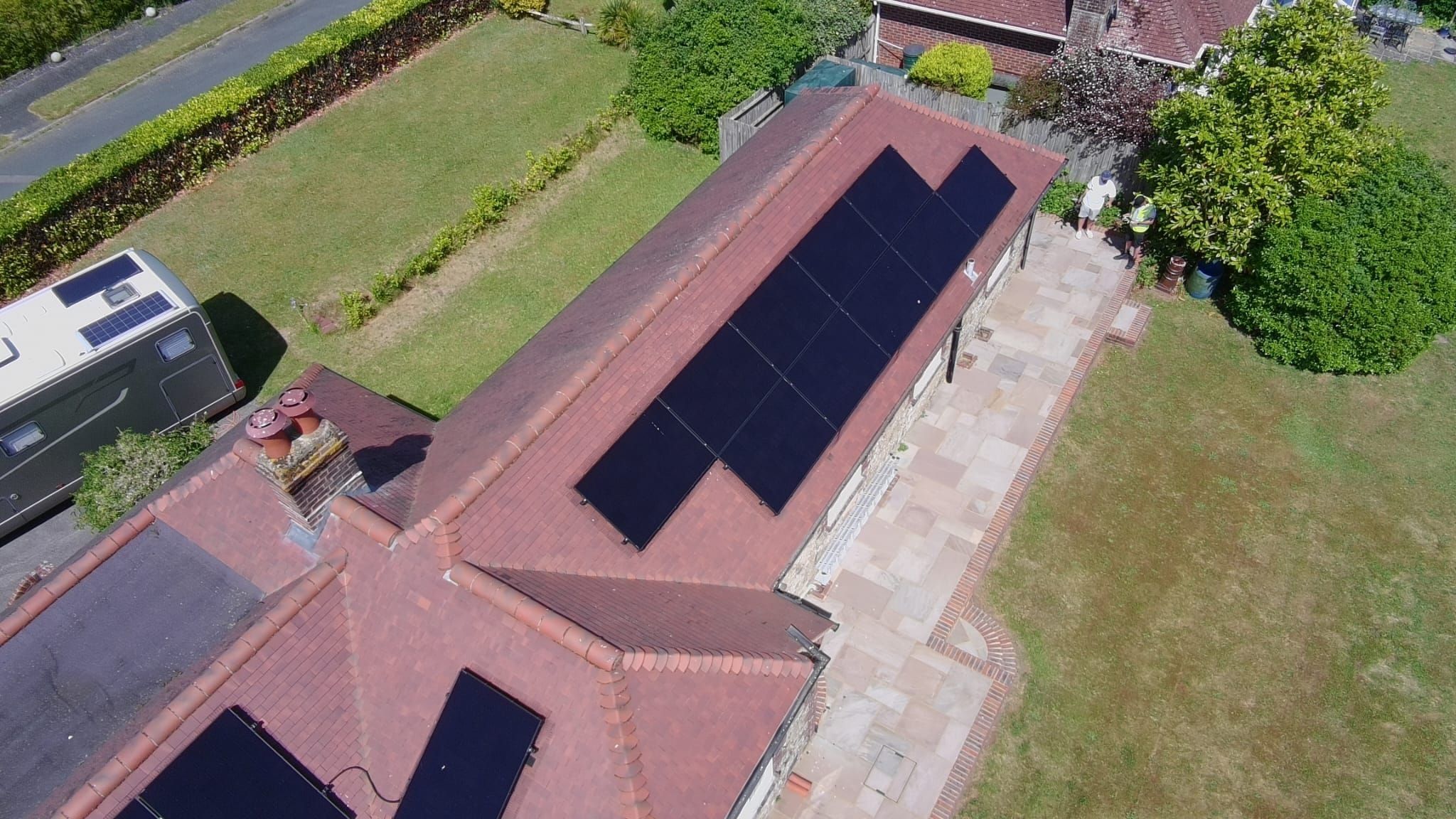
What actually happens at a free solar survey
Thirty to forty-five minutes, a look at your roof and your fuse board, and a quote afterwards. No pressure, and sometimes the answer is no.
Read it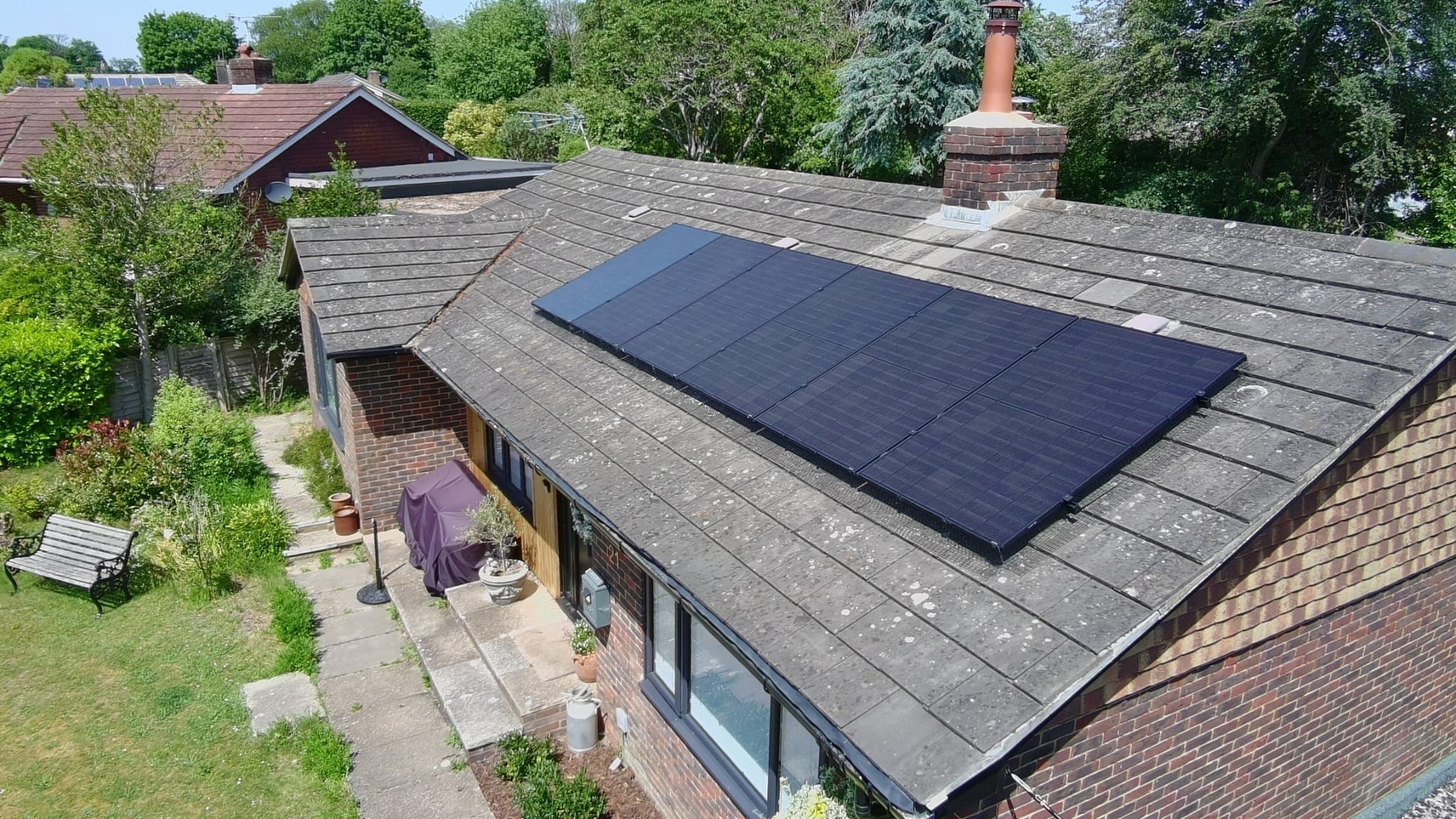
Horsham stone, flint and the Sussex roof problem
Some local roofs make solar straightforward. Others need a different conversation entirely. A survey-level guide to what we find on West Sussex roofs.
Read it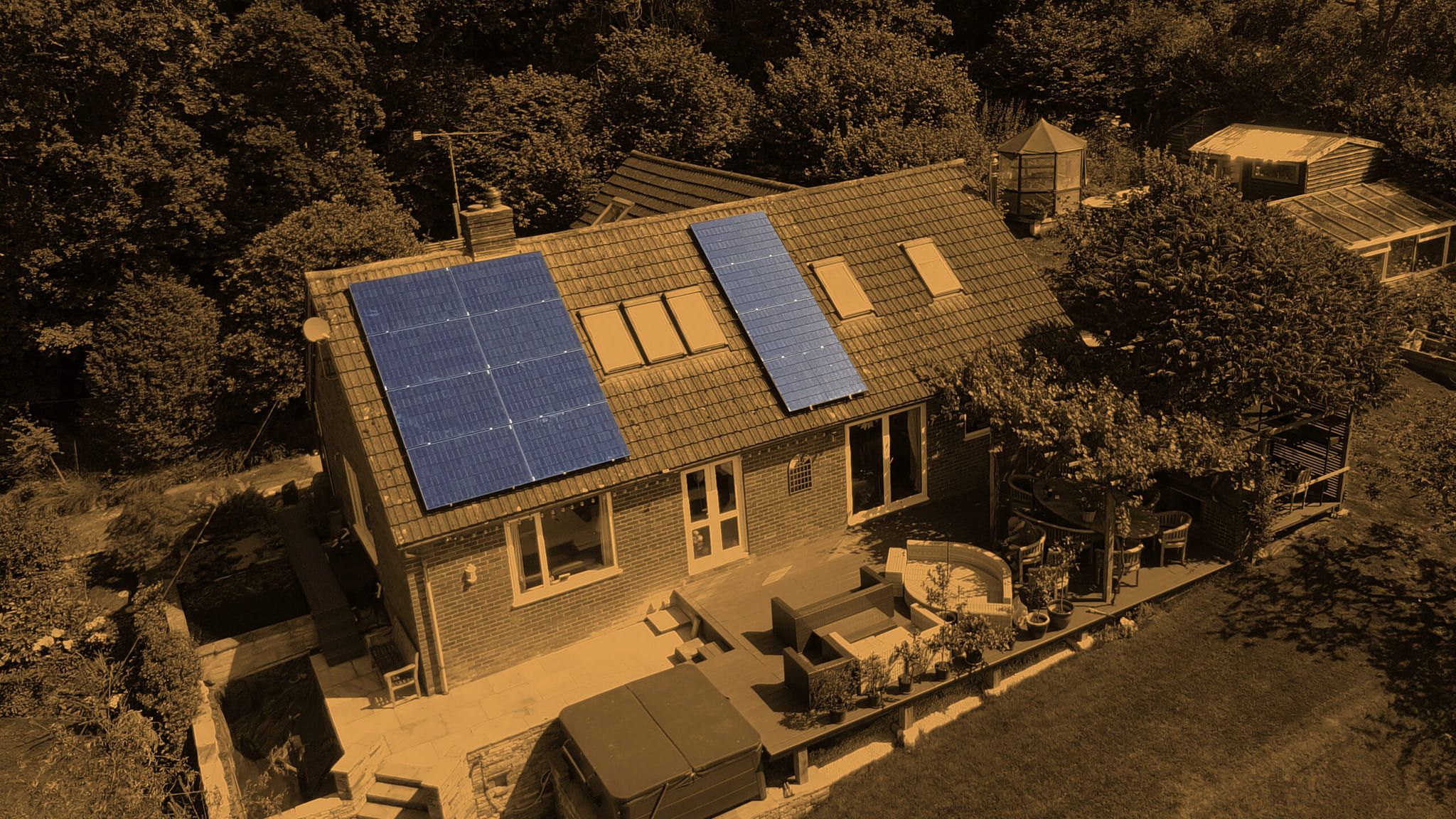
What solar actually does in a Sussex winter
Panels still generate on grey days — just less. What a West Sussex December really looks like on the app, and how to make the short days count.
Read itThe next step
Book your free survey
Thirty to forty-five minutes, at your premises, at no cost. We look at the roof or the ground, the incoming supply and the boards, and how the building actually uses power — then send you a clear quote with the assumptions shown.
- Call 01243 882444
- Email hello@solar-squirrel.co.uk
- Based Washington, West Sussex
If the building will not carry it, or the numbers do not work on your consumption, we will say so and save us both an afternoon.