

EV charging
Charging an electric car off your own roof
Pairing a home charger with solar changes the maths on both. What actually gets charged by the sun, and why the two want designing together.
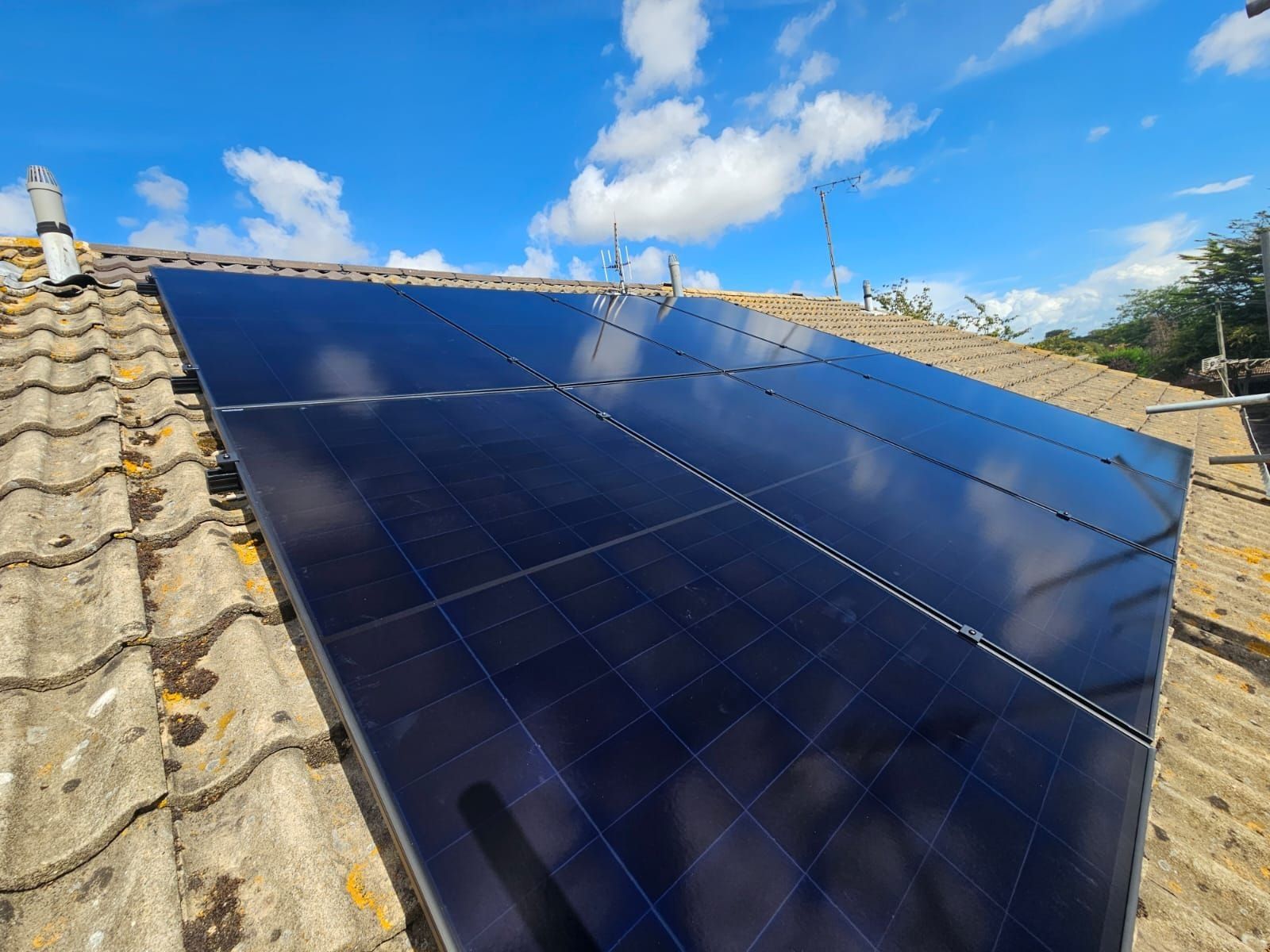
One of our own installations, photographed on the job.
An electric car is the largest single electrical load most households will ever add. It is also, conveniently, one of the most flexible — it does not much care when it charges, only that it is full by morning.
That flexibility is what makes it pair so well with a roof full of panels.
The honest version of “charging on sunshine”
You will read a lot of marketing about running your car on free sunlight. The reality is more specific, and more useful.
A 7 kW home charger draws more than a typical domestic array produces at its very best moment. So on a bright afternoon you are not charging entirely from the roof — you are charging partly from the roof and partly from the grid, with the split depending on what the sun is doing and what else in the house is switched on.
What you can do is bias it heavily. Solar-aware charging watches your generation and modulates the charge rate to soak up surplus rather than exporting it. On a good day in April you can put a genuinely large share of a charge in from your own roof.
The overnight question
Most people charge overnight, when there is no sun at all. Two things still make solar relevant:
A battery. It fills during the day and discharges into the car overnight. You are still using your own generation, just time-shifted.
Tariffs. If you are on a cheap overnight rate, the sensible play is often to charge the car on the cheap rate and use the solar for the house during the day. Solar does not have to charge the car directly to be the reason the sums work.
Why they want designing together
This is the part that costs people money when it is done in the wrong order.
An electric car adds a substantial amount to annual household consumption. If your array was sized for the house before the car arrived, it is now undersized for the household you actually have — and adding panels later means a second scaffold, a second visit, and possibly an inverter that will not take the extra.
If a car is on the horizon at all, say so at the survey. Sizing for it at the start costs very little. Retrofitting for it costs a great deal.
The unglamorous bit
Load management. A charger, an oven and a shower running at once is more than plenty of older supplies enjoy. A load-managed charger watches the incoming supply and eases off rather than tripping the main fuse — which matters more in an older Sussex property than in a new build.
More from the blog
Why nearly every roof we do now is all-black
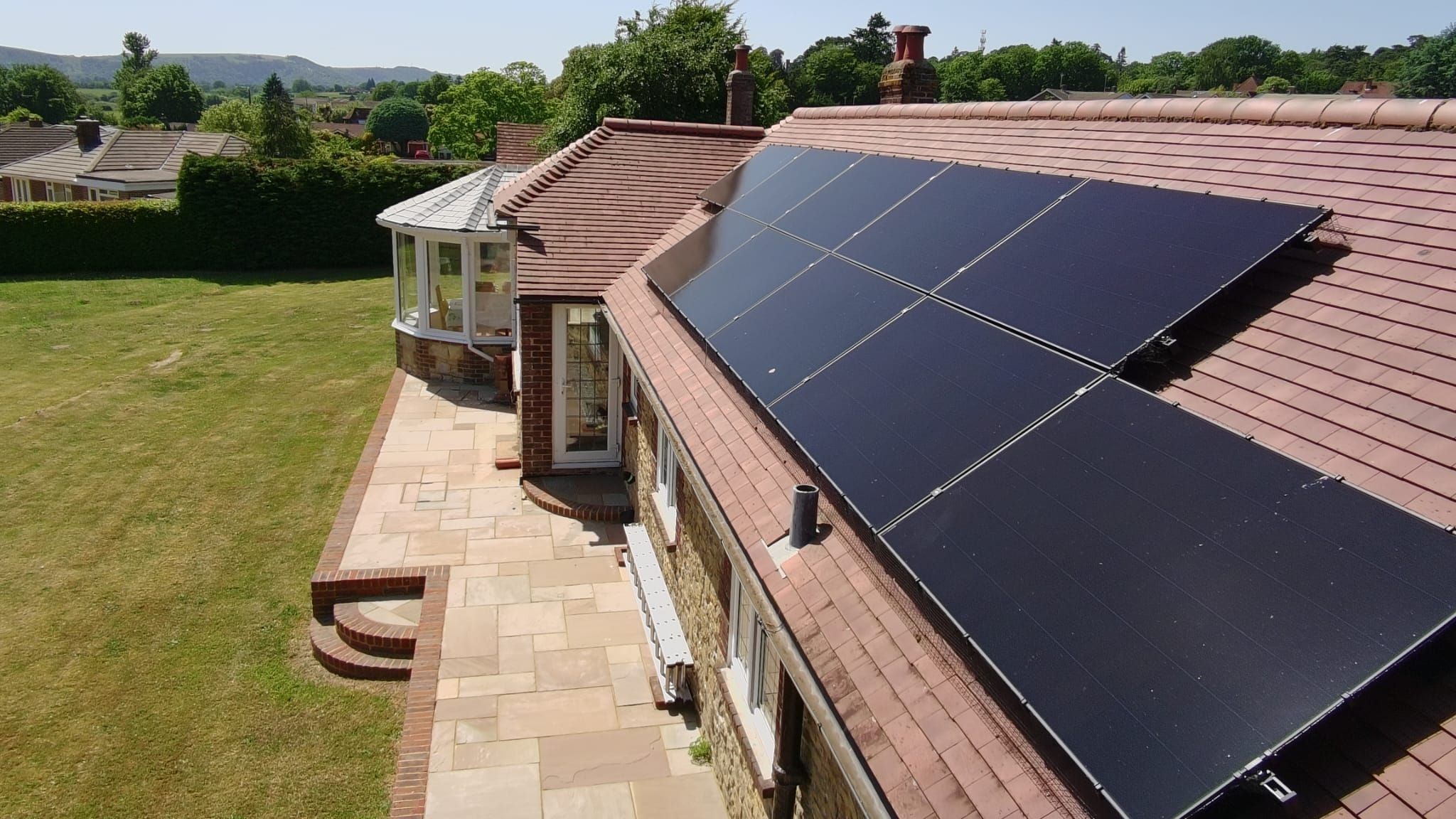
Black frames, black backsheets and why the silver grid disappeared from Sussex roofs. What you gain, what it costs, and when it isn't worth it.
Read it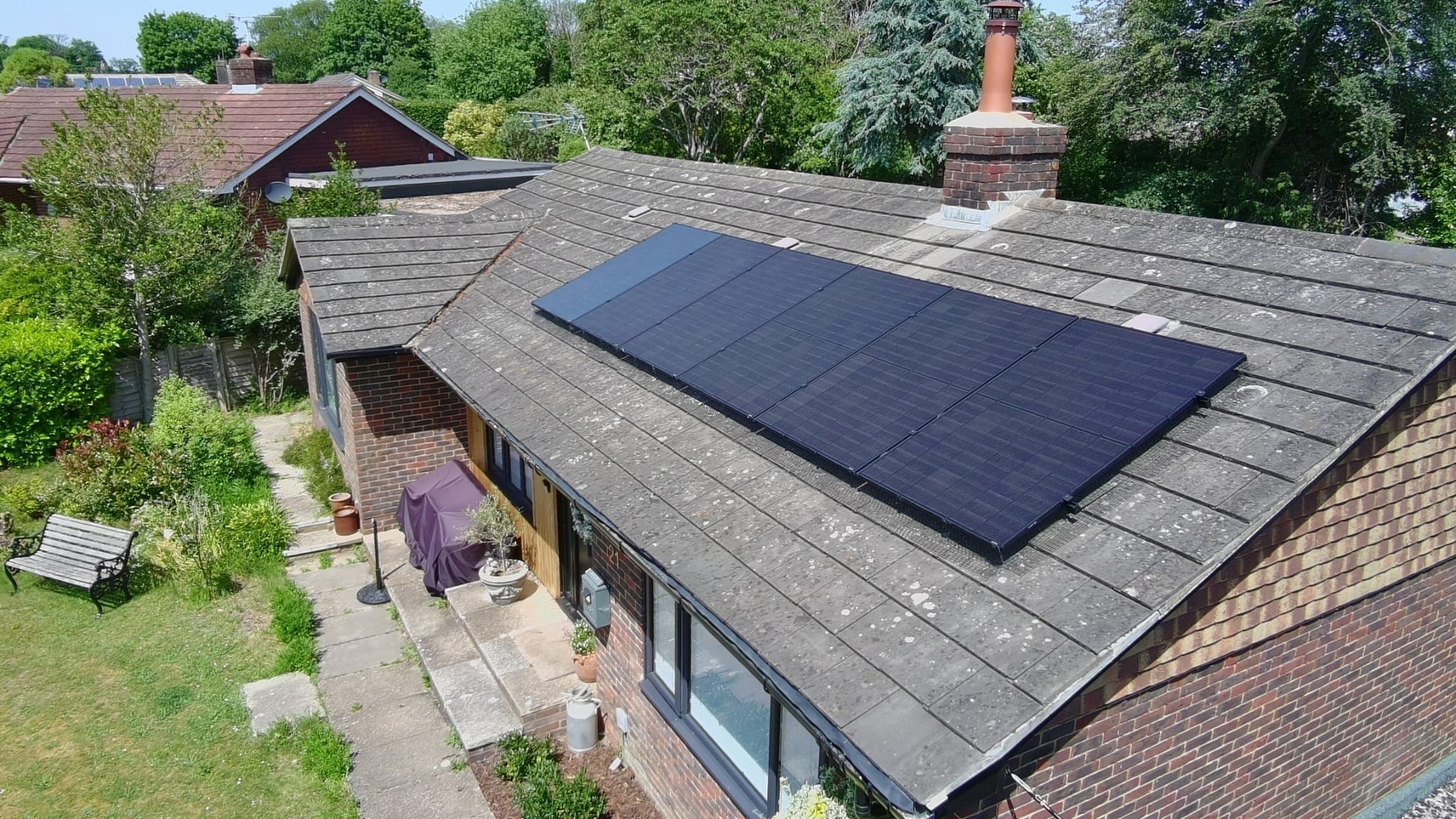
Horsham stone, flint and the Sussex roof problem
Some local roofs make solar straightforward. Others need a different conversation entirely. A survey-level guide to what we find on West Sussex roofs.
Read it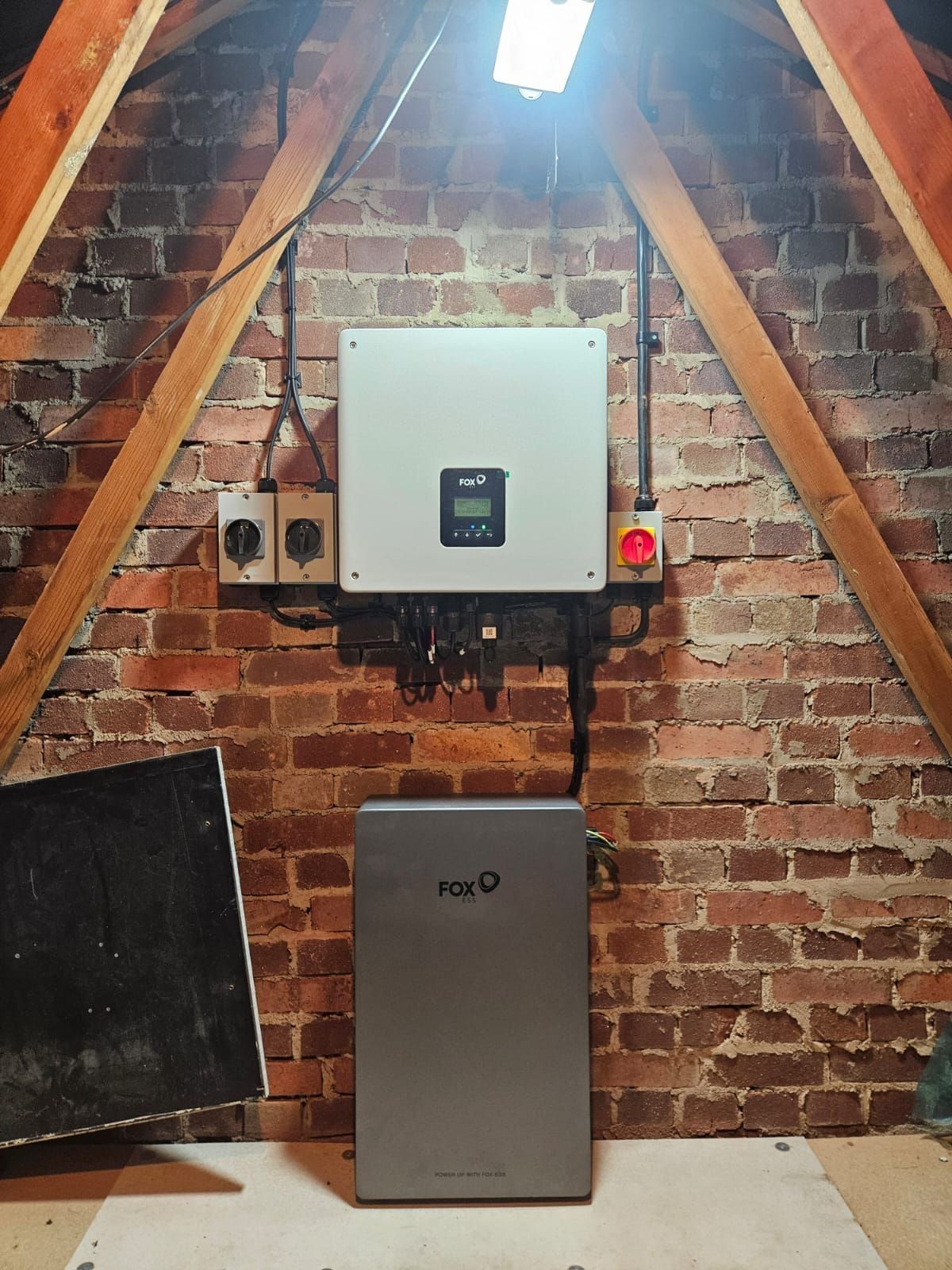
Is a battery worth it? The honest arithmetic
A battery roughly doubles how much of your own generation you use. Whether that pays depends on when your house is empty. Here is the arithmetic.
Read it