

Maintenance
Pigeons, panels and why we fit mesh as part of the job
The gap under a solar array is a perfect nesting site, and clearing a colony out later costs far more than preventing it. Which roofs need mesh.
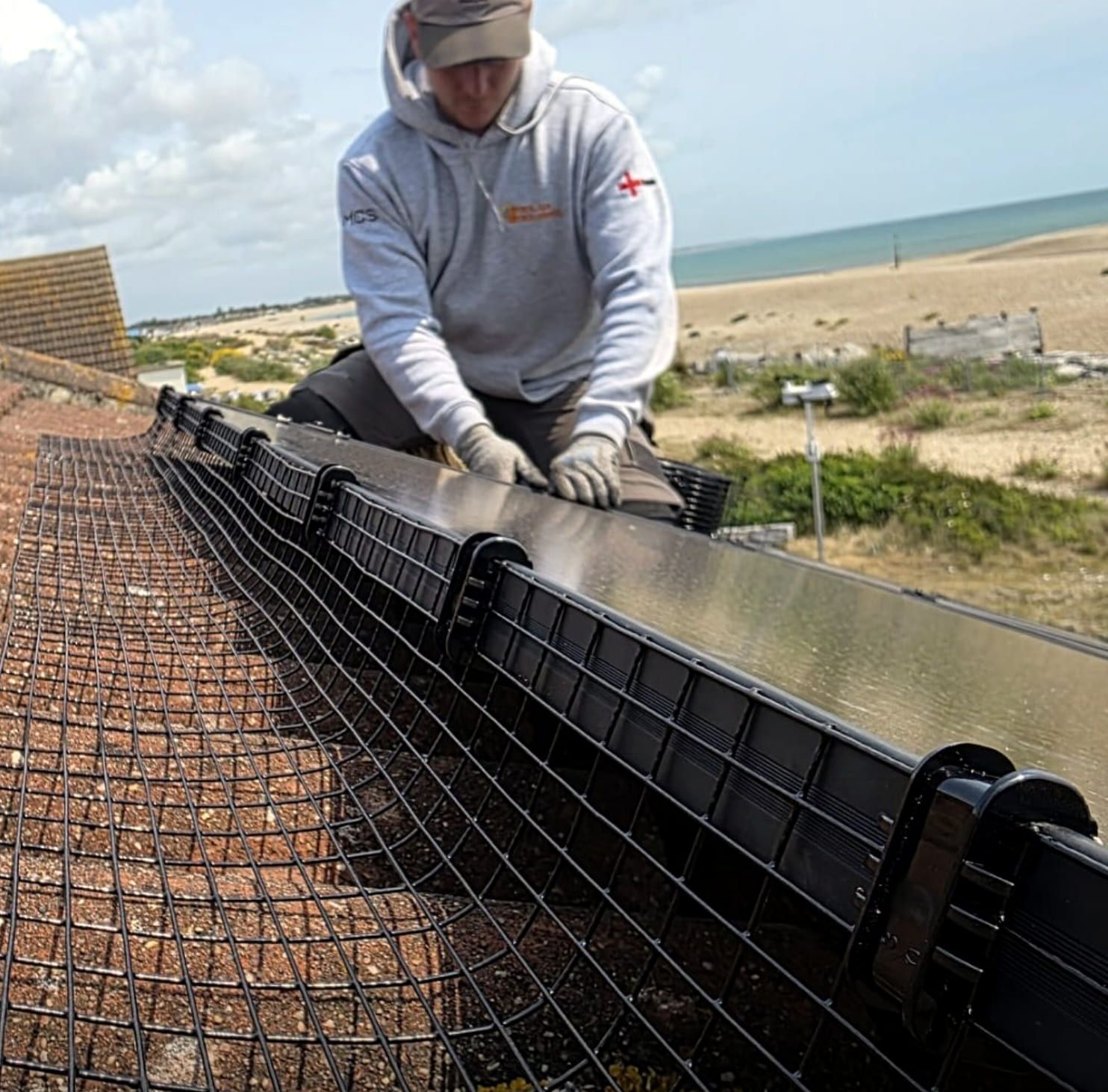
Mesh clipped to the panel frame along the array perimeter. Nothing screwed into the tiles.
An array sits on rails, a few inches clear of the tiles. To a pigeon, that is a warm, dry, sheltered, predator-proof cavity that runs the entire width of your roof.
They find it quickly.
What actually goes wrong
It is not simply noise, though the noise is considerable and it is directly above a bedroom.
Nesting material builds up under the panels and blocks the airflow the array relies on to stay cool. Droppings are acidic and they accumulate — on the tiles, in the gutters, down the elevation. Gutters block, and a blocked gutter on a Sussex winter is its own separate problem. And once a colony is established, clearing it means lifting panels, cleaning the roof, disposing of the mess, and only then fitting the mesh you could have fitted on day one.
That is a day’s work and a scaffold. The mesh, fitted during the original install when the scaffold is already up, is a fraction of it.
What the mesh is
A galvanised or PVC-coated wire mesh, clipped to the perimeter of the array with purpose-made clips that grip the panel frame. Nothing is drilled, screwed or fixed into your roof covering — which matters a great deal on clay peg tile and matters enormously on Horsham stone.
It follows the array edge, so from the ground it disappears. On an all-black array with black-coated mesh you have to know it is there to see it.
Which roofs need it
Not all of them. Roofs we would always mesh:
- Anywhere with an established pigeon or gull population nearby — which on this coast is most seafront property
- Roofs near mature trees, or with an existing history of birds in the eaves
- Any array where the panel-to-tile gap is generous
- Coastal jobs generally. Gulls are larger, more persistent and considerably harder to move on
Roofs where we might not bother: in-roof systems, where the panels sit down into the covering and there is no cavity to occupy.
The upsell question
We would rather fit it while the scaffold is up and it costs very little than come back in two years and charge you properly for the same job plus a clean-up. It is mentioned at the survey, priced openly, and it is your call.
More from the blog
Why nearly every roof we do now is all-black
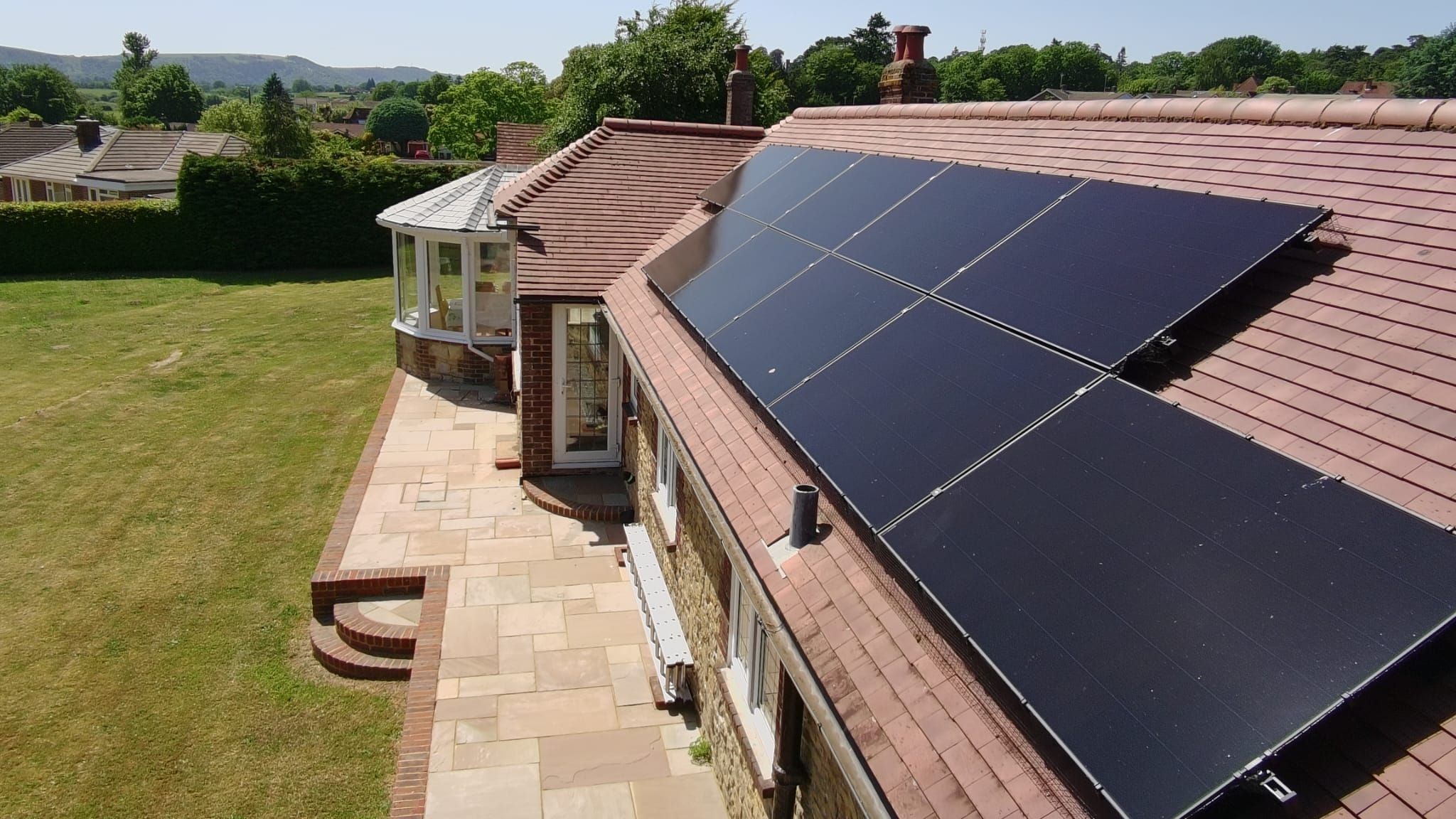
Black frames, black backsheets and why the silver grid disappeared from Sussex roofs. What you gain, what it costs, and when it isn't worth it.
Read it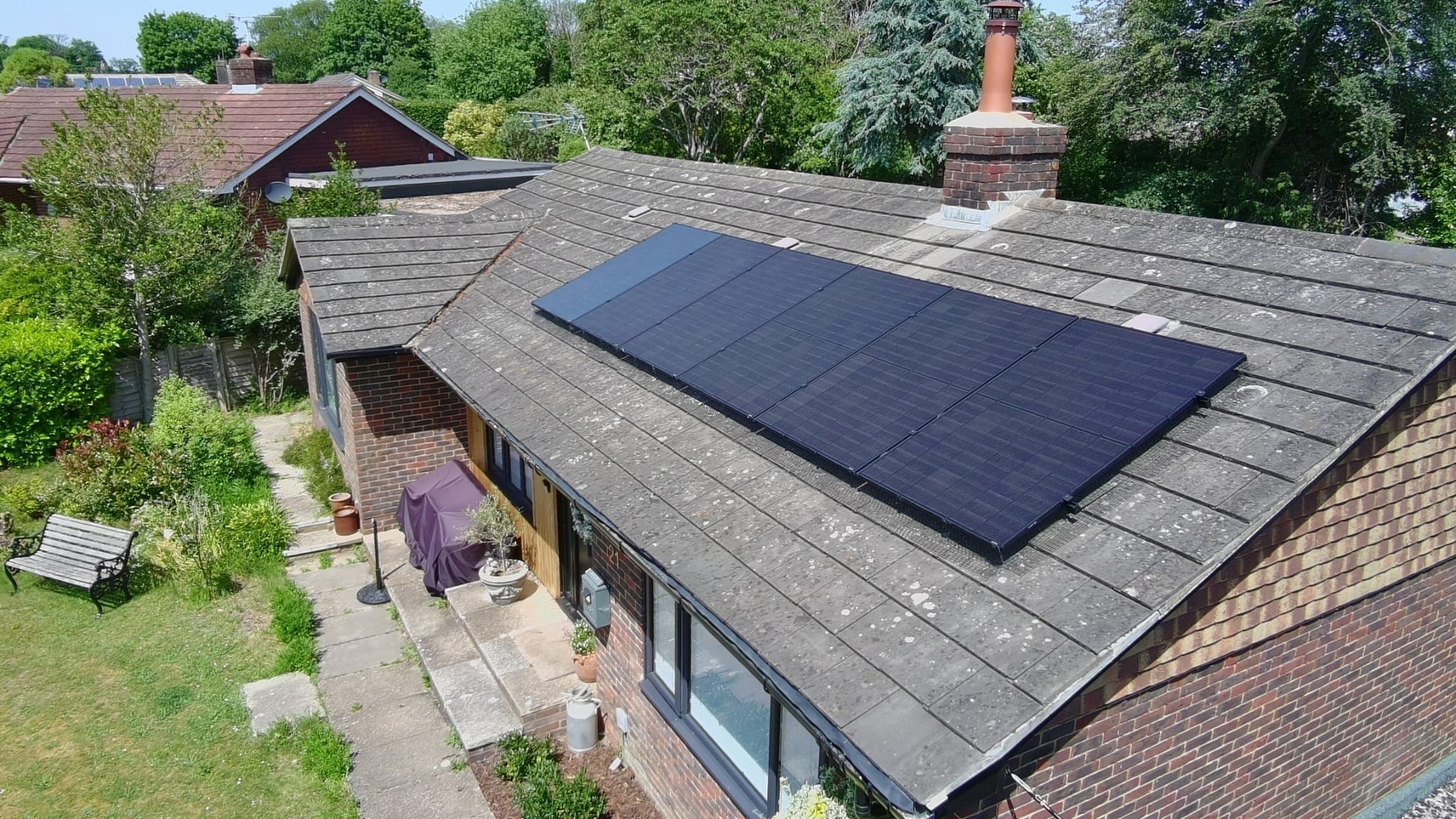
Horsham stone, flint and the Sussex roof problem
Some local roofs make solar straightforward. Others need a different conversation entirely. A survey-level guide to what we find on West Sussex roofs.
Read it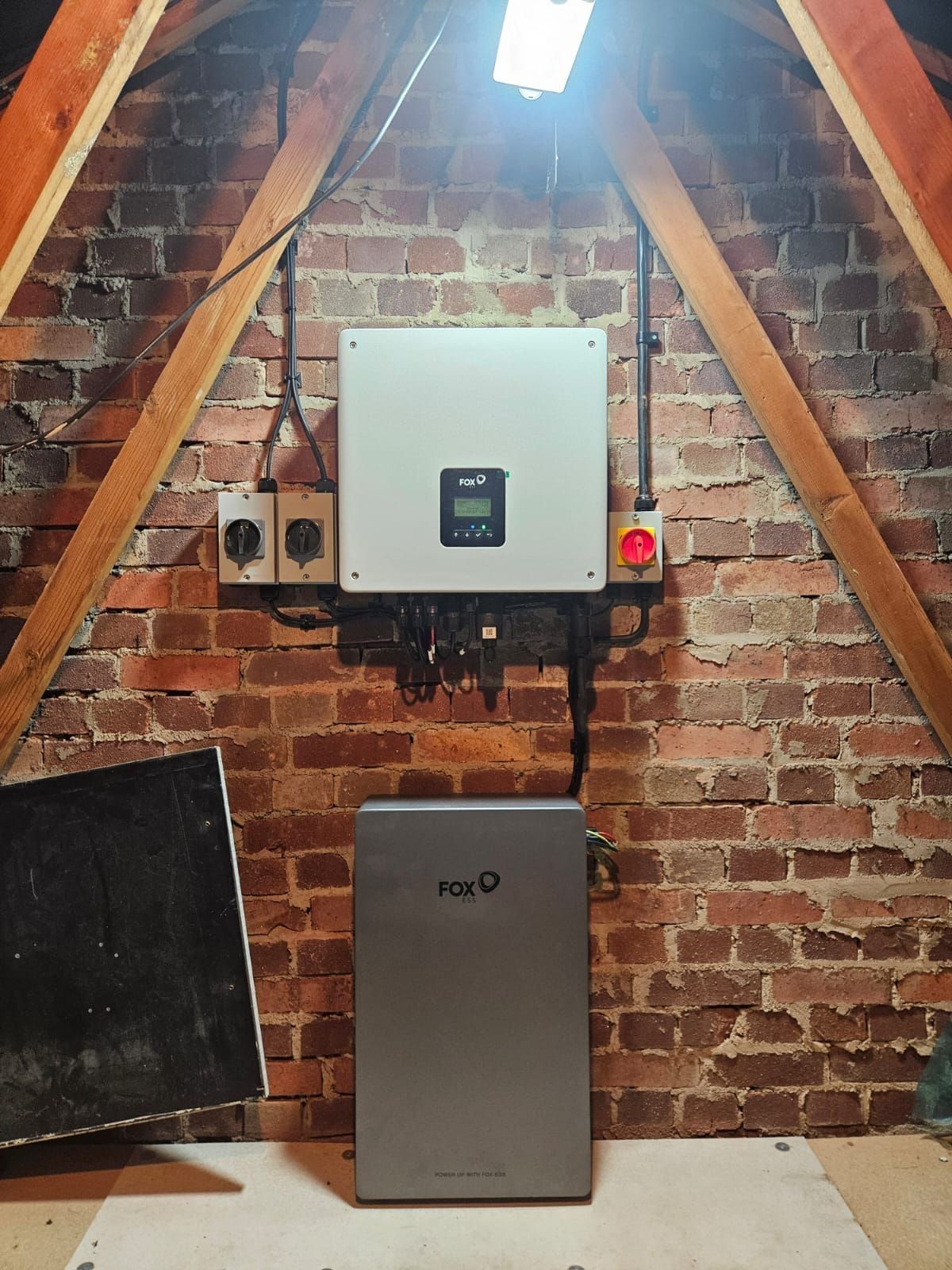
Is a battery worth it? The honest arithmetic
A battery roughly doubles how much of your own generation you use. Whether that pays depends on when your house is empty. Here is the arithmetic.
Read it