

Getting started
Scaffolding, access and the survey: the part of a solar quote nobody explains
Why the scaffold is in every quote, what a 30–45 minute survey measures, and the Sussex streets, roofs and lanes where access decides the design.
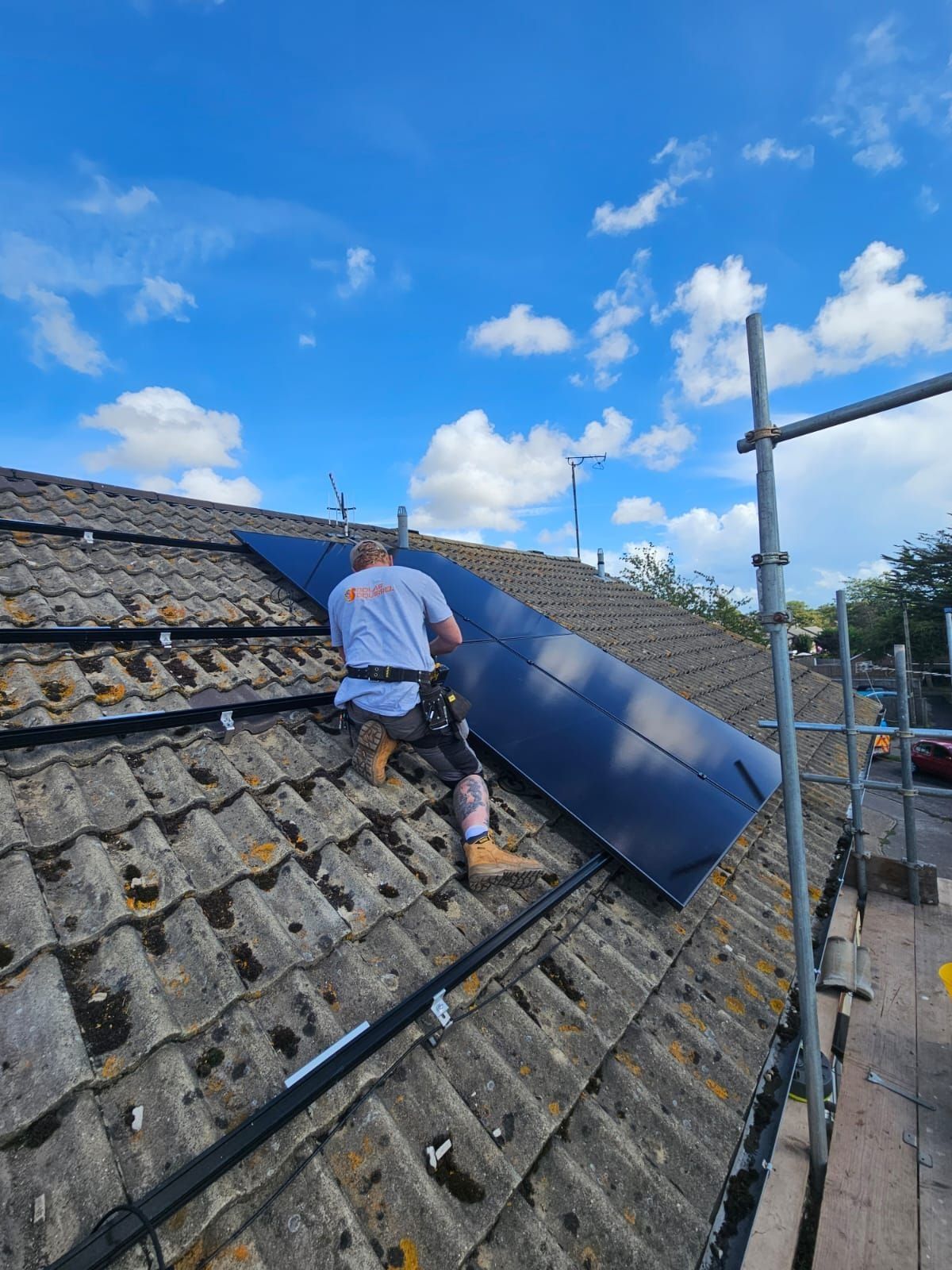
Fitting the first panels onto the rails, from one of our own jobs — the scaffold is at the eaves behind him. It goes up before the first rail and comes down after the last mesh clip, and it is in the quote.
Two lines on a solar quote get the least attention and cause the most surprise later: the survey, which people assume is a sales visit, and the scaffold, which people assume is somebody else’s problem. Neither is. Here is what each one actually is, and why in Sussex the access question often decides the design before the panels do.
The survey: thirty to forty-five minutes, nothing to sign
Our survey is somebody coming to look at your house for thirty to forty-five minutes, at no cost, with nothing to sign at the end of it. It measures five things. The roof — its pitch, which way each slope faces, what it is covered in, and what shades it. The consumer unit — where it is, what state it is in, what the incoming supply and earthing arrangement look like. Where an inverter and, if you want one, a battery can sensibly live under the fire-safety specification. Whether a car is in the picture. And the access: how the scaffold goes up, where the van parks, and what the cable run from roof to board has to cross. The quote that follows is sized to those five things, not to the roof’s area.
The scaffold: always, and in the price
A tiled or slated roof is worked from a scaffold with edge protection, not from a ladder. It goes up before the first rail is fixed and comes down after the last clip, and it is in our quote rather than an extra — so is the bird mesh, if the roof needs it, because the only sensible time to fit mesh is while the scaffold is standing. A single domestic installation is typically one to two days once the scaffold is up. If a quote you are reading elsewhere is noticeably cheaper, the scaffold line is the first place to look.
Where access decides the design
Worthing’s terraces. A straightforward pitch with an awkward approach: the scaffold plan matters more here than the panel choice.
Shoreham’s harbour side. The streets are tight for scaffold and the coast is hard on fixings, so the survey spends as long on access and corrosion as on which way the roof faces.
Brighton. Street gradients make scaffold access a genuine design input; on a terrace the front slope is often shallow slate with a parapet in the way and a street below that makes scaffold expensive, which is why the rear slope or a ballasted flat roof does so much of the work there.
The home patch under the Downs. Rural plots with mature trees, lanes the van only just fits down, and outbuildings whose roofs are frequently the better array — the scaffold goes on the barn, not the cottage.
The roof has to be worth it
A 25-year array on a roof with five years left in it is a false economy, and re-roofing under an existing array costs considerably more than doing it in the right order. The survey says so if that is what it finds, and we would rather lose the job than stand on a roof that is about to be replaced.
Where to go next
What a free survey involves is the survey in full; bird mesh: when a roof needs it is the mesh question; Sussex roofs and Brighton’s roofs are the coverings and the gradients. The town pages — Worthing, Shoreham-by-Sea, Brighton & Hove, Storrington & Pulborough — carry the local access facts, and the words are in the glossary.
More from the blog
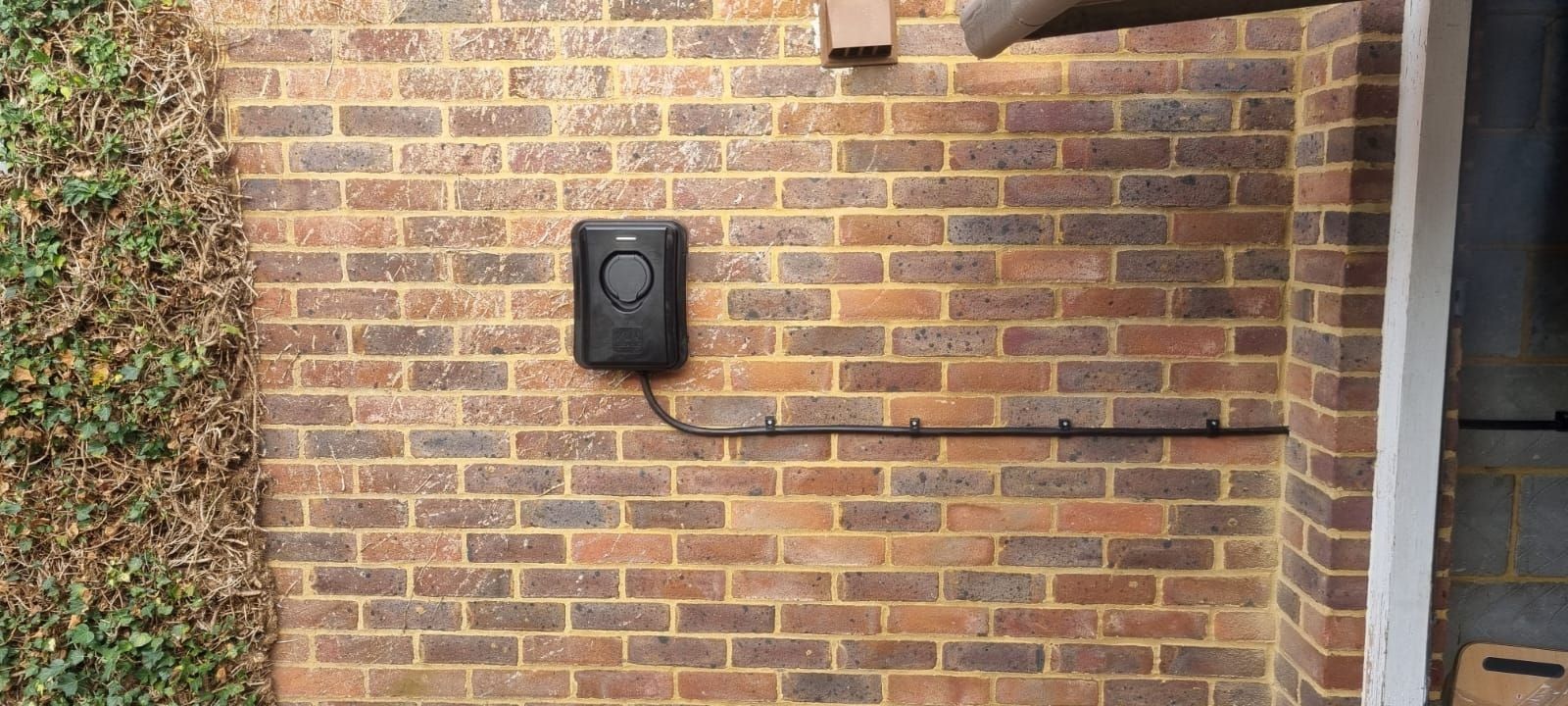
Charging an electric car in a Brighton terrace: the public network, and the home-charger cases
Over 1,000 public chargepoints, 86% of residents without off-street parking within a three-minute walk — and when a Brighton house can have its own.
Read it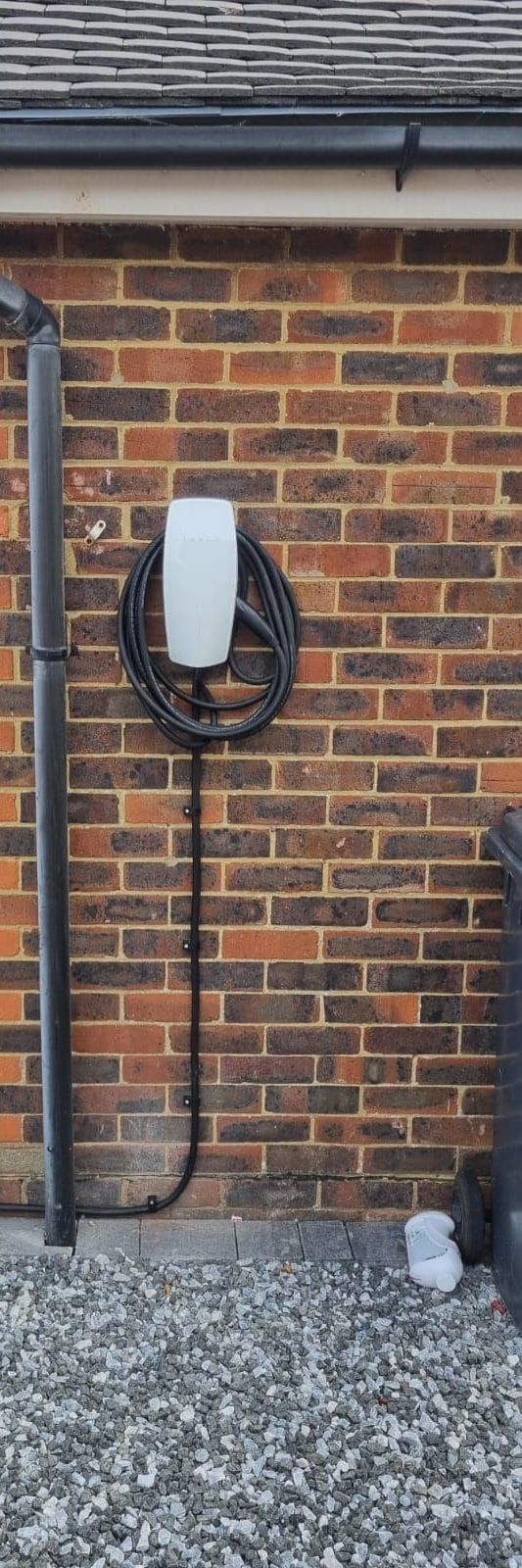
EV charger installation in Surrey: the rollout, the cable-gully rule and what a home charger needs
What Surrey has built and banned — 200-plus public sockets, no cables across the pavement — and what a home charger on the Surrey edge involves.
Read it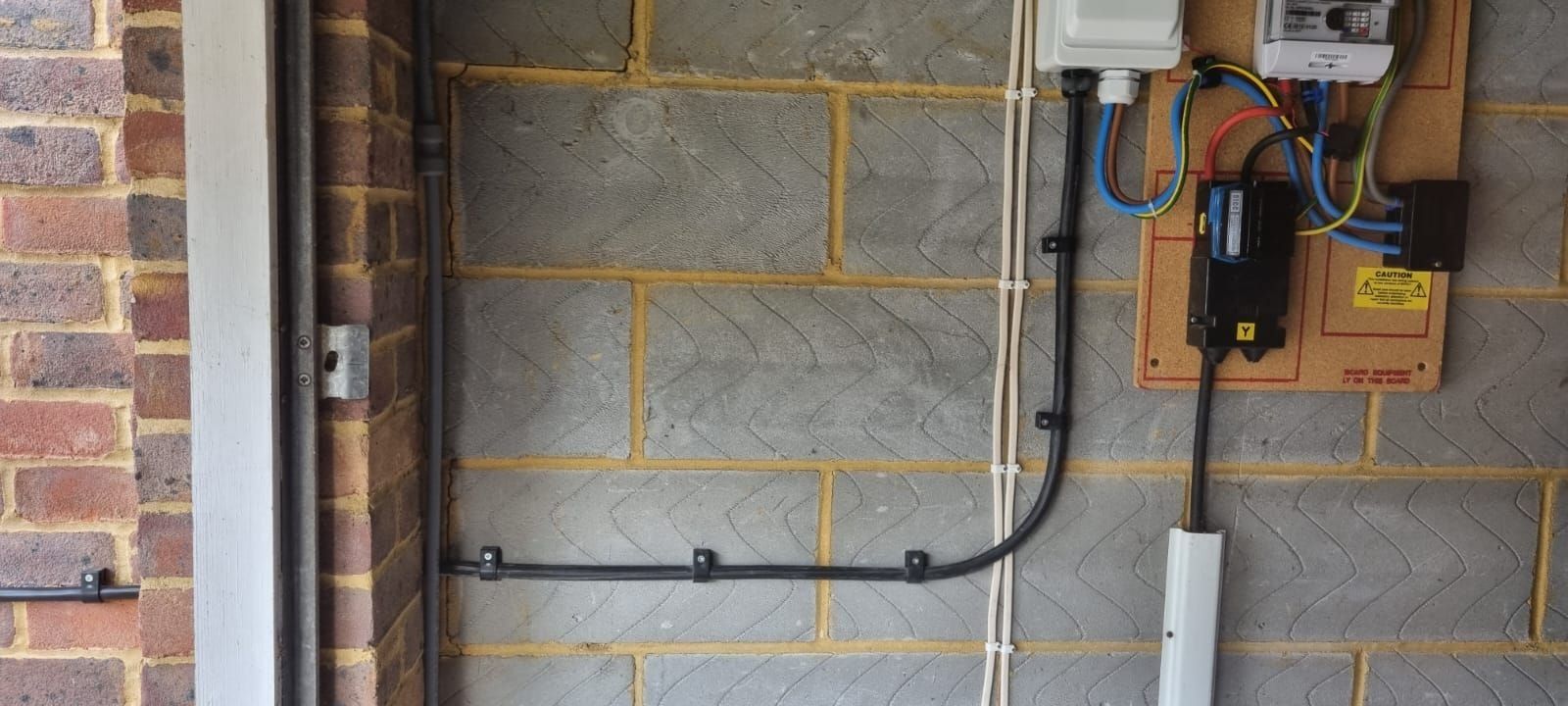
A home charger in a Worthing terrace: parking, the supply and the grant
Three Worthing houses — a semi with a drive, a terrace with a rear space, a terrace on the street — and what each can do about charging a car at home.
Read it