

Panels
Why nearly every roof we do now is all-black
Black frames, black backsheets and why the silver grid disappeared from Sussex roofs. What you gain, what it costs, and when it isn't worth it.
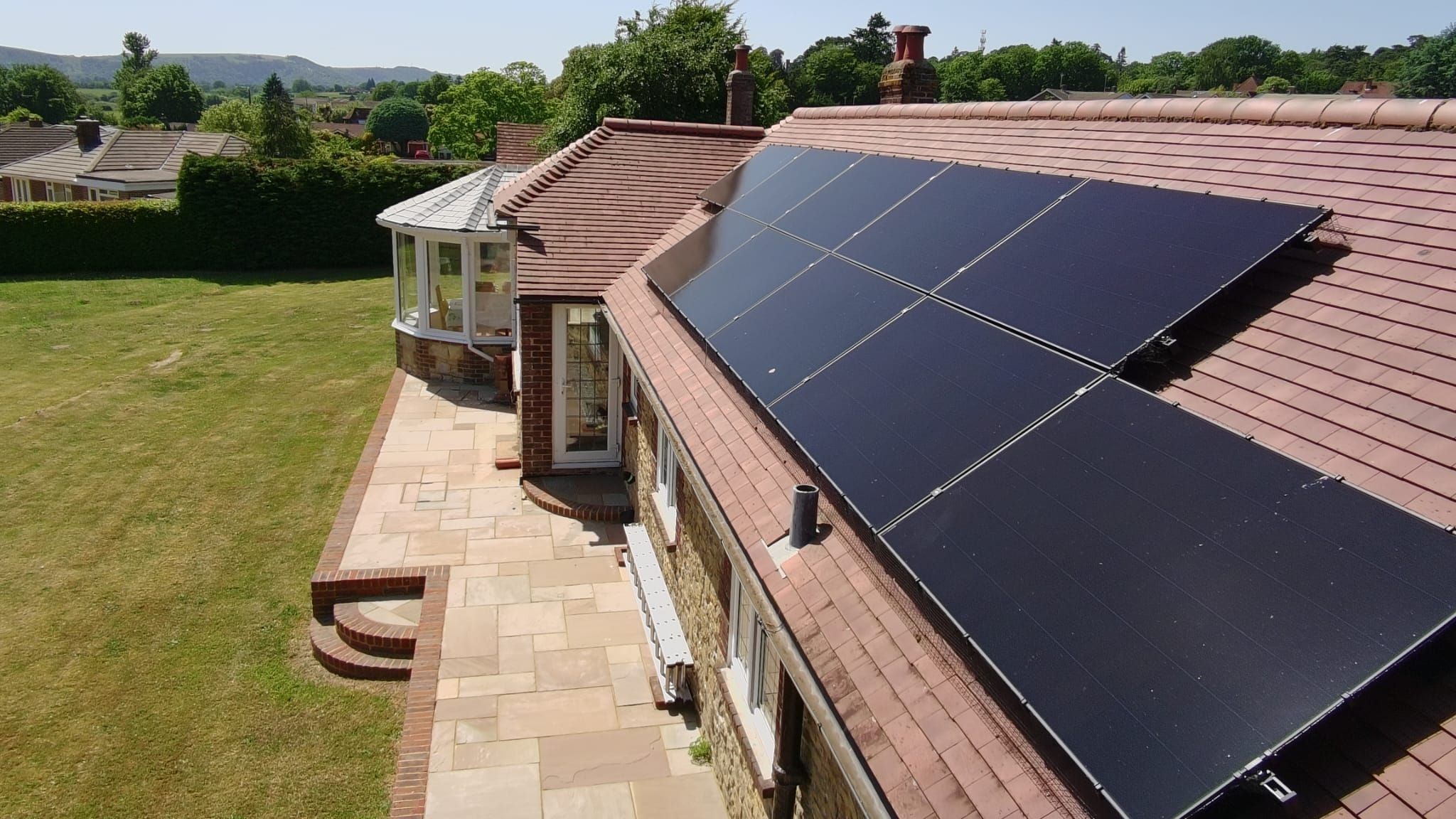
An all-black array on clay tile. From the pavement it reads as a darker panel of roof.
Ten years ago a domestic solar array announced itself. Silver frames, a visible grid of busbars, a white backsheet showing through every gap between the cells. You could count the panels from the end of the road.
Almost every system we fit now is all-black, and the difference is not subtle.
What “all-black” actually means
Three separate things are black, and they get conflated:
- The frame. Anodised black rather than mill-finish aluminium. This is the one that does most of the visual work, because the frame is what draws the grid you see from a distance.
- The backsheet. The layer behind the cells. On a conventional panel it is white, and it shows as pale diamonds in the gaps between round-cornered cells.
- The cells. Monocrystalline cells are naturally near-black. Polycrystalline — the blue, slightly speckled sort — is largely gone from domestic work now anyway.
Get all three and the array stops reading as equipment and starts reading as a dark rectangle of roof.
The efficiency question, honestly
Black absorbs more heat, and solar cells lose a little efficiency as they warm up. So on paper, an all-black panel gives up a small amount of yield against an identical white-backsheet panel on the hottest afternoons of the year.
In West Sussex, over a full year, that difference is small enough that we have never once seen it change a decision. The gap shows up in a laboratory on a 35°C day. It does not show up in your annual figures in a county where the more pressing weather question is February.
If you are covering a large south-facing barn roof that nobody can see, and you want every last kilowatt-hour, a white-backsheet panel is a perfectly rational choice and slightly cheaper. On the front of a house, it isn’t.
Where it matters most
Two situations where all-black earns its keep beyond simple looks:
Conservation areas and the National Park. A large part of our patch sits inside the South Downs National Park, and there are conservation areas in Worthing, Chichester, Brighton and half the villages in between. Nobody has ever had an application refused because the panels were too discreet.
Roofs you can see from the front. A rear-elevation array can be whatever is most efficient. A front-elevation array on a road of similar houses is a different conversation, and it is usually a much shorter one when the panels are black.
When we’d talk you out of it
If the roof covering is a strong red clay tile in good condition and the array is small, an all-black array can read as a very deliberate dark patch rather than blending. Occasionally the more honest answer is to lay the array out differently — full rows to a tile course, no orphan panels, edges aligned to the roof lines — and let the setting-out do the work rather than the colour.
That is the part that actually decides how an array looks, and it costs nothing but care on the day.
More from the blog
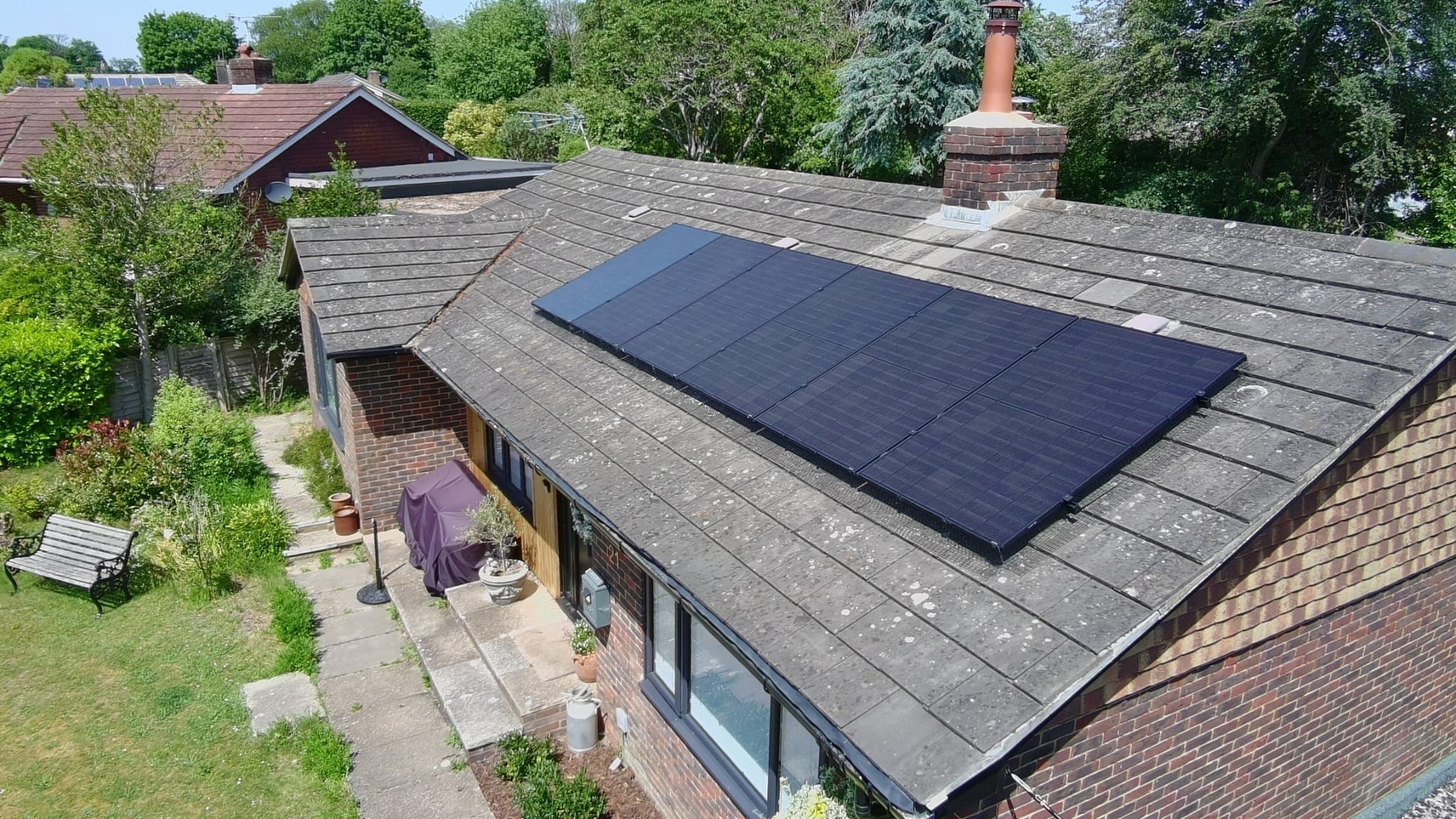
Horsham stone, flint and the Sussex roof problem
Some local roofs make solar straightforward. Others need a different conversation entirely. A survey-level guide to what we find on West Sussex roofs.
Read it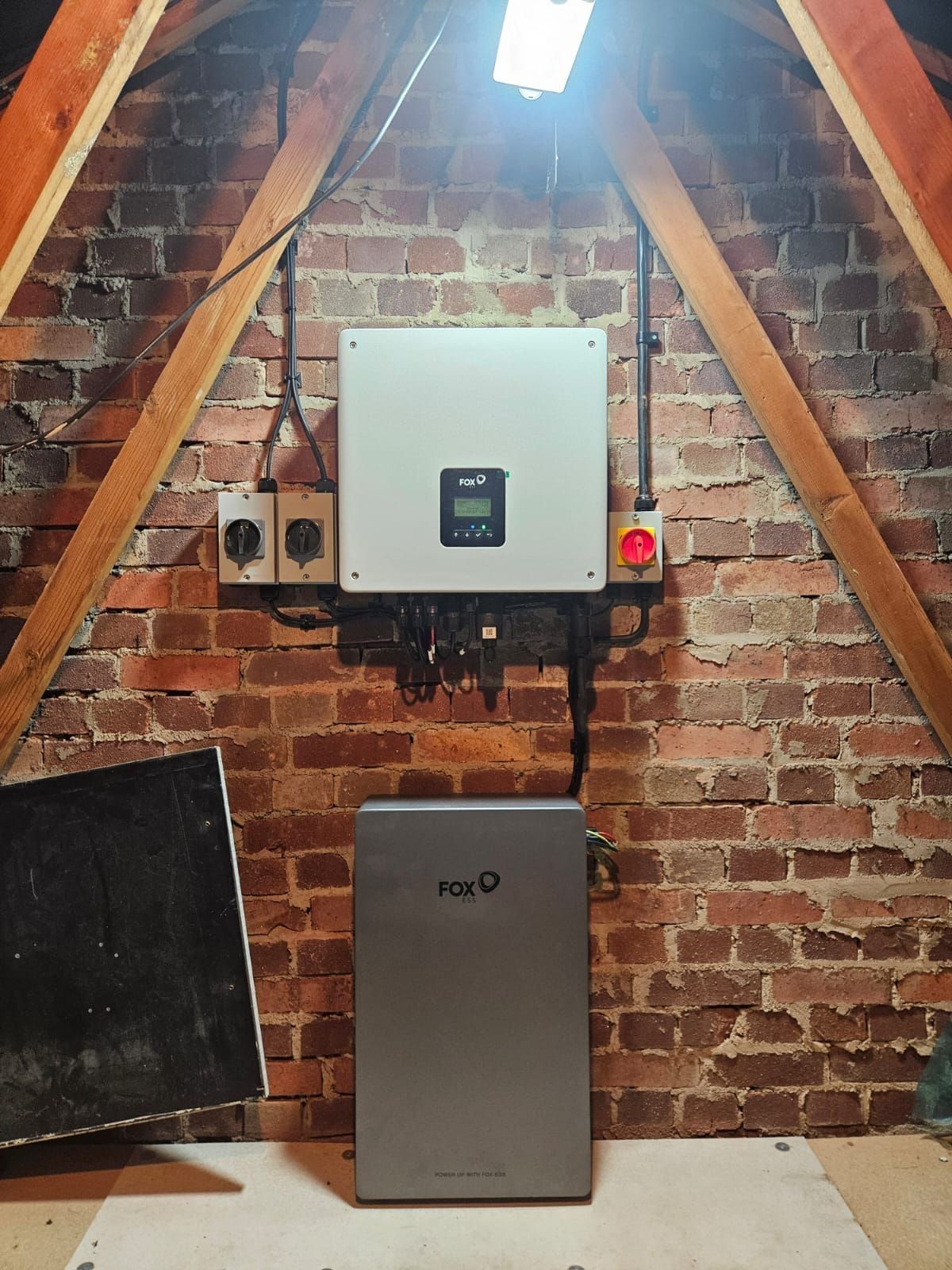
Is a battery worth it? The honest arithmetic
A battery roughly doubles how much of your own generation you use. Whether that pays depends on when your house is empty. Here is the arithmetic.
Read it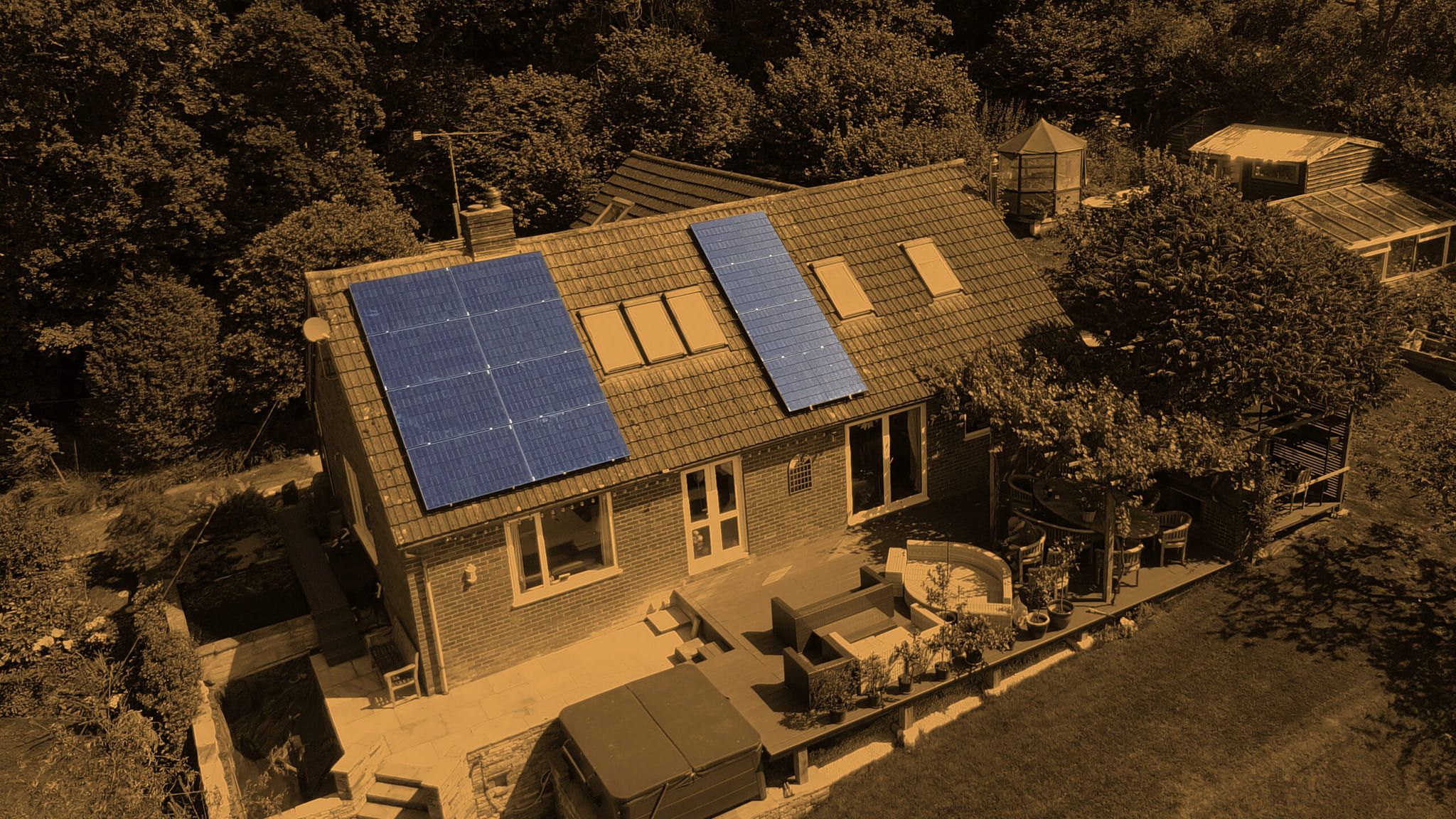
What solar actually does in a Sussex winter
Panels still generate on grey days — just less. What a West Sussex December really looks like on the app, and how to make the short days count.
Read it