

How it works
G98 or G99: which form your solar or battery needs, and who sends it
G98 up to 16 amps per phase (3.68 kW), G99 above it: what decides which form your inverter needs, why a battery can tip it, and who does the paperwork.
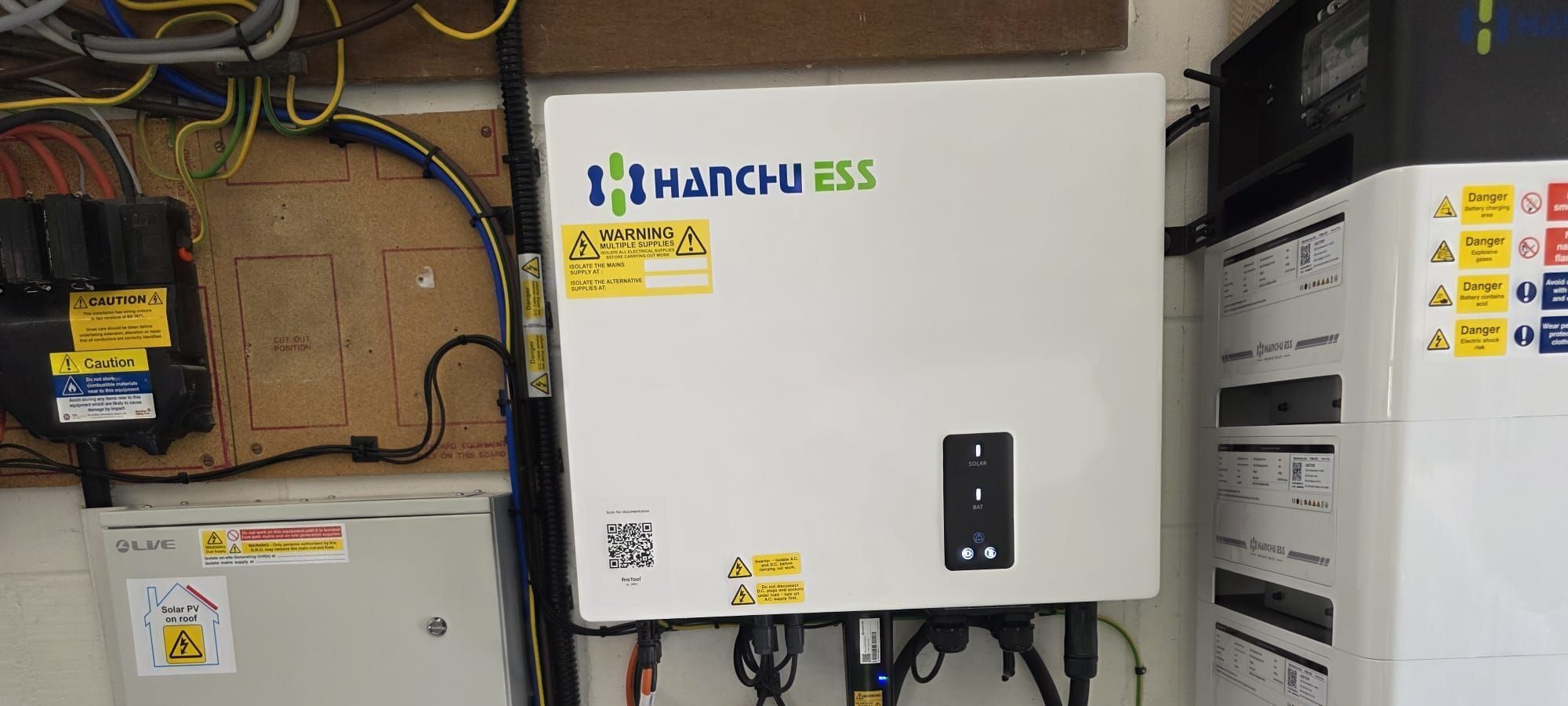
An inverter, its isolators and a stacked battery, from one of our own installations. The inverter is the thing the network operator is told about.
Every inverter we fit — for panels, for a battery, or for both — is reported to the company that runs the local electricity network. There are two ways that happens, and which one applies decides whether the system can be switched on the day it is finished or has to wait for an approval. People hear “G98” and “G99” in a quote and assume it is jargon they can ignore. It is the one bit of paperwork that sets the timetable, so here it is in plain terms.
Who the network operator is
Not your supplier. The distribution network operator — the DNO — owns the cables and substations between the grid and your meter, and it is the body that has to know what you are connecting. On our patch there are two. UK Power Networks serves the Sussex coast, Brighton, Mid Sussex, Horsham town and the eastern half of the Surrey edge. Scottish and Southern Electricity Networks serves Chichester, Billingshurst, our own RH20, the BN17 half of Littlehampton and the western Surrey towns. The boundary is not tidy — RH12 straddles it — so we read the operator from the MPAN on your electricity bill, not from the postcode.
G98: up to 16 amps per phase
Engineering Recommendation G98 covers an inverter rated at up to 16 amps per phase, which on a normal single-phase house supply is 3.68 kW. It is a notification, not an application: the system is installed and commissioned, and the operator is told afterwards. Most straightforward domestic solar systems fit under it.
G99: anything larger
Above 16 amps per phase the job falls under G99, and the order reverses. An application goes to the operator before the inverter is energised, the operator assesses the network at your address, and the system waits for their answer. Response times vary by operator and by how busy the network around you is, which is why we submit a G99 early and tell you the stage it is at rather than leaving you to guess.
Why a battery can tip a job from G98 to G99
The form is decided by the inverter’s rated output, not by the number of panels on the roof. A battery either shares a hybrid inverter with the panels or brings a second inverter of its own, and the total per phase is what the operator counts. A modest array on its own often sits under 16 amps; add a battery with a generous inverter and the same house can cross the line. That is not a reason to avoid a battery. It is a reason to know, before the design is fixed, whether the system you are being quoted is a notification or an application — because one is a day and the other is a wait.
Who does the paperwork
We do, for every inverter we fit, and the notification or the approval is in your handover pack alongside the electrical certificate. If you are reading a quote from elsewhere, the two questions to ask are: which operator is this address on, and is this system G98 or G99? An installer who cannot answer the second has not looked at the inverter rating.
Where it comes up on the patch
The Surrey edge has both operators in one county, which is why which operator gets your G99 has a post of its own; Billingshurst is the SSEN island inside a UKPN district, explained in why your Billingshurst paperwork goes to SSEN. Every town page on the site names its operator, and the battery storage page carries the county picture. A charging point is notified separately from the inverter — solar, a battery and an electric car covers how the two sit together. The terms are in the glossary.
What the form means at each end of the patch: battery storage in Surrey sits across the UK Power Networks / SSEN line, so the MPAN decides who receives it; battery storage in East Sussex is UK Power Networks for every address from Lewes to Seaford, and solar panels in East Sussex is the roof side of the same notification.
More from the blog
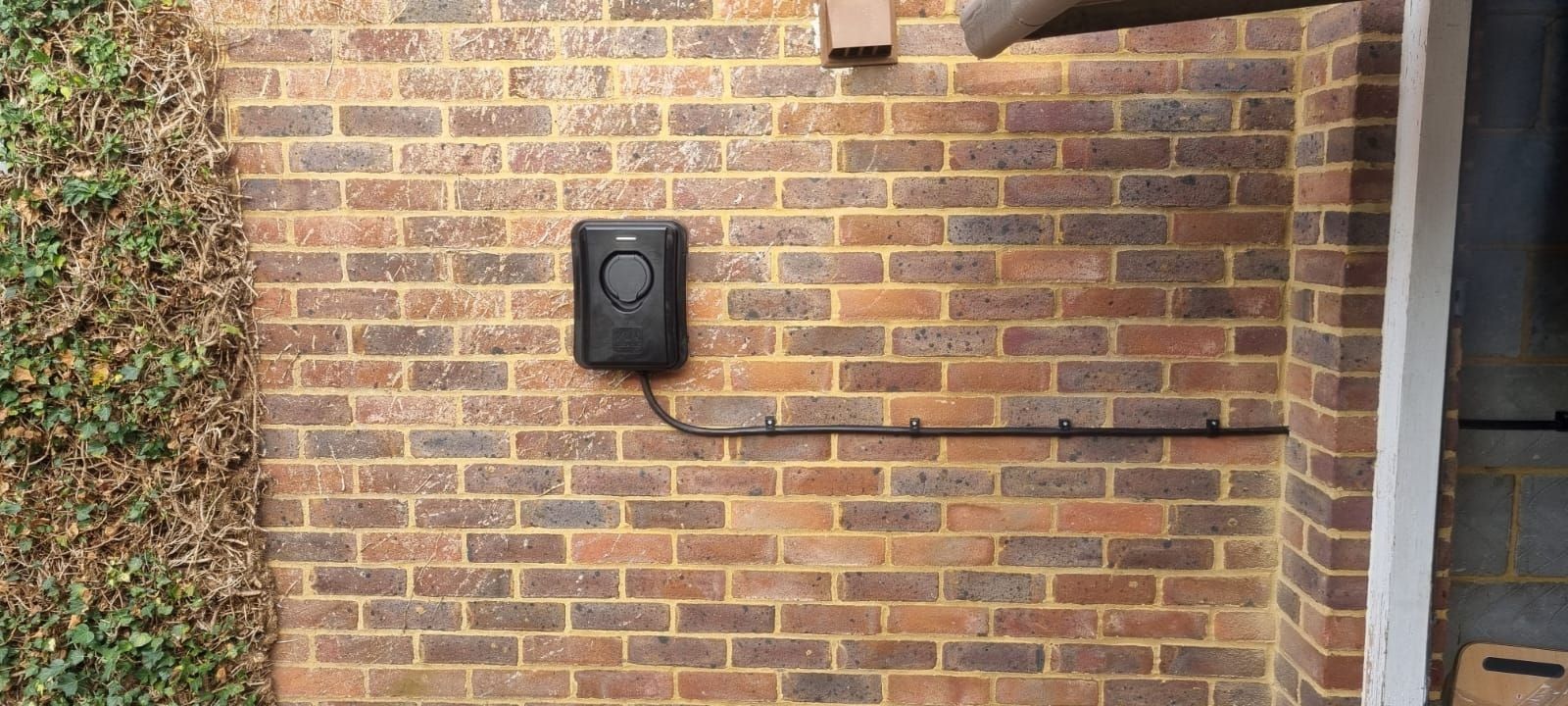
Charging an electric car in a Brighton terrace: the public network, and the home-charger cases
Over 1,000 public chargepoints, 86% of residents without off-street parking within a three-minute walk — and when a Brighton house can have its own.
Read it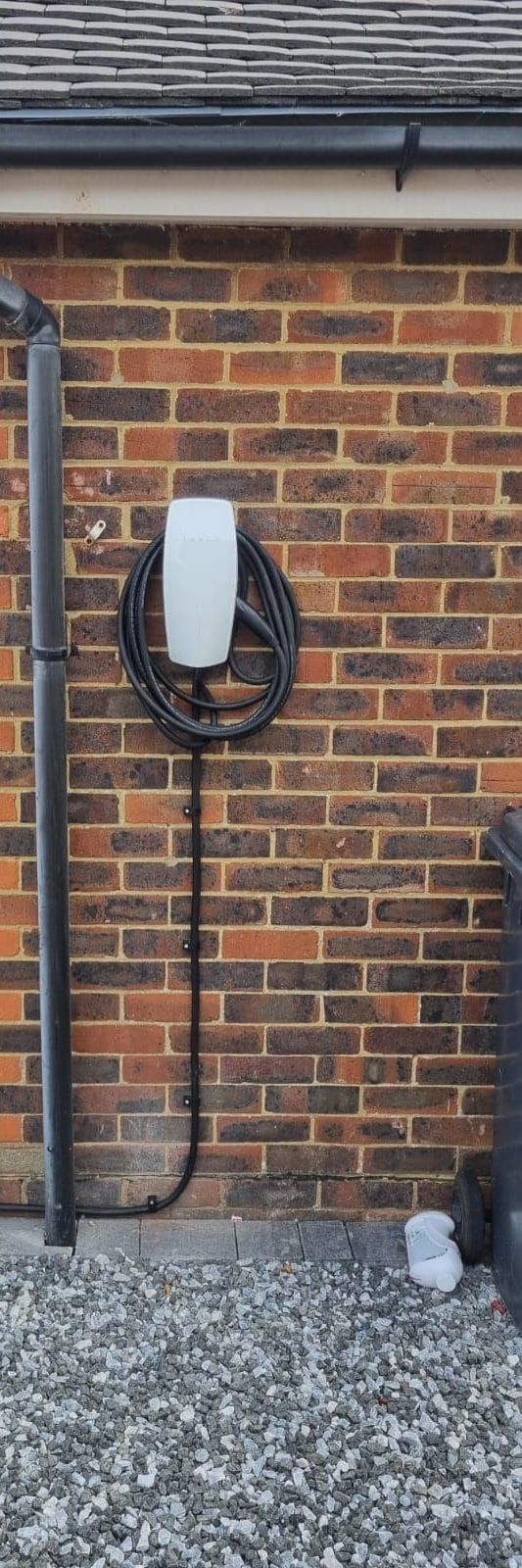
EV charger installation in Surrey: the rollout, the cable-gully rule and what a home charger needs
What Surrey has built and banned — 200-plus public sockets, no cables across the pavement — and what a home charger on the Surrey edge involves.
Read it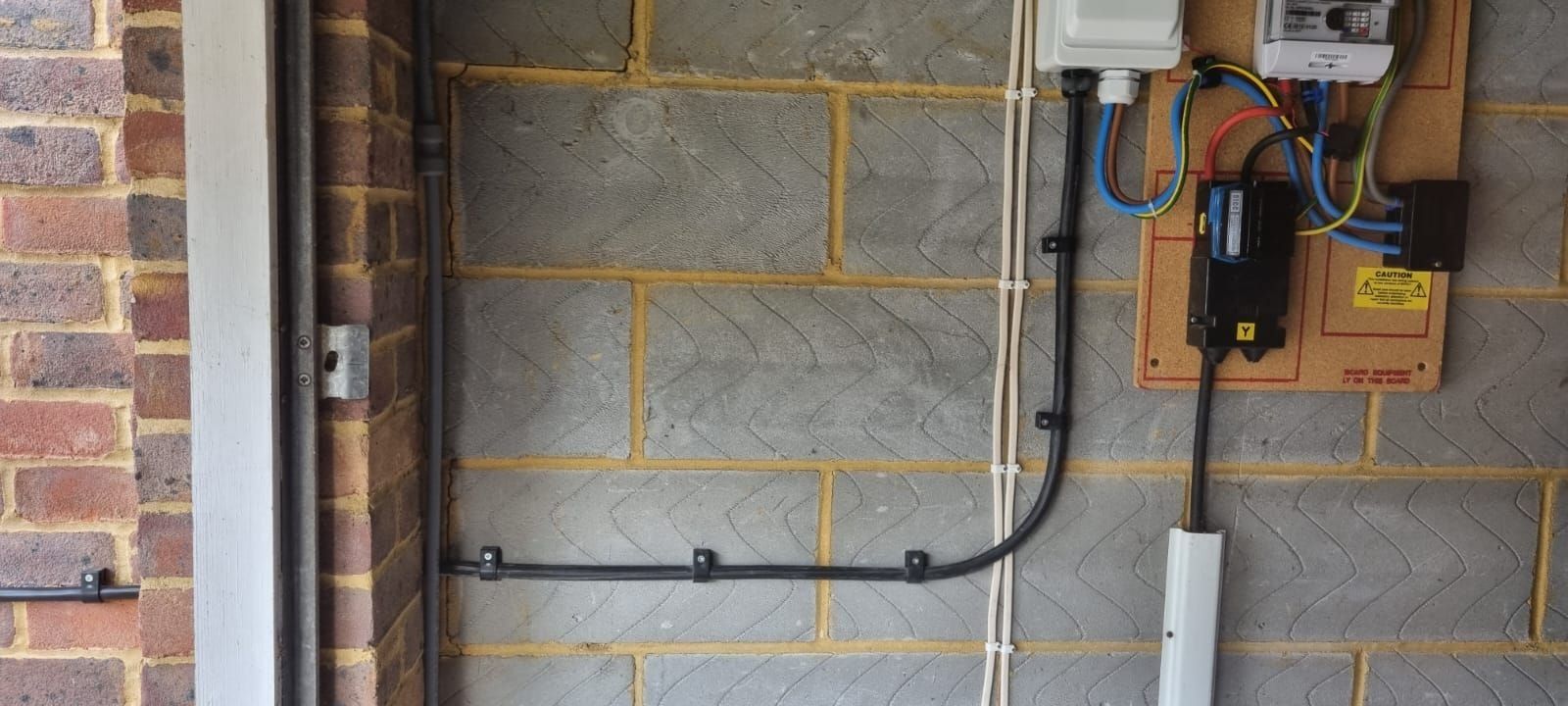
A home charger in a Worthing terrace: parking, the supply and the grant
Three Worthing houses — a semi with a drive, a terrace with a rear space, a terrace on the street — and what each can do about charging a car at home.
Read it