

Equipment
Where we fit Hanchu ESS across Sussex and Surrey: one wall, and an unfamiliar name said out loud
The one-wall Hanchu ESS hybrid, county by county: West Sussex garages, the shaded Surrey edge, Brighton basements, Lewes cellars — and what to ask first.
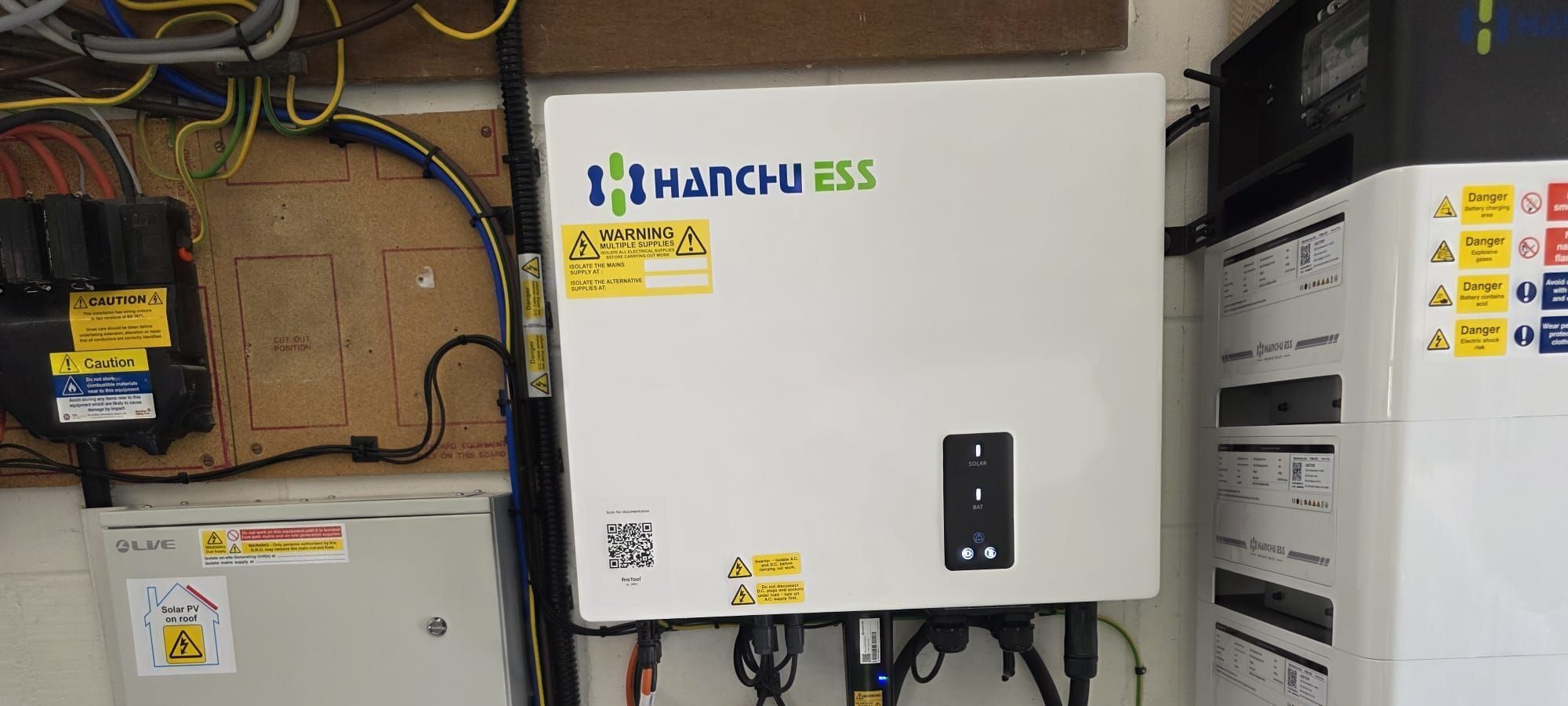
A Hanchu ESS inverter beside a stacked Hanchu battery, from one of our own installations. One wall, three parts — and a name most people have not heard.
Hanchu ESS is a line we fit and a name most people on our patch have not heard. The Hanchu ESS installer hub is honest about that: an unfamiliar badge tells you nothing on its own, good or bad, and the questions worth asking first are the whole page. The layout is a hybrid inverter, a gateway and a battery that go on one wall, photographed on our own jobs. This post is where across West Sussex, the Surrey edge and East Sussex that one-wall layout suits the house, and it sits over three county pages that go further: Hanchu ESS in West Sussex, Hanchu ESS in Surrey and Hanchu ESS in East Sussex.
Nothing here claims a capacity, a warranty term, a price or an approval for the line. The datasheet and the terms for the exact configuration come with the quote, and how to read a solar and battery warranty says what to look for in them — who honours each part, on what conditions, for how long. Those documents are what make the name on the box irrelevant.
West Sussex: one wall, and which one
The Mid Sussex and Horsham estate garages and the utilities of the coast’s post-war semis are the one-wall case: inverter, gateway and battery together on a solid wall out of the living space, the clearances the fire-safety specification asks for marked out at the survey, a short run to the board. The rural plots under the Downs often have an outbuilding with a solid wall and the better roof, and a one-wall layout suits an outbuilding; the run back to the house is the cost the survey measures.
When there is not one good wall — a terrace with no garage or cellar, a converted flat — or when the household wants the car charger in the same assembly, we say so and point at the line that fits. Sigenergy, Fox ESS and Hanchu compared is how the choice gets made.
The paperwork is the county’s usual split: UK Power Networks on the coast and in Mid Sussex and Horsham town, Scottish and Southern for Chichester, Billingshurst and our own RH20. The hybrid inverter’s rating per phase decides whether the form is a G98 notification or a G99 application; the MPAN decides who receives it; the certificate is signed by our own NICEIC-registered electricians, and the registrations arrive in your name.
Surrey: the battery that does more
PVGIS models about 1,037 kWh per kWp a year at Dorking, below the coast’s figure, and more of the Surrey edge is shaded by the Greensand and the trees. The array is often the smaller half of the system here and the battery the harder-working one: a smaller array exports a larger share of what it makes unless the surplus is stored. The survey reads the shade on the roof first, then sizes the battery to the evening load, and says if the sums do not work.
A garage in Horley, a utility in Dorking, an outbuilding in Cranleigh: the later streets have the wall a one-wall layout wants. Inside the Dorking conservation area the Article 4 directions watch the front, and the kit goes indoors or to the rear; solar panels in Dorking covers the roof side. Two operators again — Cranleigh, Dorking, Horley and Reigate on UK Power Networks, Haslemere and Godalming on SSEN — and only the recipient of the form changes. The county council targets 15% of Surrey’s energy from solar PV by 2032, and 73.2% of Mole Valley households own their home, so the decision is usually the owner’s to make. Battery storage in Surrey is the county picture.
East Sussex: basement, cellar or garage
The East Sussex end of the patch has the best modelled yield we publish — about 1,177 kWh per kWp a year at Lewes — and the surplus a battery can keep is larger here than anywhere else we cover. The wall in question is a Brighton basement, a Lewes cellar or a clifftop garage, and whether there is one is the first thing we settle. In Brighton a dry, ventilated basement is often the best indoor position in the city, and the one-wall layout suits it; Brighton’s terraces are often one house or four flats, and the layout cannot serve a converted flat with a communal supply. Hove’s avenues and the Peacehaven and Newhaven bungalows with a garage are the straightforward cases. The coast from Peacehaven to Newhaven is as exposed as Worthing, and the kit stays off the outside walls.
Lewes’s historic core is almost all conservation area inside the National Park; the kit indoors is an electrical installation, but on a listed house the position and the cable runs go to the conservation officer first. And a lot of East Sussex roofs already have panels from Solar Together. For a household adding storage to them, the first question is not the battery but what happens to the inverter you already own — its age, its type and what is connected to it — and we answer it after looking at the unit, in writing, naming the line that suits what is there or saying that none of ours does. The whole of this end of the county is UK Power Networks. Battery storage in Brighton & Hove and Lewes are the town pages.
The short version
- Fit it where there is one good wall out of the living space — an estate garage, a utility, an outbuilding, a dry basement — and the household has the documents that make the name irrelevant.
- Say no where there is not one good wall, where the supply is communal, or where the household wants the car charger in the same assembly (Sigenergy is built for that).
- Ask first: the datasheet and warranty terms for the exact configuration, who honours each part, and what happens if one part on the wall has to be worked on — the same question we put to every integrated line.
The county pages carry the facts behind each of these: West Sussex, Surrey, East Sussex. Where a home battery can go is the specification the wall is measured against.
Regional facts are the ones already on our county and town pages, with their sources there: PVGIS 5.2 yields read 15 October 2026; network operators checked by postcode district on 15 and 18 October 2026; Surrey County Council’s climate change strategy; ONS Census 2021 tenure figures. Product statements are the Hanchu ESS hub’s own.
More from the blog
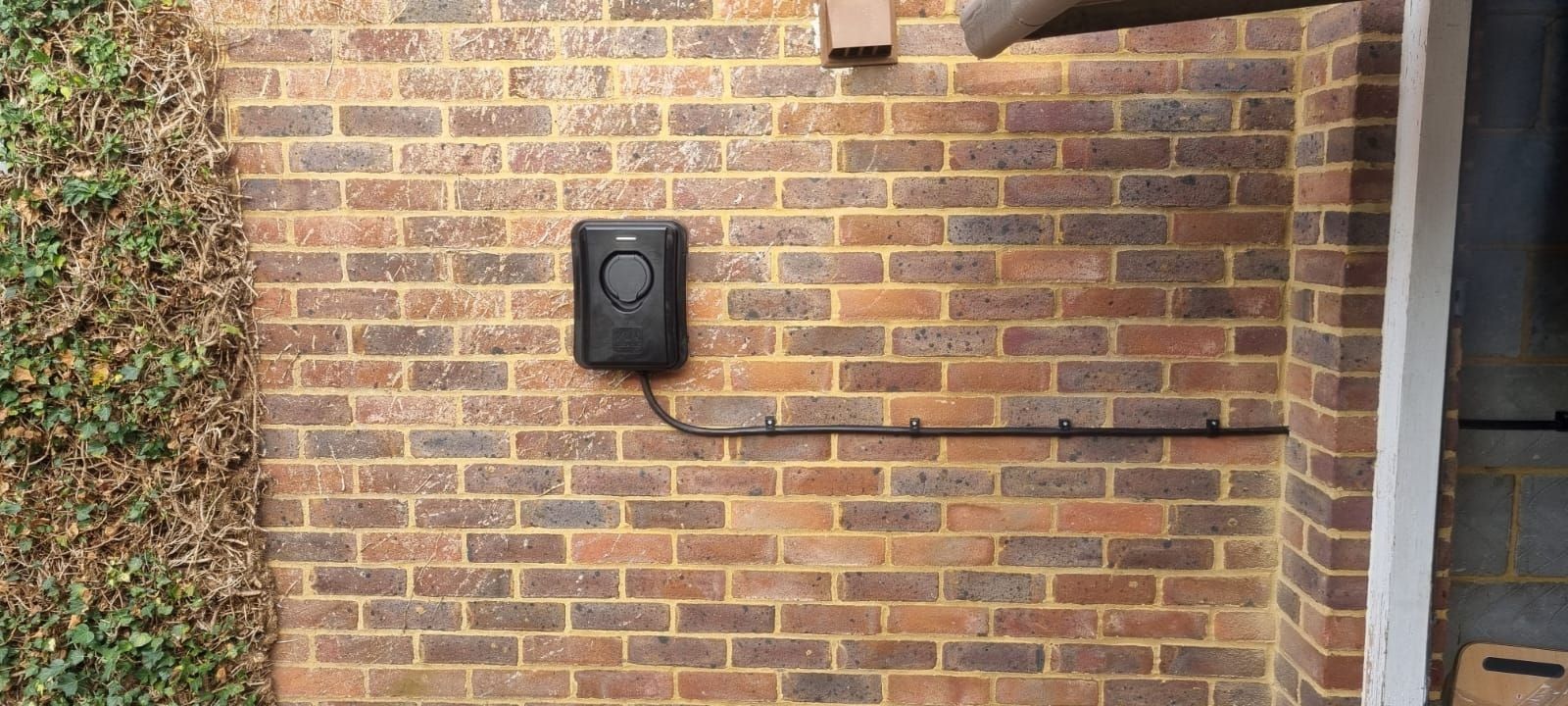
Charging an electric car in a Brighton terrace: the public network, and the home-charger cases
Over 1,000 public chargepoints, 86% of residents without off-street parking within a three-minute walk — and when a Brighton house can have its own.
Read it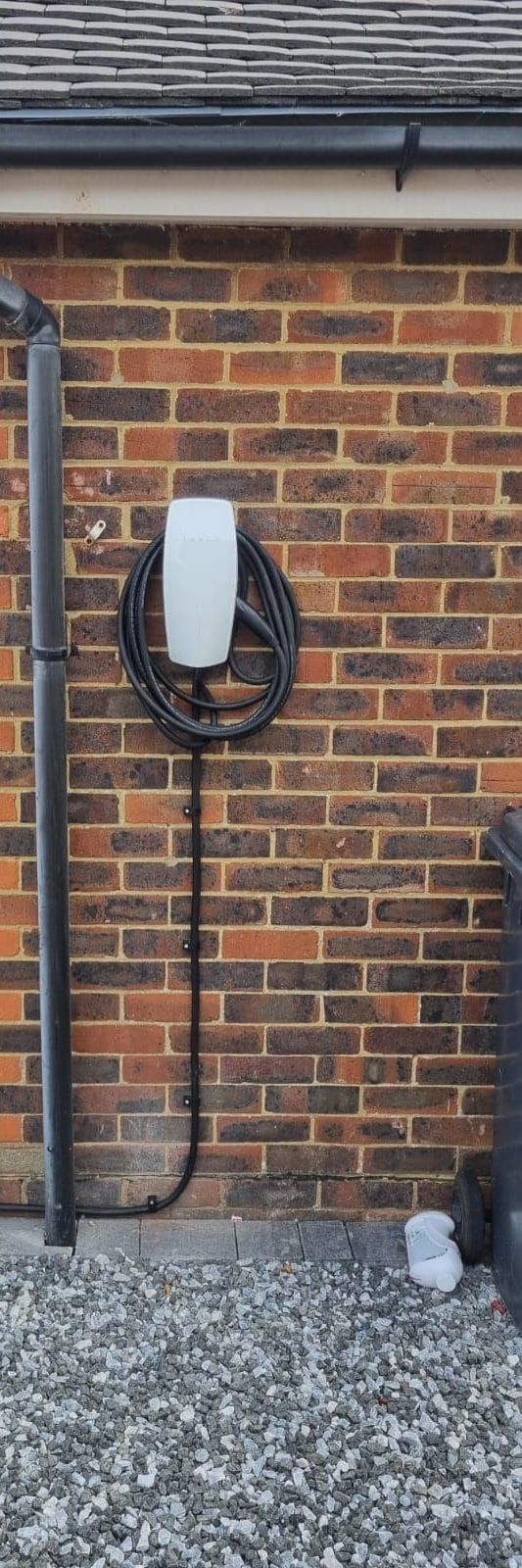
EV charger installation in Surrey: the rollout, the cable-gully rule and what a home charger needs
What Surrey has built and banned — 200-plus public sockets, no cables across the pavement — and what a home charger on the Surrey edge involves.
Read it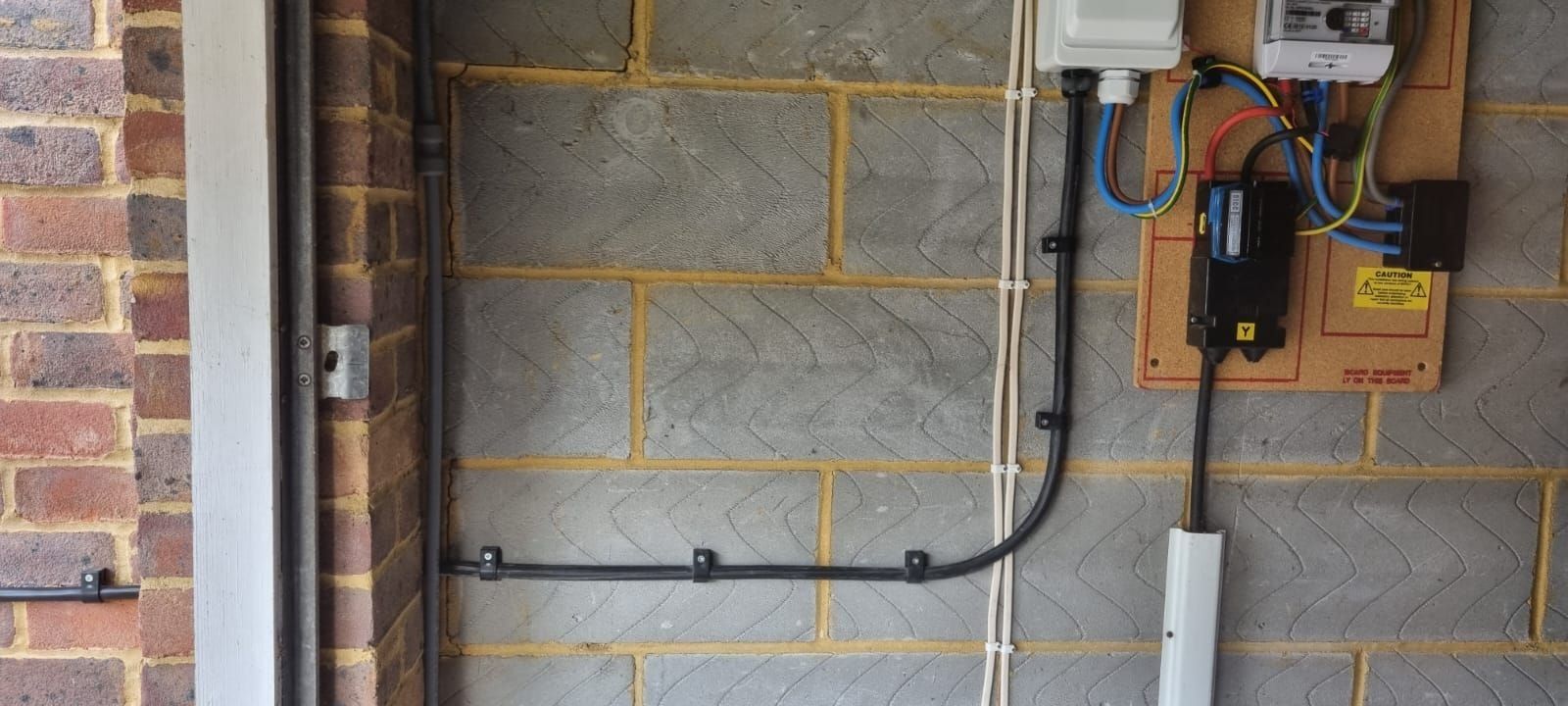
A home charger in a Worthing terrace: parking, the supply and the grant
Three Worthing houses — a semi with a drive, a terrace with a rear space, a terrace on the street — and what each can do about charging a car at home.
Read it