

Equipment
Where we fit Fox ESS across Sussex and Surrey: two walls, two operators, one line in our own photographs
The Fox ESS inverter-and-battery pair in our own photographs, county by county: the walls it goes on, the 16 A paperwork line and the two operators.
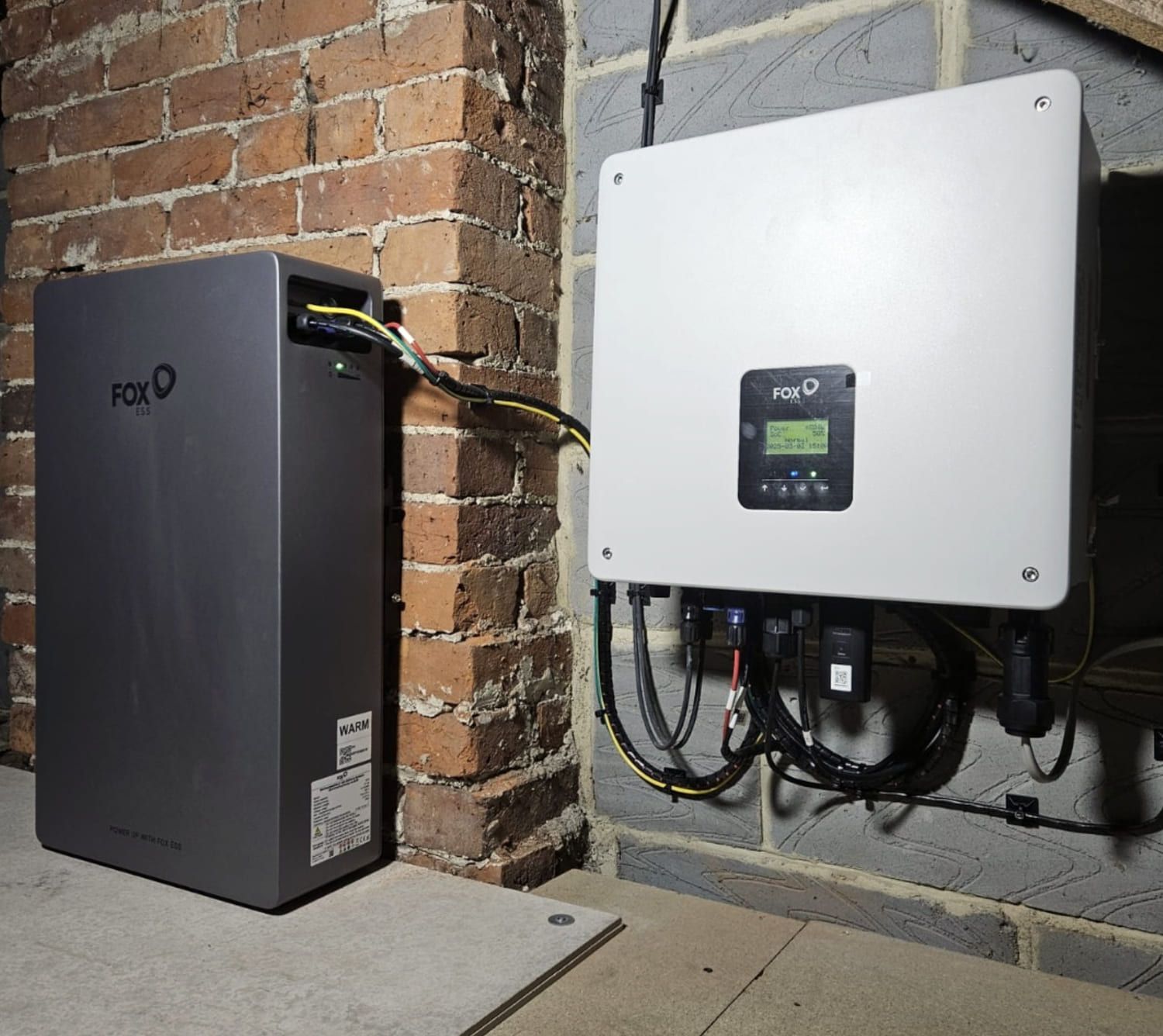
A Fox ESS battery and inverter on a brick wall, from one of our own installations. The brick wall is the commonest position in the county; the other one in our photographs is a loft.
Fox ESS leads our product pages for one reason: it is the hardware in our own installation photographs. Both the Fox ESS battery and the Fox ESS inverter on that brick wall carry the Fox mark, and a second pair — in a loft — is also one of ours, photographed on the job. The Fox ESS installer hub is the line; what to ask about a Fox ESS is the list of questions. This post is where on our patch the pair goes, county by county, and it sits over three pages that say the same in more detail: Fox ESS in West Sussex, Fox ESS in Surrey and Fox ESS in East Sussex.
Two things hold everywhere. No capacity, warranty term or price for the line is printed on any of these pages; the datasheet and terms come with the quote. And a single Fox ESS hybrid inverter sized for a typical three-bedroom house can sit either side of the 16-amps-per-phase line that decides the paperwork, so whether the job is a G98 notification after the event or a G99 application before energising is settled at the design stage, not discovered on the day.
West Sussex: the two walls in the photographs
The brick wall in our photograph is the estate and semi case across Mid Sussex, Horsham and the coast’s post-war streets: inverter and battery side by side on a garage or utility wall, a short run to the board, the clearances marked out so they survive the garage filling up with bicycles. The loft in the second photograph is the terrace case — Worthing’s Victorian streets, the railway town at Haywards Heath — where there is no garage and no cellar. A loft is surveyed for weight, access and the detection the fire-safety specification asks for before it is offered, and it is not a default; often an outbuilding or a rear addition is the better answer. Battery storage in Worthing is a page about exactly those walls.
Within a mile of the coast at Worthing, Shoreham and Littlehampton the air is salt-laden, and a Fox inverter or battery wants a dry internal wall rather than a lean-to on the seaward side — which is where the photographs show it.
The paperwork: two operators split the county, UK Power Networks on the coast and in Mid Sussex and Horsham town, Scottish and Southern for Chichester, Billingshurst and our own RH20. We read it from your MPAN and send the form ourselves. One more thing worth checking before a system is sized — Mid Sussex District Council points eligible households to the Warmer Homes scheme, and a better-insulated house needs less of everything, including battery capacity.
Surrey: a smaller array, a battery that matters more
PVGIS models about 1,037 kWh per kWp a year at Dorking, below the coast’s figure, and the Greensand and the trees shade more roofs than on the coast. A Surrey array is often sized smaller than the household imagined, and that is the house where the battery does more of the work: a Fox ESS battery sized to the evening load keeps the day’s surplus at home instead of exporting it at the Smart Export Guarantee rate — 12p per kWh in our reference as at June 2026 — to buy it back at about 26p.
The later streets of Cranleigh, Dorking and Horley have the garage or utility wall the pair wants; the older houses inside the Dorking conservation area put it in a cellar or an outbuilding, with nothing visible on a front wall where the Article 4 directions apply. The operator line wanders through the part of Surrey we cover — Cranleigh, Dorking, Horley and Reigate on UK Power Networks, Haslemere and Godalming on SSEN — so the MPAN decides who receives the form, and the inverter rating decides which form it is. Where a car is in the picture, Surrey has written the pavement rule down: no trailing cable, a gully or nothing. The house with a drive gets a separate charger circuit beside the Fox system, sized together. Battery storage in Surrey carries the county picture.
East Sussex: basements, cellars and bungalow garages
The East Sussex end of the patch has the best modelled yield we publish — about 1,177 kWh per kWp a year at Lewes — and a battery sized to the evening load keeps more surplus at home here than on any other roof we cover. The two positions in our photographs translate directly: a brick wall in a Hove garage or a Peacehaven bungalow, a loft in a terrace. In Brighton a dry, ventilated basement is often the best indoor position in the city; a wet one is not a position at all. The run to the consumer unit is the measurement in a terrace — the board is often three storeys from the wall — and it is an ordinary job, just a longer one.
Brighton’s terraces are often divided into flats, and a Fox system serves one supply from one wall that has to be yours, with the freeholder’s consent. Lewes’s listed core puts the position and the cable runs to the National Park Authority’s conservation officer first; indoors, the installation itself is outside the Park’s reach. The whole of this end of the county is UK Power Networks, so one operator for everything. Battery storage in Brighton & Hove and Lewes are the town pages.
A Fox ESS hybrid pair is a new system. For the Solar Together houses that already have panels on the roof, the first question is not the battery but what happens to the inverter you already own — its age, its type and what is connected to it — and we answer that after looking at the unit, in writing, before naming any line.
The short version
- The two walls: a brick garage or utility wall first; a loft only after it has been surveyed for weight, access and detection.
- The paperwork line: a three-bed Fox hybrid can fall either side of 16 amps per phase, so the form is chosen at design — and the MPAN, not the postcode, says which operator gets it.
- The alternatives: Sigenergy when the household wants the car charger in the same assembly; EcoFlow PowerOcean when it would rather start with one pack; Hanchu ESS for one wall and an unfamiliar name.
The county pages carry the facts behind each of these: West Sussex, Surrey, East Sussex. Where a home battery can go is the specification the walls are measured against.
Regional facts are the ones already on our county and town pages, with their sources there: PVGIS 5.2 yields read 15 October 2026; network operators checked by postcode district on 15 and 18 October 2026; Surrey County Council’s pavement rule from its chargepoint page, reviewed 1 October 2026; Mid Sussex District Council’s climate-progress page. Product statements are the Fox ESS hub’s own.
More from the blog
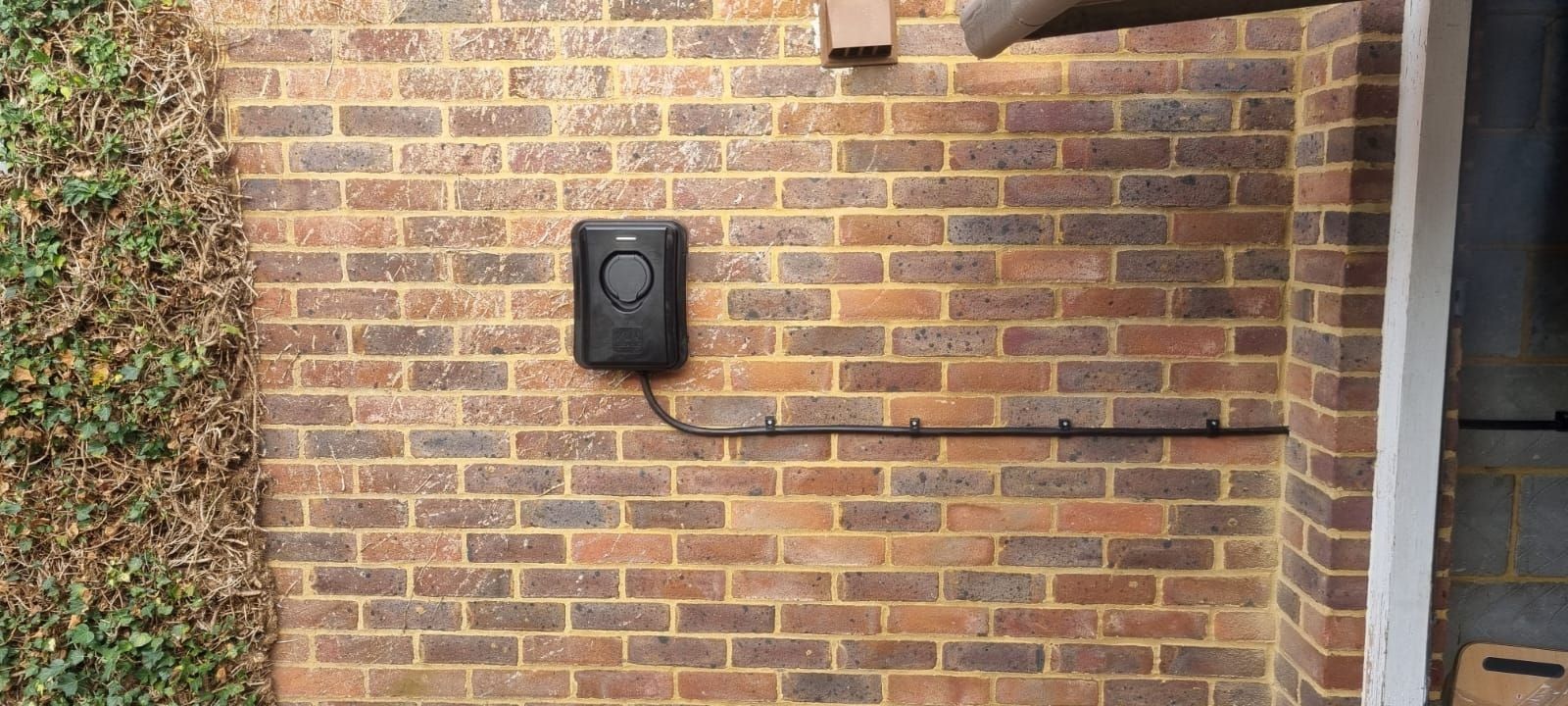
Charging an electric car in a Brighton terrace: the public network, and the home-charger cases
Over 1,000 public chargepoints, 86% of residents without off-street parking within a three-minute walk — and when a Brighton house can have its own.
Read it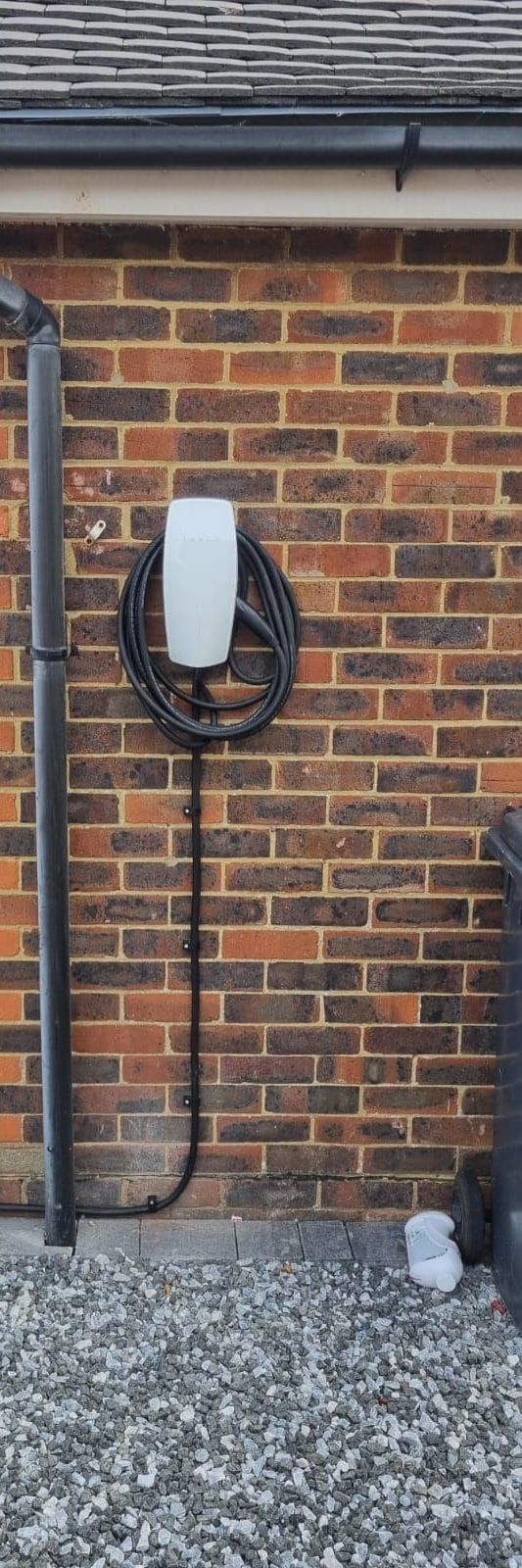
EV charger installation in Surrey: the rollout, the cable-gully rule and what a home charger needs
What Surrey has built and banned — 200-plus public sockets, no cables across the pavement — and what a home charger on the Surrey edge involves.
Read it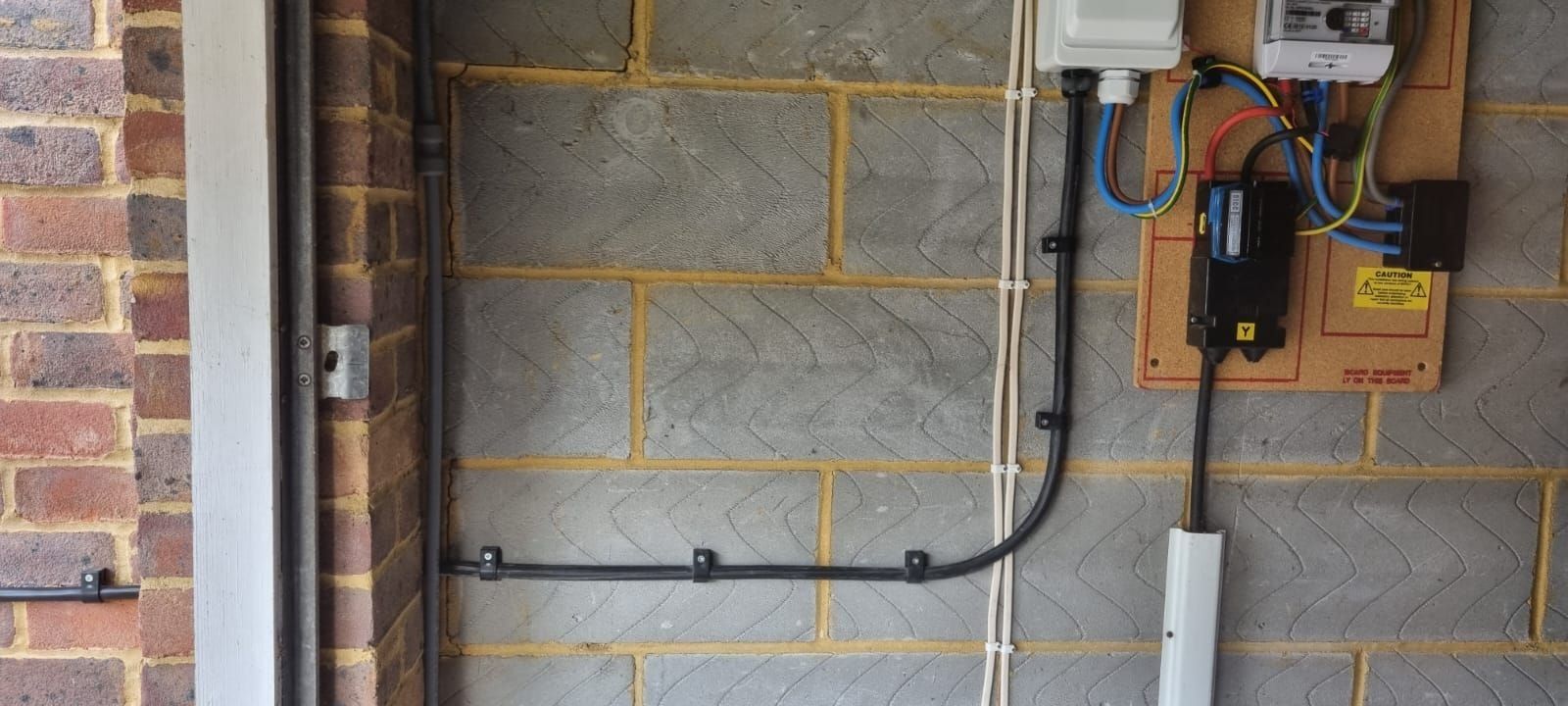
A home charger in a Worthing terrace: parking, the supply and the grant
Three Worthing houses — a semi with a drive, a terrace with a rear space, a terrace on the street — and what each can do about charging a car at home.
Read it