

Equipment
Fox ESS battery: five questions to ask before it goes on your wall
The questions that decide whether a Fox ESS battery is right for your house, and the paperwork a good installer hands over with it.
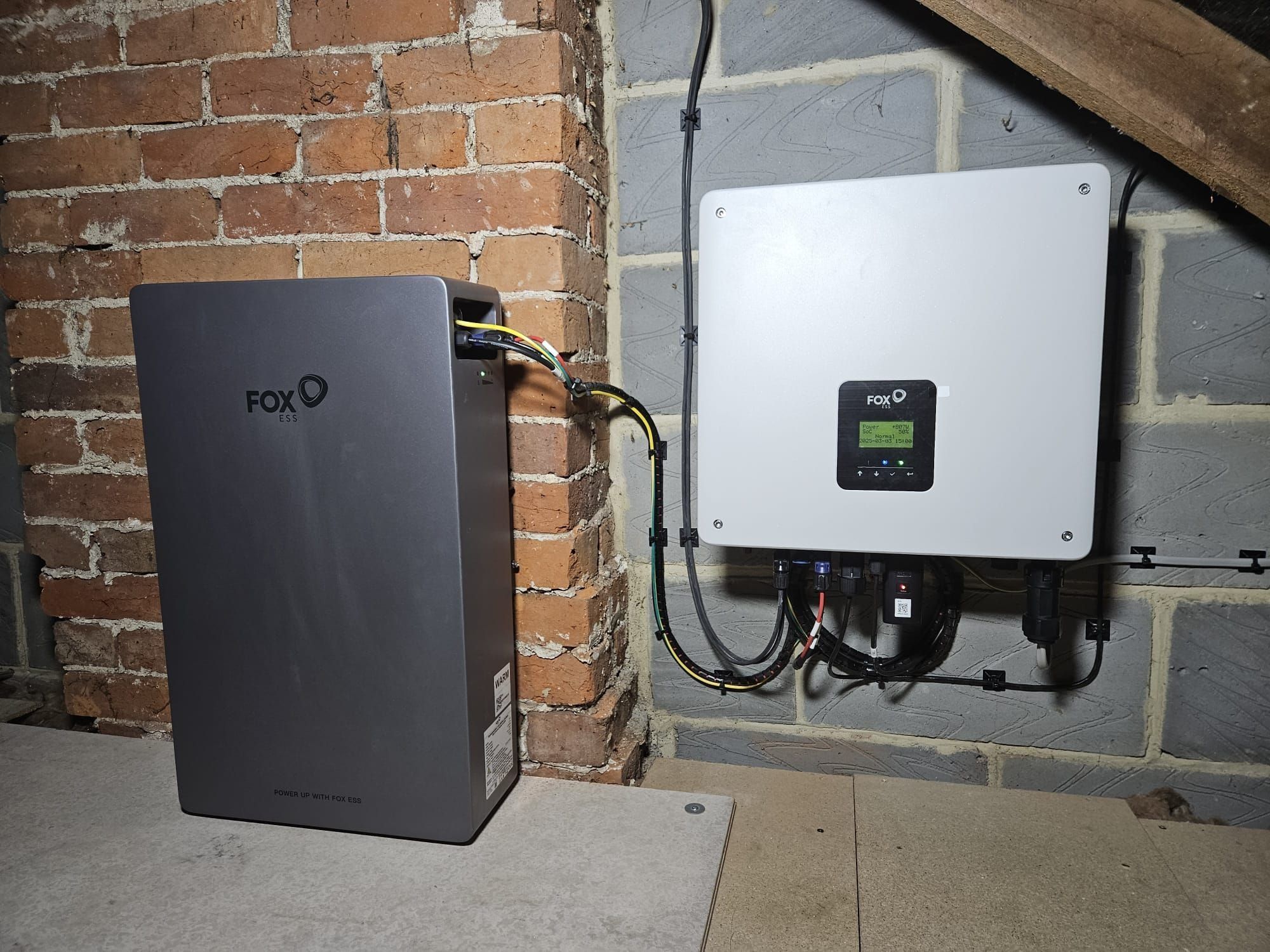
A Fox ESS battery and inverter in a boarded loft. Where it goes is a regulation now, not a preference.
Fox ESS is the battery and the inverter in our own installation photographs, which is why it gets a page of its own on this site. It is also a brand that gets searched for a great deal, often by people who have been quoted one and want to know whether to say yes. These are the questions we would ask in your position.
1. Is the inverter and the battery from the same maker, and why does that matter?
A Fox ESS battery is normally paired with a Fox ESS hybrid inverter. One manufacturer for both means one app, one firmware line and one technical department when something misbehaves, rather than two suppliers each suggesting the fault is on the other side. If a quote pairs a Fox battery with a different brand of inverter, ask why, and ask who you ring when the two stop talking to each other.
2. Where will it go, and does that spot pass the regulation?
This is the question that has changed most recently. Since April 2026 the wiring regulations, BS 7671 with its fourth amendment, include a chapter on stationary battery installations and require batteries in dwellings to be installed to PAS 63100:2024, the British Standards specification for fire safety of home battery systems. That specification is about the room, the wall, the clearances, the detection and the escape route. A garage wall or a boarded loft can be fine; under the stairs or in a cupboard off a hallway may not be. Any installer quoting you should be able to say where they propose to put it and why that location complies.
3. Does the network operator need to know, and who tells them?
Yes, always, and the installer does it. Every grid-connected inverter is notified to the local network operator. Across most of our patch, from Horsham, Haywards Heath and Burgess Hill down to the coast, that is UK Power Networks; towards Chichester, Bognor, Billingshurst and Petworth it is SSEN, and the MPAN on your bill says which. The industry code sets the threshold: a G98 notification covers an inverter of up to 16 amps per phase, which is 3.68 kW, and anything above that needs a G99 application approved before the system is switched on. A hybrid inverter for a three-bedroom house can fall either side of that line, so it is settled at the design stage. You should receive the acknowledgement for your records.
4. Will I be paid for what I export, and what does that depend on?
Export payments come through the Smart Export Guarantee, and Ofgem’s guidance is that for systems up to 50 kW the supplier asks for MCS certification, or an equivalent, covering the installation and the installer. That is a fact about who fits the system, not about the battery brand. Ask the installer to show you the certification before the equipment conversation, because without it the supplier is not obliged to pay you anything for the electricity you send out.
5. What do I actually get at handover?
For a Fox ESS battery and inverter fitted properly, a sensible handover pack contains: the electrical installation certificate for the new circuit, the commissioning record, the network notification acknowledgement, the manufacturer registration in your name with the warranty terms for the exact configuration fitted, and the app set up on your phone with you watching it run. If any of those is missing, ask for it before the final payment, not after.
Where to go from here
If you want to see what we fit and how the choice gets made at a survey, the page written by our Fox ESS battery installers covers the hardware in our own photographs, where it tends to live on a Sussex house, and what to ask us before you settle on it. The survey is free, and the answer to “is this the right battery for my house” is sometimes no.
The three county pages — Fox ESS in West Sussex, Fox ESS in Surrey and Fox ESS in East Sussex — say which walls the pair goes on in each county and which operator receives the form; where we fit Fox ESS across Sussex and Surrey is the county-by-county read.
More from the blog
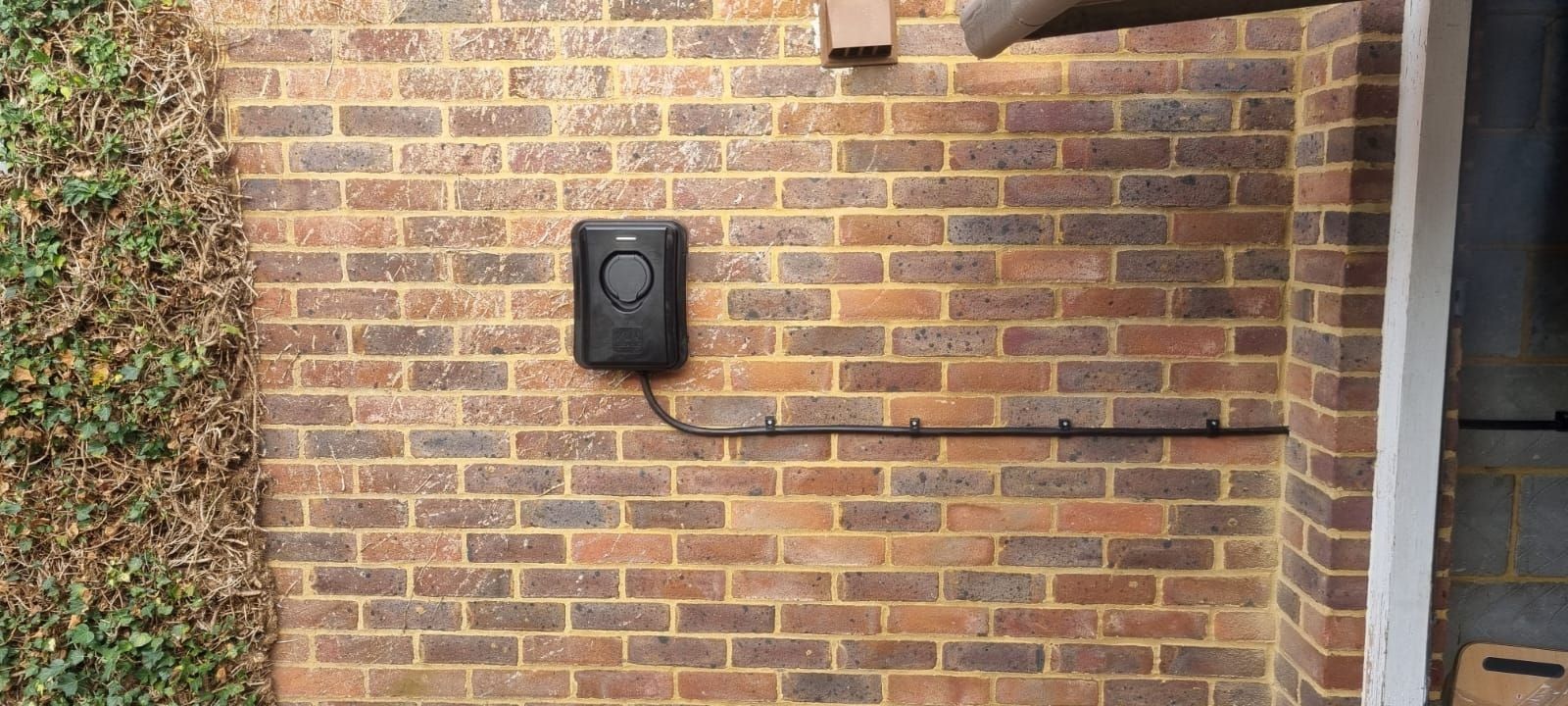
Charging an electric car in a Brighton terrace: the public network, and the home-charger cases
Over 1,000 public chargepoints, 86% of residents without off-street parking within a three-minute walk — and when a Brighton house can have its own.
Read it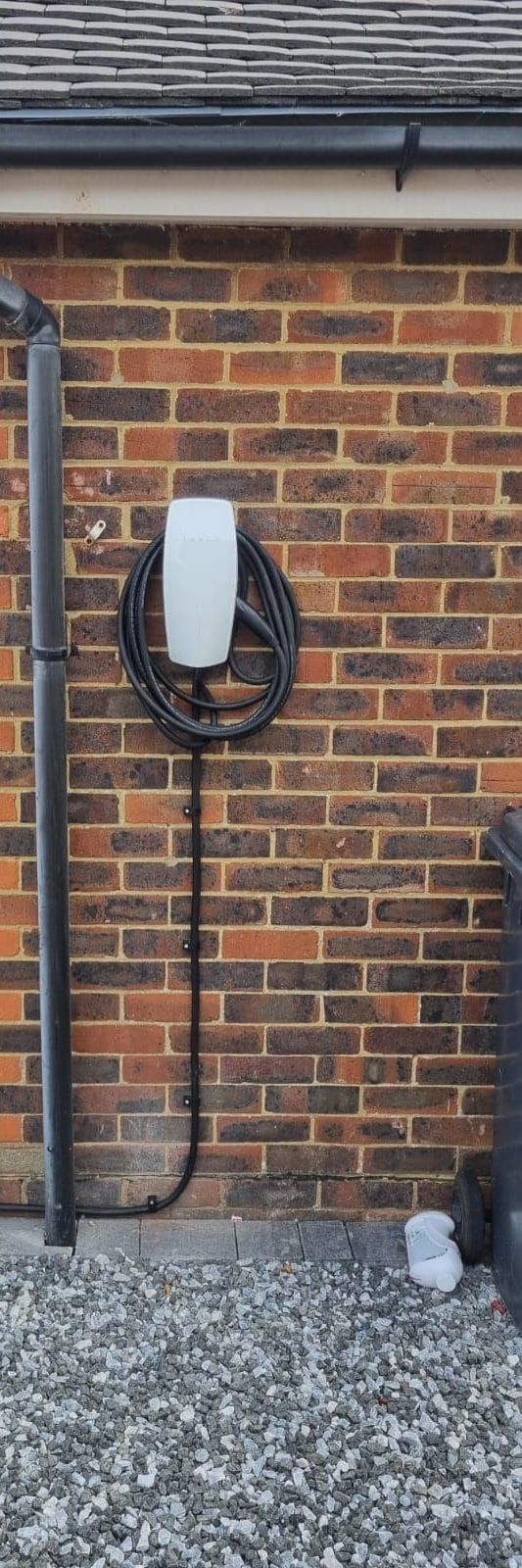
EV charger installation in Surrey: the rollout, the cable-gully rule and what a home charger needs
What Surrey has built and banned — 200-plus public sockets, no cables across the pavement — and what a home charger on the Surrey edge involves.
Read it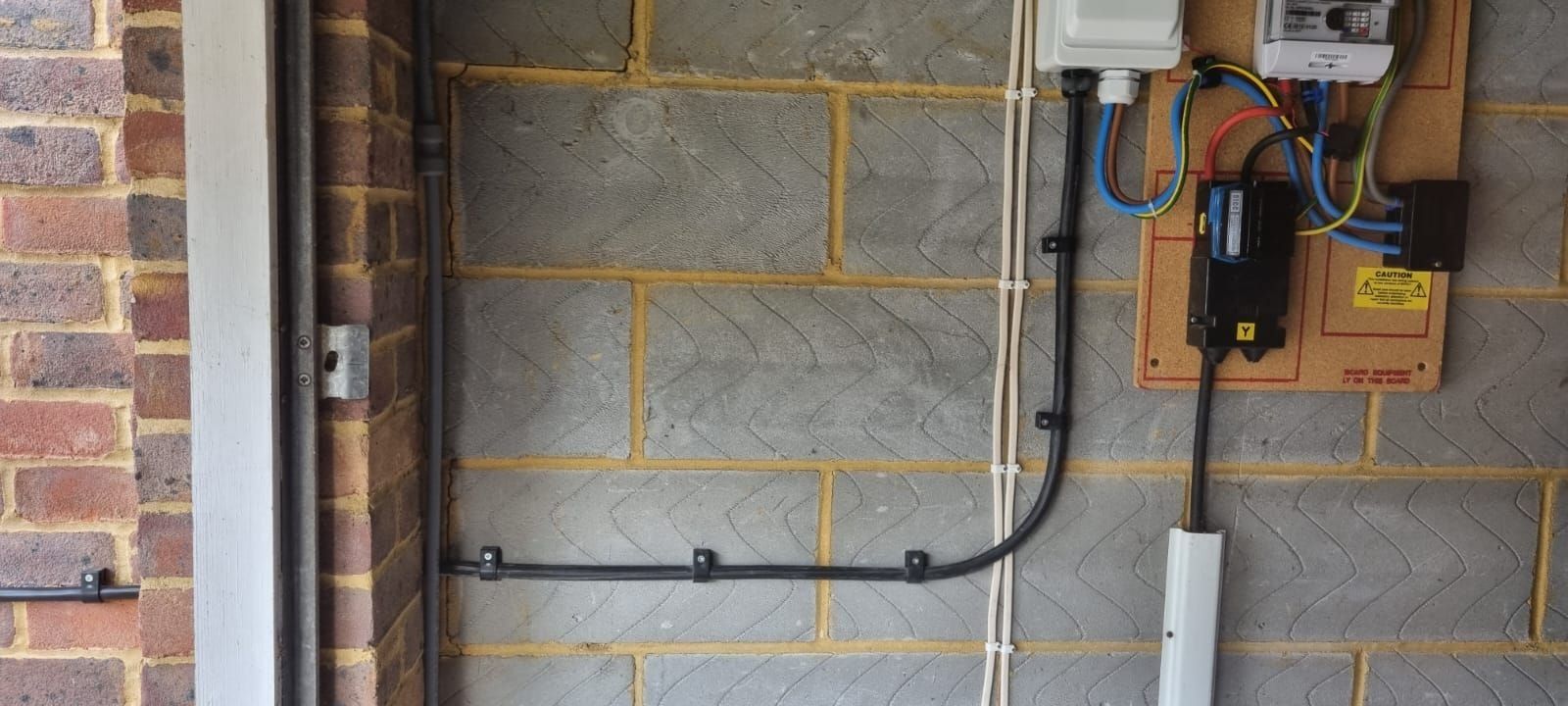
A home charger in a Worthing terrace: parking, the supply and the grant
Three Worthing houses — a semi with a drive, a terrace with a rear space, a terrace on the street — and what each can do about charging a car at home.
Read it