

Batteries
Battery storage on the Surrey edge: which operator gets your G99
Dorking, Horley and Reigate notify UKPN; Haslemere notifies SSEN. What the line changes for a Surrey home battery, and why a lower yield makes it count.
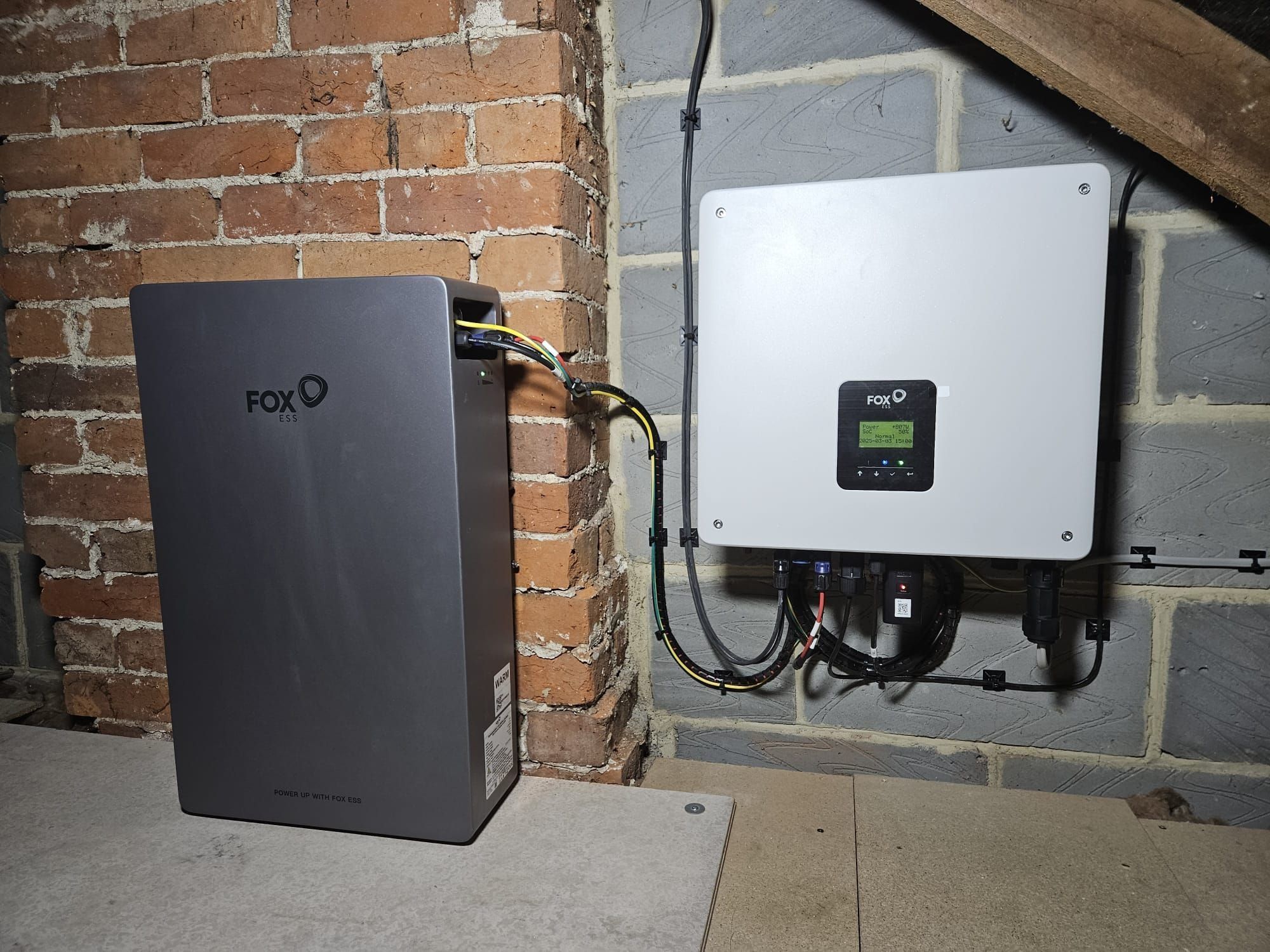
A Fox ESS battery and inverter in a boarded loft, one of our own jobs. The inverter is what the operator is told about.
The Surrey we cover is the southern edge of the county along the Sussex border — Cranleigh at 24 road miles, Haslemere at 25, Dorking at 26, Horley at 28, with Reigate on our thirty-mile line and Guildford, at 32, just beyond it. It is “parts of Surrey” in our own coverage statement, and this post is honest about which parts. It is also the one patch where a battery survey has to settle a question the coast never asks: which of two network operators your house belongs to.
The line through the county
On the 15 October 2026 lookup, district by district: Cranleigh, Dorking, Horley and Reigate are UK Power Networks, grid supply point group J. Haslemere, Godalming and Guildford are Scottish and Southern Electricity Networks, group H. The boundary wanders, so we read the operator from the MPAN on your electricity bill rather than from the postcode.
What the operator receives
Every inverter — for a battery, for panels, or for both — is reported to the operator for the address. Up to 16 amps per phase, which is 3.68 kW, it is a G98 notification made after the installation. Above that it is a G99 application made before the inverter is energised, and the operator has to approve it. The form is the same on either side of the line. What differs is the response time on a G99, which we plan the job around and tell you the stage of, rather than leaving you to guess.
What does not change
The kit, the standard it is installed to, or the price. PAS 63100:2024, the fire-safety specification home batteries have been installed to since April 2026, governs the location, clearances and detection around the stack regardless of the operator. Inside the Surrey Hills National Landscape — designated in 1958, stretching across a quarter of the county and taking in the Greensand Hills around Haslemere — the roof rules match a conservation area and a listed house needs consent for the roof, but a battery indoors sits outside all of that. Domestic solar panels and battery storage currently attract zero-rate VAT.
Why a lower yield makes the battery matter more
PVGIS 5.2 models a south-facing 4.5 kWp array at Dorking at about 1,037 kWh per kWp a year — 35° pitch, 14% system loss, read 15 October 2026 — which is below the coast, and more of the Surrey edge is shaded by the Greensand and the trees. A house that makes less exports less, but it also means that whatever is made is worth keeping. A battery sized to the evening load turns a modest Surrey array into a system that covers more of the day. We size from half-hourly consumption or bills, and we say when the sums do not support a battery at all. What solar costs in Surrey carries the worked example a battery changes.
The county’s own numbers
Surrey County Council’s climate change strategy sets net zero for its own operations by 2030 and for the county by 2050, with a stated target of 15% of energy from solar PV by 2032 and a 66% cut in domestic housing emissions by 2035 against business as usual. Mole Valley, which covers Dorking, declared a climate emergency on 18 June 2019 and voted for carbon neutrality by 2030. At the 2021 Census 73.2% of Mole Valley households owned their home, so the decision to fit a battery is usually the owner’s to make. Grants and schemes in Surrey is what the county and the districts offer.
Where to go next
Battery storage in Surrey is the page for the job and solar panels in Surrey is the roof side. South of the line, Horsham’s post is the nearest town and the battery-and-EV case; at the other edge of the patch, the East Sussex post covers adding a battery to panels you already have. The county picture is on the battery storage page.
More from the blog
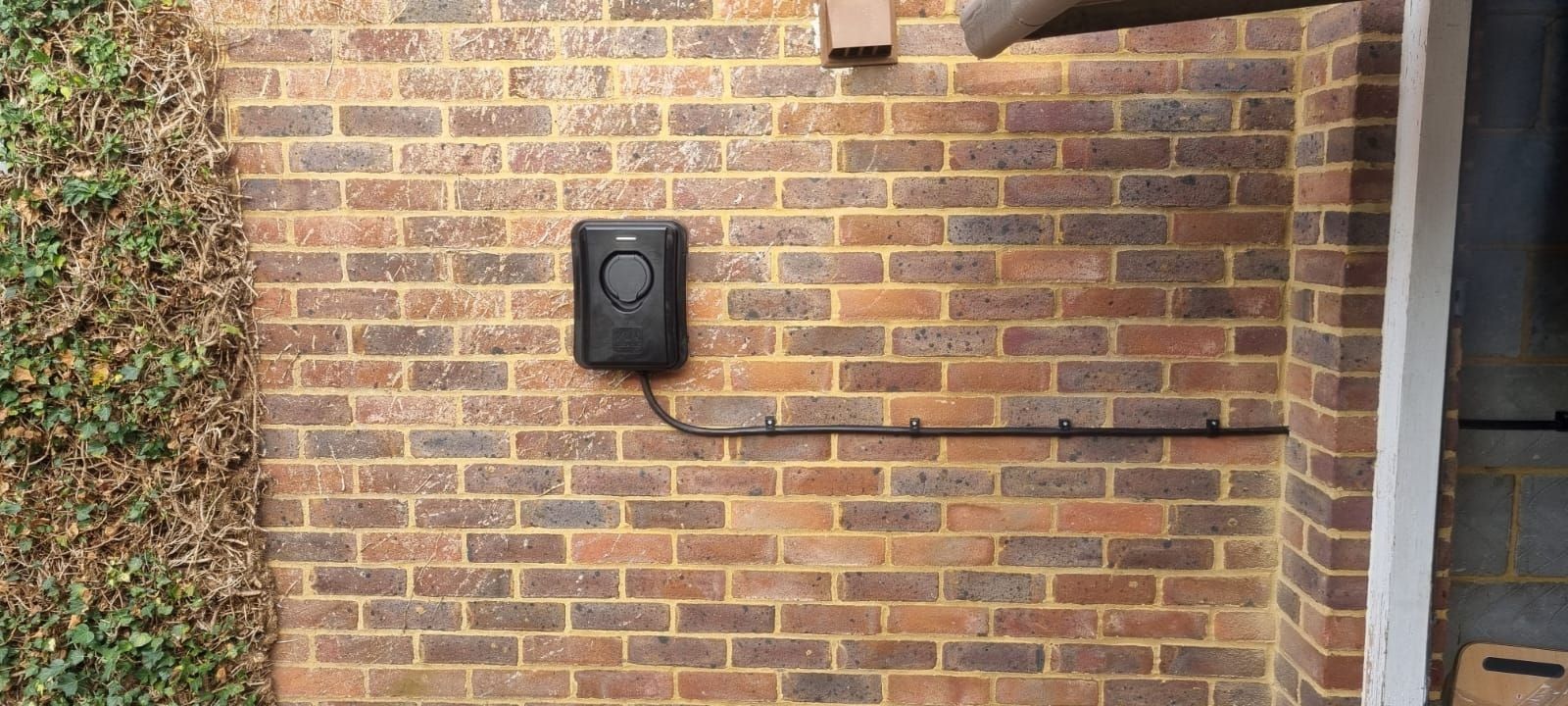
Charging an electric car in a Brighton terrace: the public network, and the home-charger cases
Over 1,000 public chargepoints, 86% of residents without off-street parking within a three-minute walk — and when a Brighton house can have its own.
Read it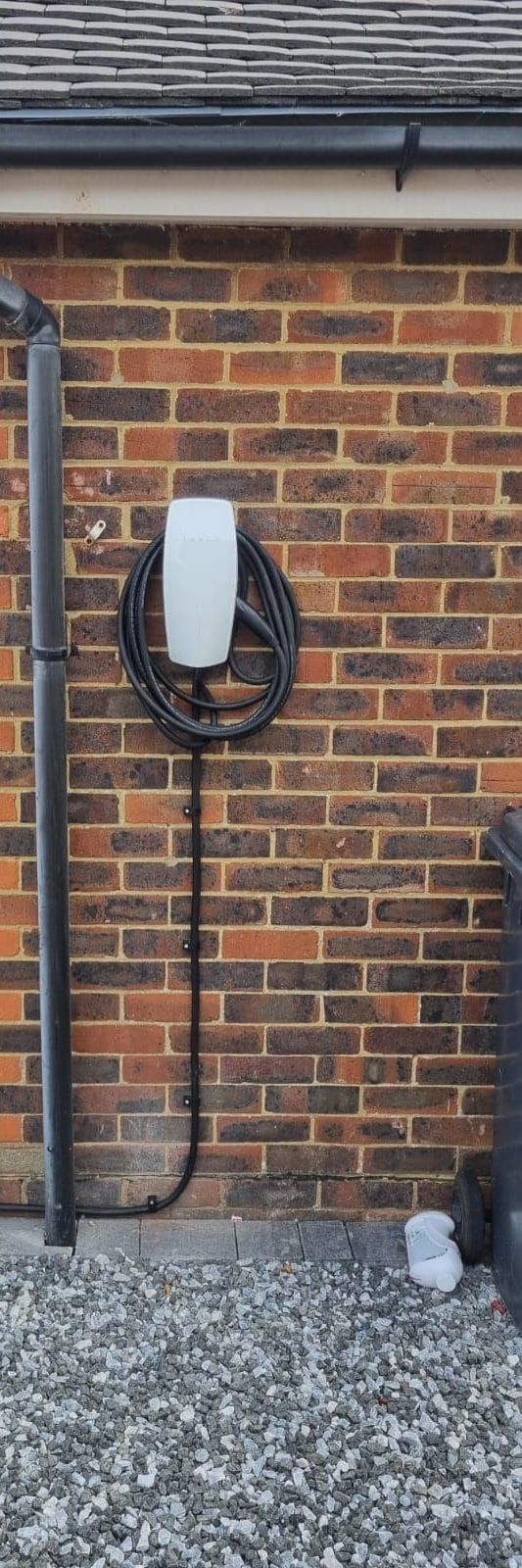
EV charger installation in Surrey: the rollout, the cable-gully rule and what a home charger needs
What Surrey has built and banned — 200-plus public sockets, no cables across the pavement — and what a home charger on the Surrey edge involves.
Read it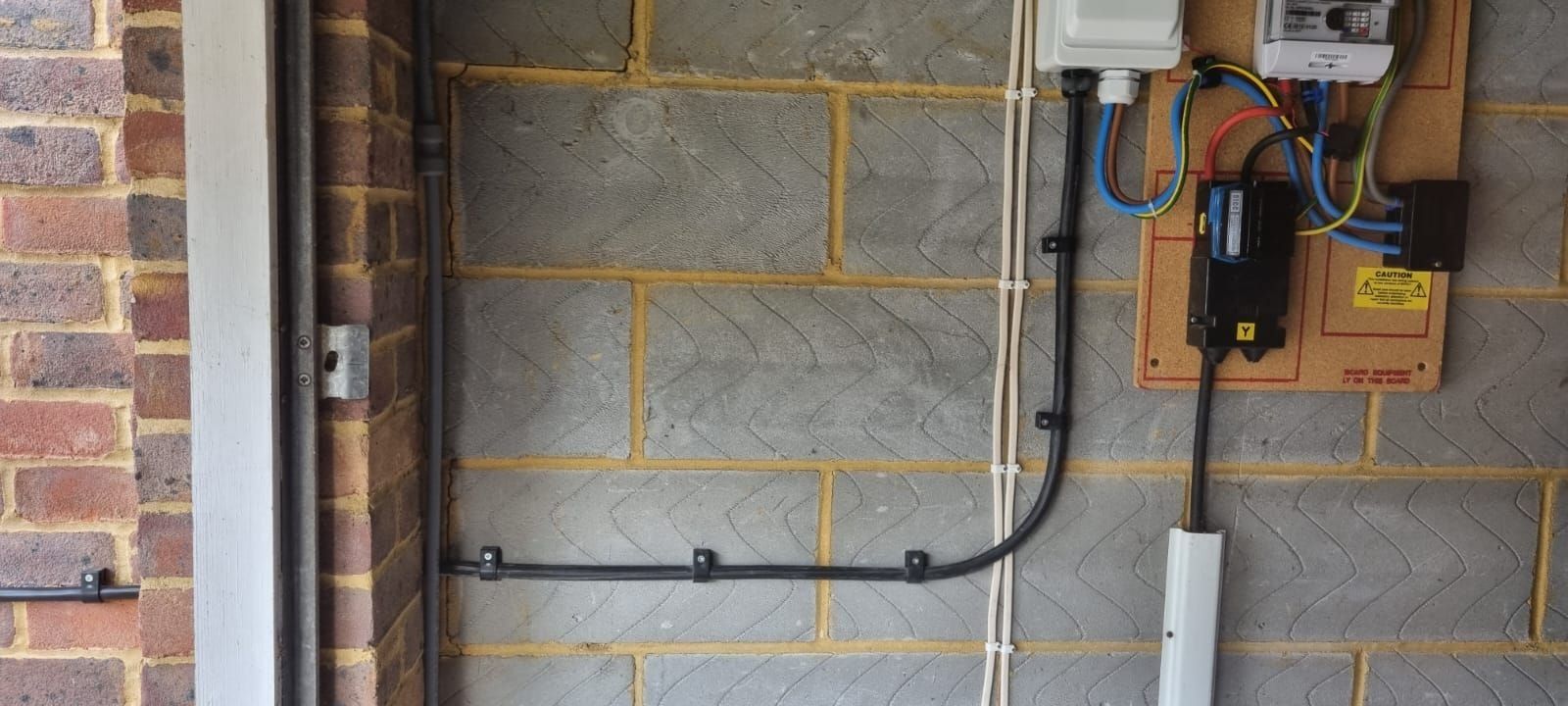
A home charger in a Worthing terrace: parking, the supply and the grant
Three Worthing houses — a semi with a drive, a terrace with a rear space, a terrace on the street — and what each can do about charging a car at home.
Read it