

Batteries
A battery behind a timber frame: East Grinstead's High Street and the later streets
Sixteen timber-framed houses and over 80 listed buildings around the High Street, plainer streets outside it: where a home battery goes in each.
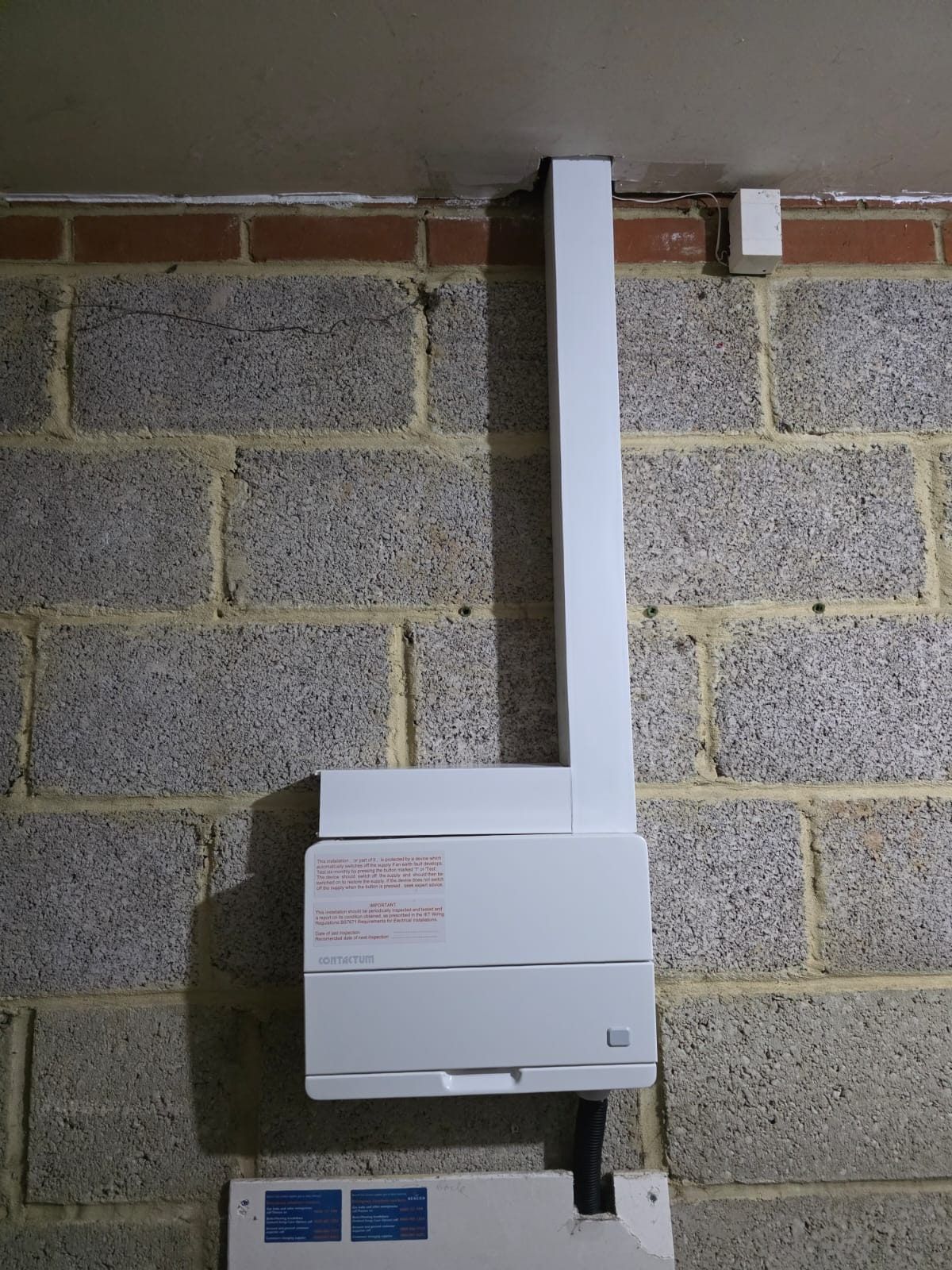
A finished consumer unit from one of our jobs. In an older East Grinstead house the board is where the survey starts.
East Grinstead is twenty-seven road miles from the workshop and the top corner of our patch — a Mid Sussex market town where, as the Town Council puts it, four counties meet. For a battery survey it is two towns. The High Street and the streets around it form a conservation area designated in 1971 and extended in 1989, with sixteen ancient timber-framed houses, two Grade I listed buildings and over eighty listed buildings centred on it. Outside that core the housing is later and plainer. The stack goes somewhere different in each.
The High Street: position first, consent second
A timber-framed house is rarely where a battery wants to live. PAS 63100:2024 — the fire-safety specification home batteries have been installed to since April 2026 — wants a location out of the living space with clearances and detection around it, and the standard steers towards a garage, an outbuilding or an enclosure outside the house before it considers anywhere indoors. A medieval frame offers none of that in the house itself. What it often does offer is a cellar, a later rear addition, or an outbuilding across the yard, and those are the positions we survey first.
Where the house is listed, there is a second question: the position of the stack and the route of its cables can touch listed building consent even though the outside of the building is untouched. We put a drawing to the conservation officer before we quote. That costs you nothing and settles it either way; discovering it afterwards costs everyone.
The later streets: the Mid Sussex standard
Outside the conservation area the job is the one we do across the district: a garage or utility wall, a short run to the board, the stack meeting the specification without argument, and a size that comes from your own half-hourly consumption or your bills rather than a price list. If the sums say a smaller battery, or none, that is the quote you get.
The two designations that do not reach indoors
East Grinstead is bounded to the east and south by the High Weald National Landscape and to the north by the Surrey Hills. Both matter for the roof — inside them the roof-slope rule is the conservation-area rule, and a listed house needs consent — and neither reaches a battery indoors or in an outbuilding, which is an electrical installation. We check which side of the High Weald line a house sits on because the array needs it, not the stack.
Operator and paperwork
RH19 is UK Power Networks, group J on the 18 October 2026 lookup. An inverter up to 16 amps per phase (3.68 kW) is notified under G98 after it is fitted; anything larger is applied for under G99 before it is energised — and a battery inverter can be what takes a job over that line, which is why we tell you which form your system is before the design is fixed. On the edge of a four-county town we read the council from the postcode and the operator from the MPAN on your bill.
Where to go next
Battery storage in East Grinstead is the page for the job and solar panels in East Grinstead is the roof. PAS 63100: where a home battery can and cannot go is the specification in plain terms, and G98 or G99 explained is the paperwork. On the same run, Haywards Heath’s post covers four kinds of house and Burgess Hill’s the garage question. The county picture is on the battery storage page.
More from the blog
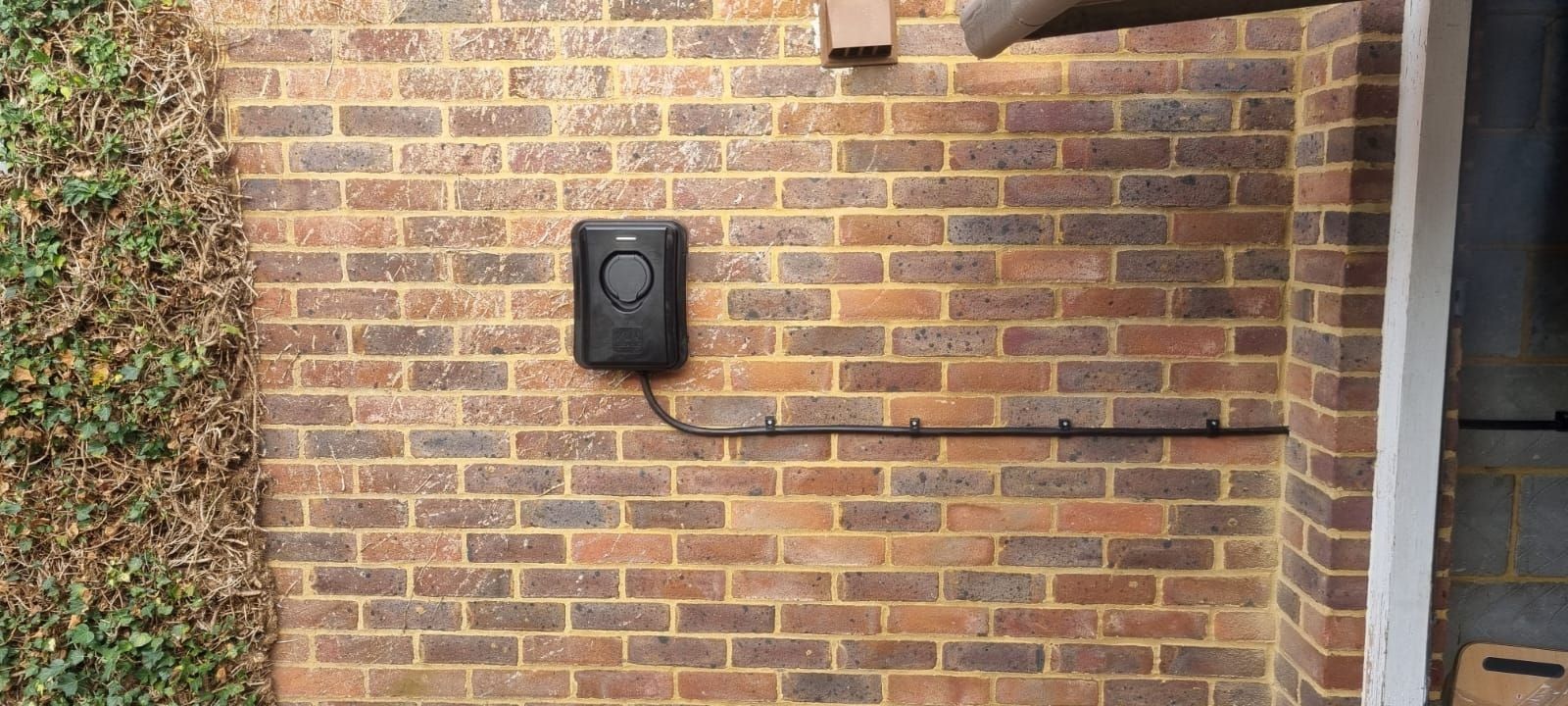
Charging an electric car in a Brighton terrace: the public network, and the home-charger cases
Over 1,000 public chargepoints, 86% of residents without off-street parking within a three-minute walk — and when a Brighton house can have its own.
Read it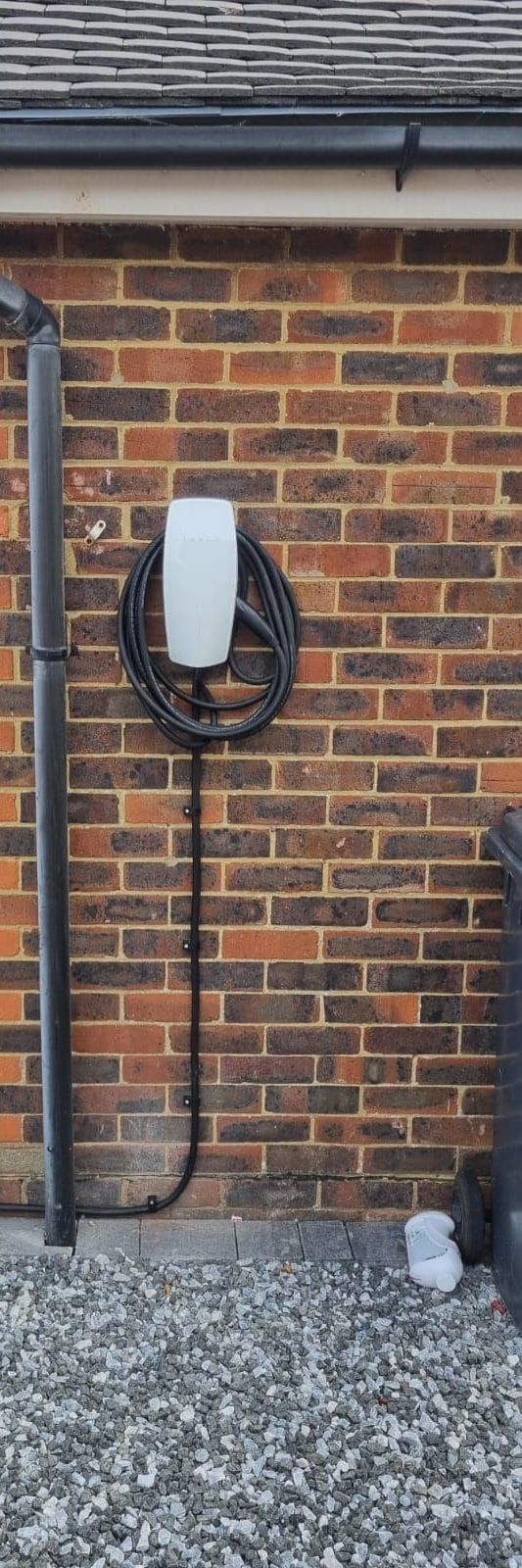
EV charger installation in Surrey: the rollout, the cable-gully rule and what a home charger needs
What Surrey has built and banned — 200-plus public sockets, no cables across the pavement — and what a home charger on the Surrey edge involves.
Read it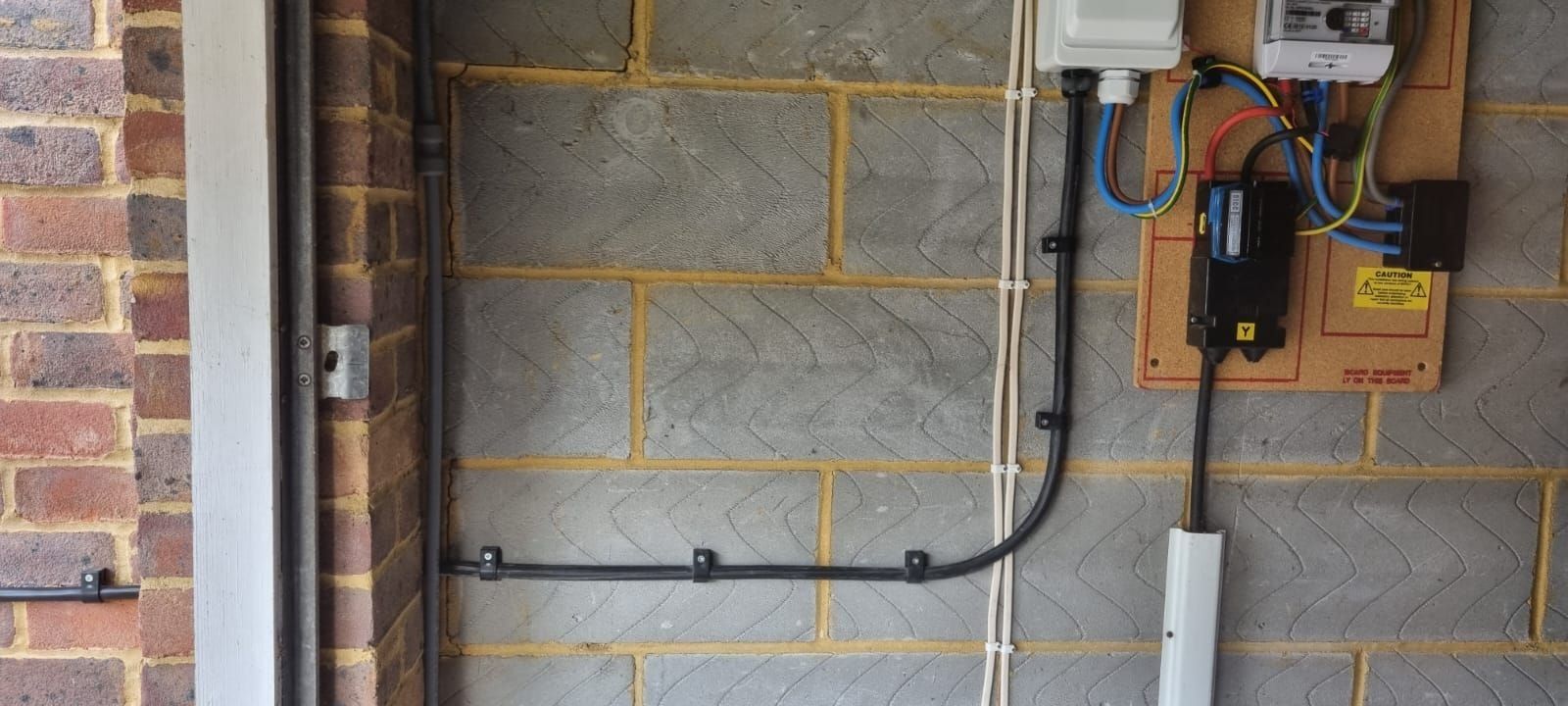
A home charger in a Worthing terrace: parking, the supply and the grant
Three Worthing houses — a semi with a drive, a terrace with a rear space, a terrace on the street — and what each can do about charging a car at home.
Read it