

Batteries
The garage question: home batteries on a Burgess Hill estate
The integral garage is the obvious battery position on a Burgess Hill estate house. Why we still measure it, and sizing for a family and a car.
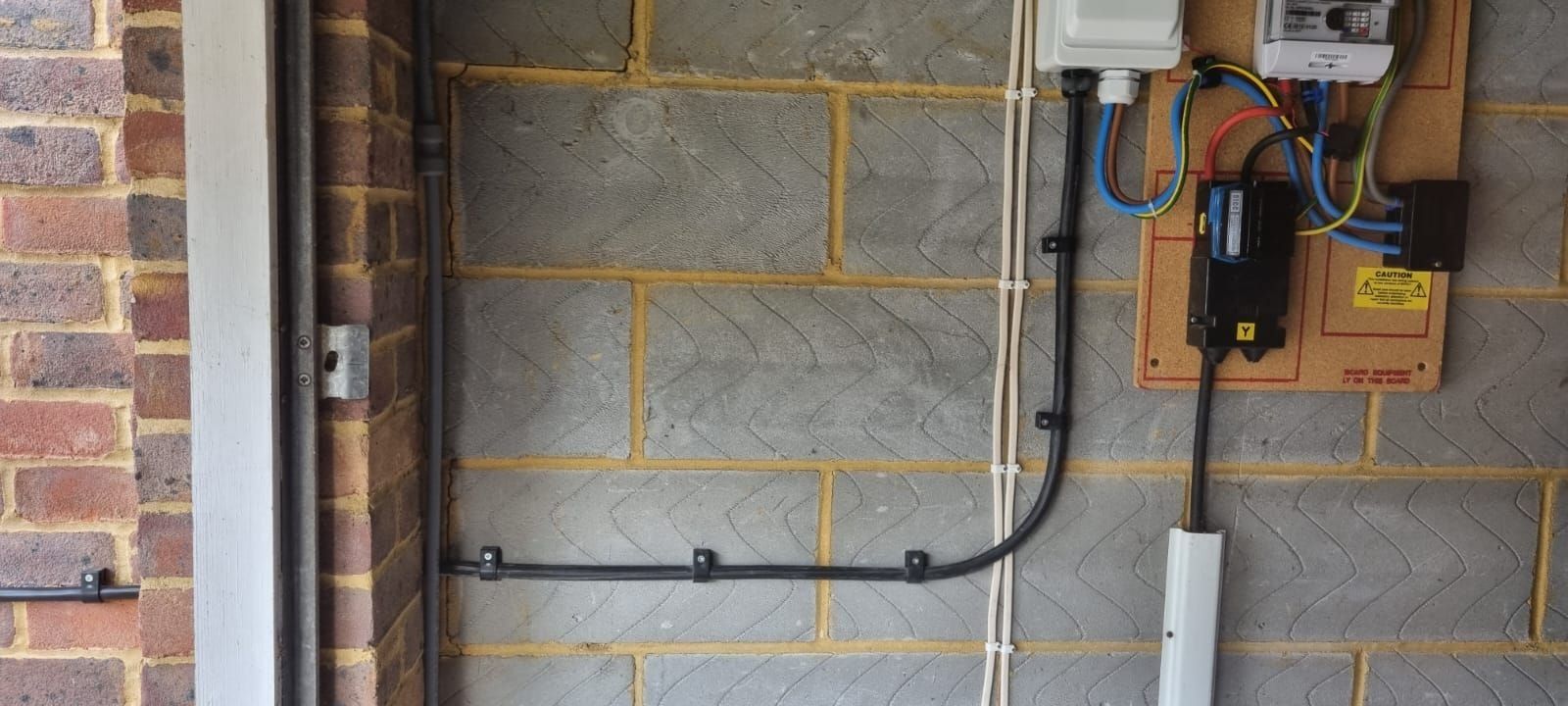
A garage wall on one of our jobs: meter tails, an isolator and a clipped run. The garage is where most estate-house batteries live.
Burgess Hill is nineteen miles up the A24 and A272, a Mid Sussex town of 33,352 people at the 2021 Census spread across six wards, and most of its housing is estate housing laid out around a garage. That makes it, on paper, the easiest battery town on our patch. In practice the garage is where the survey starts, not where it ends.
Why the garage is usually right
PAS 63100:2024, the fire-safety specification the wiring regulations have required for home batteries since April 2026, is about location, clearances and detection. An integral or attached garage gives all three with little effort: a solid wall out of the living space, room around the stack, and a short cable run to the consumer unit. For most houses on the estates it is the answer.
Why we still measure it
Garages fill up. A boiler gets moved in, a freezer arrives, the bikes multiply. A stack needs its clearances kept for the life of the system, not just for the photograph on install day, so we mark out the space it needs on the wall and the floor and you decide whether the garage can give that up. Where the garage has been converted into a room — common on the older estates — the fallback is a boarded loft or a utility, and the survey looks at the joists and the hatch as carefully as the regulations.
Sizing for a family house
Estate houses here are family houses, and a family evening — cooking, washing, lights, screens — is exactly the load a battery exists to carry. The question is rarely whether but how big, and the answer comes from your own half-hourly consumption or your bills, never from the size of the roof or the size of the brochure. We pair the battery with the array the roof allows — on an estate that is often an east–west split rather than a single south face — and quote the two as one system.
The car on the drive
If an electric car is on the horizon, say so at the survey. An EV charged overnight is the largest single load most houses will ever add, and a battery sized before it arrives is the wrong battery. The charging point is its own circuit and its own notification to the network, but the sizing is shared, and solar with an EV is a different design from solar without one.
Before the battery: the house
Mid Sussex District Council’s own energy pages, the same ones that record its net zero vote of 2 November 2022, point eligible households to the Warmer Homes scheme — government funding for energy-efficiency measures. We mention it because a better-insulated house needs less of everything, including battery capacity. If you qualify, do that first and let us size the battery to the house you will have.
Operator and paperwork
RH15 is UK Power Networks, group J. An inverter up to 16 amps per phase is notified under G98; anything larger needs a G99 application before it is energised. We make both. Hassocks and Hurstpierpoint, a few miles south on the B2116, are on the same operator and surveyed the same way.
Where to go next
Battery storage in Burgess Hill is the page for the job and solar panels in Burgess Hill is the roof. Four miles up the road, Haywards Heath’s post covers a town with four kinds of house rather than one, and Horsham’s works a battery-and-EV case through. The county picture is on the battery storage page.
More from the blog
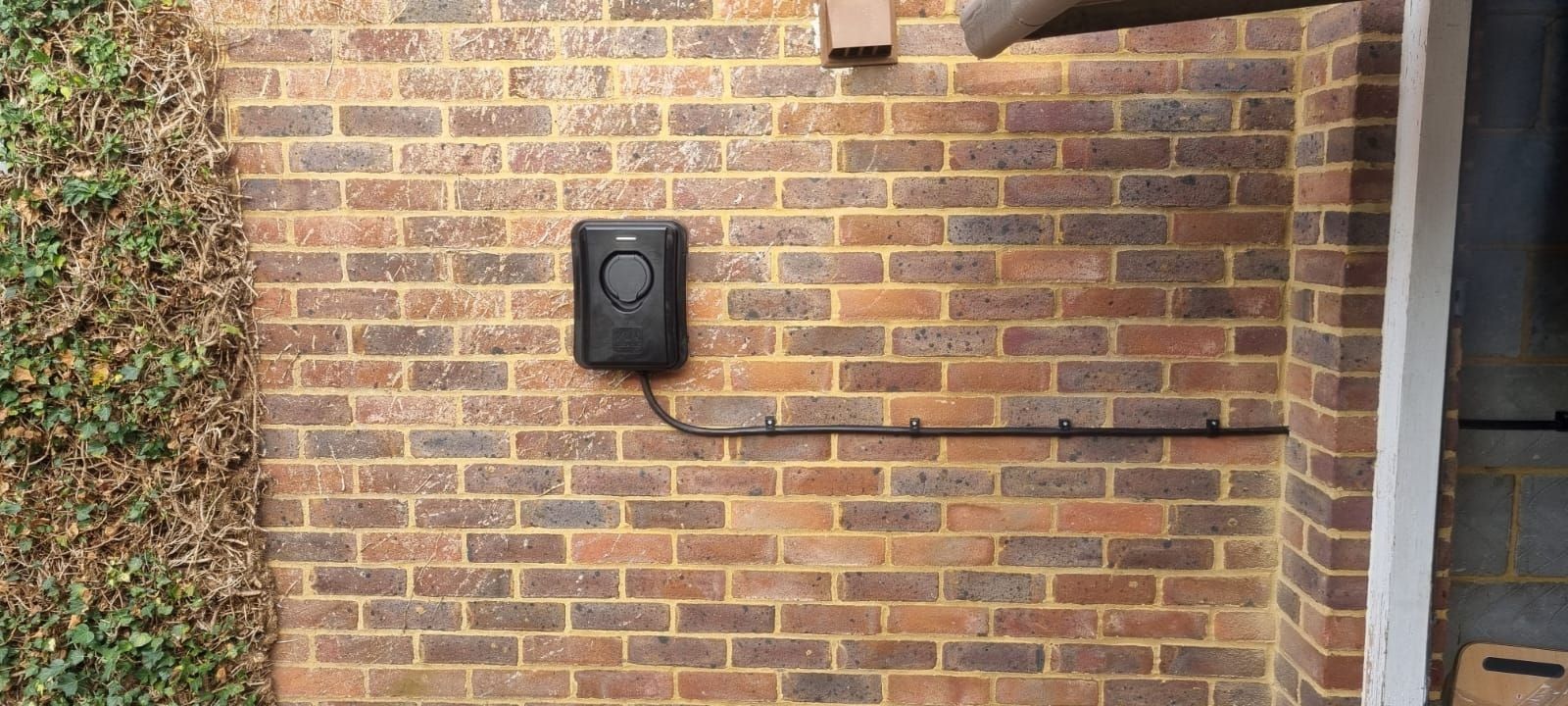
Charging an electric car in a Brighton terrace: the public network, and the home-charger cases
Over 1,000 public chargepoints, 86% of residents without off-street parking within a three-minute walk — and when a Brighton house can have its own.
Read it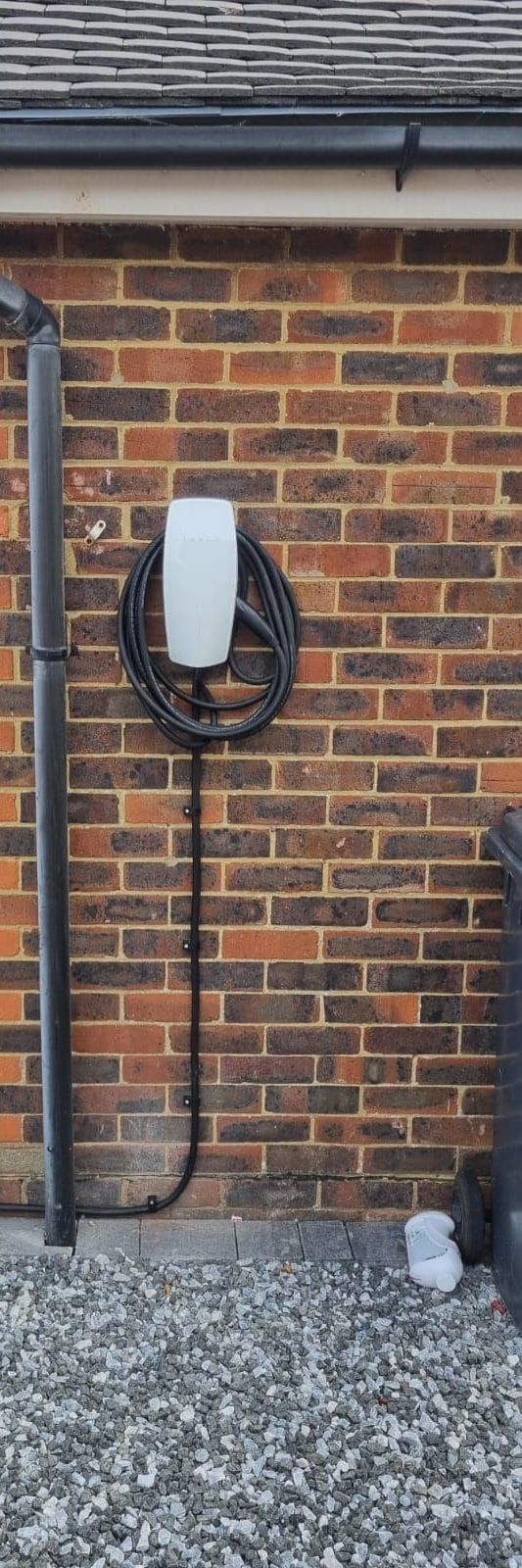
EV charger installation in Surrey: the rollout, the cable-gully rule and what a home charger needs
What Surrey has built and banned — 200-plus public sockets, no cables across the pavement — and what a home charger on the Surrey edge involves.
Read it A home charger in a Worthing terrace: parking, the supply and the grant
Three Worthing houses — a semi with a drive, a terrace with a rear space, a terrace on the street — and what each can do about charging a car at home.
Read it