

Planning
Solar panels and planning permission in Surrey: the roof-slope rule, the Surrey Hills and the exceptions
When solar panels in Surrey need planning permission and when they do not: the roof-slope rule, the Surrey Hills, flat roofs, listed houses, Article 4.
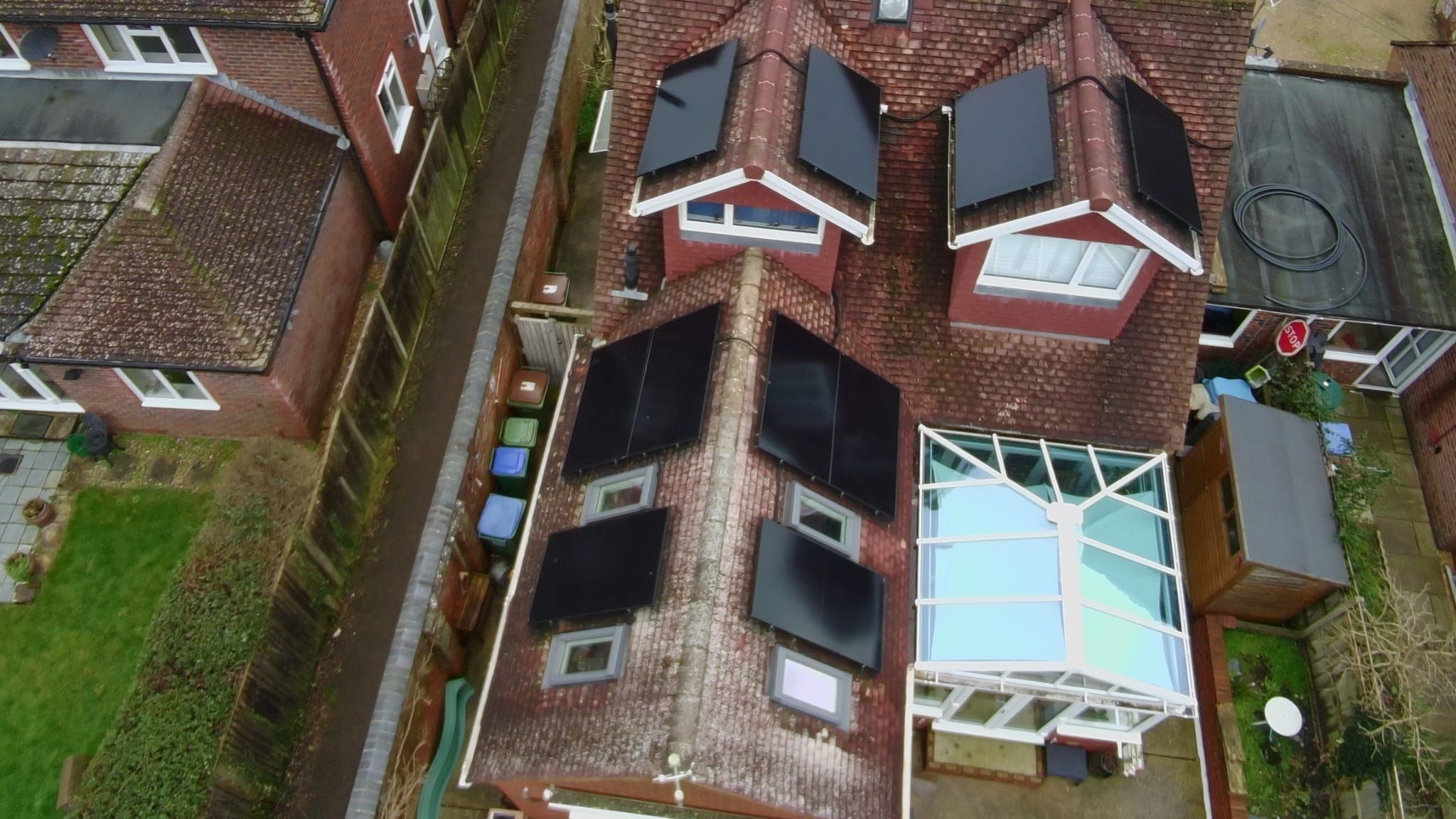
One of our own roofs. Dormers, hips and a conservation-area address change the design; they rarely change the planning answer.
The rule most people in Surrey arrive with is wrong in both directions. Some assume a house inside the Surrey Hills needs planning permission for anything on the roof; others assume nothing on a house ever does. The national permitted-development class for solar is more precise than either, and this is it, applied to the part of Surrey we cover from Washington — Cranleigh and Haslemere in the west, Dorking, Reigate and Horley in the east.
The roof-slope rule
Under the national permitted-development class for microgeneration, a solar panel on the roof slope of a house does not need planning permission, and that includes a street-facing slope and a house inside a conservation area or a National Landscape. Three things sit outside it:
- A panel on a wall, balcony or roof enclosure fronting a highway. Walls are not roofs in the class.
- A flat-roof array on designated land — a conservation area, a National Landscape, a National Park — which has needed prior approval from the council since 21 December 2023. The council is asked to approve the design and siting before it goes up; it is a lighter process than a full application, but it is a process.
- A listed house, which sits outside the class altogether and needs listed building consent for the panels and often for the cabling too.
There is one more thing to check before relying on any of that: an Article 4 direction, which a council can use to remove permitted-development rights in a particular area. They are not common for roof solar, but they exist, and the only way to know is to check the address against the district council’s own records. We do that before the survey and put the answer in writing.
The Surrey Hills, and what it changes
The Surrey Hills National Landscape was designated in 1958, one of the first in the country, and covers about a quarter of the county from Farnham in the west to Oxted in the east, including the Greensand Hills around Haslemere. A good share of the houses we survey on the Surrey edge are inside it.
What it changes is less than people expect. The roof-slope rule above applies inside a National Landscape exactly as it does outside one. What the designation does do is bring the flat-roof prior-approval rule into play — a ballasted array on a flat-roofed extension or garage inside the Surrey Hills needs the council’s prior approval — and it tends to go with the older stock, clay tile and tile-hung elevations, where the fixing and the scaffold are the real design questions. On a sloping plot with mature trees close to the house, the survey spends longer on shading than on planning.
Which council, and which network operator
Planning in the part of Surrey we cover sits with three district and borough councils: Waverley for Cranleigh and Haslemere, Mole Valley for Dorking, and Reigate & Banstead for Reigate and Horley, with Surrey County Council above them. Mole Valley declared a climate emergency on 18 June 2019 and voted for carbon neutrality by 2030 or earlier, which is worth knowing only because it tells you which way the officers lean.
The electricity network is a separate piece of paperwork and it has nothing to do with the council. Surrey has two operators and the line between them runs through our patch: Cranleigh, Dorking, Horley and Reigate are UK Power Networks, the Haslemere side is Scottish and Southern Electricity Networks, and the MPAN on your bill says which. Every inverter is notified to the operator before it is switched on — up to 16 amps per phase, 3.68 kW, as a G98 notification; above that as a G99 application that has to be approved first. We make the submission and the acknowledgement goes in your handover pack.
Batteries: a regulation, not a planning question
A home battery is not a planning matter, but since April 2026 the wiring regulations have required batteries in homes to be installed to PAS 63100:2024, the fire-safety specification for domestic battery systems. That governs where the battery goes — the room, the wall, the clearances and the detection around it — and it is settled at the survey, not on the day. A garage or a utility usually complies; under the stairs usually does not.
What this means for a Surrey quote
Most of the time the planning answer is “nothing to apply for” and the quote can be written from the roof. Where a flat roof inside the Surrey Hills needs prior approval, we say so before anything is ordered and the application is part of the job. Where a house is listed, the honest answer is sometimes an outbuilding roof instead.
What the system is worth, and what it costs, is the other half of the decision: solar panel cost in Surrey works through a PVGIS example near Dorking with every assumption shown, solar panel grants in Surrey sets out which schemes are real, and our solar panels in Surrey page covers the roofs, the towns and the two network operators. The survey is free, and the planning check is part of it.
More from the blog
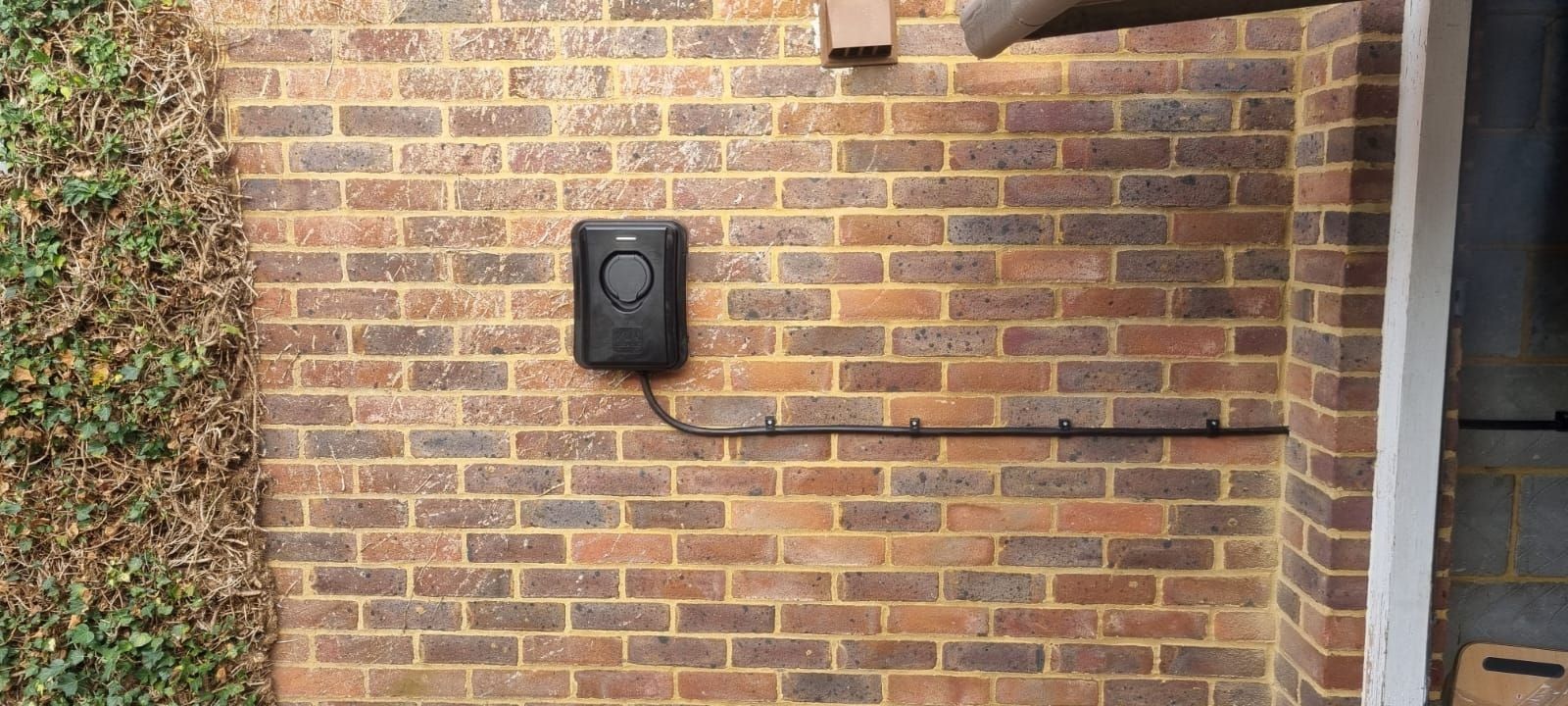
Charging an electric car in a Brighton terrace: the public network, and the home-charger cases
Over 1,000 public chargepoints, 86% of residents without off-street parking within a three-minute walk — and when a Brighton house can have its own.
Read it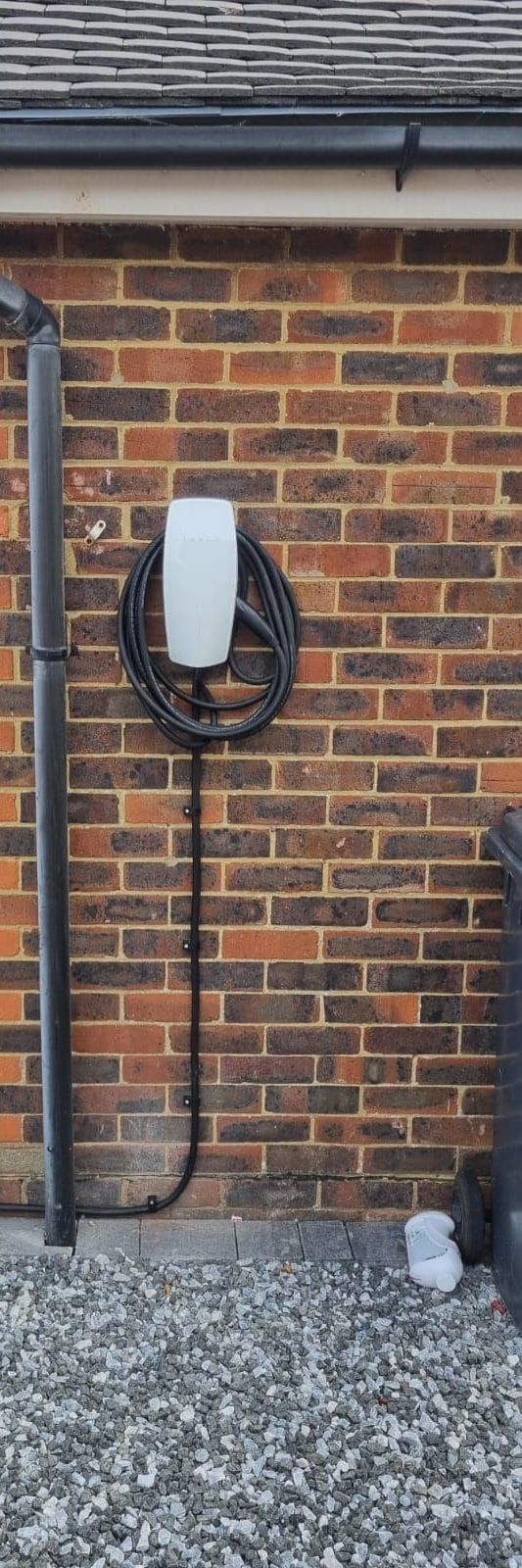
EV charger installation in Surrey: the rollout, the cable-gully rule and what a home charger needs
What Surrey has built and banned — 200-plus public sockets, no cables across the pavement — and what a home charger on the Surrey edge involves.
Read it
A home charger in a Worthing terrace: parking, the supply and the grant
Three Worthing houses — a semi with a drive, a terrace with a rear space, a terrace on the street — and what each can do about charging a car at home.
Read it