

Batteries
Battery, EV and a Horsham estate house: sizing the three together
On the estates north and east of Horsham the battery job is easy and the car is what changes it. How we size array, battery and charger as one system.
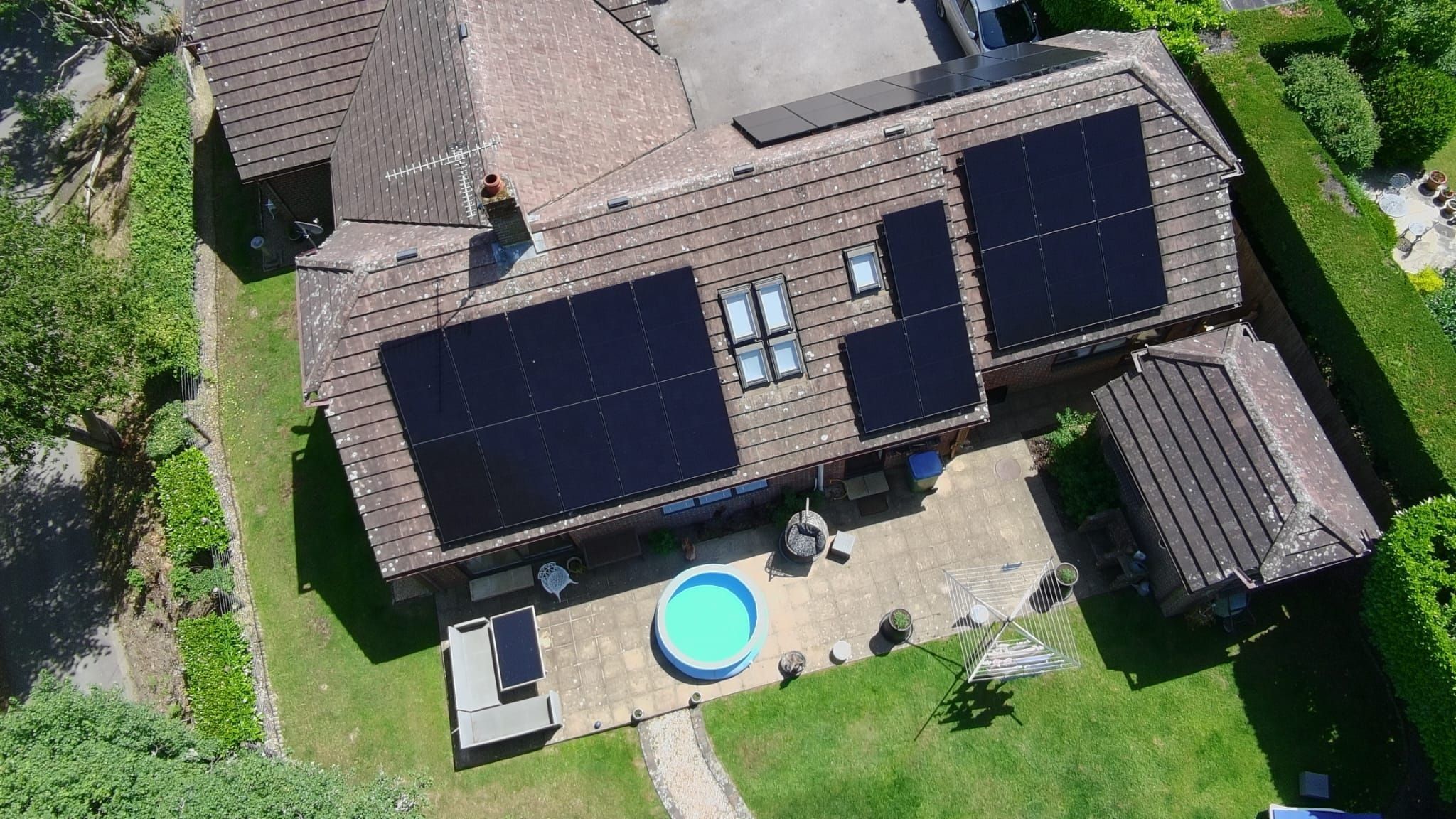
Two slopes, two arrays, one house — a typical estate layout from one of our own jobs, seen from above.
Horsham is thirteen miles up the A24 in our own district — Washington is a Horsham District village — and north and east of the town centre it is substantial modern estate housing: large, simple pitched roofs, a garage or a utility, and increasingly a car on the drive that plugs in. The battery job on those estates is a known quantity. The car is what changes it, and it is the thing people most often forget to mention at the survey.
The easy half
A garage wall gives PAS 63100 — the fire-safety specification home batteries have been installed to since April 2026 — what it asks for: a location out of the living space, the clearances around the stack, and room for the detection. A short run to the consumer unit, a notification to the operator, and the position is settled. On these estates the roof is the other easy half: concrete tile on a big simple pitch, where the only real question is which slope earns its keep.
The hard half is the load
A battery is sized to how much the house uses after dark, read from half-hourly smart-meter data where the meter will give it to us and from the bills where it will not. A family evening is a decent load. An electric car charged overnight is a bigger one — the largest single load most houses on these estates will ever add — and a battery sized before the car arrives will be the wrong battery for the house that has one. So we ask. If a car is a year away, we size for it now, because one system designed once is cheaper than two designed in sequence.
Three things, one design
The array decides how much there is to store. The battery decides how much of the evening it covers. The charging point is its own dedicated circuit with its own notification to the network, and it decides whether the car charges from the day’s surplus, from the battery, or from the grid overnight. Designed together those three make sense of each other; designed apart they fight. Solar with an EV is the longer explanation, and the EV charger installation page is the charger side.
The other Horsham house
Not every Horsham house is on an estate. Older houses across the district carry Horsham stone roofs — heavy, brittle, irregular — and an array on them is a specialist mounting job that often ends up smaller than the house could use. That is the house where a battery earns most: a modest array exports a large share of what it makes unless there is somewhere to put it. Inside one of the four town-centre conservation areas — the town centre, London Road, Richmond Road and Park Terrace Gardens — the stack goes indoors or to the rear and nothing visible changes.
Two operators in one district
UK Power Networks serves the RH12 and RH13 postcodes around the town; Scottish and Southern Electricity Networks serves RH14 Billingshurst; and on the 15 October 2026 lookup RH12 itself straddles the two. We read the operator off the MPAN on your bill rather than the postcode. The form is the same either way — G98 up to 16 amps per phase, a G99 application above — and so is the kit and the price. Domestic solar panels and battery storage currently attract zero-rate VAT.
Where to go next
Battery storage in Horsham is the page for the job and solar panels in Horsham is the roof, Horsham stone included. Burgess Hill’s post is the garage question on a different estate town, and Billingshurst’s is what changes on the SSEN side of the district. The county picture is on the battery storage page.
More from the blog
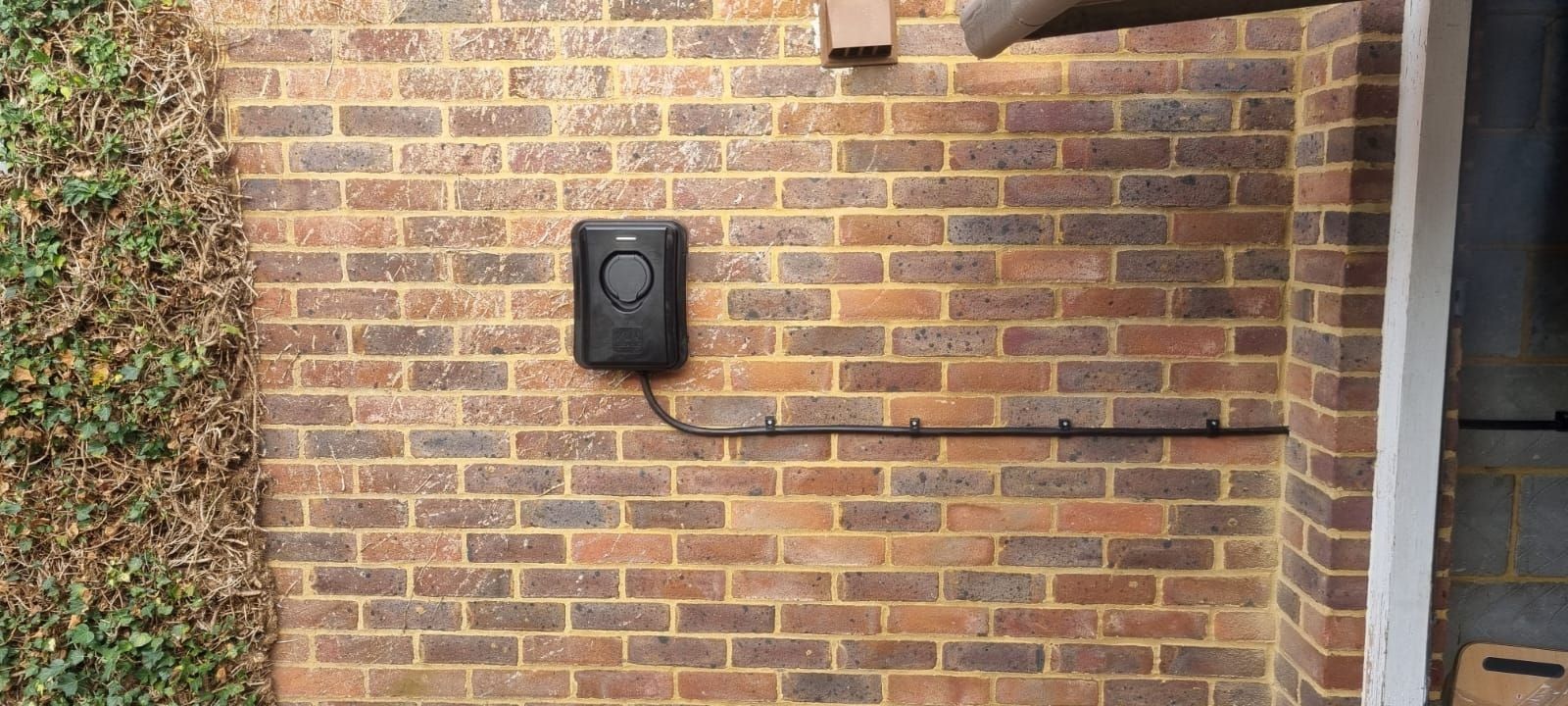
Charging an electric car in a Brighton terrace: the public network, and the home-charger cases
Over 1,000 public chargepoints, 86% of residents without off-street parking within a three-minute walk — and when a Brighton house can have its own.
Read it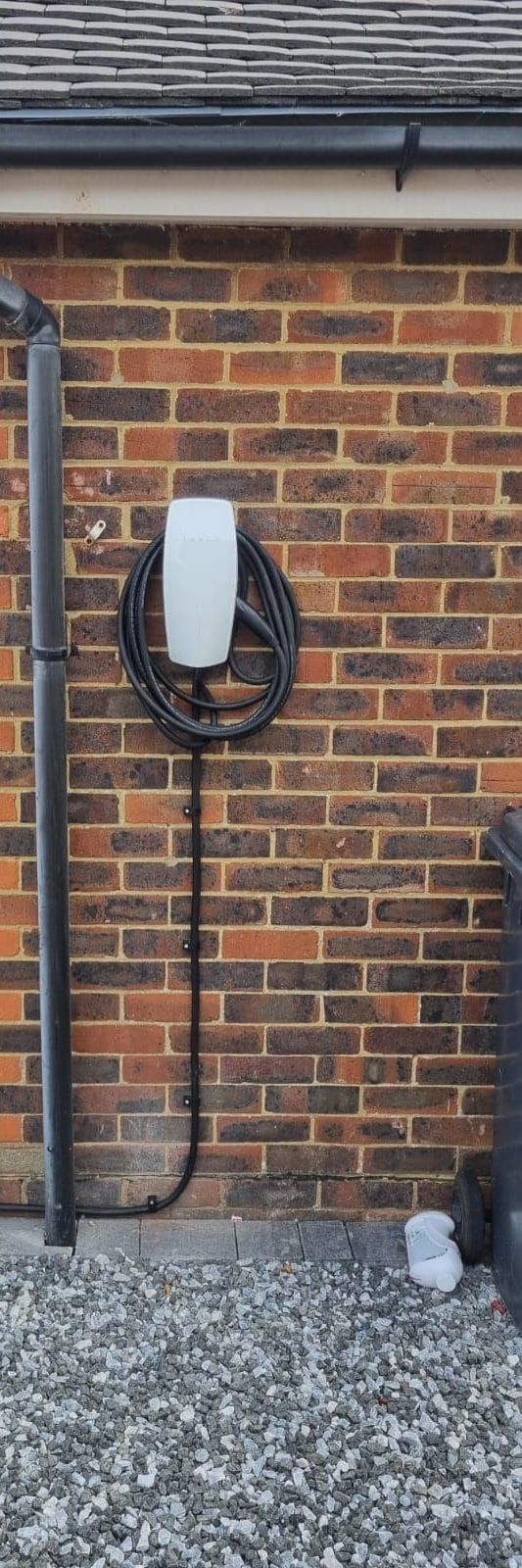
EV charger installation in Surrey: the rollout, the cable-gully rule and what a home charger needs
What Surrey has built and banned — 200-plus public sockets, no cables across the pavement — and what a home charger on the Surrey edge involves.
Read it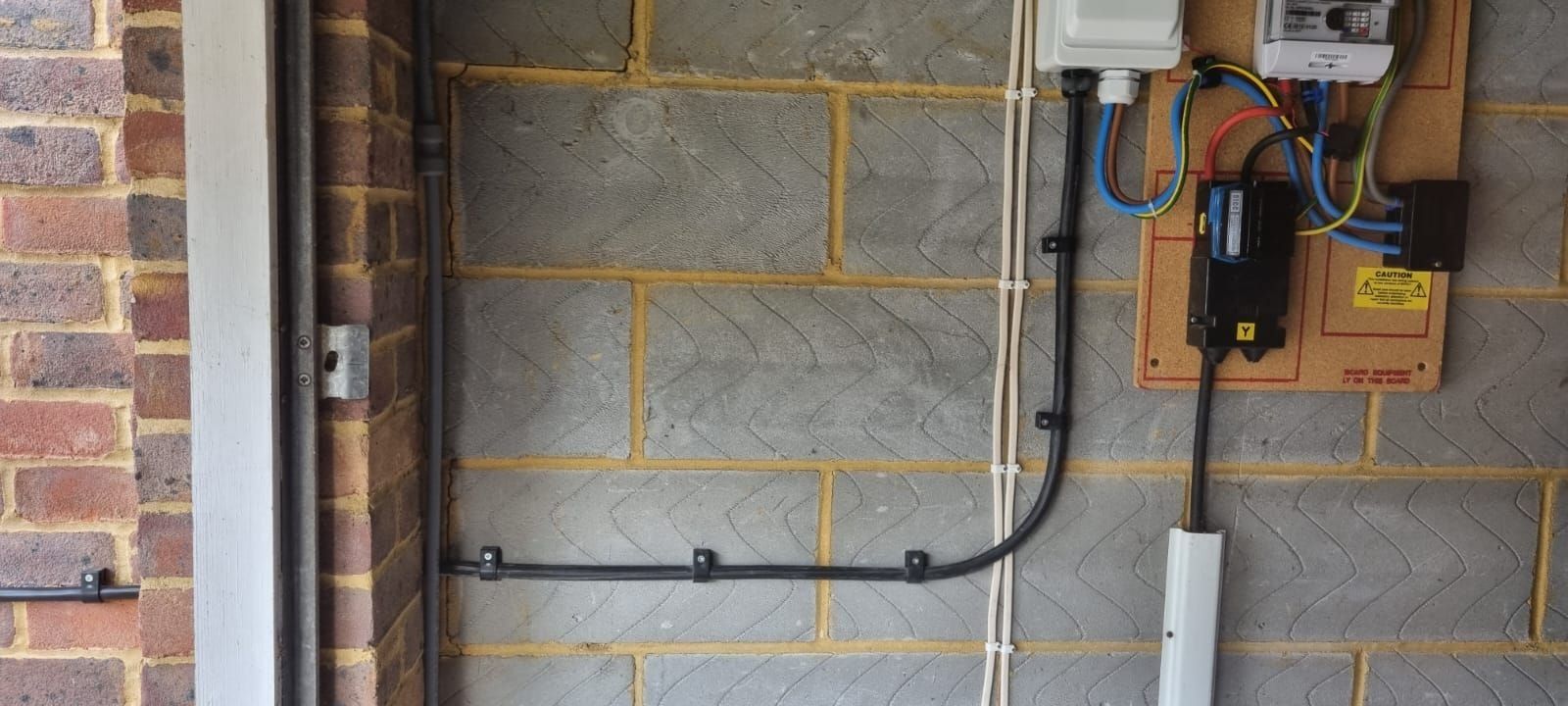
A home charger in a Worthing terrace: parking, the supply and the grant
Three Worthing houses — a semi with a drive, a terrace with a rear space, a terrace on the street — and what each can do about charging a car at home.
Read it