

How it works
What solar actually does in a Sussex winter
Panels still generate on grey days — just less. What a West Sussex December really looks like on the app, and how to make the short days count.
The same roof generates every month of the year. The difference is how much.
The single most common thing we get asked, usually in a slightly sceptical tone: does it actually do anything in winter?
Yes. Just less. And the honest version of that answer is more useful than either the sales version or the pessimistic one.
Panels need light, not heat
This trips people up constantly. Solar panels are not solar thermal — they are not warming anything. They respond to light, and they are actually marginally more efficient when they are cold. A bright, frosty February morning is a genuinely good generating hour.
What falls away in winter is not temperature, it is daylight: fewer hours of it, at a lower sun angle, through more cloud.
What a real Sussex December looks like
Generation follows a predictable curve through the year. Your best months are May through August. Your worst are November through January, and December is the floor.
A December day on the app is not zero. It is a modest, wide, flat hump — enough to run the background load of the house, the fridge, the router, the standby draw that never sleeps. On a clear cold day it will do considerably more than that.
The south coast has one genuine advantage here: this is among the sunniest parts of the United Kingdom. It is not Spain, but it is measurably better than most of the country.
Making the short days count
Three things change how much of a winter you actually capture:
Roof angle. A steeper pitch catches a low winter sun better than a shallow one. You cannot change your roof, but it does explain why two neighbouring houses can behave differently.
Shading. A tree that is irrelevant in June casts a long shadow across a roof in December. This is exactly what we model at the survey, and it is why the survey involves standing on your roof rather than looking at a satellite image.
A battery. In winter your generation is small but so, often, is your daytime use. A battery holds what you make in the middle of a short day for the evening — which in December starts at four o’clock.
The honest summary
Your system will do most of its annual work between April and September. Winter contributes, meaningfully, but it is not where the money is. Anyone who tells you otherwise is selling something.
More from the blog
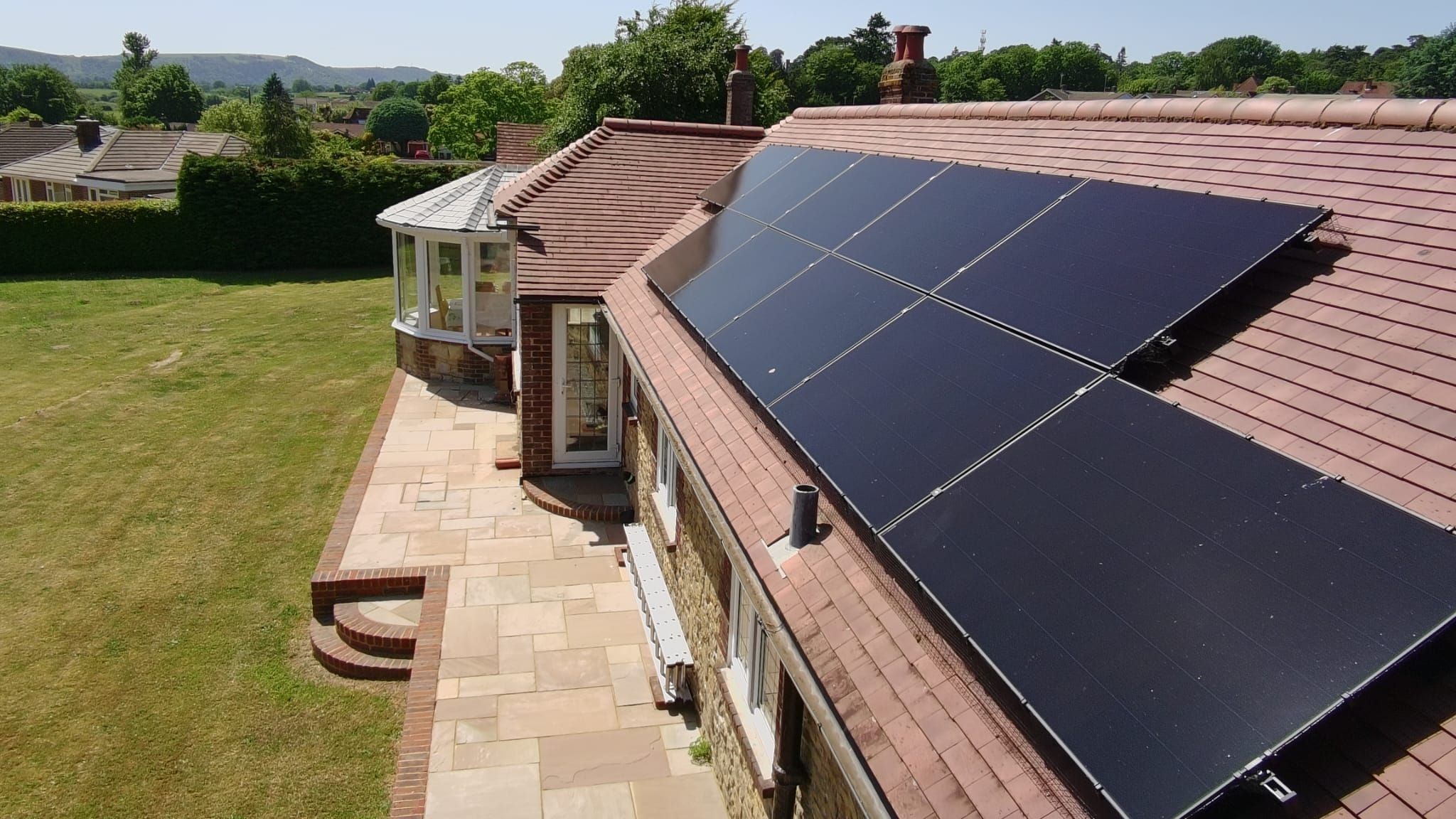
Why nearly every roof we do now is all-black
Black frames, black backsheets and why the silver grid disappeared from Sussex roofs. What you gain, what it costs, and when it isn't worth it.
Read it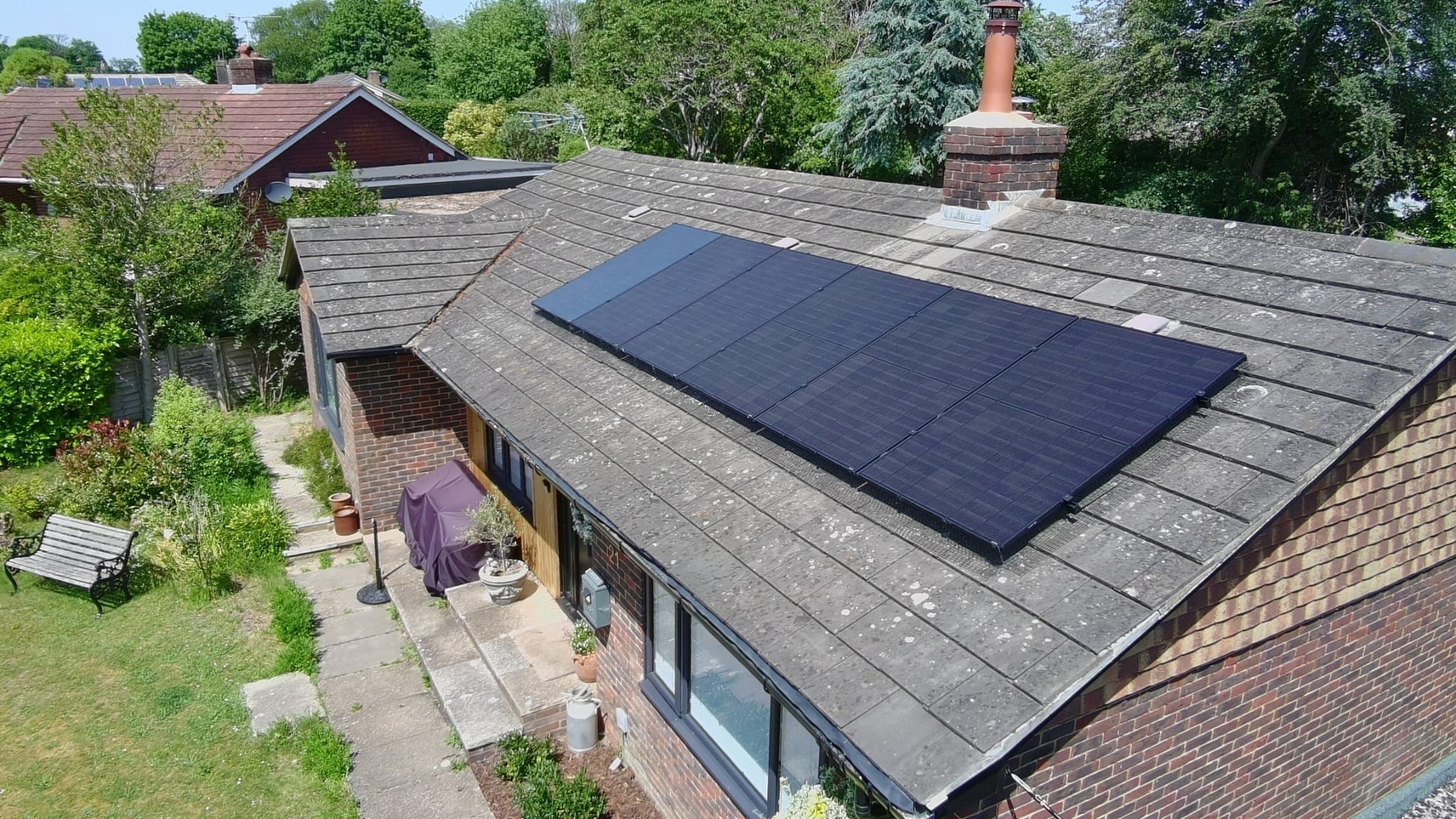
Horsham stone, flint and the Sussex roof problem
Some local roofs make solar straightforward. Others need a different conversation entirely. A survey-level guide to what we find on West Sussex roofs.
Read it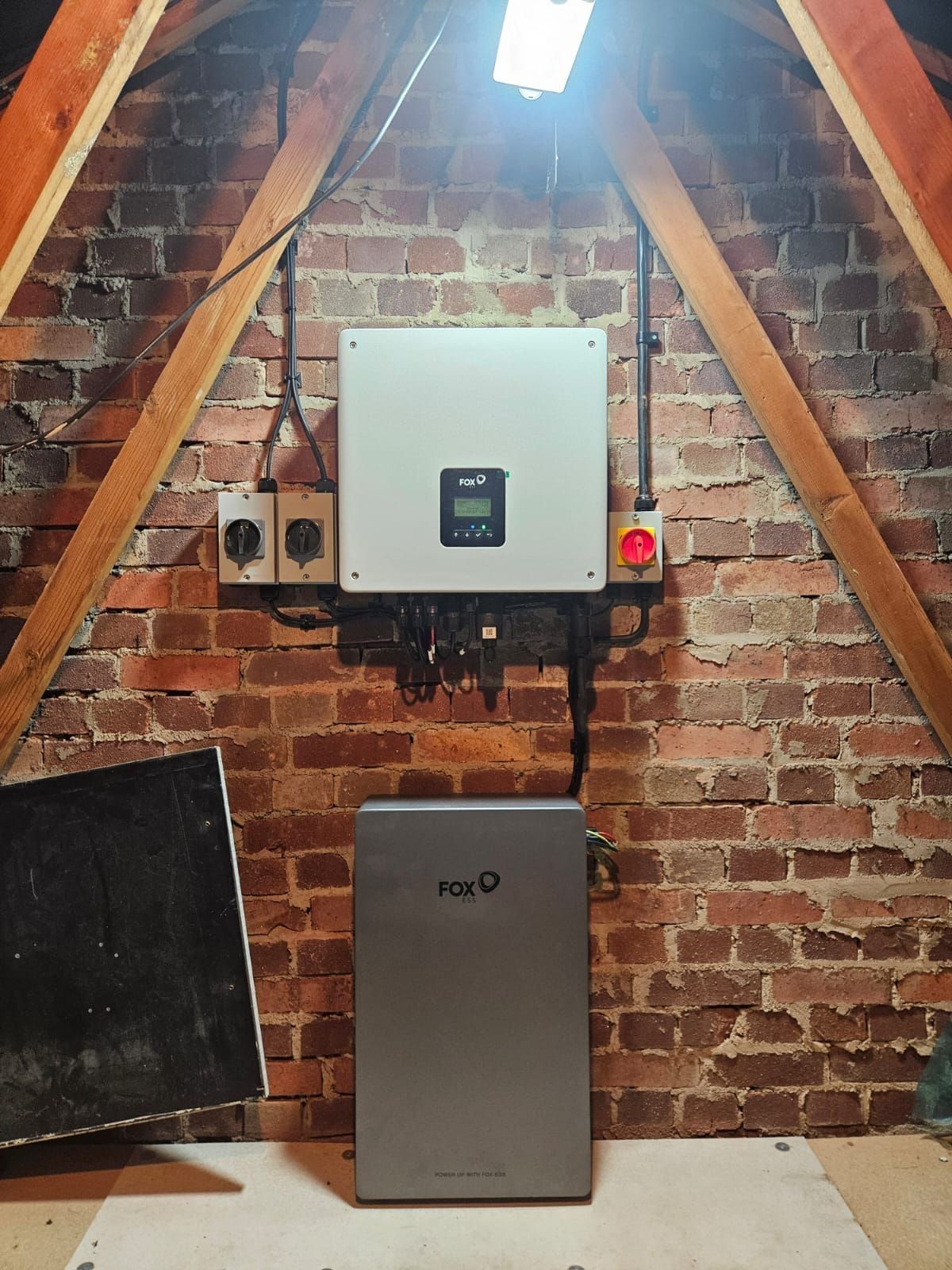
Is a battery worth it? The honest arithmetic
A battery roughly doubles how much of your own generation you use. Whether that pays depends on when your house is empty. Here is the arithmetic.
Read it