

Equipment
What a Sigenergy installation involves, from the survey to the handover pack
The order of a Sigenergy installation on a West Sussex house: survey, the wall, the network notification, the stack going up, commissioning and the app.
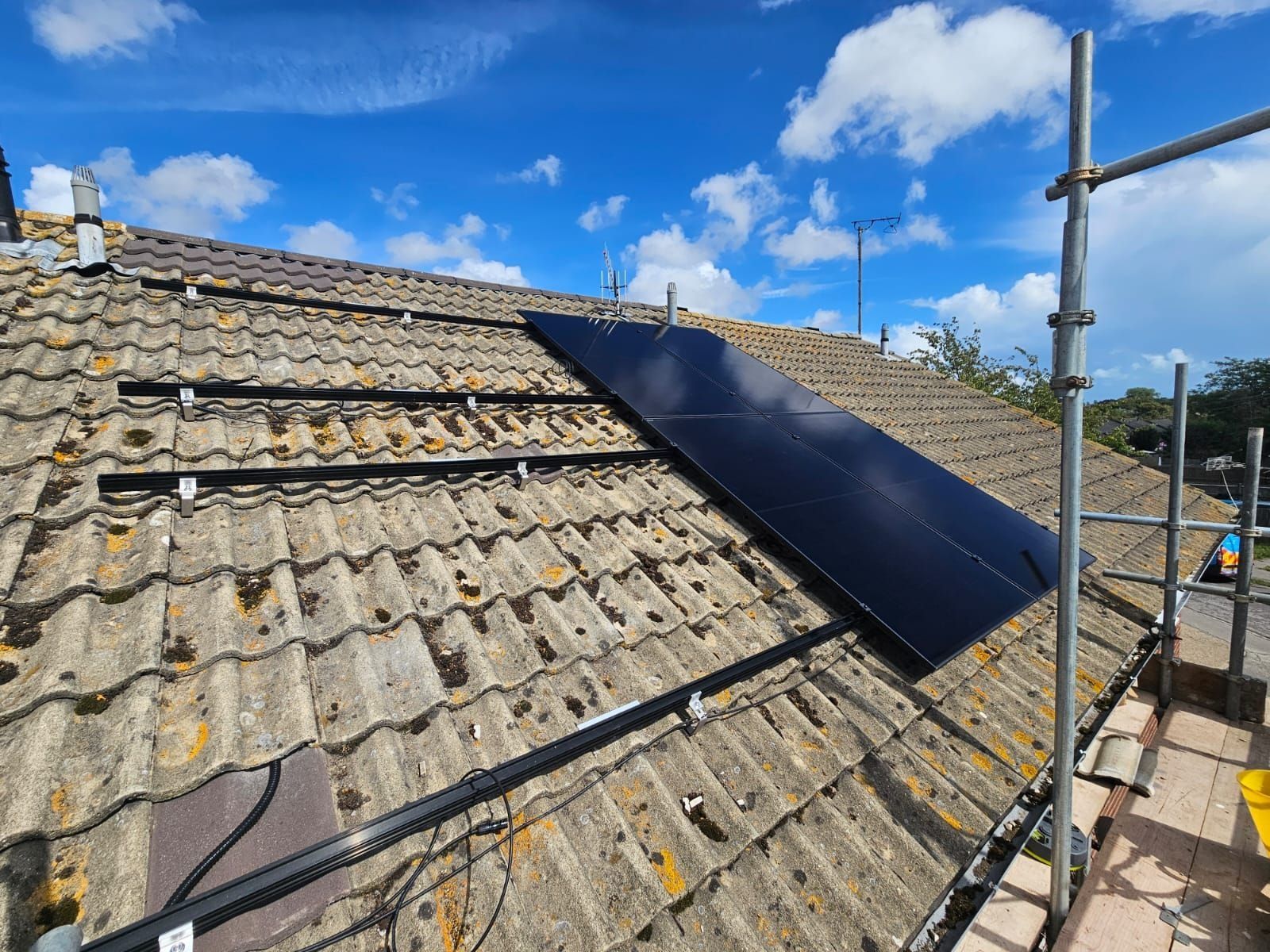
Rails and the first panels on one of our own roofs. The battery side of the job happens indoors, after this.
People who have been quoted a Sigenergy stack usually want to know what the job actually looks like: how long, in what order, who does which part, and what they are holding at the end. This is the sequence as we run it. Nothing below is a specification, and nothing is a promise about a date; both of those come in writing after the survey.
1. The survey, and the five things we measure
The incoming supply and what headroom it has. The consumer unit, its age and whether it has anywhere left to go. The earthing arrangement. The wall the assembly is going on and what is behind it. How far that wall sits from the board and what the cable has to cross to get there. None of those questions gets easier because the equipment is clever; they decide whether the clever equipment can go where you want it. What happens at the free survey describes the visit itself.
2. The wall, settled under PAS 63100
Since April 2026 the wiring regulations require batteries in homes to be installed to PAS 63100:2024, the fire-safety specification for domestic battery systems. For a stacked assembly that means one position that satisfies the rules on location, clearances and detection, and that can take the weight. A garage, a utility or an outbuilding usually can. Under the stairs usually cannot. The location goes into the quote with the reason, so you can see it before you sign.
3. The network notification, to the right operator
Every inverter is notified to the electricity network operator before it is switched on, and an integrated stack is no exception. Across most of our patch that is UK Power Networks; towards Chichester, Bognor Regis, Billingshurst and Petworth it is Scottish and Southern Electricity Networks, and in Horsham district the two meet. The threshold is the industry code’s: up to 16 amps per phase, 3.68 kW, is a G98 notification; above it a G99 application has to be approved before the system is energised. We make the submission, and the acknowledgement is yours to keep.
4. The install
The roof side is the same as any array: scaffold in the quote, rails, panels, bird mesh where the roof needs it. The battery side is where a Sigenergy job differs from a two-box system. Sigenergy’s own product page describes the battery modules connecting through guided quick connectors that plug as they are stacked, in place of hand-wiring between units, and the inverter, the battery’s power conversion and the car charger arriving as parts of the one assembly. In practice that means one position to prepare rather than three, and one set of connections to the board. The electrical work is done by our own electricians, who are also the people who will sign for it.
5. Commissioning, by the people who fitted it
An integrated system has an energy-management layer, and somebody has to commission it: set it up for your supply, your tariff and the way your household uses power, and prove it does what the design said. We do that ourselves rather than handing it to a subcontractor, because the questions that come up in year three are easier to answer when the firm that commissioned the system is the one you ring.
6. The handover pack
For a Sigenergy stack fitted properly, you should be holding: the electrical installation certificate for the new circuit; the commissioning record; the network notification acknowledgement; the manufacturer registration in your name, with the warranty terms for the exact configuration fitted; and the app set up on your phone with you watching it run. Sigenergy’s app is mySigen, which they describe as tracking the energy flow from generation to consumption. If any item on that list is missing, ask for it before the final payment, not after.
What we are, and what we are not
We fit Sigenergy. We hold no badge from them and claim none, and the page written by our Sigenergy installer team says so out loud, alongside the questions worth asking before you settle on an integrated system. What the SigenStor stack actually is, in Sigenergy’s terms and then in ours, is the companion to this piece. The survey is free, and it is where every one of the six steps above starts.
Which houses the stack suits differs by county — Sigenergy in West Sussex for the estate garages, Sigenergy in Surrey for the lower-yield roofs that need the surplus kept, Sigenergy in East Sussex for the one-house-or-four-flats question — and where we fit Sigenergy across Sussex and Surrey is the longer read.
More from the blog
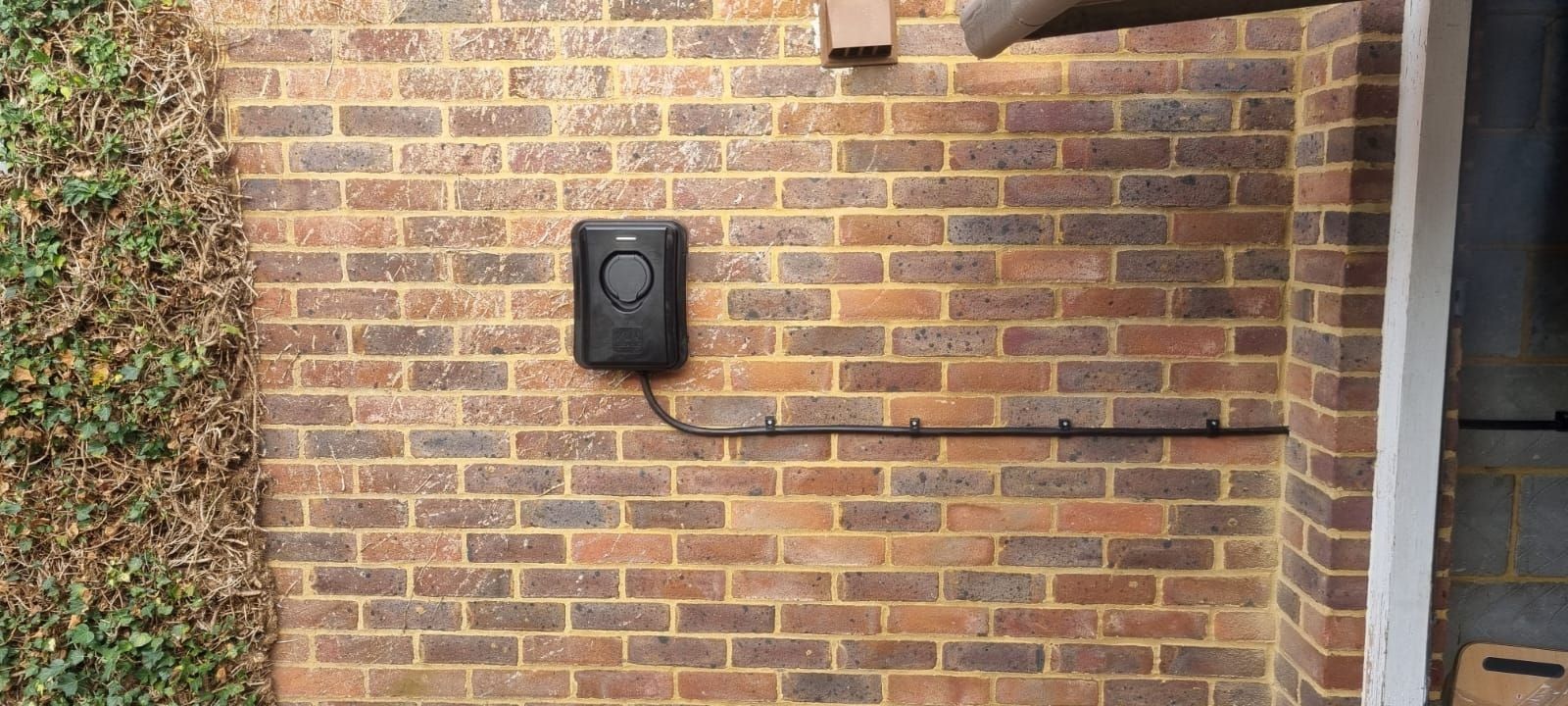
Charging an electric car in a Brighton terrace: the public network, and the home-charger cases
Over 1,000 public chargepoints, 86% of residents without off-street parking within a three-minute walk — and when a Brighton house can have its own.
Read it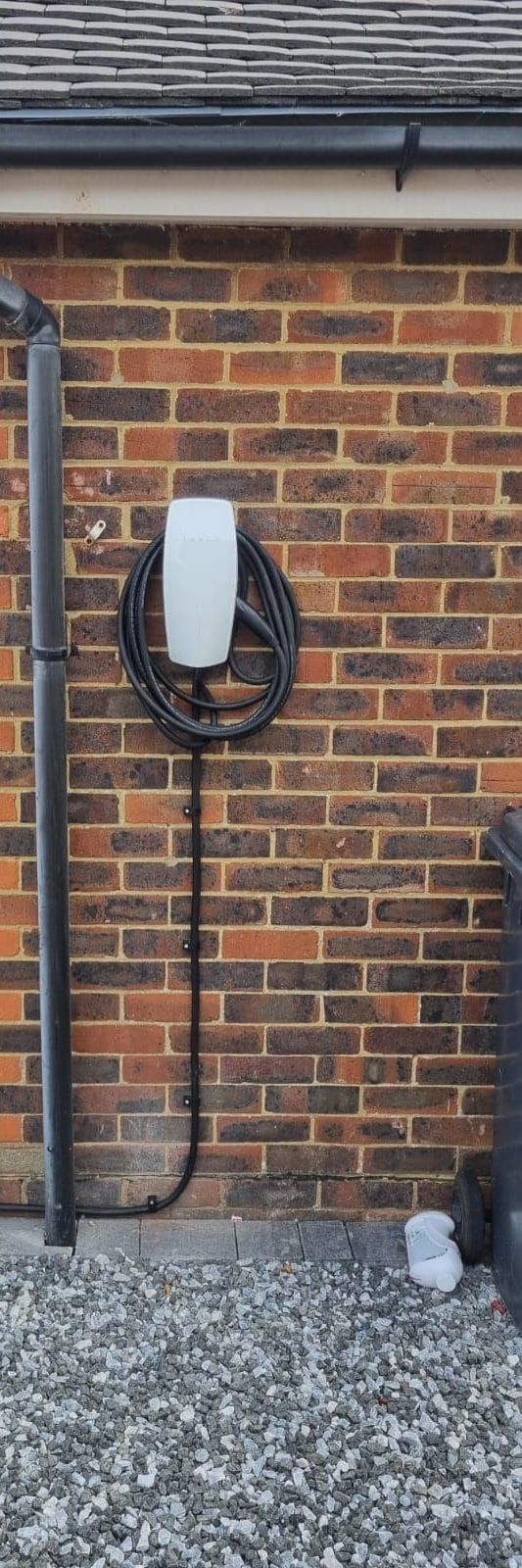
EV charger installation in Surrey: the rollout, the cable-gully rule and what a home charger needs
What Surrey has built and banned — 200-plus public sockets, no cables across the pavement — and what a home charger on the Surrey edge involves.
Read it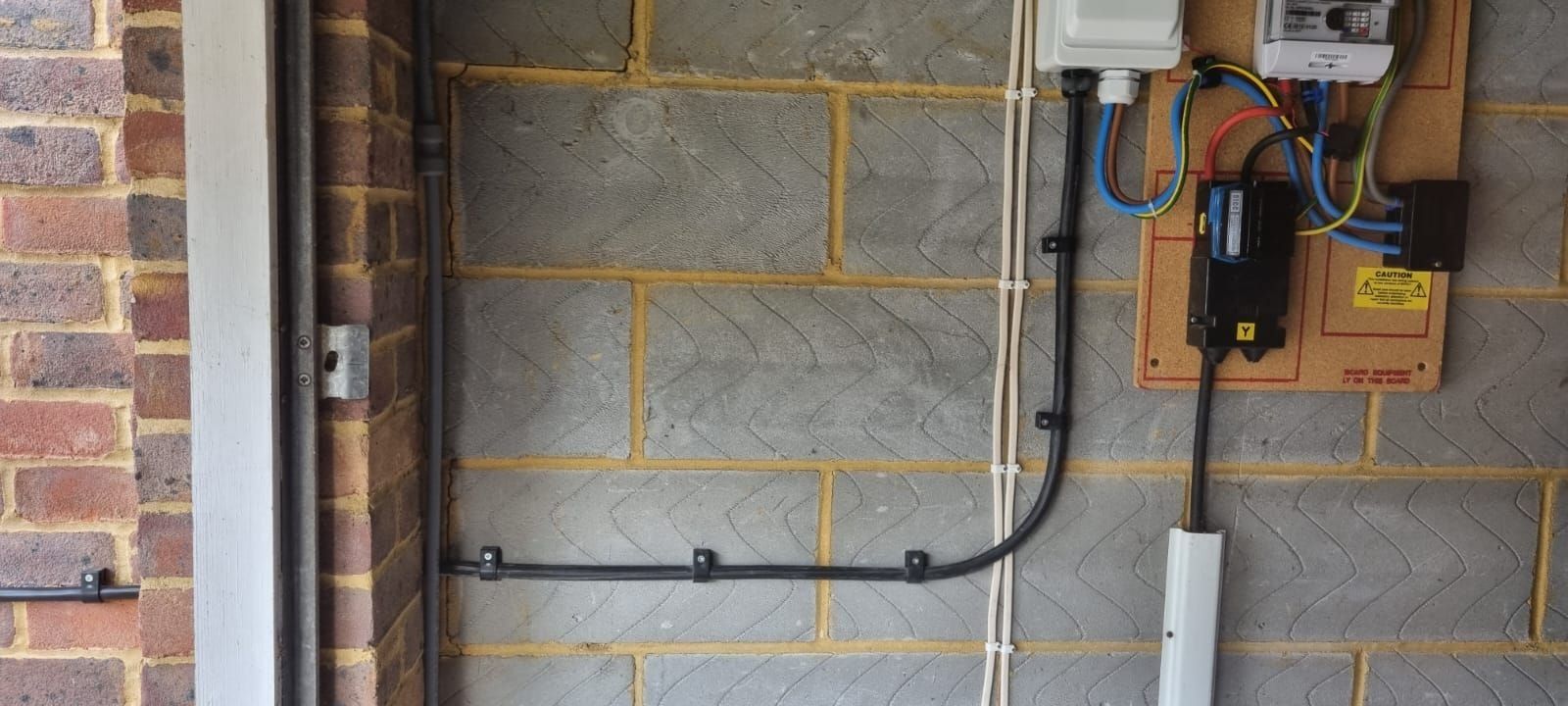
A home charger in a Worthing terrace: parking, the supply and the grant
Three Worthing houses — a semi with a drive, a terrace with a rear space, a terrace on the street — and what each can do about charging a car at home.
Read it