

Equipment
Sigenergy SigenStor explained: what the five-in-one stack is, and what to ask before it goes on your wall
What Sigenergy's five-in-one SigenStor stack combines, what that changes on a Sussex wall, and the questions to put to any Sigenergy installer.
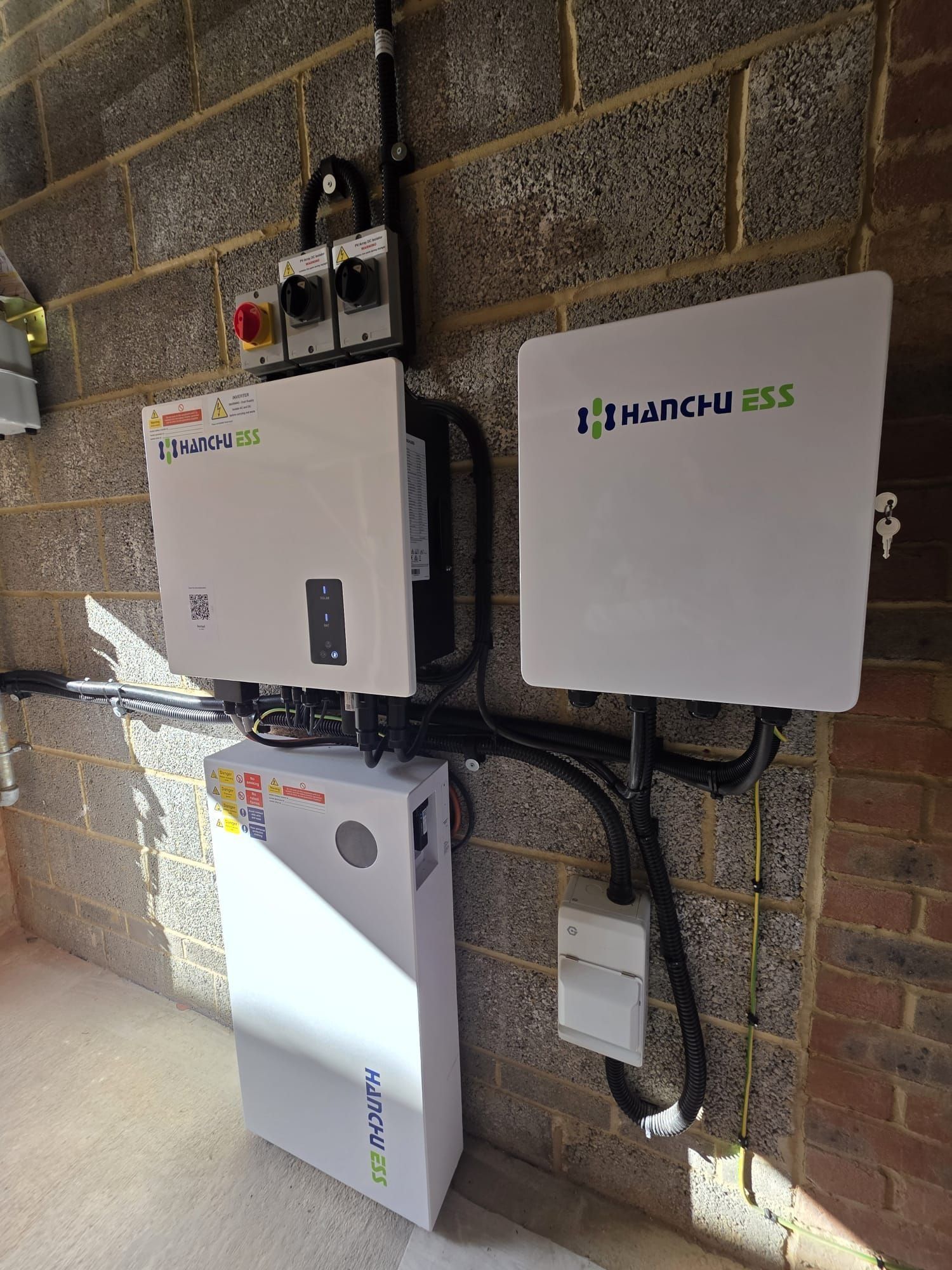
A battery, inverter and gateway on one wall from one of our own jobs. It is not Sigenergy hardware — we have not photographed that on a job of ours yet, and we will not use a manufacturer's render instead.
Sigenergy is the youngest name on the short list of lines we fit, and the one people arrive at the survey asking about by name. This is what the SigenStor stack is, in the manufacturer’s own terms and then in ours, and the questions we would put to any Sigenergy installer, including us.
What Sigenergy say it is
Sigenergy’s own product page, read on 15 October 2026, describes SigenStor as an “AI-powered 5-in-one Home ESS”: a solar inverter, a DC car charger, the battery’s power conversion, the battery packs themselves and the energy management system, built as one assembly rather than five. The same page describes the design as modular and stackable, says the battery modules connect through guided quick connectors that plug as they are stacked, gives the enclosure an IP66 rating, and describes backing up the house from the car’s battery as well as from the stack. The mySigen app is what you look at afterwards; Sigenergy describe it as tracking the energy flow from generation to consumption.
That is their description, not ours, and we have deliberately not printed a capacity, an output or a warranty term. Sigenergy publish and revise those figures; the specification for the exact unit proposed for your house is given at the survey, in writing, from the current documentation.
What “one assembly” changes on a Sussex wall
Most home batteries are two or three boxes: a hybrid inverter, a battery, sometimes a separate gateway for backup, with cabling and connections between them. The SigenStor idea is that those turn up as one stacked unit. On a retrofit that matters in three practical ways.
Wall space. There is one thing to find a place for rather than two or three, but that one thing is taller and needs one good position. On a Burgess Hill estate house where the integral garage has become a bedroom, that can be the whole conversation.
Joints. Fewer connections between components is fewer places for a fault to hide, and one manufacturer to ring when something misbehaves rather than two politely blaming each other.
The car. Where the charge point is part of the same stack, the coordination between generating, storing and charging happens inside one system. That is an advantage on a house with a drive and no advantage at all on a Brighton terrace where the car lives on the street.
The young-company question, answered straight
Sigenergy was founded in 2022. It is entirely fair to ask what that means for equipment you expect to work for two decades, and we are not going to pretend to know how any manufacturer will look in 2045. What we can tell you is who holds the certification for your installation, who you ring, what the current documentation says in writing, and how the system behaves if one part of the stack ever has to be worked on. Ask us that, and ask it of everyone else quoting.
We should also say plainly what we are not. We fit Sigenergy; we do not hold a badge from them and we do not claim one. The two marks on our own wall are set out on the about page, and the products page keeps the approvals and the kit we fit as two separate lists.
The paperwork that does not change because the box is clever
An integrated stack is still an inverter on the grid and a battery in a dwelling, so two pieces of paperwork apply regardless.
The network operator has to be told before anything is energised. Which one depends on the address: UK Power Networks across most of our patch, Scottish and Southern Electricity Networks towards Chichester, Bognor Regis, Billingshurst and Petworth, with the MPAN on your bill settling it. A G98 notification covers up to 16 amps per phase, 3.68 kW; above that a G99 application has to be approved first. We make the submission.
And since April 2026 the wiring regulations, BS 7671 with its fourth amendment, require batteries in homes to be installed to PAS 63100:2024, the fire-safety specification for domestic battery systems. That governs the location, the clearances and the detection around the stack. It is settled at the survey, not on the day.
Five questions to put to any Sigenergy installer
- Where exactly will it go, and why does that spot comply with PAS 63100? A good answer names the wall and the reason.
- What happens when the grid goes off? Be specific about what you want still working. The answer comes from the design, not from the badge.
- Who commissions the energy-management layer? The firm that fitted the stack, or a subcontractor you will never meet.
- Can it take cheap electricity overnight if my tariff rewards that, and who changes the charging windows when the tariff changes?
- Who signs the electrical certificate, and who answers the phone in year three?
We are the electricians as well as the installers, so the commissioning, the network notification and the handover are done by the people who fitted it. The page written by our Sigenergy installer team goes through the decision itself — the house, the questions, and when one stack is the wrong answer — and how we choose between the four lines we fit is written out alongside it. The survey is free, and the answer is sometimes a different line altogether.
More from the blog
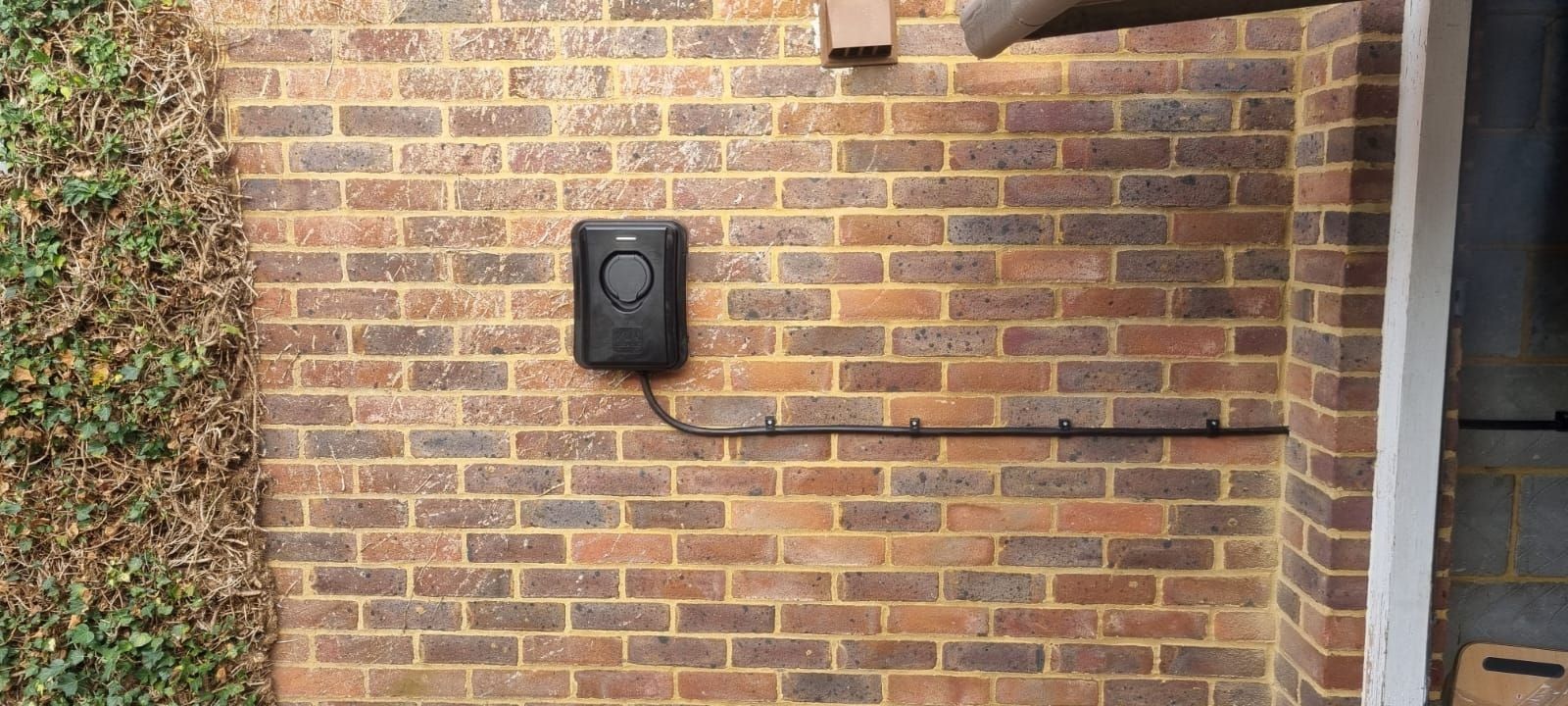
Charging an electric car in a Brighton terrace: the public network, and the home-charger cases
Over 1,000 public chargepoints, 86% of residents without off-street parking within a three-minute walk — and when a Brighton house can have its own.
Read it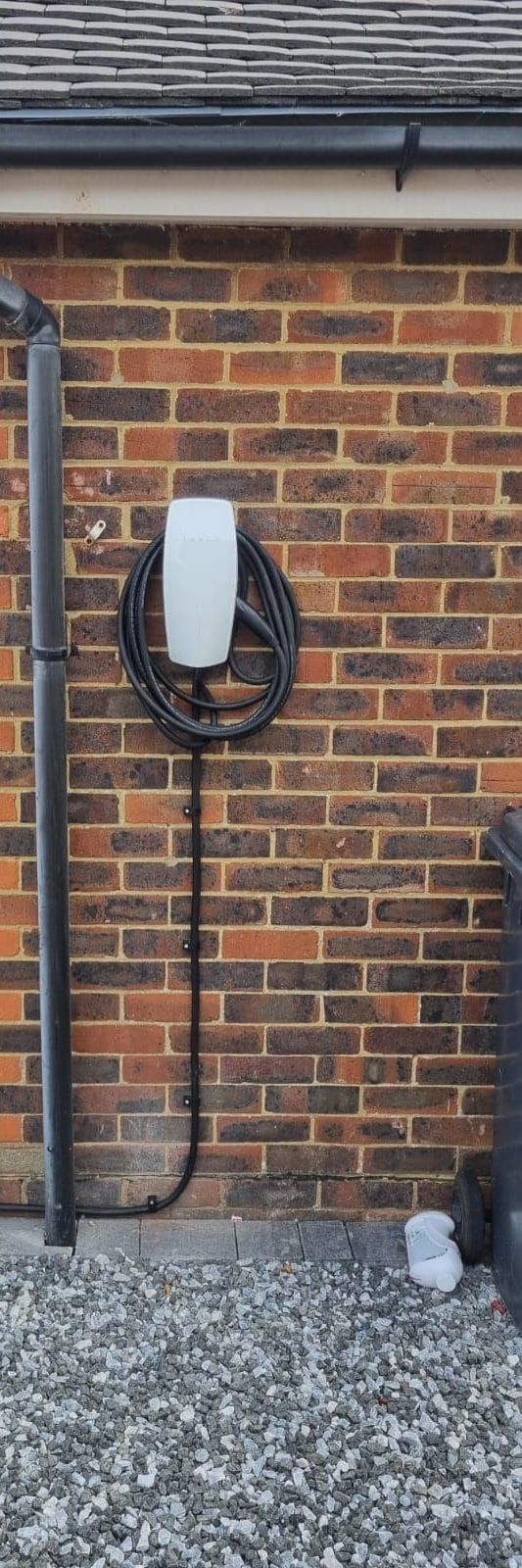
EV charger installation in Surrey: the rollout, the cable-gully rule and what a home charger needs
What Surrey has built and banned — 200-plus public sockets, no cables across the pavement — and what a home charger on the Surrey edge involves.
Read it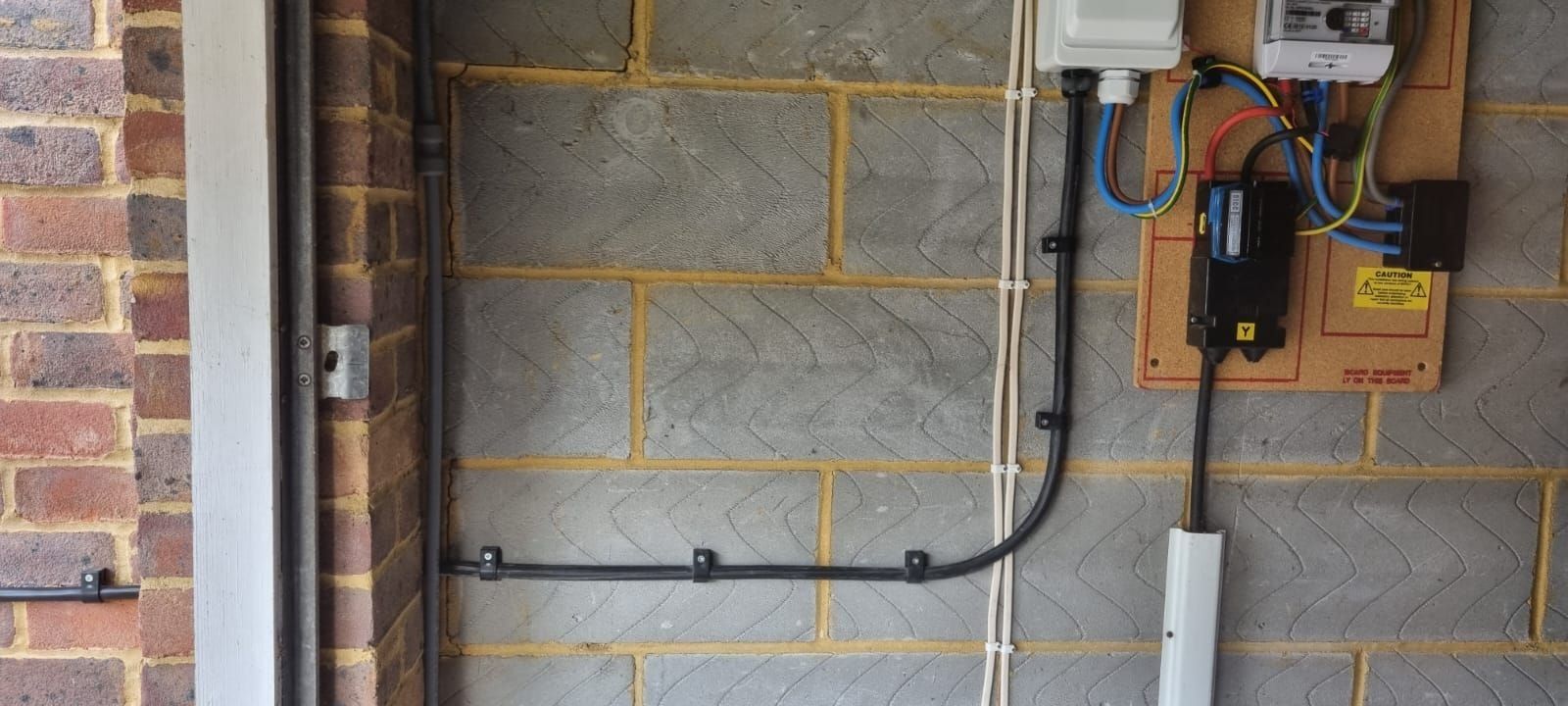
A home charger in a Worthing terrace: parking, the supply and the grant
Three Worthing houses — a semi with a drive, a terrace with a rear space, a terrace on the street — and what each can do about charging a car at home.
Read it