

Batteries
Shade, Box Hill and a smaller array: why a Dorking battery earns more
Dorking's modelled yield is below the coast's and its roofs are more often shaded: why that makes a battery count for more, and where the stack goes.
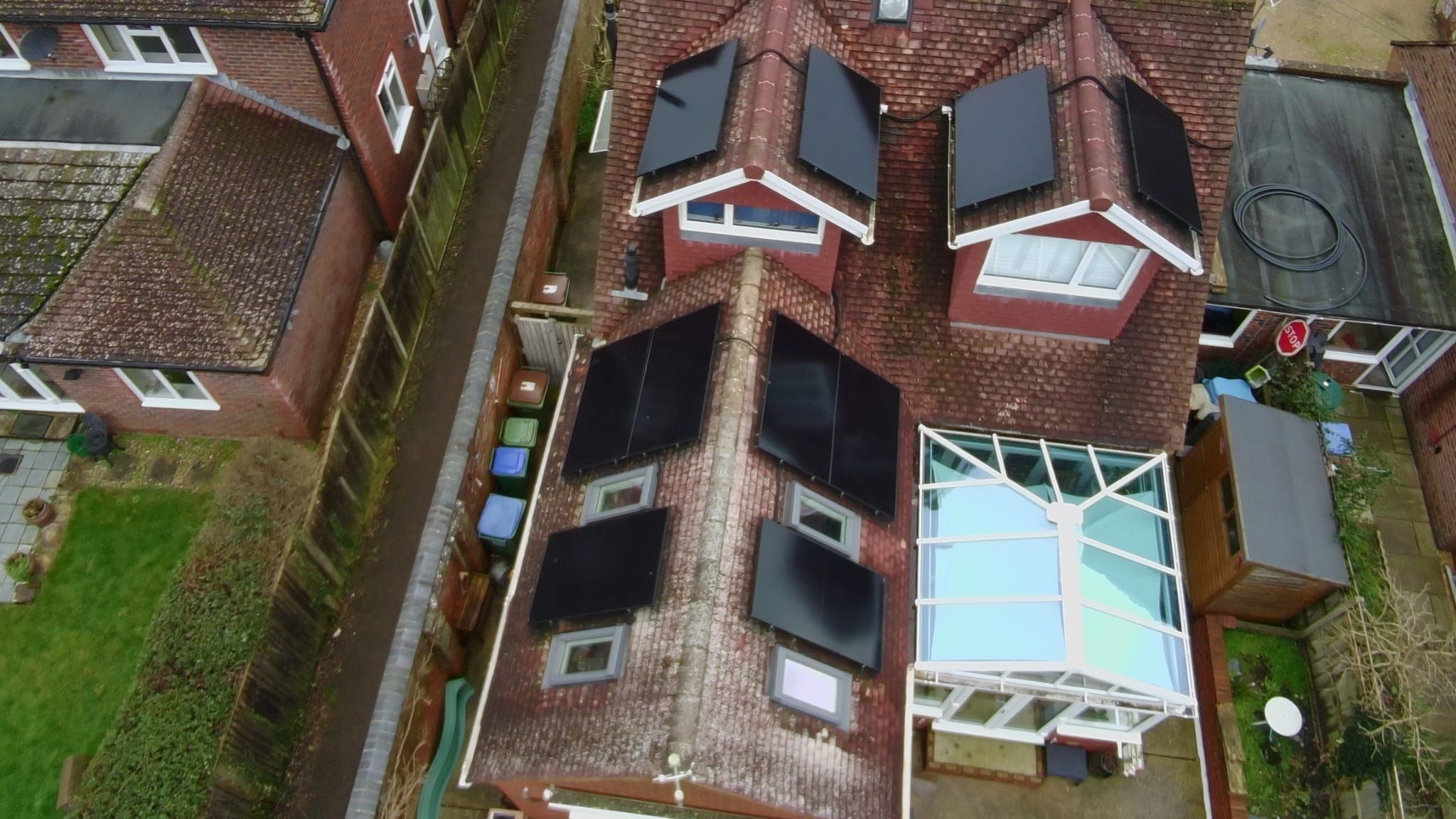
A roof with dormers from above: the dormer faces and the main slopes all carry panels. Dormers, trees and slopes each take a slice of what a roof makes — and in Dorking the slopes are hills.
Dorking is twenty-six road miles straight up the A24 and a town between two hills: Box Hill, part of the North Downs, about three miles from the stations with a 200-metre climb to the top, and Leith Hill, the highest point in Surrey, on the other side at Coldharbour. PVGIS models a south-facing 4.5 kWp array here at about 1,037 kWh per kWp a year — below Washington’s 1,125 and Lewes’s 1,177 for the same panel at the same pitch — and the trees and slopes put shade closer to the roofs than anywhere on the coast. People read that as an argument against solar. It is the argument for sizing honestly, and for a battery.
Why a smaller array makes the battery matter more
A roof that makes less, and makes it on one slope rather than two, still makes most of it in the middle of the day. Without somewhere to put the surplus a house uses somewhere around half of what its panels make and exports the rest at the export rate — 12p per kWh in our tariff reference as at June 2026, against 26p for every unit bought back in the evening. The smaller the array, the larger the share of it that is wasted as export unless there is a battery. So in Dorking the battery is not the luxury on top of the system; it is the part that turns a modest array into one that covers the evening.
The sizing, which does not change
The battery is sized to the evening load, read from half-hourly smart-meter data where the meter will give it and from the bills where it will not. The array is sized to the roof after the shade has been modelled on each slope, which in this town often means an east–west split rather than a single south face. If the sums do not support a battery on your data, the quote says so.
Where the stack goes in an Article 4 town
Mole Valley has 26 conservation areas; Dorking’s dates from 24 March 1974 and parts of it carry Article 4 Directions that protect particular street features. A battery indoors or on a rear wall sits outside that question — in the older streets it is a cellar, a utility or an outbuilding, nothing visible on a front wall — and on the later streets it is the garage. Either way the position meets PAS 63100 on location, clearances and detection before any size is named.
Operator and paperwork
RH4 and RH5 are UK Power Networks, group J on the 18 October 2026 lookup — unlike Haslemere and Godalming on the SSEN side of the county. An inverter up to 16 amps per phase is notified under G98; above that it is a G99 application before energising, and a battery inverter can be what takes the job over the line. We make the notification or application and the paperwork is in your handover pack.
Where to go next
Battery storage in Dorking is the page for the job and solar panels in Dorking is the roof. What solar costs in Surrey carries the worked example at this town’s own yield; SEG tariffs: what exporting pays is the export rate in detail; the Surrey two-operator post is the paperwork across the county line. The county picture is on the battery storage page.
More from the blog
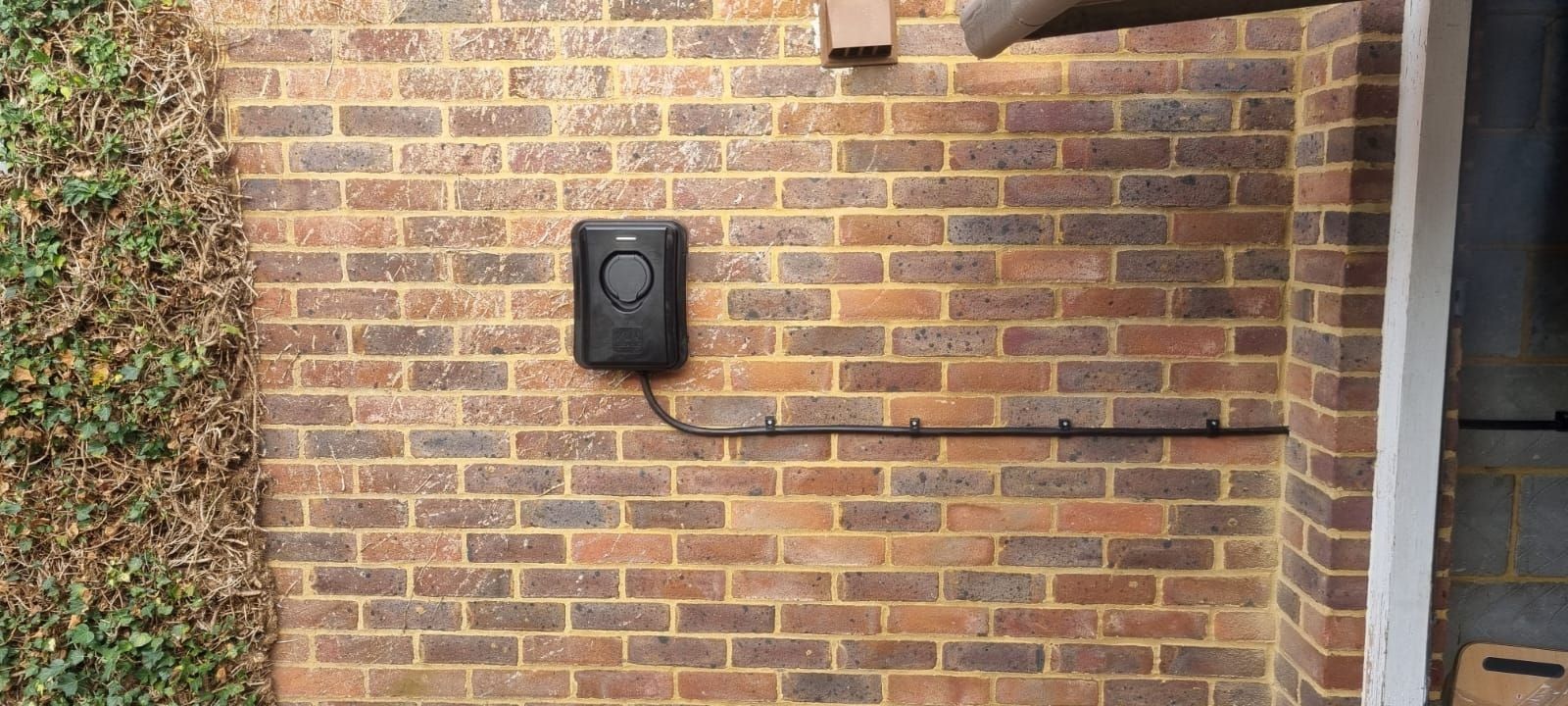
Charging an electric car in a Brighton terrace: the public network, and the home-charger cases
Over 1,000 public chargepoints, 86% of residents without off-street parking within a three-minute walk — and when a Brighton house can have its own.
Read it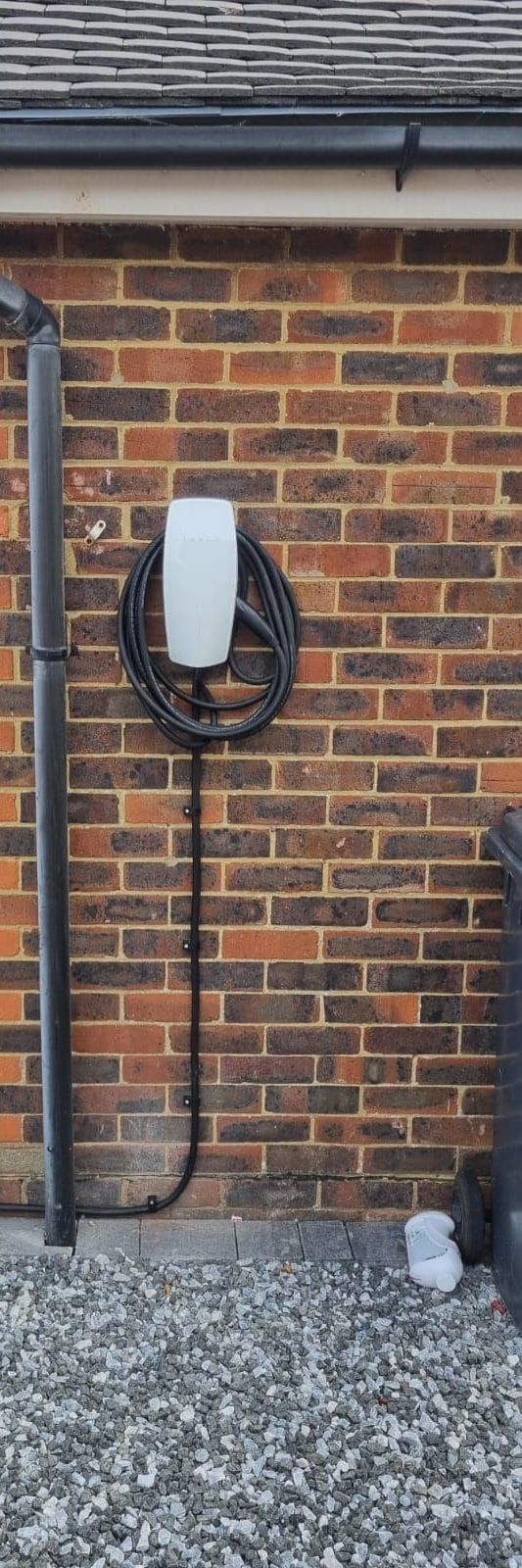
EV charger installation in Surrey: the rollout, the cable-gully rule and what a home charger needs
What Surrey has built and banned — 200-plus public sockets, no cables across the pavement — and what a home charger on the Surrey edge involves.
Read it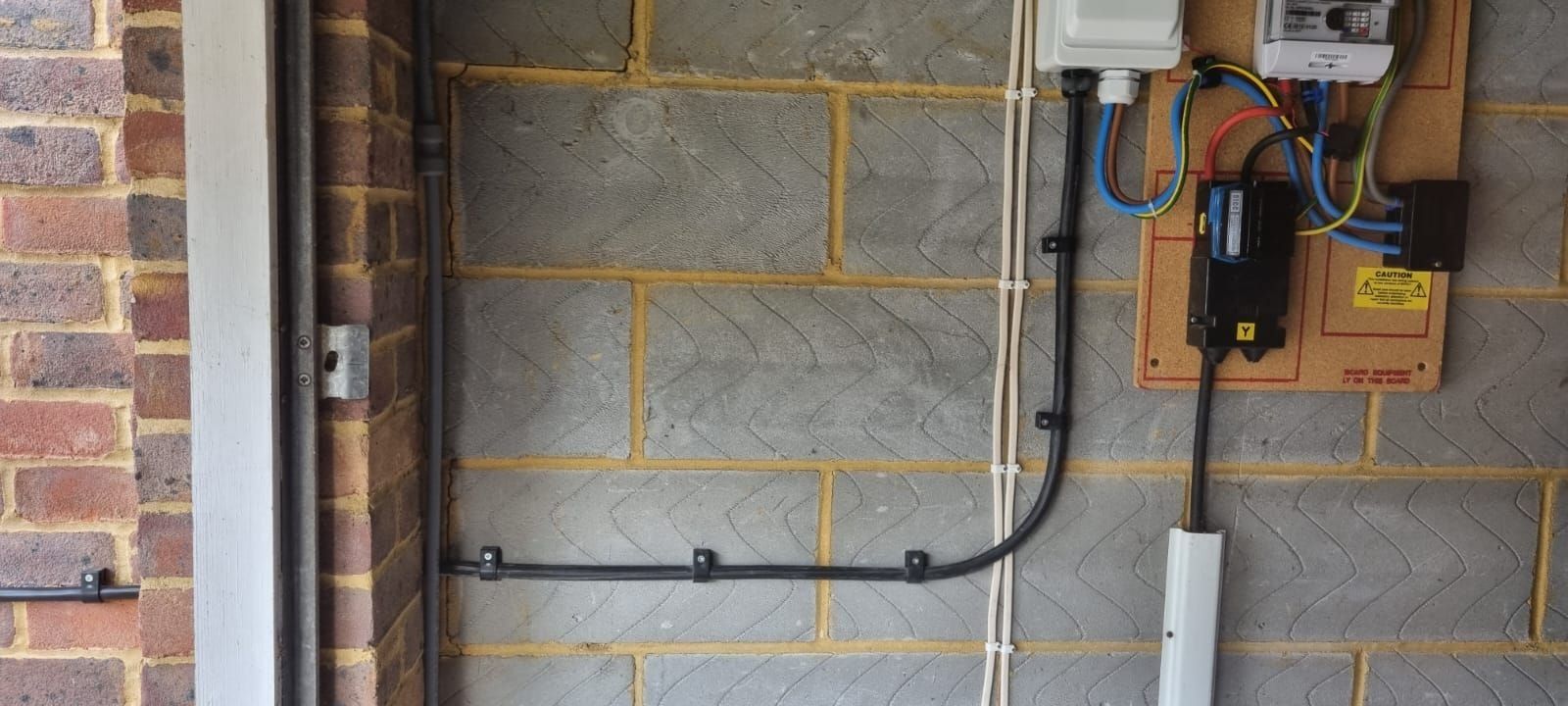
A home charger in a Worthing terrace: parking, the supply and the grant
Three Worthing houses — a semi with a drive, a terrace with a rear space, a terrace on the street — and what each can do about charging a car at home.
Read it