

Equipment
EcoFlow PowerOcean: what “start with one pack” really means
EcoFlow sells PowerOcean on the idea that you can start small and add packs later. What that means on a real house, and what the datasheet says.
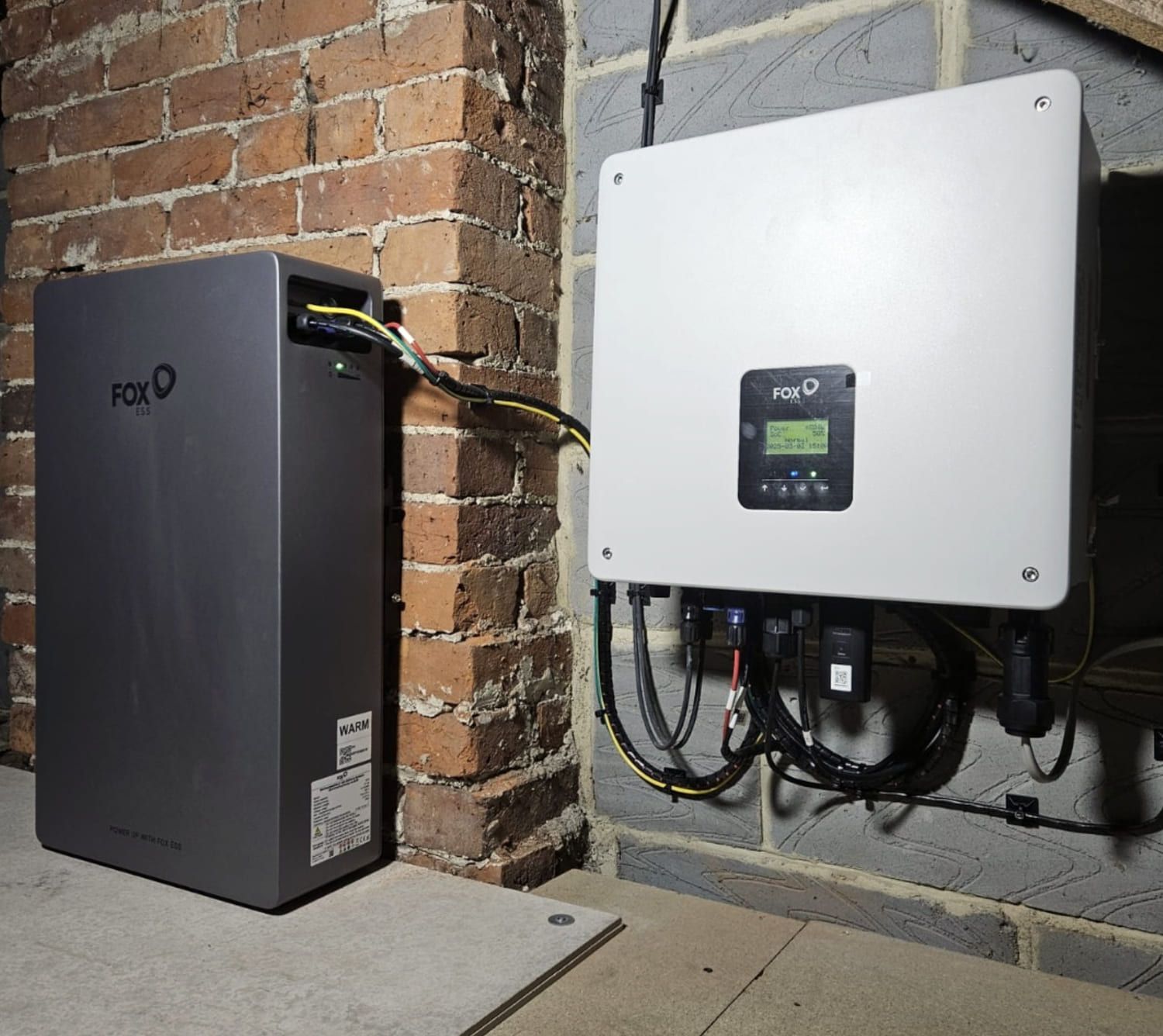
A battery and inverter on a garage wall. Modular systems live in the same places; the wall still has to be chosen.
Most home batteries are bought as a size. EcoFlow sell PowerOcean as a starting point: fit one battery pack with the hybrid inverter now, add more later as the household, the car or the tariff changes. It is a genuinely different pitch, and it deserves a plain explanation of what it does and does not change.
What EcoFlow themselves publish
So that you are not relying on us, here is what EcoFlow’s own UK product pages said when we read them on 6 October 2026. Each PowerOcean battery pack is 5 kWh. The three-phase page says a system can grow to 45 kWh, quotes backup output of up to 12 kW, and defines its cycle figure in a footnote as 6,000 cycles before the cell falls to 70% of its original capacity at 25°C. The single-phase page says 60 kWh, with a note that one hybrid inverter supports up to 20 kWh so the largest total needs three inverters, and gives an IP65 rating. Both describe LFP cells, a fire-prevention module and a 15-year warranty.
We quote those figures with the date because they are EcoFlow’s, they get revised, and the pair of pages did not agree with each other on the maximum. The datasheet that arrives with a quote from us is the one that applies to your configuration.
What “start with one” changes on a real house
Three things, and one that it does not.
The first bill is smaller. One pack and the inverter is a smaller invoice than a fixed 10 kWh unit. If the household’s evening use is modest, one pack may be all the storage you ever need.
The decision is reversible in one direction. You can add a pack. You cannot easily take one away, so the sensible path is to start at the size the survey supports, not the smallest size that exists.
The inverter is sized once. The hybrid inverter is chosen for the array and the household on day one. If you intend to grow the battery substantially, say so at the survey, because the inverter and its network notification are decided then.
What it does not change is the wall. A modular battery is still a battery in a dwelling. Since April 2026 the wiring regulations require home batteries to be installed to PAS 63100:2024, the fire-safety specification for domestic battery systems, which governs location, clearances and detection. Stacking a second pack later is only possible if the first one was put somewhere the second one can join it.
The two numbers people compare wrongly
Capacity. Quotes get compared on headline kilowatt-hours. Compare total usable capacity for the number of packs actually being supplied, not the number the system could reach one day.
Cycle life. A cycle figure is only meaningful with its retention point and temperature attached. EcoFlow’s is quoted to 70% at 25°C. A competing figure quoted to 80%, or at a different temperature, is not the same measurement, and neither tells you how a battery performs in an unheated outbuilding in January.
The tariff question
A battery that can be told when to charge and discharge is worth more on a time-of-use tariff than on a flat one, because the gap between the cheap overnight rate and the evening rate is where the return lives. PowerOcean’s app can run the battery around such a tariff. Whether your supplier, your meter and your household pattern make that worthwhile is a survey conversation, and it is a bigger factor in the arithmetic than the choice of brand.
If you are weighing it up
Our page written for people looking for EcoFlow installers in West Sussex goes through where PowerOcean tends to be fitted, what happens in a power cut, how it sits next to the other three lines we install, and what we measure on the day regardless of what is on the box. The survey is free and the honest answer, more often than any brand would like, is that the right size is smaller than the brochure.
Where a single pack makes the most sense is a county question: EcoFlow in West Sussex for the estates and the unheated outbuildings, EcoFlow in Surrey for the shaded roofs, EcoFlow in East Sussex for the clifftop garages and the Solar Together roofs; where we fit EcoFlow PowerOcean walks through all three.
More from the blog
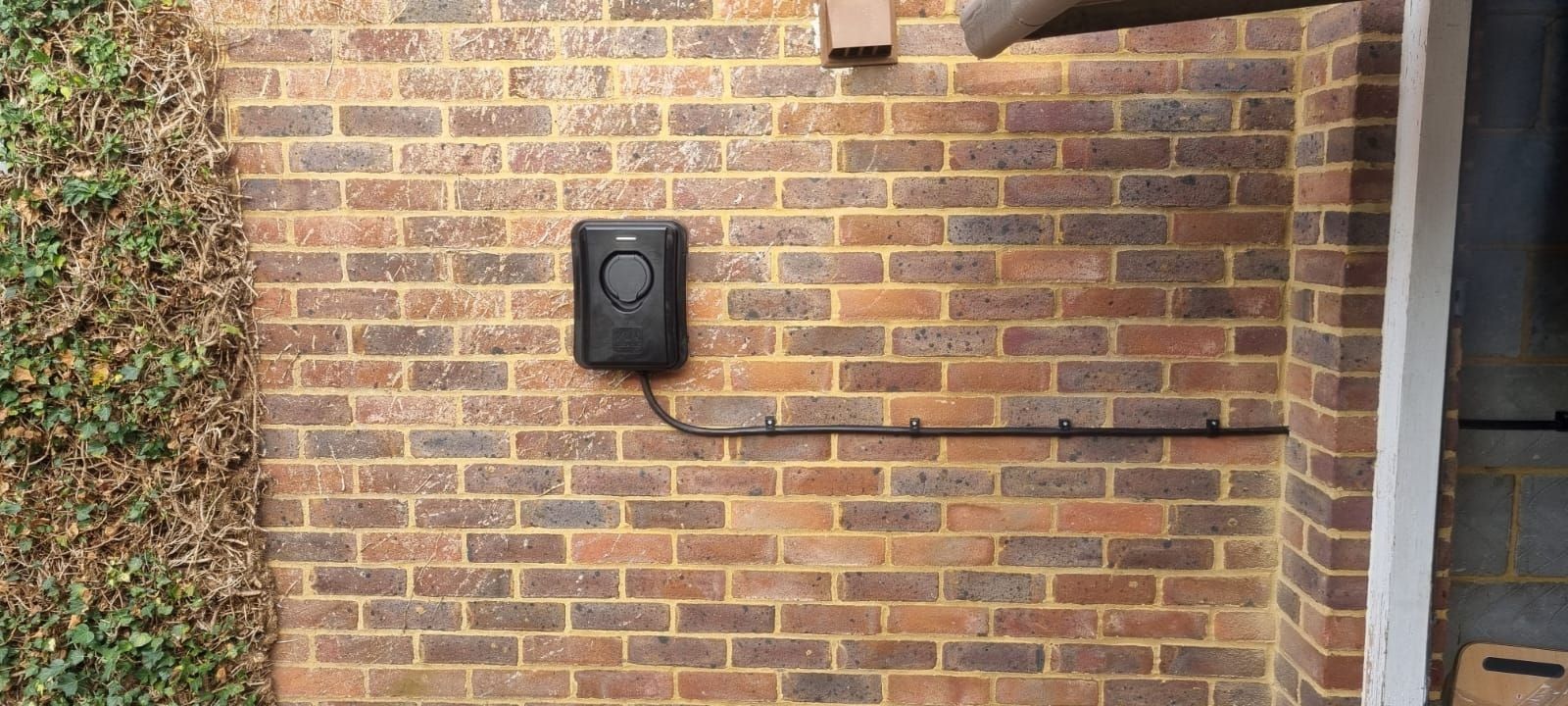
Charging an electric car in a Brighton terrace: the public network, and the home-charger cases
Over 1,000 public chargepoints, 86% of residents without off-street parking within a three-minute walk — and when a Brighton house can have its own.
Read it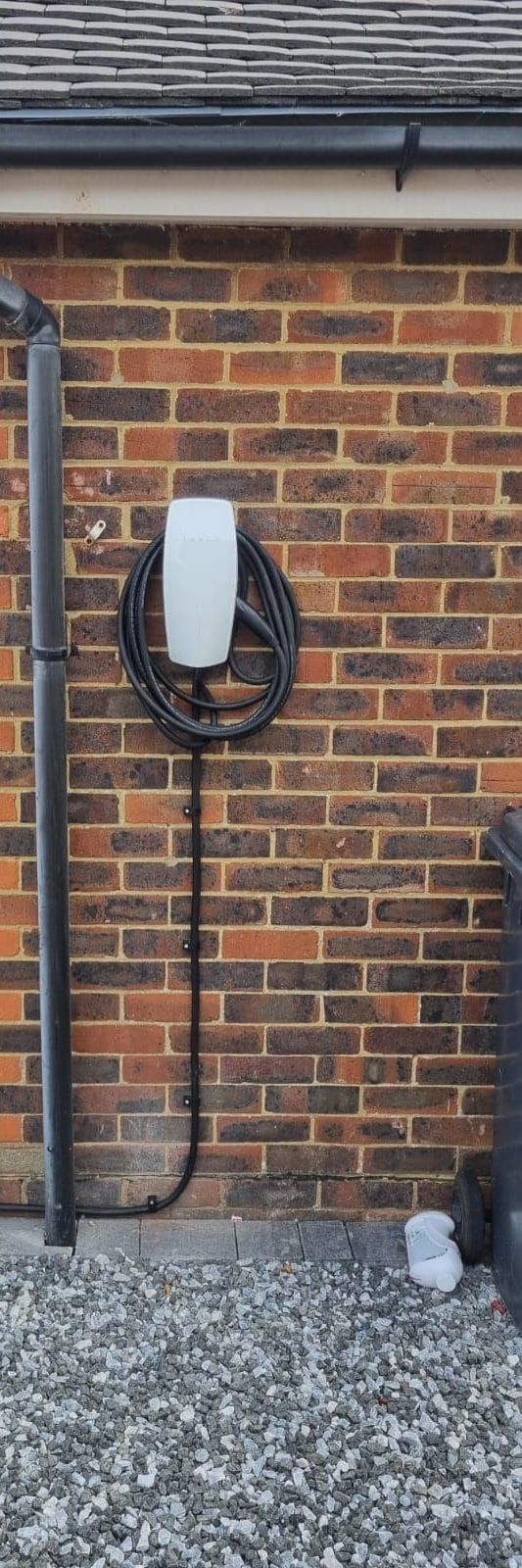
EV charger installation in Surrey: the rollout, the cable-gully rule and what a home charger needs
What Surrey has built and banned — 200-plus public sockets, no cables across the pavement — and what a home charger on the Surrey edge involves.
Read it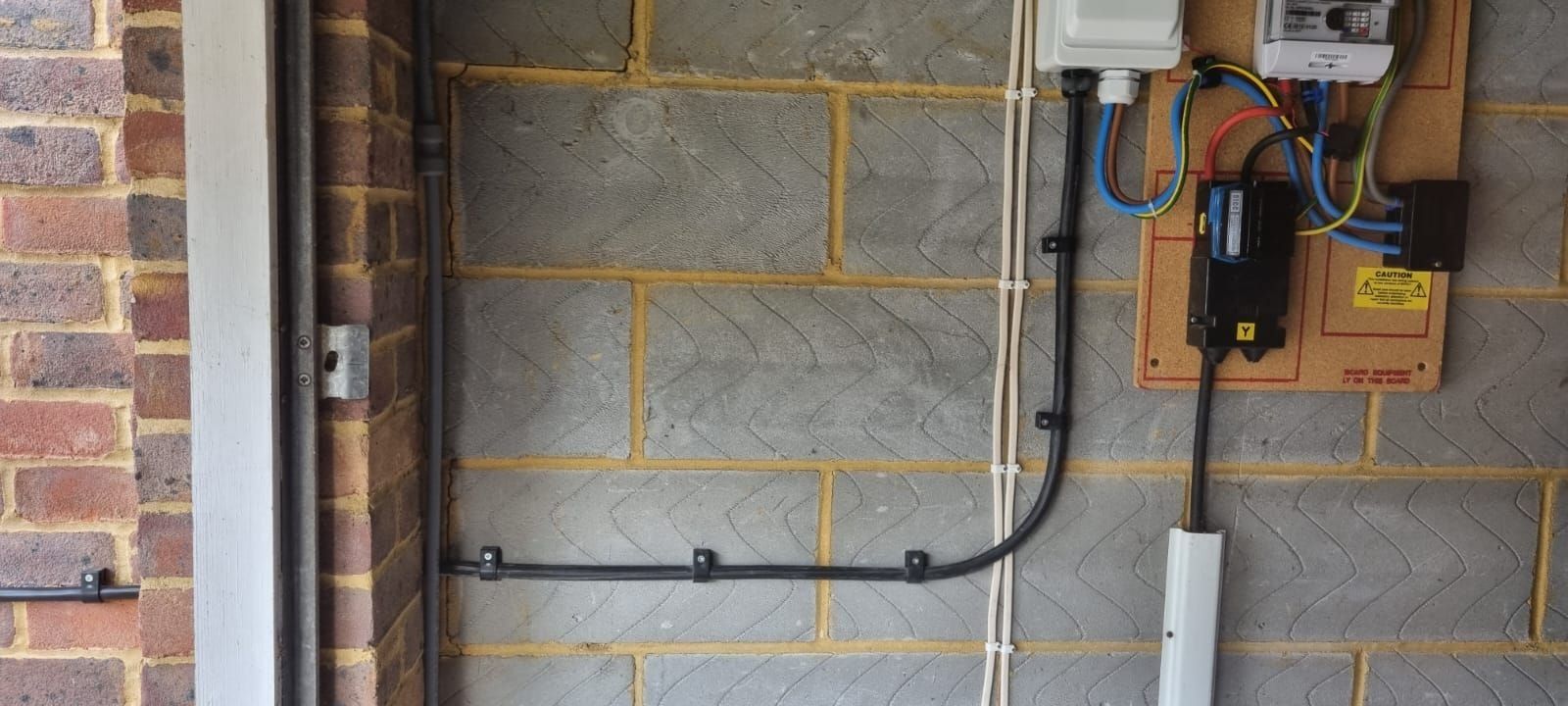
A home charger in a Worthing terrace: parking, the supply and the grant
Three Worthing houses — a semi with a drive, a terrace with a rear space, a terrace on the street — and what each can do about charging a car at home.
Read it