

Batteries
The outbuilding battery: storage in the home patch under the Downs
Around Storrington and Pulborough the barn is often a better home for a battery than a period cottage: the cable run, the board, the Park and SSEN.
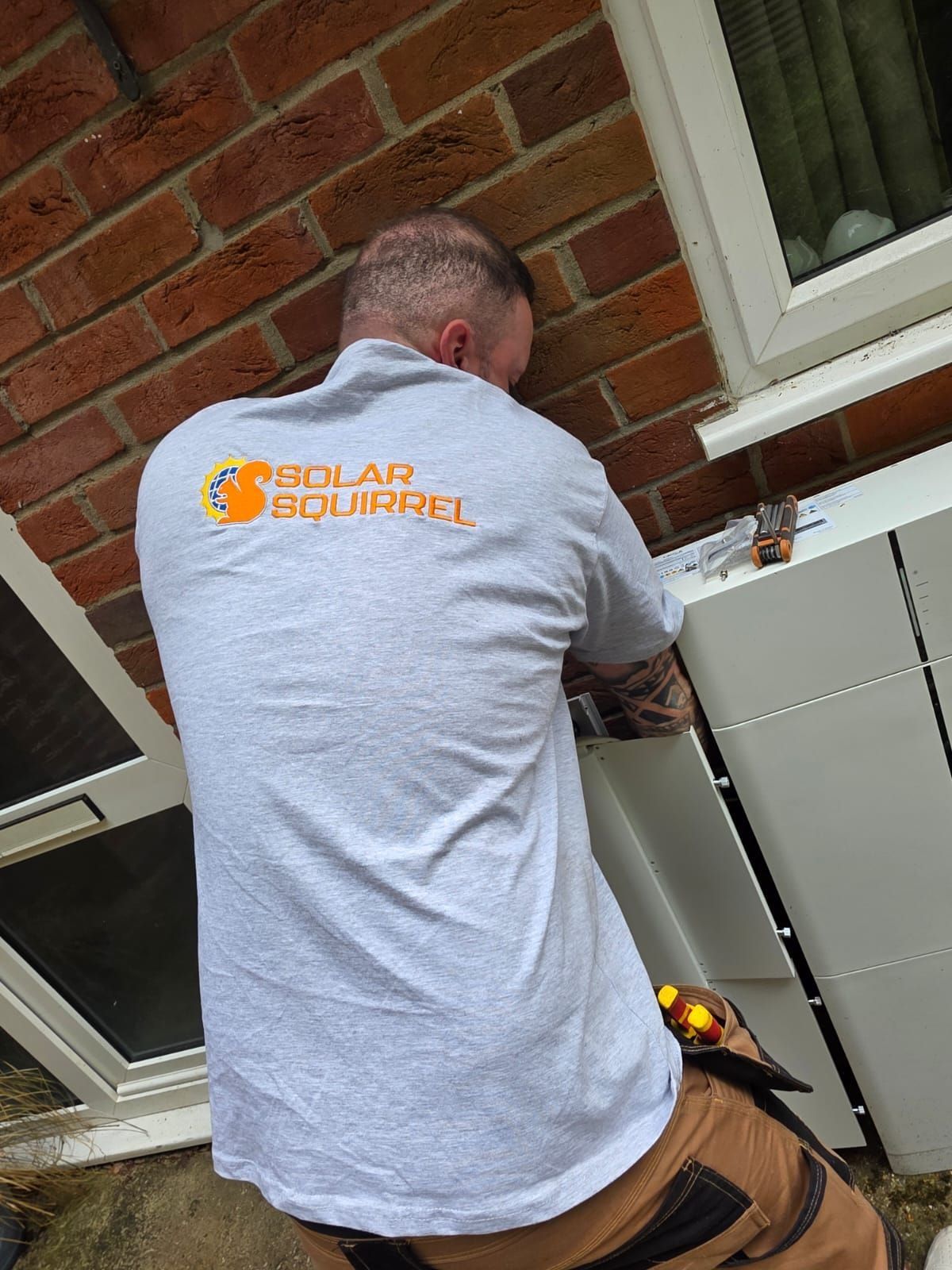
One of our installers fitting a stack against an outside wall. On a rural plot that wall is often the outbuilding's.
Storrington is three road miles from the workshop and Pulborough seven; Edmonds Electrical Ltd, the company behind Solar Squirrel, is registered at Washington, Pulborough. These are the lanes the van goes down every day, and the houses are the ones we know best: period and rural property under the northern scarp of the Downs — tile-hung elevations, clay peg tiles, Horsham stone — on plots with mature trees and, very often, an outbuilding. For a battery, the outbuilding is the story.
Why not the house
An old cottage is a poor home for a stack more often than people expect. PAS 63100:2024, the fire-safety specification home batteries have been installed to since April 2026, wants a location out of the living space, clearances around the unit and detection near it. A cottage utility is frequently too small, too warm or too close to the stairs, and a peg-tile loft is not where we would put the weight. We would rather say that than make it fit.
Why the barn
A barn, a garage block or a garden workshop usually has what the cottage lacks: a solid wall, a cool space, the clearances, and — on this patch especially — a roof that is often the better solar roof than the house, out of the sightline and clear of the trees. The array goes on the outbuilding, the stack goes on its wall, and the house gets the benefit.
What that layout costs
Two things, and the survey measures both rather than guessing. The cable run back to the house, which on a rural plot can be long and may need to be buried. And the state of the consumer unit, which in an old house is sometimes the real job. Where the house is listed, the position and the runs are put to the conservation officer before we quote.
The Park, and what it affects
Both villages sit just outside the South Downs National Park, which takes in our Washington base, and whether a particular roof falls inside the boundary is checked on every survey here. The Park’s rules are about what is visible from outside — the array, and any outside enclosure. A battery indoors or in an outbuilding is an electrical installation and the Park does not come into it.
Sizing a rural house
Older rural houses use electricity differently from an estate house, and an outbuilding on its own circuit changes the picture again. So the evening load is read from the meter — half-hourly where it will give it, bills where it will not — rather than assumed from the number of bedrooms. Shading from the trees usually means a smaller array than the plot suggests, and a smaller array is exactly where a battery earns its keep, because it exports a large share of what it makes unless there is somewhere to put it. If the sums do not support one, you are told.
The operator
RH20 — Washington included — is Scottish and Southern Electricity Networks, grid supply point group H on the 15 October 2026 lookup, not UK Power Networks like the coast. An inverter up to 16 amps per phase is notified to SSEN under G98; anything larger is a G99 application before it is energised. We make both. Domestic solar panels and battery storage currently attract zero-rate VAT.
Where to go next
Battery storage in Storrington & Pulborough is the page for the job and solar panels in Storrington & Pulborough is the roof — and the barn. Billingshurst’s post is the other SSEN village and what the operator changes; Chichester’s is the listed question in a city. The county picture is on the battery storage page.
More from the blog
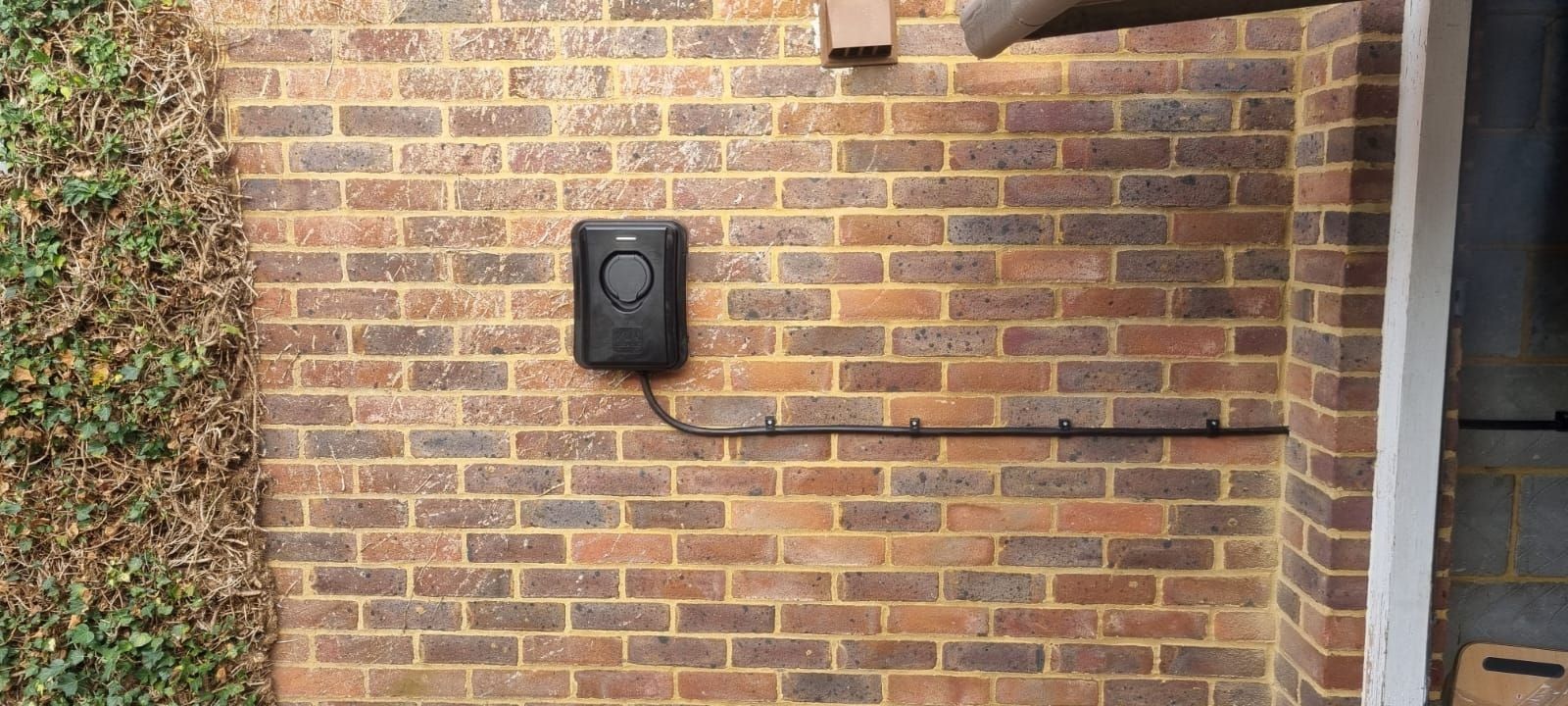
Charging an electric car in a Brighton terrace: the public network, and the home-charger cases
Over 1,000 public chargepoints, 86% of residents without off-street parking within a three-minute walk — and when a Brighton house can have its own.
Read it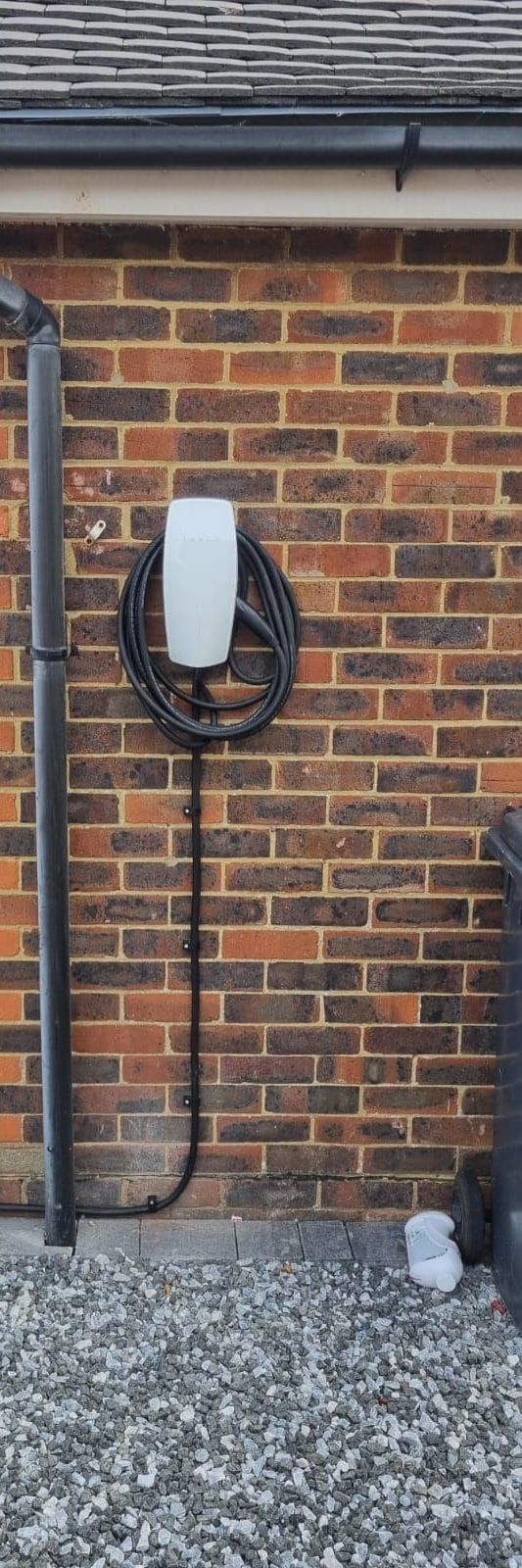
EV charger installation in Surrey: the rollout, the cable-gully rule and what a home charger needs
What Surrey has built and banned — 200-plus public sockets, no cables across the pavement — and what a home charger on the Surrey edge involves.
Read it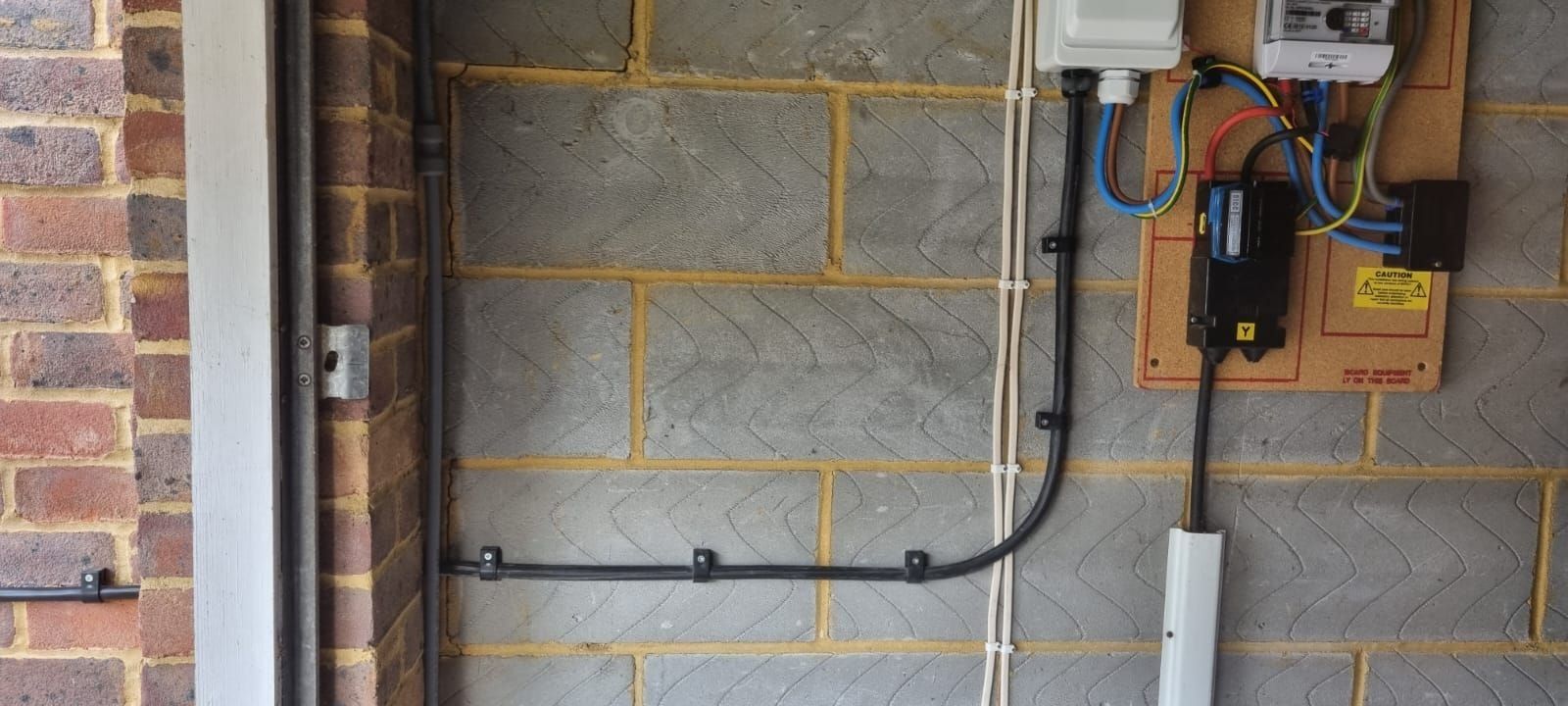
A home charger in a Worthing terrace: parking, the supply and the grant
Three Worthing houses — a semi with a drive, a terrace with a rear space, a terrace on the street — and what each can do about charging a car at home.
Read it